 Ferndale
 Building Exteriors for a Coastal Whatcom County Community
Birch Bay sits right on the water along the Strait of Georgia, and that location shapes almost everything about how a home ages here. Homes in Birch Bay face a different combination of stresses than houses a few miles inland in Ferndale or Bellingham — salt-laden air off the bay, wind-driven rain that hits siding sideways instead of straight down, and a moss and mildew season that can run most of the year in a marine climate like this one. Whether your home is a longtime year-round residence or a place that started as a summer cabin and became a full-time house, the exterior has to work harder here than it does elsewhere in Whatcom County.
We're based nearby in Ferndale and work throughout the area, so Birch Bay isn't an unfamiliar drive for us — it's part of the territory we already know. That matters when you're picking a contractor, because coastal exposure isn't something every crew accounts for the same way inland projects get built.
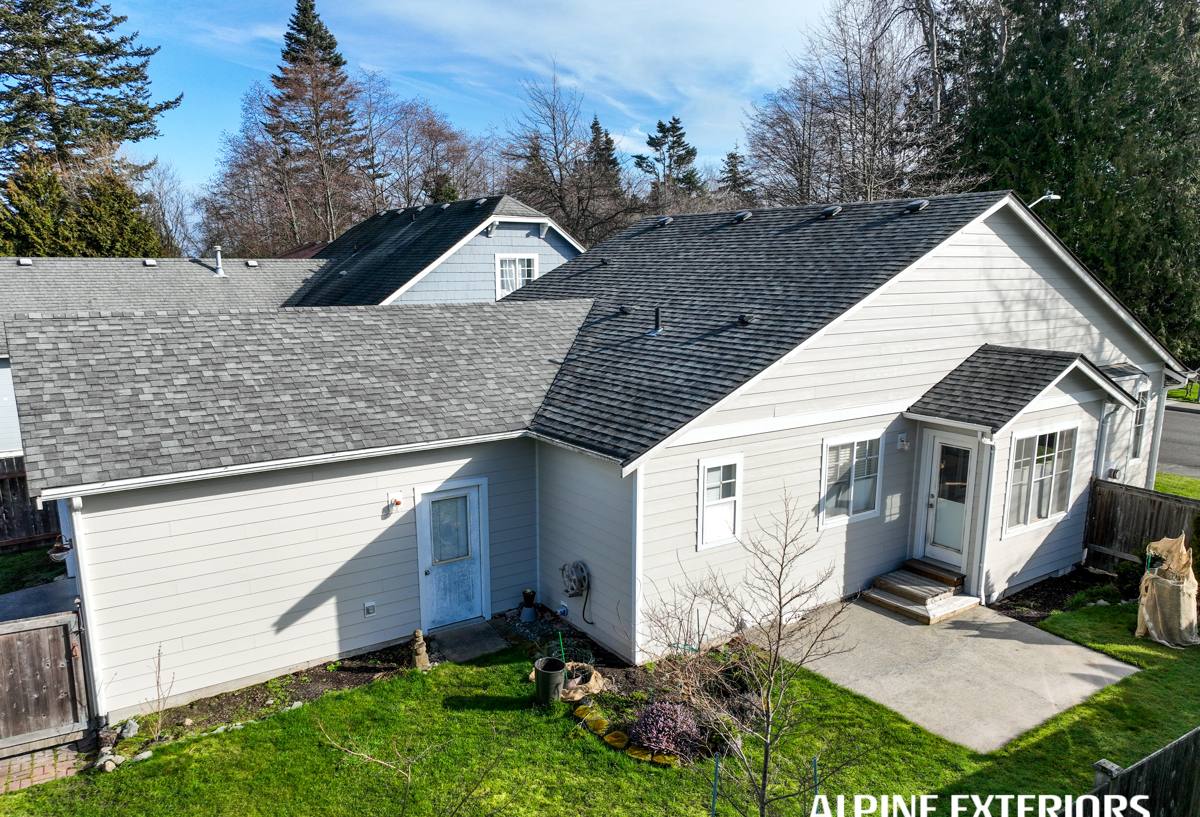
What Salt Air, Wind-Driven Rain, and Moss Actually Do to a House
Salt Air
Airborne salt from the bay settles on every exterior surface — siding, trim, fasteners, flashing. Over years it accelerates corrosion of metal components and can degrade paint and coatings faster than the same materials would wear inland. It's a slow, cumulative effect rather than a dramatic one, which is exactly why it gets overlooked until a homeowner notices premature chalking, corroded fasteners, or finish failure well ahead of schedule.
Wind-Driven Rain
Birch Bay's open exposure to the water means storms don't just drop rain straight down — wind pushes it sideways into walls, seams, and penetrations. That puts extra demand on flashing details, siding laps, and caulking joints. A siding system that performs fine in a sheltered inland yard can show its weak points quickly on a wind-exposed coastal wall if it wasn't installed with that exposure in mind.
Moss and Mildew
Western Washington's wet season is long everywhere, but a shaded, moisture-retaining coastal lot can stay damp even longer than average. Moss doesn't just grow on roofs — it takes hold in siding seams, behind trim, and in any spot where moisture sits instead of shedding. Left alone, sustained moisture against a wall assembly is one of the more common paths to hidden rot and siding failure, regardless of what material is on the wall.
Why We Install Only James Hardie Fiber Cement Siding
We made a deliberate decision as a company to install one siding system — James Hardie fiber cement — rather than offering a menu of vinyl, LP SmartSide, or other fiber cement brands. In a climate like Birch Bay's, that decision isn't about brand loyalty; it's about which material holds up honestly under salt, wind, and sustained moisture with the least amount of long-term babysitting.
- Non-combustible core: fiber cement doesn't feed a fire the way some other cladding materials can, which matters in Whatcom County's wildfire-aware building climate as much as its wet one.
- Moisture-resistant by composition: Hardie board is engineered to resist swelling, cracking, and moisture intrusion better than wood-based or vinyl alternatives, which is directly relevant to a wind-driven-rain environment.
- Climate-engineered HZ product lines: Hardie manufactures HZ5 formulations specifically for wetter, colder regions like the Pacific Northwest, rather than a single one-size-fits-all board.
- Factory-applied ColorPlus finish: baked-on at the factory under controlled conditions, it resists fading and chipping better than field-applied paint, and it's the finish layer most exposed to that salt air.
- Strong transferable warranty: a real, honored warranty structure gives you something to stand on if something does go wrong years down the road.
We're upfront that other products — vinyl, LP SmartSide, Cemplank, Allura, primed wood, cedar — each have legitimate uses and loyal installers elsewhere. Our stance is narrower than "those products are bad": it's that after years of installing and repairing siding in this exact climate, Hardie is the one system we're willing to put our name behind and warranty our workmanship against. That's a standard we hold for our own business, not a judgment on every home that has something else on the wall.
What a Siding Project Looks Like Start to Finish
Every project starts with an honest look at what's actually happening behind the existing siding, not just what's visible from the driveway. On coastal homes especially, we pay close attention to:
- Condition of the water-resistive barrier and flashing at windows, doors, and roof-to-wall intersections
- Signs of trapped moisture, soft sheathing, or existing rot before we ever talk about the new material going up
- Fastener and trim corrosion from salt exposure, which can be a red flag for what's happening underneath
- Ventilation and drainage gaps that let a wall assembly dry out after a wind-driven storm
From there, installation follows James Hardie's published fastening, clearance, and flashing specifications. Correct installation is what actually determines whether fiber cement performs the way it's designed to — a great product installed loosely, with the wrong fasteners or without proper clearances, gives up most of its advantage. That's true anywhere, but it's especially true on a wall that's going to spend the next few decades absorbing salt air and horizontal rain.
Roofing, Windows, and Decks: The Rest of the Coastal Envelope
Siding is one piece of a home's defense against a marine climate, not the whole story. We also handle roofing, windows, and decks, because those systems all interact with each other around the same weak points — flashing transitions, fastener penetrations, and anywhere water has a chance to sit instead of shed.
Roofing
A roof that's shedding moss poorly or has degraded flashing sends water downhill into siding and trim, which is why we look at the roof line as part of any siding assessment, not as an unrelated system.
Windows
Window flashing and integration with the siding plane is one of the more common failure points on any coastal home. When we replace siding around existing windows, we check that flashing is doing its job — and when we install windows, we detail them to work with the siding system going in around them.
Decks
Outdoor living surfaces in Birch Bay take the same salt and moisture exposure as the walls above them, often with more direct sun and rain combined. Deck materials, fastener choices, and ledger flashing all matter more here than they would on a sheltered inland lot.
Cost Factors for a Birch Bay Siding Project
Every home is different, and we don't quote sight unseen — but these are the factors that most commonly move the price of a siding project in a coastal Whatcom County setting:
| Factor | Why It Matters Here |
|---|---|
| Extent of hidden moisture or rot damage | Coastal wind-driven rain increases the odds of trapped moisture behind old siding, which affects repair scope before new siding goes up |
| Home size and wall complexity | More corners, gables, and trim details mean more cutting, flashing, and labor time |
| Siding profile and ColorPlus color selection | Lap width, shingle-style panels, and factory finish options carry different material costs |
| Existing flashing and window integration condition | Salt-air corrosion on old flashing often needs replacement, not reuse, during a re-side |
| Access and site conditions | Waterfront lots, retaining walls, or tight setbacks can add time and equipment considerations |
Maintaining Fiber Cement Siding in a Salt-Air Climate
James Hardie siding is low-maintenance compared to wood or vinyl, but "low-maintenance" doesn't mean "no maintenance," especially this close to the water. A simple annual rhythm goes a long way:
- Rinse siding periodically to clear accumulated salt residue, especially on walls facing the bay directly
- Keep gutters and downspouts clear so water isn't sheeting down siding faces during storms
- Trim back vegetation that shades siding and keeps it damp longer than it should stay
- Watch caulked joints and trim intersections for gaps opening up over time, and have them resealed before they become entry points
- Address any moss or mildew growth on siding promptly rather than letting it establish
Why a Local Crew Matters for a Property Like This
A contractor who mostly works inland can still do a technically fine installation and still get a coastal home wrong — not because of bad workmanship, but because they're not used to designing for wind-driven rain and sustained salt exposure as the default condition instead of the exception. Being based in Ferndale means Whatcom County's coastal edge, Birch Bay included, is a normal part of our work, not a special case. We show up knowing what this climate does to a wall assembly over ten or twenty years, and we build accordingly.
If you're weighing a siding, roofing, window, or deck project for a Birch Bay home, we're glad to take a look and give you a straightforward assessment — no pressure, no scare tactics, just an honest read on what your home needs. Use the form below to request a free estimate.