 Ferndale
 Why Siding Problems Sneak Up on Ferndale Homeowners
Ferndale sits close enough to Bellingham Bay and the Strait of Georgia that salt-laden air is a real factor in how exterior materials age here, not just a coastal cliché. Add in Whatcom County's long, wet fall-through-spring stretch and the shaded, moisture-holding conditions that keep moss and algae active on north-facing walls for much of the year, and you've got a climate that's genuinely tough on siding. The problem is that most siding failure doesn't announce itself. It starts small — a hairline crack, a slightly soft spot near a downspout, a patch of discoloration you assume is just dirt — and by the time it's obvious from the street, there's often water damage happening behind the wall that costs far more to fix than the siding itself.
This page walks through the warning signs worth checking for, what they usually mean, and how to tell the difference between a minor repair and a sign that full replacement is the more honest answer.
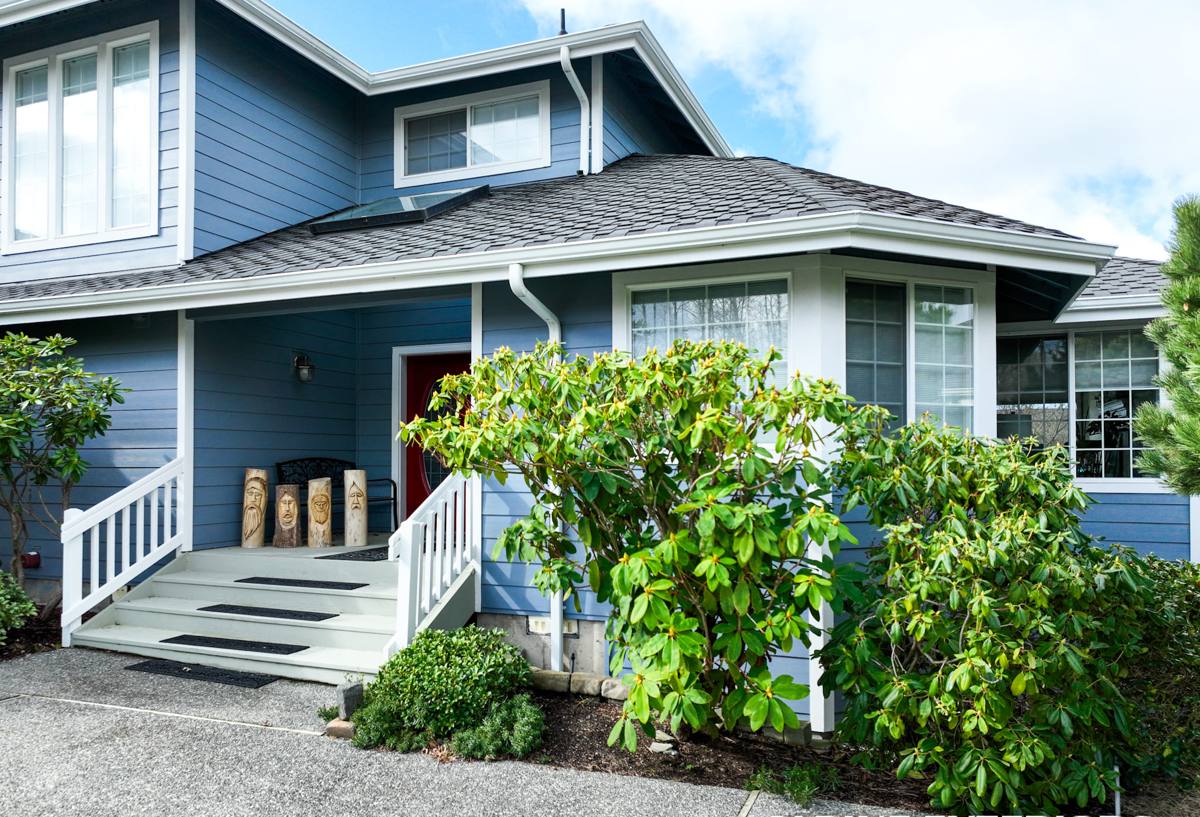
How Local Climate Accelerates Siding Wear
Salt Air
Homes closer to the water deal with airborne salt that speeds up corrosion on fasteners, flashing, and any exposed metal trim. Over years, that corrosion can loosen the connections holding siding panels in place even when the panels themselves look fine.
Driving Rain
Whatcom County storms often come with real horizontal force behind the rain, which pushes water into laps, seams, and butt joints that would stay dry in a gentler climate. Siding systems and installation details that work fine in a drier region can underperform here if they weren't built with wind-driven rain in mind.
Moss Season
Shaded walls, fences, and north exposures in Ferndale can stay damp for weeks at a stretch, especially under tree cover. Moss and algae don't just look bad — they hold moisture directly against the siding surface, which matters a lot depending on what that surface is made of.
Warning Signs You Can See From the Ground
- Bubbling or peeling paint — often the first visible sign that moisture is trapped underneath, not just a paint quality issue
- Warping or buckling panels — boards that look wavy or no longer sit flat against the wall
- Visible cracks — hairline cracks that widen over a season, or cracks radiating from nail heads
- Soft or spongy spots — press gently near the base of walls, under windows, and near downspouts
- Persistent staining — dark streaks or discoloration that doesn't wash off, especially below seams
- Gaps at trim and corners — siding pulling away from window trim, corner boards, or the foundation line
- Nail pops — fastener heads backing out or leaving small raised bumps under paint
- Heavy, persistent moss or algae growth — especially on shaded or north-facing walls
Warning Signs by Siding Material
Not every material fails the same way, and knowing what's on your walls changes what you should be watching for.
| Material | Early Warning Signs | Why It Happens |
|---|---|---|
| Wood/cedar | Soft spots, cupping, visible grain swelling, insect activity | Wood absorbs and releases moisture repeatedly; repeated wet-dry cycles break down fibers over time |
| Engineered wood (LP SmartSide and similar) | Edge swelling at seams and butt joints, dark staining at the bottom edge of panels | Composite wood substrates are vulnerable at cut edges and joints if caulking or paint maintenance falls behind |
| Vinyl | Warping/wavy panels, brittleness and cracking with age, fading, panels rattling loose | Vinyl expands and contracts with temperature and can become brittle in colder, damp winters over time |
| Fiber cement (James Hardie) | Rare when installed correctly; watch caulk joints and paint film over decades | Cement-based composition resists moisture absorption and doesn't support rot the way wood-based products can |
Moisture Damage: What's Happening Behind the Wall
The visible signs above matter mostly because of what they usually indicate underneath. Once moisture gets past a siding system's outer layer, it can reach the weather-resistive barrier, the sheathing, and eventually framing — and none of that is visible without opening up the wall. Common entry points we see on inspections in this area include:
- Poorly caulked or uncaulked butt joints and panel seams
- Missing or deteriorated flashing above windows, doors, and where decks meet the house
- Nail holes that were never sealed or have lost their seal over time
- Siding installed too close to grade or in direct contact with soil or mulch beds
- Kick-out flashing missing where a roofline meets a wall — a common and expensive gap
If you find soft sheathing, a musty smell in an adjacent interior wall, or bubbling interior paint on the same wall as exterior siding damage, that's a strong signal the problem has already moved past the siding layer.
Nail Pops, Cracking, and Warping — Reading the Signs Correctly
Not every imperfection means the same thing, and it's worth knowing the difference before assuming the worst.
Isolated nail pops
A handful of nail pops scattered across a wall is usually a minor, fixable issue — often just fasteners that weren't seated correctly during the original install. It's worth having someone reset and reseal them before water finds the gap.
Cracking that follows a pattern
Cracks that appear at every panel seam, or that line up with the studs behind the wall, often point to a systemic installation issue rather than a one-off defect — worth a full inspection rather than a spot repair.
Widespread warping
When multiple panels across a wall are warping or buckling at the same time, that's usually a sign the material itself is reaching the end of its service life, or that moisture has been getting behind the siding for a while. This is the category most likely to mean replacement rather than repair.
A Practical Ground-Level Inspection Checklist
You don't need to get on a ladder to do a useful first pass. Walk the perimeter of the house, ideally after a stretch of rain, and check for:
- Soft spots when you press firmly with a flat hand, especially within a foot of ground level
- Visible gaps or separation at corner boards, window trim, and where siding meets the foundation
- Discoloration or streaking below every horizontal seam
- Moss or algae buildup thicker than a light surface film, especially on shaded walls
- Paint that's cracking, chalking, or peeling rather than just fading
- Any area where you can see daylight or feel airflow behind a panel edge
- Caulk joints that have shrunk, cracked, or pulled away from the surface
- Downspouts and gutters draining directly onto or near siding rather than away from the house
Repair or Replace: How to Think About It
Age, extent of damage, and material all factor into whether a repair makes sense or whether you're better off planning for replacement. As a general guide:
| Situation | Usually Repair | Usually Replace |
|---|---|---|
| Damage extent | Isolated to one or two panels or a small section | Spread across multiple walls or the whole exterior |
| Underlying cause | One-time event (impact damage, a single failed seam) | Systemic — original material or installation issue |
| Material age | Well within expected service life | At or past the material's typical lifespan |
| Moisture findings | Surface only, sheathing is dry | Soft or damp sheathing found behind siding |
| Cost comparison | Repair cost is a small fraction of full replacement | Repeated repairs are adding up close to replacement cost |
A straightforward inspection is the only reliable way to know which category a given home falls into — guessing from the driveway usually undersells how far moisture has traveled.
What We Recommend When Replacement Time Comes
When a Ferndale homeowner is past the repair stage and looking at full replacement, our shop installs James Hardie fiber cement siding exclusively. That's not a marketing preference — it's a standard we settled on after seeing how differently materials perform in this specific climate over the years. Fiber cement doesn't absorb moisture the way wood-based products can, it's non-combustible, and Hardie's ColorPlus factory finish holds up to sun and salt air without the repainting cycle that wood and some engineered products need. Whatcom County's damp, moss-prone conditions are exactly the kind of environment where those differences show up over a 20- or 30-year timeline rather than in the first few years.
We're not going to tell you every home with siding issues needs a full tear-off — plenty of the problems above are legitimately fixable. But when a home is due for replacement, we think it's worth understanding why we standardized on one product line instead of offering several, and we're happy to walk through that reasoning in person.
If you're noticing any of the signs above on your own home, or you just want a second opinion before a small problem turns into a wall-cavity repair, we offer free, no-pressure estimates and inspections — use the form below to get one scheduled.