 Ferndale
 Why Cedar Still Turns Heads
There's a reason cedar siding never really goes out of style. Fresh cedar has a warmth and depth that manufactured products spend a lot of marketing dollars trying to imitate. It smells good on install day, it takes stain beautifully, and on a dry, well-ventilated home it can look genuinely striking for years. We're not going to pretend otherwise — homeowners in Ferndale ask about cedar for good reason, and if you've seen a well-kept cedar-sided home in Whatcom County, you understand the appeal immediately.
The honest part of this page isn't about whether cedar can look good. It's about what it takes to keep it looking good here, on the ground, in this climate, year after year — and why, after weighing that against what our customers actually want from an exterior, we stopped installing it.
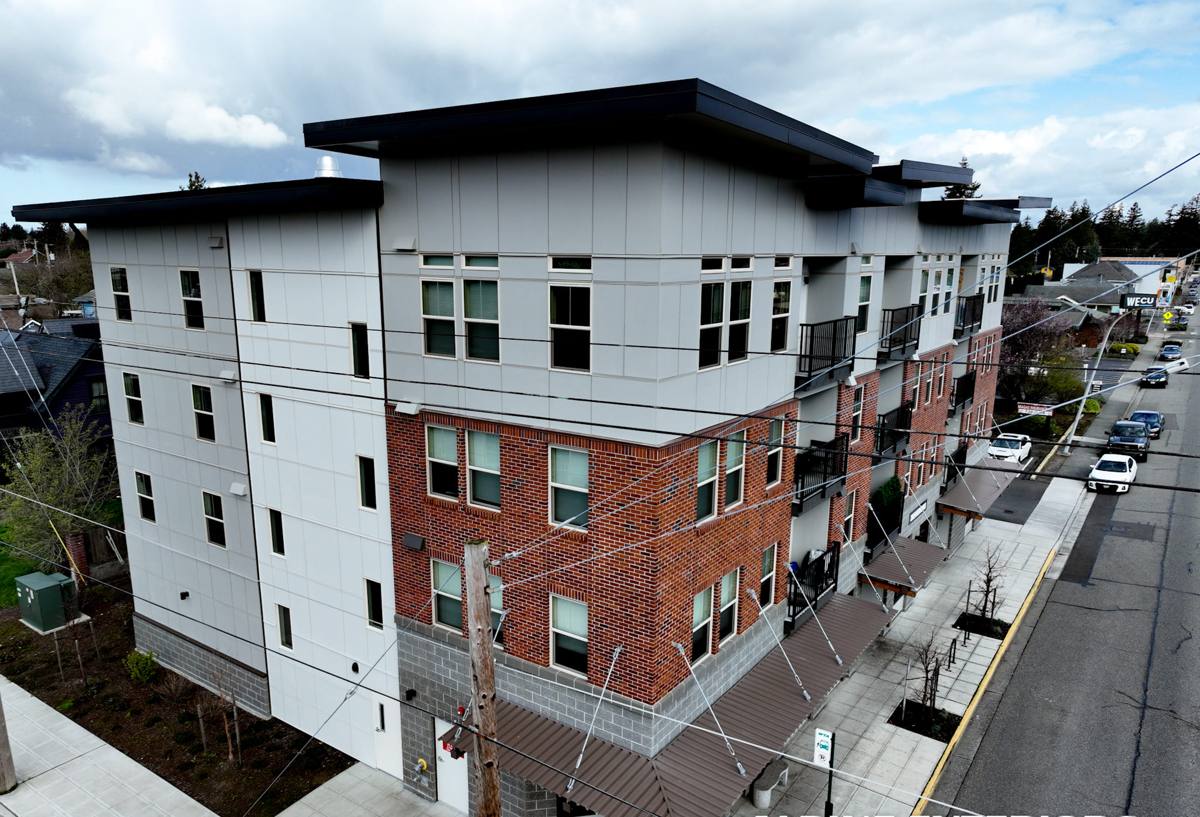
What Cedar Siding Actually Requires
Cedar is a real wood product, and wood moves, absorbs moisture, and breaks down under UV and weather exposure unless it's protected. That protection isn't a one-time thing — it's an ongoing maintenance relationship between the homeowner and the siding.
The Refinishing Cycle
Stained or sealed cedar typically needs a fresh coat every 2 to 4 years to keep water from penetrating the wood fibers. Solid-body paint finishes can stretch that interval out somewhat, but they also hide the grain that's the whole reason most people choose cedar in the first place, and paint failure on wood siding tends to show up as peeling and cracking rather than a graceful fade.
The Inspection Habit
Beyond refinishing, cedar asks for regular inspection — checking for checking (splits along the grain), loose or popped fasteners, caulk failure at joints and trim, and soft spots that signal moisture has already gotten in. Skip a cycle or two and you're not just behind on cosmetics; you're often behind on catching rot before it spreads into sheathing and framing.
The Whatcom County Climate Problem
Every one of those maintenance demands gets harder to keep up with in Ferndale's specific climate. This isn't a generic "wood needs upkeep" warning — it's about what Whatcom County weather does to wood siding specifically.
Salt Air
Proximity to the Salish Sea means a steady presence of salt-laden air, which accelerates the breakdown of finishes and speeds up corrosion on fasteners and hardware. Cedar's natural rot resistance helps with decay, but it does nothing to protect a finish coat from salt exposure — that coat still degrades on the same clock as anywhere else near the water, sometimes faster.
Driving Rain
Wind-driven rain off the Strait doesn't just wet the face of the siding — it drives moisture into every lap joint, fastener hole, and seam that isn't perfectly sealed. Cedar's dimensional movement with humidity changes means those seals are working against the material itself, not just against the weather.
Moss Season
Whatcom County's long, wet stretch of the year is prime moss and algae territory. Moss doesn't just sit on top of siding — it holds moisture against the surface for extended periods, and on wood siding that sustained dampness is exactly the condition that invites rot underneath an otherwise intact-looking finish. North-facing and shaded walls, common on wooded Ferndale lots, are especially prone to it.
Moisture, Rot, and the Repaint Cycle
Put those three climate factors together and you get a maintenance cycle that's shorter and less forgiving than cedar's reputation suggests. A homeowner who diligently refinishes every 2 to 4 years and stays on top of moss removal can absolutely keep cedar performing well for decades. The issue is what happens during the gaps — a missed year, a busy season, a home that changes hands and the maintenance history goes with the previous owner.
| Maintenance Task | Cedar Siding | James Hardie Fiber Cement |
|---|---|---|
| Refinishing interval | Every 2-4 years (stain/seal) | Factory ColorPlus finish, no refinishing for the finish life of the product |
| Moss/algae vulnerability | High — sustained moisture risks underlying rot | Low — non-organic material doesn't feed rot from surface moss |
| Salt air effect on finish | Accelerates finish breakdown, shortens repaint cycle | Factory-baked finish engineered for UV and weather exposure |
| Fastener/joint sealing | Requires regular caulk inspection and renewal | Requires standard joint maintenance, less movement-driven failure |
| Consequence of deferred upkeep | Rot risk in sheathing/framing behind siding | Non-combustible, moisture-resistant substrate reduces that risk |
None of this means cedar is a bad material. It means cedar's performance is tied directly to how consistently it's maintained, and Whatcom County's climate shortens the margin for error more than it would in a drier region.
Cost Over Time: Cedar's Hidden Math
Cedar often looks competitive against fiber cement on install-day price. The real comparison only shows up when you factor in what happens over the following 20 to 30 years.
- Upfront material and labor — cedar can be comparable to or sometimes less than premium fiber cement, depending on the profile and grade chosen.
- Refinishing costs — every 2 to 4 year stain/seal cycle carries its own labor and material cost, repeated for as long as you own the home.
- Spot repairs — replacing a rotted board or repairing moisture damage behind the siding is more likely over time with wood than with fiber cement.
- Resale expectations — buyers and inspectors increasingly ask about siding maintenance history, and a spotty refinishing record on cedar can become a negotiating point.
When you add the recurring refinishing cost to the install price, cedar's total cost of ownership over the life of the siding often runs higher than a one-time investment in a factory-finished fiber cement system — even though the sticker price on day one told a different story.
Where Cedar Gets Installed Wrong
A meaningful share of the cedar problems we've seen on Whatcom County homes trace back to installation, not the material itself. Wood siding is sensitive to details that are easy to rush: gapping at butt joints for expansion, back-priming or back-sealing cut ends before they go up, correct fastener placement so the board can move without splitting, and flashing details at windows, doors, and penetrations that keep driving rain from getting behind the plane of the siding.
Get any of those wrong and you shorten the siding's life regardless of how well the homeowner keeps up with refinishing afterward. That installation sensitivity is a real factor in our decision — it's a product that punishes small shortcuts more than most, and it demands a level of ongoing craftsmanship-plus-homeowner-diligence that's hard to guarantee over decades of ownership changes.
Insurance, Fire Risk, and Warranty Realities
Two practical factors round out the picture. First, wood siding is combustible, and as wildfire-adjacent insurance underwriting has tightened across the Pacific Northwest in recent years, some homeowners have found that non-combustible exterior materials factor into their premiums or coverage terms. Second, warranty structures on wood siding products are typically tied to proper maintenance being documented and performed on schedule — miss the cycle, and coverage on finish or material defects can be affected. Compare that to a manufacturer warranty built around a factory-applied finish system that doesn't depend on the homeowner's refinishing schedule, and the risk profile looks different.
Why We Standardized on James Hardie
We didn't stop installing cedar because it's a poor product — we stopped because, weighed against what Ferndale homeowners actually want (an exterior that holds up with minimal upkeep in a wet, salty, moss-heavy climate), fiber cement is the better match for this region. James Hardie's fiber cement is non-combustible, holds its factory ColorPlus finish without a refinishing cycle, and its HZ product lines are engineered specifically for climate zones like ours — freeze-thaw swings, sustained moisture, and coastal exposure. The warranty is transferable and substantial, which matters both for long-term owners and for resale. When it's installed to spec, it's a system we can stand behind without asking the homeowner to commit to a maintenance schedule just to keep the warranty intact.
That's the whole basis for our position: not that cedar can't perform, but that it asks more of the climate and the homeowner than most people realize when they're standing in a showroom looking at a sample board.
If You Already Have Cedar Siding
Plenty of Ferndale homes already have cedar on them, and a well-maintained cedar exterior can still serve a home well. If that's your situation, here's a practical maintenance checklist to keep it performing:
- Inspect all elevations at least once a year, paying special attention to north-facing and shaded walls where moss takes hold fastest.
- Remove moss and algae buildup promptly rather than letting it sit through a wet season.
- Plan on refinishing (stain or seal) every 2 to 4 years, sooner on south- and west-facing walls that take the most sun and driving rain.
- Check and renew caulking at joints, trim, and penetrations before each wet season.
- Watch for soft spots, splitting, or fastener pops, and address them before they become water intrusion points.
- Keep vegetation and sprinklers from holding moisture directly against the siding.
Talk to Us About Your Options
Whether you're weighing cedar against fiber cement for a new project, or trying to decide whether it's time to move on from an aging wood exterior, we're happy to walk your specific home and give you a straight answer — including telling you if your current cedar still has good years left in it. We'd rather you make an informed decision than a rushed one. Reach out for a free, no-pressure estimate and we'll talk through what makes sense for your home and your budget.