 Ferndale
 Blaine's Waterfront Climate Is Hard on a House
Blaine sits right up against Semiahmoo Bay and Drayton Harbor, at the northern edge of Whatcom County, where the Pacific weather rolling in off the Strait of Georgia meets the last stretch of Washington coastline before the Canadian border. That location is part of what makes the town special, and it's also exactly why homes here take a different kind of beating than homes twenty miles inland. Salt-laden air moves off the water and settles on siding, trim, and roofing day after day. Wind-driven rain doesn't just fall straight down — it gets pushed sideways into wall assemblies, window flashing, and deck ledger connections. And the mild, wet winters that make this corner of the county so livable also make it one of the best moss-growing climates in the country.
None of that is a reason to avoid building or maintaining a home in Blaine. It's a reason to be picky about materials and installation. A siding system, roof, window package, or deck that would hold up fine in a drier part of the state can fail years early here — not from one dramatic storm, but from constant low-grade exposure that most homeowners never think about until they see the damage.
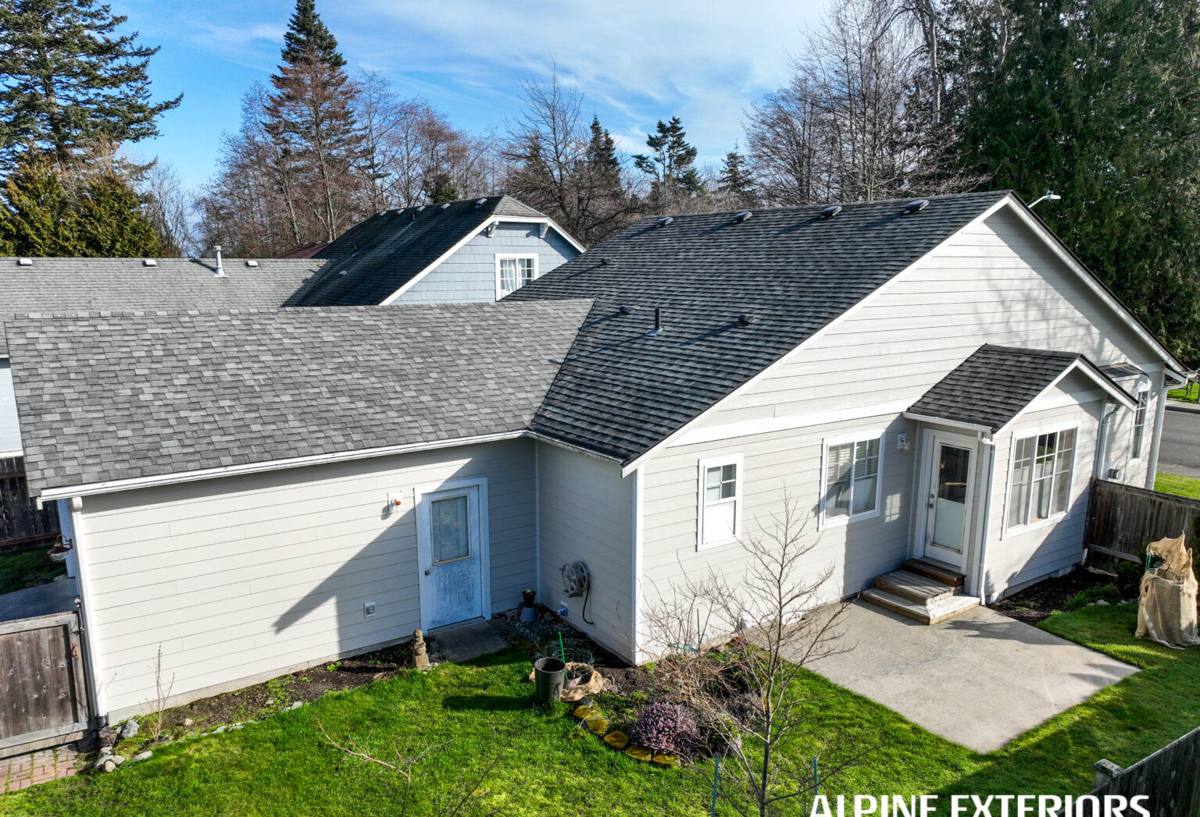
What Salt Air, Rain, and Moss Actually Do to a Home
Salt Air
Airborne salt is corrosive to fasteners, flashing, and any exposed metal trim. On wood-based siding products, it also accelerates the breakdown of paint films and can pull moisture into end grain and seams faster than inland exposure would. Homes closer to the water tend to show chalking, fading, and fastener corrosion sooner than homes even a few miles inland.
Driving Rain
Wind off the bay pushes rain into laps, seams, and penetrations that a calm-weather installation might get away with. This is where installation detail matters as much as the material itself — house wrap overlaps, flashing at windows and doors, and proper caulking at trim joints all have to be done to spec, not just "close enough."
Moss and Sustained Moisture
Whatcom County's mild, wet winters keep surfaces damp for long stretches, which is ideal for moss and algae growth on roofs, north-facing siding, and shaded deck boards. Beyond the cosmetic issue, moss holds moisture against the surface it's growing on, which shortens the life of roofing materials and can trap dampness against siding and trim.
Why We Install Only James Hardie Fiber Cement
Ferndale Siding does not install vinyl siding, LP SmartSide, Cemplank, Allura, primed spruce, or cedar. We install James Hardie fiber cement exclusively, and in a climate like Blaine's, that's not a marketing position — it's a practical one.
Fiber cement is non-combustible, which matters given the increasing attention to wildfire-adjacent building codes across Washington. It doesn't rot, doesn't feed insects, and doesn't absorb water the way wood-based products do. James Hardie's ColorPlus factory-finish coating is baked on and warranted against fading and peeling in a way field-applied paint on wood siding can't match — which matters directly here, since a coastal environment is exactly the kind of exposure that breaks down paint fastest. Hardie also engineers its siding in region-specific "HZ" formulations, meaning the boards specified for the Pacific Northwest are built with this exact combination of rain and humidity in mind, rather than a one-size-fits-all national spec.
We back that up with a strong transferable warranty, which matters to homeowners who may eventually sell — a documented, professionally installed Hardie system is an asset in a real estate listing, not a question mark.
How Fiber Cement Compares to the Alternatives
Homeowners in Blaine and the surrounding Whatcom County communities usually consider a handful of options before deciding on siding. Here's an honest comparison of the trade-offs, as we see them after years of installing and repairing exteriors in this exact climate.
| Material | Moisture Behavior in a Wet Coastal Climate | Maintenance Burden | Typical Lifespan Here |
|---|---|---|---|
| James Hardie Fiber Cement | Does not absorb water or rot; factory finish resists salt-air fading | Low — periodic wash, minimal repainting | 30+ years with correct install |
| Vinyl | Sheds water but can warp, crack, or fade with UV and temperature swings; seams can allow wind-driven rain intrusion | Low, but damage often means full panel replacement | 15–25 years, shorter with wind exposure |
| LP SmartSide (engineered wood) | Wood-based core is vulnerable if the factory coating is compromised at cuts, seams, or fastener points | Moderate — edges need vigilant sealing | Variable; sensitive to installation quality |
| Cedar / Primed Spruce | Absorbs moisture, especially in shaded or salt-exposed areas; needs the finish maintained to stay protected | High — regular refinishing and caulking | Highly dependent on upkeep; shorter near the water |
Every one of these products has a legitimate place in the market. Our decision to install only fiber cement comes down to what holds up with the least ongoing maintenance in exactly this kind of environment — salt air, sustained dampness, and driving rain off the water.
What Correct Installation Looks Like
Fiber cement is only as good as the installation behind it. In a high-exposure area like Blaine, we pay particular attention to a few details that matter more here than they would somewhere drier:
- Proper clearance between the bottom of the siding and grade, decks, and roof lines, so water sheds away instead of wicking upward
- Correct fastener spacing and stainless or coated fasteners suited to salt-air exposure
- Fully lapped and sealed house wrap and flashing at every window, door, and penetration
- Factory-cut or properly sealed field cuts, since exposed cut edges are the most common failure point on any fiber cement job
- Caulking joints specified for movement and moisture, not just cosmetic gap-filling
These aren't exotic techniques — they're the manufacturer's installation spec, followed completely rather than partially. Skipping steps rarely shows up in year one. It shows up in year eight, as moisture damage behind the siding that's expensive to trace and repair.
Roofing for a Wet, Mossy Climate
The same conditions that make siding choice matter in Blaine make roofing choice matter just as much. A roof here deals with sustained moisture, shaded north-facing slopes that stay damp longer, and moss that can work its way under shingle edges if it's left unaddressed. We look at ventilation, underlayment quality, and flashing detail as closely as we look at the shingle or metal product itself, because a roof that breathes properly and sheds water cleanly is what actually prevents moss from getting a foothold in the first place.
Windows That Handle Wind-Driven Rain
Homes near the water take wind-driven rain directly against window assemblies, which makes flashing and sealing at the window opening just as important as the window unit itself. We pay attention to how a new or replacement window integrates with the surrounding siding and house wrap, since a poorly flashed window is one of the most common sources of hidden water intrusion in coastal homes. Energy performance matters too — well-sealed, properly installed windows cut down on the drafts and condensation that damp coastal winters tend to expose in older window installations.
Decks Built for Waterfront Exposure
Decks in Blaine face constant damp shade for parts of the year, plus salt air on any deck with a bay-facing exposure. Ledger board attachment and flashing are the details that matter most for long-term structural health, since a deck failure almost always traces back to water getting into the connection between the deck and the house rather than the decking material itself. We also factor in how a deck drains, since standing water and trapped debris are what accelerate moss growth and rot in shaded corners.
Why a Local Crew Makes a Difference
A contractor working across all of Whatcom County develops a working sense of which parts of a job need extra attention in a coastal, high-moisture environment versus a drier inland lot. That shows up in small decisions — flashing details, fastener choice, how tight the siding-to-grade clearance needs to be — that a crew unfamiliar with this region might not think twice about. It also means we're a known, findable business if a warranty question or maintenance issue comes up years down the road, rather than a name that was here for one season and gone.
Questions Worth Asking Before You Hire
- Is the crew installing to the manufacturer's written specification, or their own shortcut version?
- Who is actually on site day to day — the crew you're hiring, or a subcontracted rotating crew?
- What does the warranty cover, and is it transferable if you sell the home?
- Are they licensed and insured to work in Washington, and can they show it without hesitation?
- Do they have a plan for flashing and moisture management specific to a coastal property, or a generic answer?
Simple Maintenance That Extends the Life of Your Exterior
Even the best materials benefit from basic upkeep in this climate. A light annual wash to remove salt residue and organic growth, prompt attention to any caulking that's cracked or pulled away, and keeping gutters clear so water isn't overflowing onto siding or decking all go a long way. None of this is complicated, but it's easy to let slide, and in a climate this wet, deferred maintenance compounds faster than it would somewhere drier.
If you're planning a siding, roofing, window, or deck project on your Blaine property, we're happy to take a look and put together a straightforward, no-pressure estimate — just fill out the form below.