 Ferndale
 Siding in Lynden: Built for a Damp, Marine-Influenced Climate
Lynden sits inland along the Nooksack River valley, close to the Canadian border, in the heart of Whatcom County's farm country. It's a different setting than the immediate coastline, but the same marine weather system that pushes salt-tinged air over the county's shoreline towns also drives the wind and moisture that reach Lynden. Add in a river valley that holds fog and humidity longer than higher ground, and you get a climate that's genuinely hard on exterior building materials: driving rain that comes in sideways more often than straight down, and a moss and mildew season that can run most of the year on shaded walls and north-facing exposures.
None of that is unusual for this part of Washington. But it means siding that's rated for a generic national climate zone, or that was installed without much thought for how water actually moves across a wall here, tends to show problems faster than homeowners expect. We install James Hardie fiber cement siding exclusively across our Whatcom County service area, including Lynden, and that choice comes directly from watching how different products age in this specific climate.
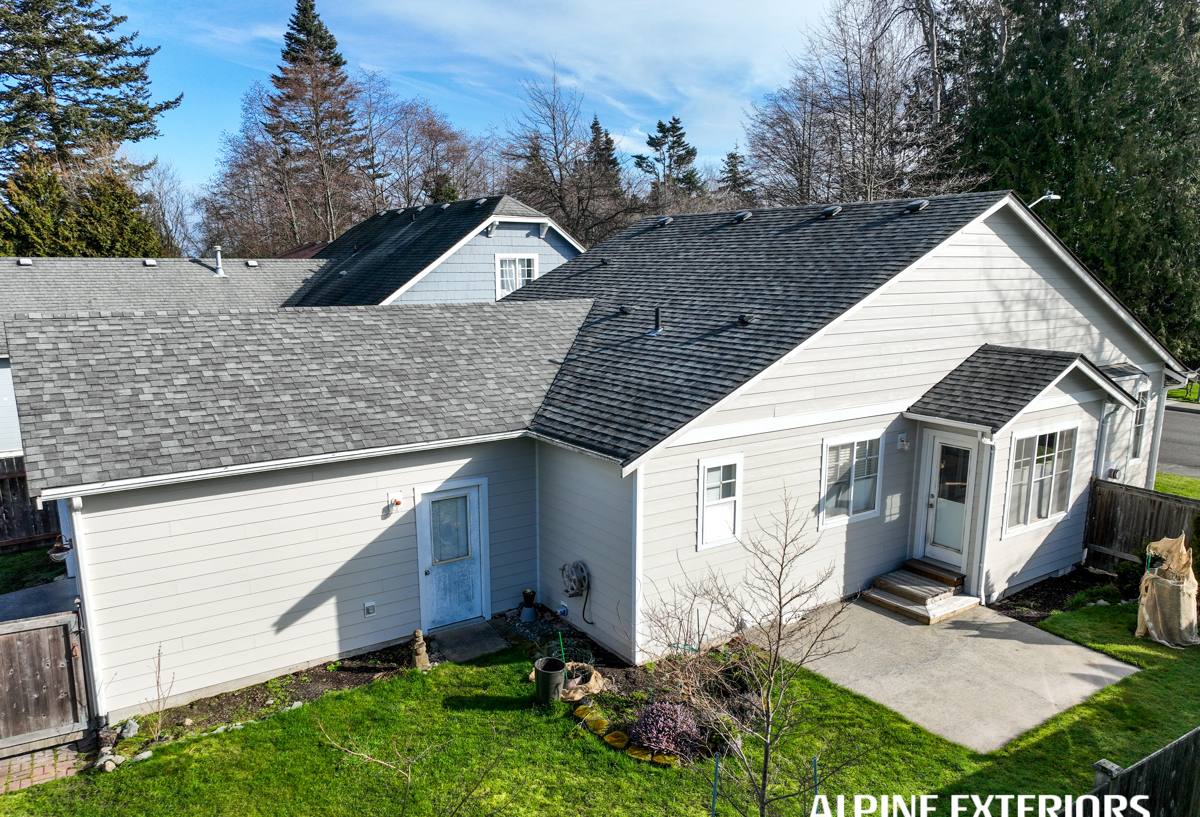
What Lynden's Climate Does to a House
Wind-Driven Rain
Rain in the Nooksack lowlands rarely falls in a simple straight line. Weather systems moving in off the water carry wind that pushes rain sideways into lap joints, trim seams, and anywhere a wall assembly has a gap. That's a heavier load on a siding system than an annual rainfall total suggests, because the water is finding horizontal paths into the wall, not just draining off the top.
Valley Fog and Sustained Humidity
Lynden's position in the river valley means mornings often hold fog and dampness longer than you'd see on higher, more exposed ground. That extended period of surface moisture, day after day through fall and winter, is exactly the condition that lets moss, algae, and mildew take hold on siding that's even slightly porous or slow to dry out.
Marine Air and Corrosion
Even this far inland, the same weather patterns that bring salt-influenced air to the Whatcom County coast affect the broader region's humidity and moisture cycling. Combined with agricultural irrigation and the general dampness of a farming valley, fasteners, flashing, and lower-grade trim finishes can corrode or break down faster here than in a drier inland climate elsewhere in the state.
Temperature Swings and Freeze-Thaw
Lynden sees colder winter mornings than the immediate coastline, and the valley can hold frost longer before it burns off. Siding materials that expand and contract with temperature swings, or that absorb moisture and then freeze, are more likely to crack, cup, or separate at the seams over repeated winters.
Why We Only Install James Hardie Siding
We don't offer a menu of siding brands and let homeowners pick based on price alone. We settled on one system, James Hardie fiber cement, after enough tear-offs and service calls in this exact climate to know which products actually hold up and which ones quietly shift maintenance costs onto the homeowner a few years down the road.
- Non-combustible core: Fiber cement doesn't feed a fire the way wood-based siding products can, which matters for household safety and can matter for insurance underwriting as well.
- Factory-applied ColorPlus finish: The color is baked on under controlled factory conditions instead of brushed on in the field, so it resists fading, chalking, and moisture damage far longer than site-applied paint.
- Climate-engineered HZ product lines: Hardie's HZ5 formulation is built for regions with sustained moisture exposure and freeze-thaw cycling, which describes Whatcom County's river valleys and lowlands well.
- Dimensional stability: Fiber cement doesn't swell, cup, or warp the way engineered wood siding can after repeated wet-season moisture cycles.
- Strong transferable warranty: Hardie backs its products with one of the more robust warranty structures in the industry, provided the installation follows manufacturer spec.
We won't install LP SmartSide, vinyl siding, Cemplank, Allura, primed spruce, or cedar. Each has a legitimate place in the market, and plenty of homeowners elsewhere are satisfied with them. But given the amount of sustained moisture, temperature swings, and valley humidity Lynden homes deal with, we made a professional decision that one system we fully trust is worth more than a cheaper option that trades lower upfront cost for a heavier maintenance burden later.
A Word on Engineered Wood and Vinyl Specifically
Two products come up often in Lynden estimates. Engineered wood siding performs well when it's kept dry and maintained on schedule, but it depends on an intact factory coating and careful field sealing at every cut edge; in a climate with this much sustained dampness, a single missed detail can let moisture into the substrate before anyone notices. Vinyl siding is inexpensive and low-maintenance in the short term, but it can trap moisture behind the panels rather than shedding it, and it tends to fade, warp, or crack under years of temperature swings and UV exposure. We're not calling either product defective. We're saying that for this specific valley climate, fiber cement's dimensional stability and factory finish hold up more consistently over the long haul.
What a Correct Hardie Installation Involves
The material is only half the job. A James Hardie installation that performs the way the product is engineered to requires correct fastening patterns, proper clearances from grade and roofline, correctly lapped and sealed joints, and house wrap and flashing details that work together as a system rather than as separate steps. Skipping any one of those details is one of the most common ways a good product ends up performing poorly, which is why we treat the installation sequence with the same seriousness as the material choice itself.
Repair vs. Full Replacement
Not every siding issue on a Lynden home calls for a full tear-off. Storm-damaged sections, isolated trim failure around a window, or a section that took an impact can often be repaired and matched into existing Hardie siding. But if moisture has been tracking behind the wall for a while, or the existing siding is an older product nearing the end of its service life, patching it typically just postpones a larger job. We'll give you a straight answer about which situation you're actually in.
Siding Cost Factors for Lynden Homes
| Factor | What It Affects | Why It Matters Here |
|---|---|---|
| Home size and wall complexity | Total material and labor | More trim, gables, and corners mean more joints where wind-driven rain can intrude |
| Tear-off vs. overlay | Labor scope and substrate access | Tear-off reveals hidden moisture damage that's common under older siding after years of valley humidity |
| Substrate condition | Repair costs before new siding goes on | Trapped moisture behind failing siding can rot sheathing and framing over time |
| Trim and color selection | Material cost and finish longevity | ColorPlus factory finishes hold their color and integrity longer than field-applied paint in this climate |
| Property size and access | Labor time and equipment needs | Larger rural and farm-adjacent lots common around Lynden can add staging and setup time |
Exact numbers depend on the specific home and its exposure, which is why we walk the property in person before giving a real number instead of quoting off a generic price sheet.
Signs Your Lynden Home's Siding Needs Attention
- Moss or dark staining that returns quickly after cleaning, especially on shaded or north-facing walls
- Soft or spongy siding, particularly low on the wall or around window and door trim
- Peeling paint, bubbling, or visible warping on siding boards
- Cracked, chipped, or missing sections after wind or storm events
- Visible gaps at seams, corners, or trim joints where water can track in
- Rising heating bills that may point to a wall assembly no longer sealing properly against the cold
Roofing, Windows, and Decks Alongside Your Siding
Siding problems rarely start with the siding itself. A leaking roof valley, a poorly flashed window, or a deck ledger board trapping moisture against the house can all show up as siding damage even when the siding material is doing its job. Because we handle roofing, windows, and decks in addition to siding, we look at a Lynden home as one connected exterior system when we're on site, rather than diagnosing a wall in isolation and missing where the water is actually getting in.
Windows and Siding Transitions
Window flashing and siding trim have to work together, and this is one of the more common failure points we find on older homes in the area. If the flashing behind a window's trim wasn't installed correctly, or if the siding butts up against the frame without a proper drainage path, water can get behind the wall for years before it's visible from outside. When we're doing siding work near existing windows, we check those transitions rather than just siding around them.
Decks and Ledger Connections
A deck ledger board attached directly to the house is a common spot for hidden moisture intrusion, especially on older decks that predate current flashing standards. If we're working on siding near a deck attachment point, we make sure that connection is properly flashed and isn't quietly feeding water into the wall behind it.
Why a Local Crew Matters in Lynden
A crew that works across Whatcom County day in and day out, not just in the immediate coastal towns, sees how wind-driven rain, valley fog, and a long moss season actually behave on real houses over a full year rather than how a product performs on a spec sheet. That local, repeated exposure shapes practical decisions on install day: where extra flashing attention matters most, which wall orientations stay damp the longest, and which details are worth the extra time so a homeowner isn't fielding a callback two winters later. Lynden's river valley setting and agricultural surroundings aren't identical to the coastline or to the more urban parts of the county, and a crew with genuine local experience accounts for that instead of applying the same generic approach everywhere.
Working With a Lynden Contractor: What to Expect
- An in-person walk-around of the home before any number gets put in writing
- A clear explanation of tear-off versus overlay, and why one makes more sense than the other for your home
- An honest look at substrate condition once old siding comes off, with photos if damage is found
- A written scope that specifies product line, color, and trim details, not just a lump-sum price
- A realistic timeline that accounts for Whatcom County's wetter months and typical weather delays
If your Lynden home needs new siding, a repair, or an honest second opinion on what's actually happening behind an aging wall, we're glad to take a look. Reach out using the form below to schedule a free, no-pressure estimate.