 Ferndale
 Building for a Marine Environment
Lummi Island sits out in Whatcom County's marine waters, reachable only by ferry, and that isolation shapes everything about how a home's exterior holds up out there. Homes on the island face a combination most inland Ferndale properties don't deal with nearly as much: near-constant salt-laden air, driving rain off the water, and long stretches of shade and dampness that feed moss and mildew on roofs and siding alike. None of that is exotic or unusual for an island in the Salish Sea — it's just the trade-off for the views and quiet that come with living there. But it does mean the exterior materials and workmanship need to be chosen with that environment in mind, not treated the same as a subdivision build twenty miles inland.
We've worked on homes throughout Whatcom County long enough to know that "coastal" isn't a marketing word — it's a maintenance schedule. Salt air accelerates corrosion on fasteners and flashing, humidity keeps painted and composite surfaces wet longer after every rain, and moss doesn't just sit on a roof looking rustic — it holds moisture against materials that were never designed to stay wet. A siding, roofing, window, or deck project on Lummi Island should be planned around those realities from the first conversation, not discovered as a problem five years later.
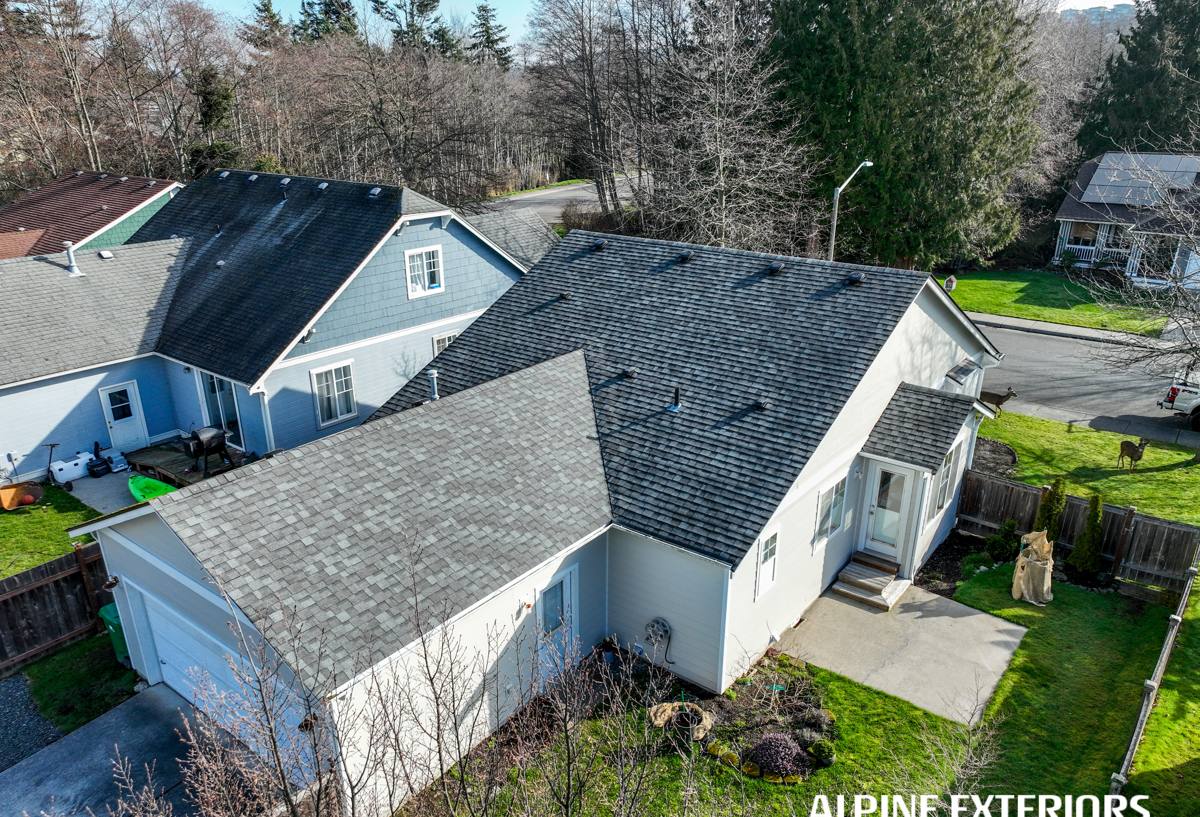
What Salt Air Actually Does to a Home's Exterior
Salt spray carried on wind off the water settles on every exterior surface of a home, not just the side facing the water. Over time, salt residue is corrosive to metal fasteners, flashing, and hardware, and it can accelerate the breakdown of finishes that aren't formulated to shed it. This shows up in a few predictable ways:
- Faster corrosion of exposed nail heads, hinges, and hardware that isn't rated for coastal exposure
- Chalking, fading, or premature wear on paint and coatings that aren't a true marine-grade or factory-cured finish
- Increased need for rinsing and cleaning to keep salt film from building up on siding and window glass
- Faster deterioration of untreated or poorly sealed wood trim, fascia, and deck components
None of this means a home on Lummi Island is doomed to constant repairs. It means the materials and details matter more here than they would in a drier, inland part of Whatcom County — and it's why we lean hard on products and installation practices built for exactly this kind of exposure.
Moss, Shade, and the Long Wet Season
Between the marine humidity and the tree cover common on much of the island, roofs and north-facing siding can stay damp for extended periods, especially through the fall and winter months. That dampness is what moss needs to establish itself, and once moss gets a foothold on a roof or in siding seams, it holds water against the surface underneath long after the rain has stopped. On a roof, that means accelerated wear on shingles and faster degradation of the decking below if it's left unaddressed. On siding, trapped moisture behind moss growth or clogged seams is one of the more common ways water damage starts, even on materials that are otherwise holding up fine.
Good design — proper flashing, adequate roof pitch and ventilation, siding installed with the right clearances and drainage — reduces how much moss has a chance to take hold in the first place. Regular light maintenance (a rinse, a clear gutter, an eye kept on shaded roof valleys) does the rest.
Windows: Wind-Driven Rain and Salt Spray
Windows on an exposed island lot take a different kind of beating than windows tucked into a sheltered inland yard. Driving rain pushed by wind off the water finds its way into poorly flashed openings, and salt film builds up on glass and frames faster than it does elsewhere. When we replace windows on Lummi Island, we pay close attention to flashing details and sill pans around each opening — that's usually where water problems start, not with the window unit itself. We also talk with homeowners about frame materials and hardware finishes that hold up better against salt exposure over the long run, since not every window product is built with that in mind.
Decks: UV, Moisture, and Salt Together
Outdoor living space is a big part of why people choose to live on Lummi Island in the first place, and decks out there face a tough combination: UV exposure on clear days, near-constant moisture, and salt air working on fasteners and finishes at the same time. Composite and properly sealed materials generally outperform untreated wood here, and fastener choice matters more than most homeowners realize — coastal-rated hardware costs a little more up front and saves a lot of grief later when it doesn't rust and streak the deck surface within a couple of seasons.
Why We Only Install James Hardie Fiber Cement Siding
We made the decision years ago to install James Hardie fiber cement siding exclusively, and nowhere does that decision matter more than on a marine-exposed property like the ones we work on out on Lummi Island. Fiber cement is non-combustible and dimensionally stable, meaning it doesn't expand, contract, warp, or rot the way wood-based and some engineered wood siding products can when they're exposed to constant moisture cycling. That matters a great deal in a climate that keeps siding damp for days at a stretch through much of the year.
James Hardie's ColorPlus finish is baked on in a factory-controlled process rather than field-applied, which gives it better fade and wear resistance than typical field-painted siding — a real advantage where salt air and UV are working against the finish every day. Hardie also engineers regional product lines (their HZ5 line, for instance) specifically for wetter, harsher climates like ours, with formulations meant to resist moisture damage better than their standard product. Add a strong transferable warranty on top of that, and it's a product we can stand behind on a home that's going to spend decades a stone's throw from saltwater.
We get asked from time to time about vinyl siding or engineered wood products like LP SmartSide, since both are common and less expensive up front. Vinyl can become brittle and prone to cracking with age and temperature swings, and its seams and fastening system give water more opportunities to get behind the panel over time — a bigger concern in a wet, wind-driven climate than in a dry one. Engineered wood siding performs well when installation and maintenance are done exactly to spec, but it depends on an intact factory coating to keep moisture out, and any breach — a scratch, a poorly sealed cut edge, a missed caulking detail — becomes a moisture entry point in wood-based substrate. On a marine-exposed island property, we'd rather not take that bet. Fiber cement gives us a wider margin for error against a climate that doesn't offer much forgiveness.
Roofing on an Island Property
Roofing decisions out here come down to the same core issues: moisture management, moss resistance, and materials that hold up under salt exposure and wind. Proper ventilation keeps moisture from building up in the attic space, which matters as much for roof longevity as the shingle material itself does. Flashing details around chimneys, valleys, and any roof penetrations deserve extra attention on an island property, since that's where wind-driven rain most often finds a way in. We also talk through moss-resistant shingle options and drip edge details with homeowners who have significant tree cover shading their roof, since that shade is exactly what keeps moss coming back season after season.
Comparing Siding Options for Coastal Exposure
| Material | Moisture Behavior | Salt Air Durability | Maintenance Load |
|---|---|---|---|
| James Hardie Fiber Cement | Dimensionally stable, resists moisture-driven warping | Factory ColorPlus finish holds up well; non-combustible | Low — periodic rinsing, minimal recoating |
| Vinyl Siding | Seams and panel joints can allow water intrusion over time | Can become brittle with age and temperature cycling | Low upfront, but seam and fastener issues surface over years |
| LP SmartSide / Engineered Wood | Depends on intact factory coating; wood substrate vulnerable if breached | Performs well if sealed and maintained exactly to spec | Moderate — cut edges and caulking need regular inspection |
| Cedar / Primed Spruce | Natural wood movement, prone to moisture absorption | Requires diligent finish maintenance in salt air | High — refinishing and moisture monitoring ongoing |
Working With a Local Crew on Island Logistics
An island jobsite adds a layer of planning that a mainland Ferndale project doesn't have. Materials, equipment, and crews all need to move by ferry, which means scheduling has to account for sailing times and load capacity, and a good contractor plans deliveries and crew days around that rather than treating it as an afterthought. It also means it pays to work with a crew that has actually done projects out there before and knows how to stage materials efficiently, minimize the number of ferry trips needed, and keep a job moving on schedule despite the extra logistics. A crew unfamiliar with island work can turn a straightforward siding or roofing job into a scheduling headache — and that cost usually gets passed along to the homeowner one way or another.
Being based in Ferndale and working throughout Whatcom County, we're close enough to Lummi Island to build that logistics planning into the estimate from the start rather than figuring it out mid-project.
Signs Your Exterior Needs Attention
A few things worth watching for on an island property, especially heading into or coming out of the wet season:
- Moss or dark streaking building up on north-facing roof slopes or siding sections
- Rust staining running down from fasteners, flashing, or hardware
- Soft or discolored trim around window and door openings, a sign water is getting behind the surface
- Paint or coating that's chalking, peeling, or fading faster than expected for its age
- Deck boards that feel spongy, or fasteners showing rust streaks across the surface
- Gutters and downspouts clogged with debris that hold water against the roofline or siding base
Catching these early is almost always cheaper than waiting for them to become structural repairs.
Cost Factors for Island Projects
Pricing for siding, roofing, window, or deck work on Lummi Island tracks fairly closely with mainland Whatcom County pricing for the same scope of work, with a few added considerations: ferry logistics for material delivery, site access and staging space on the lot, and any extra prep work needed to address existing moss or moisture damage before new materials go on. We walk through all of that during an on-site estimate so there aren't surprises once work starts — every property and every ferry schedule is a little different.
Let's Take a Look at Your Home
If you're dealing with moss buildup, aging siding, a roof that's due for attention, or windows and decking that are showing their age out on Lummi Island, we're happy to come take a look. Fill out the form below for a free, no-pressure estimate, and we'll walk the property with you and talk through what actually makes sense for your home and your budget.