 Ferndale
 Siding in Sumas: A Border Town With Its Own Climate Demands
Sumas sits at the northern edge of Whatcom County, tucked into the Nooksack River valley right against the Canadian border. It's a different kind of exposure than a lot of homeowners expect from "Pacific Northwest weather." The valley traps moisture, fog settles in low and lingers, and the rain that rolls off the Cascades and down through the Fraser Valley corridor tends to come in sideways rather than straight down. Add in long stretches of overcast, damp days through fall, winter, and spring, and you've got an exterior envelope that's working hard almost year-round.
We've been doing exterior work throughout Whatcom County long enough to know that Sumas homes don't fail the same way a house in a drier climate does. It's rarely one big event. It's the slow accumulation of moisture finding its way in through worn caulk lines, warped boards, or siding that was never really built for this kind of sustained dampness in the first place.
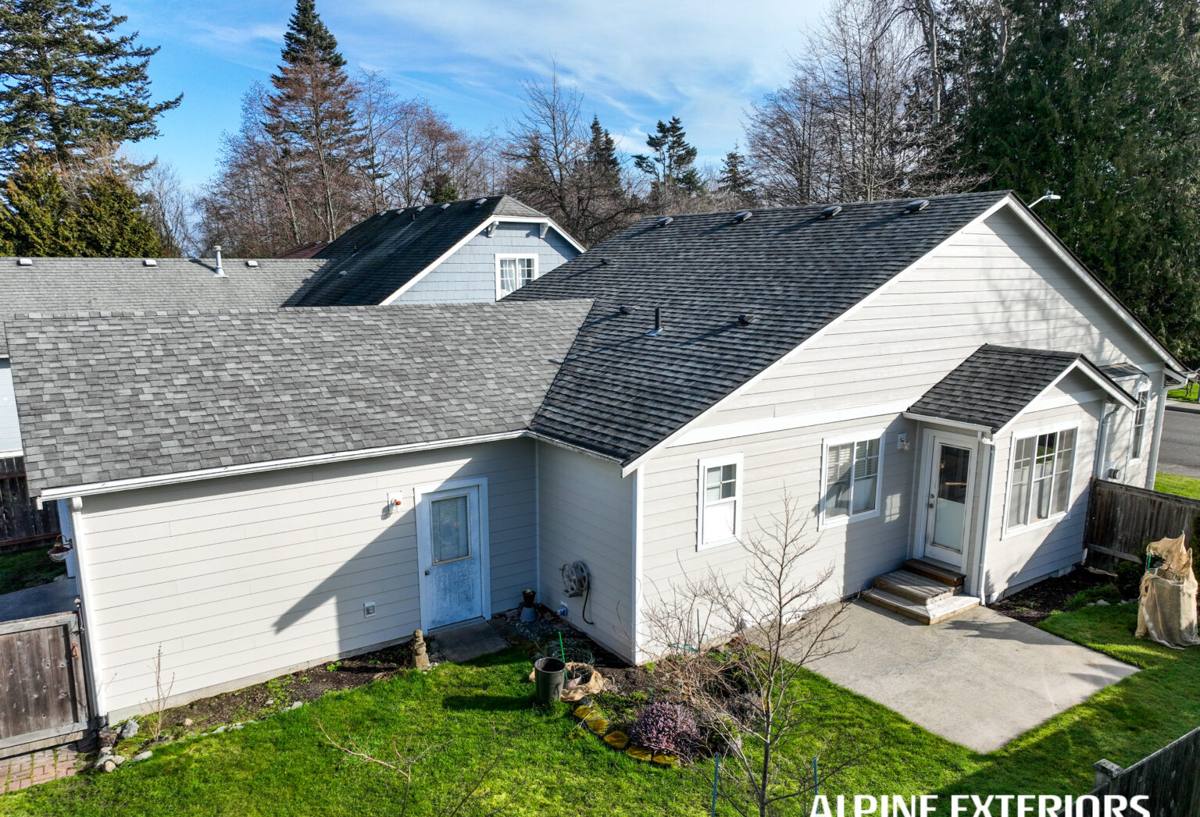
What Sumas Homes Are Actually Up Against
Driving Rain and Valley Moisture
Because Sumas sits low in a river valley, wind-driven rain tends to hit siding at an angle rather than falling straight, which pushes water into seams, laps, and fastener points that a flatter installation might never test. Combine that with the valley's tendency to hold onto humidity longer than more exposed or elevated parts of the county, and you get siding that rarely gets a real chance to dry out between storms.
A Long Moss and Algae Season
Shade from mature trees, north-facing walls, and the sheer number of damp, low-light days in a Whatcom County winter all add up to a moss and algae season that can run much longer here than in sunnier parts of Washington. Once organic growth gets a foothold on a wood or composite surface, it holds moisture against the material and accelerates whatever decay process is already underway.
Temperature Swings and Fog
River valleys like the one Sumas sits in are prone to cold air pooling and fog forming on clear, calm nights, especially in the shoulder seasons. That means siding here goes through more freeze-thaw and wet-dry cycling in a given year than homes on higher, more exposed ground just a few miles away.
Why the Siding Material You Choose Matters More Here
In a climate this consistently damp, the material behind the paint is doing most of the real work. Wood-based products need a dry, protected microclimate to perform well over decades — something the Sumas valley doesn't reliably offer. Vinyl sheds water fine on the surface but relies entirely on a watertight house wrap behind it, with no material-level resistance to the moisture that inevitably finds a gap somewhere over 20-plus years. That's a big part of why we made the decision, years ago, to install only James Hardie fiber cement siding and nothing else.
Why We Only Install James Hardie
This isn't a marketing angle — it's a standard we hold every job to. Fiber cement, and James Hardie's engineering specifically, handles the realities of a Whatcom County valley climate in ways that wood-based and vinyl products structurally can't.
Built for Pacific Northwest Moisture
James Hardie's HardieZone HZ5 product line is engineered specifically for climates like ours — high moisture exposure, freeze-thaw cycling, and long wet seasons. Fiber cement doesn't absorb and swell the way wood-based composites can, and it doesn't rely purely on a housewrap barrier the way vinyl does. It's dimensionally stable wet or dry, which matters a lot on a wall that may not fully dry out for weeks at a time.
Non-Combustible and Low Maintenance
Fiber cement is non-combustible, which is worth noting given how many Whatcom County properties border wooded lots or open agricultural land. It also doesn't need the recurring repainting, caulking, and rot-checking that wood siding demands to stay ahead of a climate like this one.
ColorPlus Factory Finish
Hardie's ColorPlus finish is baked on at the factory under controlled conditions, which gives it more consistent coverage and better fade and moisture resistance than field-applied paint. In a region where UV exposure is inconsistent and humidity is constant, that factory-cured finish holds up longer than most site-applied coatings.
A Warranty Built to Match
James Hardie backs its siding with a strong transferable warranty, and the ColorPlus finish carries its own separate finish warranty. That matters to homeowners in Sumas who may sell in the years ahead — a documented, transferable warranty is a real asset in a real estate conversation, not just paperwork.
What Correct Installation Actually Involves
James Hardie siding performs the way it's designed to only when it's installed to spec. We see plenty of Hardie product out there installed with the wrong fasteners, tight-butted joints, or missing flashing — and it fails early for reasons that have nothing to do with the material itself.
- Proper starter strip and clearance at the foundation to keep the bottom edge out of standing moisture
- Correct fastener spacing and depth — over-driven nails crack the board's edge over time
- Flashing at every window, door, and horizontal trim transition, not just at the roofline
- Sealed but not sealed-shut joints, allowing the assembly to manage moisture rather than trap it
- Minimum ground clearance and proper caulking at butt joints per Hardie's published installation guidelines
This is where a lot of the warranty protection actually lives. James Hardie's product warranty assumes installation according to their specifications — cutting corners on flashing or fastener placement can undercut coverage even on a great product.
Beyond Siding: The Whole Exterior Envelope
Siding doesn't work in isolation. We also handle roofing, windows, and decks, because in a climate that pushes moisture at a house from every direction, the weak point is usually wherever two systems meet — a roofline that dumps water onto a wall below it, a window that was never properly flashed into the siding around it, or a deck ledger board holding moisture against the house. Looking at the whole envelope together, rather than patching one component at a time, is how you actually solve a moisture problem instead of relocating it.
James Hardie vs. Other Siding Options
| Factor | James Hardie Fiber Cement | Vinyl | Wood / Engineered Wood |
|---|---|---|---|
| Moisture performance in valley climates | Dimensionally stable, engineered for the PNW | Relies on housewrap; no material-level resistance | Prone to swelling, rot without diligent upkeep |
| Fire resistance | Non-combustible | Combustible | Combustible |
| Maintenance | Low; factory finish holds up for years | Low, but can crack or fade | Regular painting, caulking, inspection required |
| Typical lifespan when installed to spec | Decades, often 30+ years | 15-30 years, variable | Highly dependent on maintenance and exposure |
| Warranty structure | Strong, transferable manufacturer warranty | Varies widely by manufacturer | Limited or none on the material itself |
Why a Local Crew Matters in a Town Like Sumas
Sumas is small, and the housing stock reflects a mix of older farmhouses, newer construction, and everything in between, much of it sitting close to the Nooksack floodplain and agricultural land. A crew that works throughout Whatcom County regularly sees how that specific combination of valley fog, driving rain, and long moss seasons plays out on real houses over real years — not just in a manufacturer's spec sheet. That local pattern recognition shows up in small decisions on a job: where extra flashing makes sense, which walls need closer attention to moss and algae growth, and how to sequence work around the wetter stretches of the year so materials aren't installed in conditions that compromise the job from day one.
Local also means being reachable after the job is done. If a warranty question comes up, or a section of trim needs a look five years down the road, you're calling a crew that's still working in the same towns, not chasing down a company that moved on to the next region.
Questions Worth Asking Before You Hire
- Is the crew installing to the manufacturer's written specifications, including fastener type and flashing details?
- Does the estimate clearly state the specific Hardie product line and profile being used?
- Who is responsible for permitting, and is that built into the timeline?
- What does the manufacturer's warranty actually cover, and does the installer's workmanship warranty match it?
- How will the crew protect landscaping, gutters, and adjacent surfaces during tear-off and installation?
If your Sumas home is due for new siding, or you're weighing options after noticing moss buildup, cracked caulk lines, or soft spots on the current siding, we're happy to take a look. A free, no-pressure estimate is a straightforward way to find out what's actually going on with your exterior and what it would take to fix it right — just fill out the form below.