 Ferndale
 Siding Built for Everson's Riverside Climate
Everson sits along the Nooksack River in the farmland east of Ferndale, and that setting shapes what a home's exterior has to deal with year-round. The river valley holds moisture longer than the drier ground to the west, mornings bring heavy fog and dew through most of the fall and spring, and the surrounding fields mean less windbreak than a home might get in a tighter neighborhood closer to the coast. Add in Whatcom County's long, wet winters and the moss and algae growth that comes with them, and Everson houses tend to show weathering patterns that are a little different from what we see on siding jobs closer to Bellingham Bay or downtown Ferndale.
We've been doing exterior work — siding, roofing, windows, and decks — across Whatcom County long enough to know that a product or installation approach that works fine in a dry climate can fail quietly here for years before it becomes visible. That's the whole reason we standardized on one siding product and stopped installing several others. More on that below.
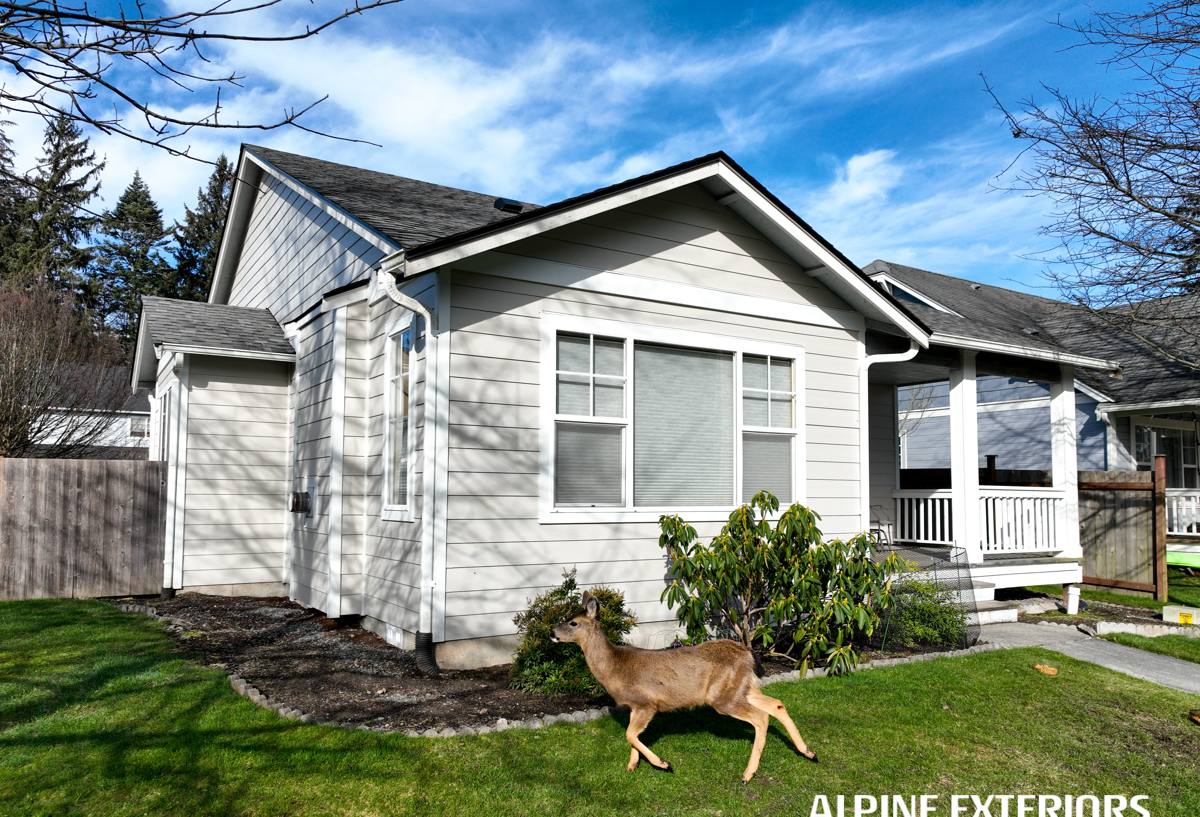
What the Local Climate Actually Does to Siding
Persistent Moisture and River Valley Humidity
Homes near the Nooksack River deal with more sustained humidity than properties on higher, more exposed ground. Fog sits in low areas overnight and burns off slowly, which means siding surfaces stay damp longer each day. Wood-based products absorb that moisture at the surface and at every seam, fastener hole, and cut edge — and repeated wet-dry cycling over years is what drives swelling, delamination, and eventual paint failure.
Driving Rain and Wind-Driven Wetting
Whatcom County storms often come in sideways off the Strait of Georgia and Puget Sound, and the open farmland around Everson doesn't offer much shelter once weather rolls through. Wind-driven rain pushes water into laps, corners, and any gap in caulking or flashing far more aggressively than a straight-down rain would. This is one of the main reasons installation detail — not just the product itself — determines how long an exterior lasts here.
Moss, Algae, and a Long Growing Season
Between the moisture and the shade thrown by mature trees on many rural Everson lots, moss and algae get a long runway to establish themselves on north-facing walls, under eaves, and anywhere airflow is limited. Some siding materials resist this better than others — surface texture and the paint/finish system both matter.
Agricultural Setting
Everson's surroundings are largely farmland, and homes out here can see more airborne dust, occasional field spraying drift, and wider temperature swings between a sunny afternoon and a cold, damp evening than a more built-up area sees. None of that is dramatic on its own, but it adds up over a 20-30 year siding lifespan.
Why We Install Only James Hardie Fiber Cement
We install James Hardie siding exclusively. We do not install vinyl, LP SmartSide, Cemplank, Allura, or primed wood products like spruce or cedar lap. That's not a marketing position — it's a decision we made after years of doing exterior work in exactly the kind of moisture-heavy, moss-prone conditions Everson sees.
What Hardie Gets Right for This Climate
- Fiber cement doesn't absorb water the way wood-based siding does, so the wet-dry cycling that drives rot and swelling isn't a factor in the same way
- It's non-combustible, which matters in a county that has had real wildfire seasons in recent years, even in the wetter western half
- The ColorPlus factory finish is baked on under controlled conditions and holds up to sun and moisture far longer than field-applied paint
- Hardie's HZ5 product line is engineered specifically for climates with freeze-thaw cycling and sustained moisture exposure, which fits the Nooksack Valley
- It carries a strong, transferable manufacturer warranty when installed to spec — worth something if the home changes hands
Why We Won't Install the Alternatives
Vinyl siding is inexpensive and low-maintenance in a general sense, but it's a thin plastic product that can warp in temperature swings, fade over time without the option of a durable factory finish, and doesn't offer the impact resistance or fire rating that fiber cement does. LP SmartSide, Cemplank, and Allura are all reasonable engineered products in the right hands, but each comes with its own moisture-sensitivity profile, seam behavior, or finish-warranty structure that we've found less predictable than Hardie's over the long run in this specific climate. Primed spruce and cedar are beautiful materials, but they demand a maintenance schedule — recaulking, repainting, inspecting for rot — that most homeowners underestimate until the damage is already done. We'd rather install one product we trust completely than offer five and hope the homeowner picks the right one for their situation.
How the Siding Process Works
Assessment and Estimate
We start with a walk-around of the home to look at current siding condition, trim, flashing, and any moisture damage already present — this is common on older Everson homes that were built with wood siding decades ago. We'll talk through Hardie's lap, panel, and shingle profile options and how they'd look on the specific house.
Tear-Off and Sheathing Check
Old siding comes off and we inspect the sheathing underneath. In a river-valley climate, this step matters more than people expect — hidden moisture damage behind old siding is common, and it needs to be dealt with before new siding goes on, not covered up.
Water-Resistive Barrier and Flashing
Correct house wrap, flashing at every window, door, and penetration, and proper overlap at seams is what actually keeps wind-driven rain out of the wall assembly. This is the step where a rushed or inexperienced install fails, regardless of how good the siding material is.
Installation to Manufacturer Spec
Hardie's warranty depends on installation following their fastening, clearance, and joint-treatment specifications. We install to that spec as standard practice, not an upsell.
Final Walkthrough
We review the finished work with the homeowner and make sure trim, caulking lines, and color match are right before calling the job done.
Cost Factors for an Everson Siding Project
| Factor | Why It Matters Here |
|---|---|
| Home size and wall complexity | More corners, dormers, and trim detail mean more labor and material waste |
| Current siding removal | Old wood siding with rot damage takes longer to tear off and may need sheathing repair |
| Siding profile chosen | Lap, shingle, and panel styles carry different material and labor costs |
| Color and finish | Factory ColorPlus finishes cost more upfront than field paint but skip a repaint cycle |
| Access and site conditions | Rural lots with long driveways or limited staging area can affect logistics and timeline |
| Trim and accessory work | Window trim, fascia, and soffit work is often bundled into a full re-side |
We give straightforward, itemized estimates — no inflated "worst case" numbers to pad the bid, and no lowball number that grows once the tear-off reveals problems.
Roofing, Windows, and Decks — Handled Together
Siding rarely fails in isolation. A roof that's shedding water onto a wall, windows with failed flashing, or a deck ledger board attached without proper waterproofing all feed moisture into the same wall assembly a new siding job is trying to protect. Because we handle roofing, windows, and decks as well as siding, we can look at an Everson home as one system instead of four separate contractors each assuming someone else is handling the water management. That matters more here than in a lot of places, given how much moisture this valley sees.
What to Check Before Hiring an Exterior Contractor
- Washington state contractor license and current insurance — ask to see it, don't just take their word for it
- Manufacturer certification for the specific siding product they're installing
- A written estimate that breaks out tear-off, materials, labor, and trim work separately
- Willingness to explain how they'll handle flashing and water-resistive barrier detail, not just "we'll put the siding up"
- References or completed work you can actually see, ideally in a similar climate zone
- Clear warranty terms — both the manufacturer's product warranty and the contractor's workmanship warranty
Why a Local Crew Matters in Everson
Everson is a smaller community, and it doesn't always get the same attention from Bellingham-based contractors that in-town Ferndale or Lynden jobs do. We're based in Ferndale and treat Everson as part of our regular service area, not a special trip. That matters for scheduling, for follow-up if a warranty question comes up down the road, and for understanding the specific way this river valley's weather behaves compared to the rest of Whatcom County.
If you're weighing a siding, roofing, window, or deck project for a home in Everson, we're happy to walk the property and put together a straightforward estimate — no pressure, no obligation. Use the form below to get started.