 Ferndale
 Nooksack's Climate Reality
Nooksack sits inland from Ferndale along the Nooksack River valley, but it doesn't escape the marine weather that defines this corner of Washington. Moist air pushes up the valley from Bellingham Bay and the Salish Sea, mixing with river-bottom humidity and the long stretches of overcast, drizzly weather that Whatcom County is known for. The result is a specific set of conditions for exterior building materials: near-constant dampness for months at a time, salt-tinged air working its way inland on stronger weather systems, and enough shade from surrounding trees and hills that surfaces stay wet longer than they would in a drier, sunnier climate.
None of this is unusual for anyone who has lived here a while. But it matters more than most homeowners realize when it comes to choosing what goes on the outside of a house. Materials that perform fine in Eastern Washington or the Midwest can struggle here, and the failures usually show up slowly — a few years in, not on day one.
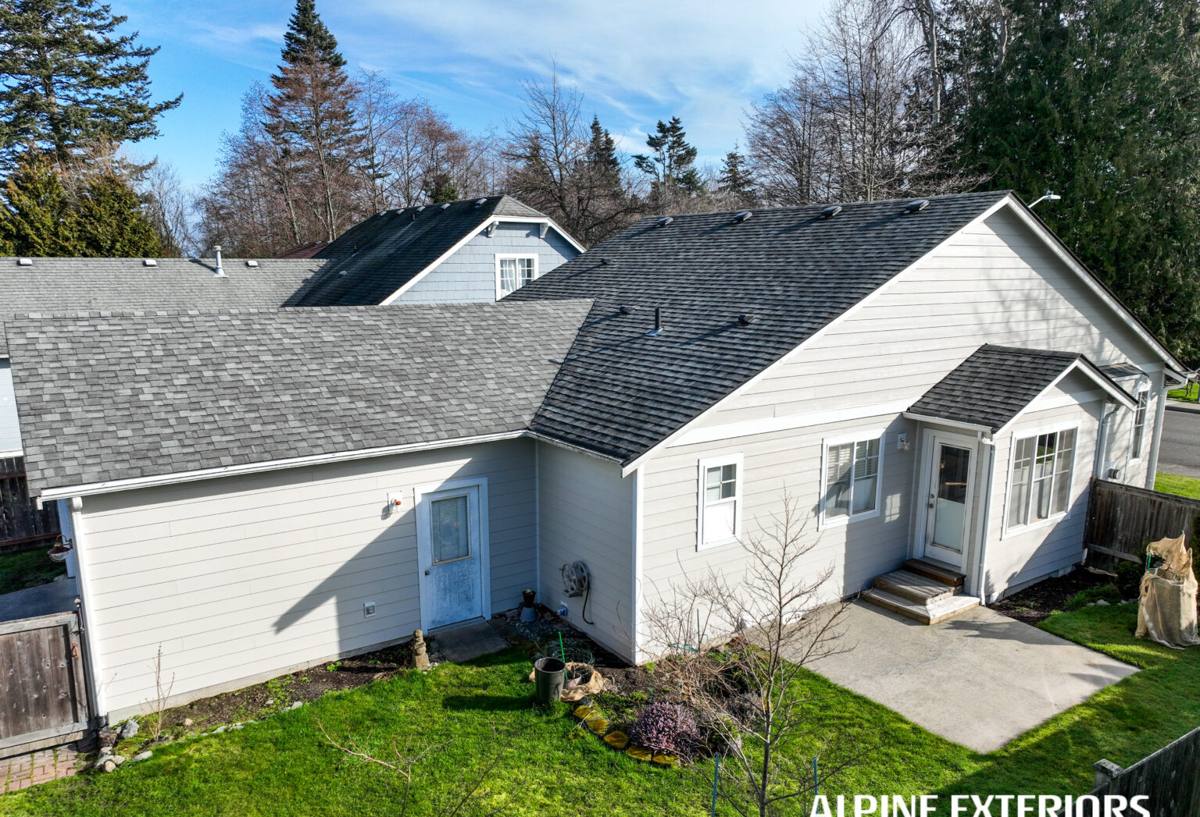
What This Climate Does to a House Over Time
Moisture That Doesn't Let Up
Whatcom County's rain isn't usually the dramatic, short-burst kind. It's the driving, sideways, all-day kind, and it repeats for weeks on end through fall, winter, and spring. Siding, trim, and roofing systems around Nooksack spend a large share of the year damp rather than genuinely dry, which changes how every material on the market actually behaves versus how it's marketed.
Moss and Algae Season
Shaded siding, north-facing walls, and anything under overhanging trees is prone to a long moss and algae season here. Organic growth holds moisture against the surface, and on wood-based products that moisture exposure is exactly what accelerates rot, delamination, and paint failure. On any siding, moss buildup left unaddressed year after year is a maintenance burden, not just a cosmetic issue.
Cycling Between Wet and Dry
Even in a wet climate, surfaces do dry out between storms, and that wet-dry cycle is hard on materials that swell and shrink with moisture content. Repeated cycling is what causes edge swelling on engineered wood products and cracking or checking on solid wood siding over the years, especially at butt joints, seams, and cut ends that weren't properly sealed during installation.
Why We Install Only James Hardie Fiber Cement
We made a decision a while back to standardize on James Hardie fiber cement siding and stop installing everything else — vinyl, LP SmartSide, Cemplank, Allura, primed spruce, cedar. That's not a marketing angle; it's a professional standard we hold ourselves to because of what we've seen this climate do to homes over time.
Fiber cement is cement, sand, and cellulose fiber — there's no wood pulp for moisture to feed on, and it doesn't provide the same food source for the fungal growth that causes rot. It's also non-combustible, which matters more each year as wildfire smoke and dry-season fire risk become a bigger part of Pacific Northwest summers, even in a historically wet county like this one.
Climate-Engineered Product Lines
James Hardie makes region-specific formulations under its HZ5 line, engineered for wetter, harsher climates like ours, as opposed to a one-size-fits-all product sold the same way in Arizona and Washington. That distinction is easy to miss if you're just comparing brochures, but it's part of why we trust the product for homes in Nooksack and the rest of Whatcom County.
ColorPlus Factory Finish
Most of what we install uses Hardie's ColorPlus finish — a baked-on, factory-applied coating that holds color and resists fading far longer than field-applied paint, and comes with its own finish warranty separate from the substrate warranty. In a climate where UV exposure is inconsistent but moisture exposure is constant, a factory finish that isn't relying on a painter's prep work in damp conditions is a real advantage.
How the Common Alternatives Actually Hold Up Here
We get asked why we won't install other popular products. Here's the honest comparison, based on how these materials behave in a wet coastal-influenced climate — not on brand claims.
| Material | Moisture Behavior | Moss/Algae Resistance | Long-Term Maintenance |
|---|---|---|---|
| Vinyl siding | Doesn't absorb water itself, but seams and panels can warp or gap, letting moisture behind the cladding | Grows algae/moss on the surface; doesn't rot but stays visibly dirty longer | Low upfront upkeep, but repairs are patch-and-hope; color isn't repaintable easily |
| LP SmartSide | Engineered wood strand product; performs well if installation and caulking are exact, but wood fiber core is vulnerable if moisture gets in | Needs regular cleaning and sealed joints to prevent growth from taking hold | Installation-sensitive; edge swelling risk if any detail is missed |
| Cedar / primed spruce | Solid wood; absorbs and releases moisture constantly, which drives cracking, cupping, and checking | High — natural wood is an active food source for moss and fungus in shaded, damp spots | Highest — repainting, caulking, and spot repair on a recurring cycle |
| James Hardie fiber cement | Cement-based; doesn't swell, rot, or feed fungal growth from moisture exposure | Can still get moss on the surface like anything outdoors, but the material underneath isn't compromised by it | Lowest of the group; factory finish holds up without a repaint cycle |
To be fair to the alternatives: vinyl is inexpensive and low-maintenance in the right application, LP SmartSide can perform well when installation is flawless, and cedar has a look some homeowners genuinely prefer and are willing to maintain. We're not saying those products are junk — we're saying that after years of doing this work in this climate, fiber cement is what we're willing to put our name behind and warranty.
Our Process for Nooksack Homes
Every job starts with a walk-around, not a sales pitch. We look at sun and shade exposure on each wall, existing moisture damage, trim and flashing condition, and how water currently moves off the roof and away from the walls — because siding failures are very often water-management failures, not siding failures.
- Remove old siding and inspect sheathing for hidden rot or moisture damage before anything new goes up
- Repair or replace any compromised sheathing, framing, or flashing found underneath
- Install a weather-resistant barrier and rainscreen approach appropriate to the wall assembly
- Install James Hardie panels, planks, or shingle-style siding per manufacturer specification, including proper fastening, clearances, and caulking at joints
- Detail trim, corners, and penetrations (vents, hose bibs, light fixtures) so water has a clear path off the wall
- Final walkthrough with the homeowner before we consider the job done
Installation quality is where a lot of siding problems actually originate, regardless of brand. Hardie's own warranty structure depends on installation to spec, which is one more reason we treat the process carefully rather than rushing panels up.
The Full Exterior Envelope: Roofing, Windows, and Decks
Siding doesn't work in isolation. A roof that's shedding water poorly, windows that leak at the flange, or a deck ledger board that's trapping moisture against the house all put stress on the siding around them. We handle roofing, windows, and decks alongside siding so the whole exterior envelope of a Nooksack home works together instead of being patched piecemeal by different contractors over the years.
This matters especially around here: a roof-to-wall transition or a window flashing detail that's slightly off doesn't usually show up as a leak right away — it shows up two or three winters later as rot behind otherwise good siding. Coordinating these trades under one crew closes that gap.
Why a Local Crew Matters
A crew that works Whatcom County homes regularly knows what a Nooksack-area house is actually dealing with — the shade patterns, the moss cycle, how far salt-influenced weather typically pushes inland, and what local permitting and inspection expect. That knowledge shapes real decisions: where we add extra flashing, which walls get closer attention during install, how we sequence work around the wetter months.
It also matters after the job is done. Warranty work and follow-up questions are easier to handle when the crew that installed your siding is a short drive away, not a regional outfit that subcontracted the job and moved on.
Signs It's Worth Getting a Look
- Visible moss or dark streaking that keeps returning after cleaning
- Soft spots, bubbling paint, or warping on wood or engineered wood siding
- Gaps opening up at seams, corners, or trim boards
- Rising heating bills that might point to compromised wall assembly, not just an old furnace
- Siding that's original to a home built before double-digit-year-old moisture barriers were standard practice
What to Expect Cost-Wise
Siding project cost depends on square footage, the condition of what's underneath, how much trim and detail work is involved, and whether roofing, window, or deck work is bundled in. We won't quote a number without seeing the house, but we're upfront during the estimate about what's driving the price on your specific project rather than a generic per-square-foot figure that doesn't match the real scope.
If you're in Nooksack or anywhere else in the Ferndale service area and want a straight answer on what your home needs, we're happy to come take a look. There's no pressure and no obligation — just a clear assessment and, if you want one, an estimate using the form below.