 Ferndale
 Sandy Point's Exterior Challenge Is Different From the Rest of Ferndale
Sandy Point sits closer to the water than most of the neighborhoods we work in around Ferndale, and that changes what a house needs from its siding, roof, and trim. Homes here don't just deal with the general Whatcom County wet season — they deal with salt-laden air coming off the water, near-constant wind exposure, and driving rain that hits walls at an angle instead of falling straight down. That combination is harder on an exterior than inland Ferndale conditions, and it shows up faster on the wrong materials.
We've worked on homes throughout the Ferndale area long enough to know that a siding product that performs fine three miles inland can struggle on a waterfront lot. Salt air accelerates corrosion on fasteners and metal trim, wind-driven rain finds every gap in a lap joint or caulk line, and the moss and algae growth that's a mild nuisance elsewhere becomes a persistent, season-long problem on shaded, damp-facing walls near the water. None of this is exotic — it's just a more concentrated version of what every Pacific Northwest coastal property deals with.
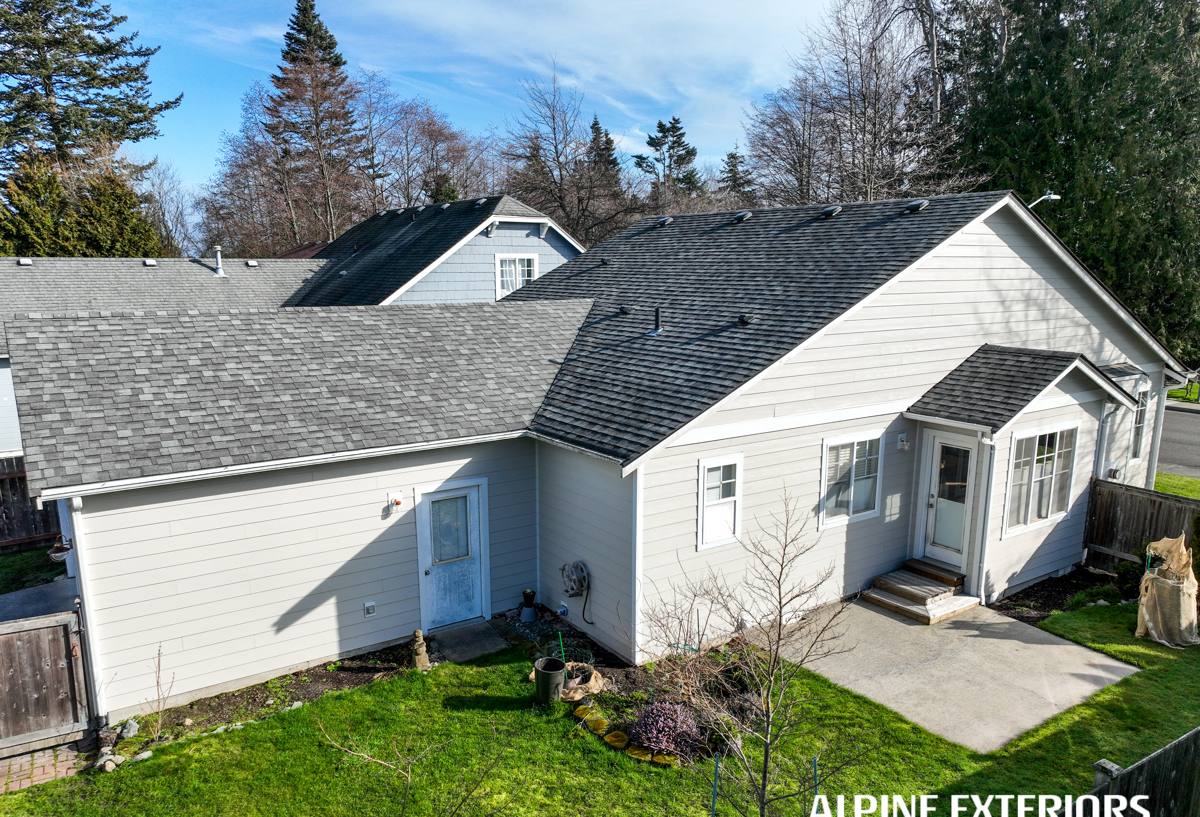
What Salt Air Actually Does to a House
Salt air isn't just an inconvenience — it's a mechanism. Airborne salt is hygroscopic, meaning it pulls moisture out of the air and holds it against building surfaces even on days that aren't rainy. Over years, that constant low-level dampness works on anything with metal content: nail heads, flashing, screws, hinges, and any exposed fastener that isn't sealed or coated for coastal exposure. It also breaks down finishes faster than inland UV exposure alone would, which is why paint and stain on wood or composite siding near the water tends to chalk, fade, and fail earlier than the same product would a few miles inland.
Where We See It Show Up First
- Fastener corrosion at butt joints and window trim, especially where builders used standard (non-coastal-rated) nails or screws
- Premature paint failure on south- and west-facing walls that take the brunt of sun and salt spray
- Caulk joints that dry out, crack, and open a path for wind-driven rain
- Faster onset of moss and algae on north-facing or tree-shaded walls that stay damp longer
- Trim and fascia boards that show rot years before the same cut of wood would fail inland
Driving Rain and Wind Exposure Change How Siding Needs to Perform
Straight-down rain is easy for almost any siding product to shed. Wind-driven rain is a different problem — it hits vertical wall surfaces directly, gets pushed up under laps and around corners, and tests the water-resistive barrier and flashing details behind the siding, not just the siding itself. On a more exposed lot like the ones near Sandy Point, that means installation quality matters more than it does on a sheltered inland site. Proper lap spacing, correctly integrated flashing at windows and doors, and a continuous drainage plane behind the cladding aren't optional extras out here — they're the difference between a wall that stays dry and one that slowly takes on moisture behind the finish.
This is also where we get particular about who installs the material. A crew that's used to calm, sheltered lots can cut corners on flashing and still get away with it for a few years. On an exposed waterfront property, those same shortcuts show up as staining, soft trim, or interior moisture problems much sooner.
Why We Only Install James Hardie Fiber Cement
We standardized on James Hardie siding for every home we work on, and on a property like Sandy Point that decision matters even more than usual. Fiber cement is not organic material — it won't rot, it doesn't feed mold or fungus, and it isn't a food source for the moss and algae that thrive in a damp, salt-tinged marine environment the way wood fiber is. That doesn't mean a Hardie wall never gets a moss film on a shaded north face — anything sitting in constant damp will eventually pick some up — but it means the siding itself isn't degrading underneath that growth the way wood, primed spruce, or some engineered wood products can.
Hardie's ColorPlus factory finish is baked on under controlled conditions and backed by a real finish warranty, which matters a lot on a coastal lot where field-applied paint takes more abuse from salt and UV than it would inland. And Hardie's HZ5 product line is specifically engineered for harsher climate zones — it's the version we spec for the most exposed sites we work on in Whatcom County, including waterfront and near-waterfront lots.
What We Deliberately Don't Install, and Why It Matters More Here
We don't install vinyl, LP SmartSide, Cemplank, Allura, or primed spruce or cedar siding, and the reasoning gets sharper the closer a home sits to the water:
- Vinyl can warp and deform in direct, sustained heat reflection and becomes brittle with age and UV exposure — and it doesn't offer the impact or wind resistance a coastal property benefits from.
- LP SmartSide is an engineered wood product; wood-based substrates are more vulnerable to sustained moisture exposure than fiber cement, and a marine environment with wind-driven rain is exactly the kind of sustained-moisture setting where that vulnerability gets tested hardest.
- Cemplank and Allura are fiber cement competitors to Hardie, and while the category performs reasonably well as a class, we've standardized on one manufacturer, one finish system, and one warranty structure so every job we do is consistent and every homeowner gets the same accountability chain if something needs attention down the road.
- Primed spruce and cedar are real wood — beautiful, but wood is the material most sensitive to the salt-air-plus-moisture combination this area sees. It needs more frequent refinishing here than it would inland, and skipped maintenance cycles show up as rot faster.
Roofing, Windows, and Decks in the Same Environment
Siding isn't the only part of a Sandy Point exterior working overtime. Roofing near the water deals with the same salt and wind exposure — fasteners, flashing, and underlayment all benefit from materials and installation details rated for coastal conditions, not just standard inland specs. Windows on exposed walls take more direct wind-driven rain at the frame and sill, so flashing integration around the window opening is one of the most common failure points we find on older coastal homes when we're re-siding around existing windows. Decks facing the water deal with UV, salt, and moisture cycling that ages fasteners and finishes faster than a sheltered backyard deck ever would. We handle all four — siding, roofing, windows, and decks — because on a property like this, they're not separate problems. Water that gets past one system usually shows up as damage in another.
What a Sandy Point Siding Project Typically Involves
Every home is different, but re-siding work on an exposed, moisture-heavy lot generally follows the same sequence: remove the old siding, inspect the sheathing and framing underneath for any hidden rot or moisture damage (common on older coastal homes even when the exterior looked fine), repair or replace anything compromised, install a proper water-resistive barrier and flashing system, then install the Hardie siding with correct fastener spacing, lap detail, and caulking rated for the exposure. On a more exposed lot, we pay particular attention to inside and outside corners, window and door flashing, and any wall sections that take direct wind and spray, since those are the details that separate a wall that performs for decades from one that needs attention again in five or six years.
Cost Factors on a Coastal-Exposed Lot
| Factor | Why It Affects Cost Here |
|---|---|
| Wind/spray exposure of the lot | More exposed walls may warrant HZ5 product and extra flashing detail |
| Condition of existing sheathing | Coastal homes have a higher chance of hidden moisture damage requiring repair |
| Access for equipment and material staging | Waterfront and beach-access lots can have tighter or less conventional access |
| Trim and corner detail complexity | More corners and window returns near exposed walls means more flashing and finish work |
| Existing siding material | Removal of wood, vinyl, or engineered wood siding takes different labor than removing old fiber cement |
Why a Local Crew Matters More Out Here
A crew that mostly works sheltered inland lots in Whatcom County doesn't always think about salt-rated fasteners, extra flashing attention at exposed corners, or how much faster caulk and finish age near the water. We work throughout the Ferndale area regularly enough to know which lots need that extra attention and which details actually matter versus which are inland habits that don't need to change. That local pattern recognition — knowing this is a Sandy Point job before we even walk the site — is part of what keeps a coastal exterior performing the way it's supposed to for the long haul.
Maintenance That Actually Fits This Environment
Even the right materials benefit from a little seasonal attention on an exposed lot. A few habits go a long way:
- Rinse salt residue off siding and trim periodically, especially after long dry spells followed by wind
- Keep gutters and downspouts clear so wind-driven rain has a clear path off the roof instead of backing up at the fascia
- Check caulk joints at windows, doors, and trim yearly and recaulk before gaps open up
- Trim back vegetation that keeps a wall section shaded and damp longer than the rest of the house
- Address any moss or algae growth on siding before it spreads across a full wall section
None of this is unique to Hardie siding — it's just good practice for any coastal-exposed home. But fiber cement gives you a wider margin for error if a maintenance task slips a season, since the material itself isn't feeding on the moisture the way an organic substrate would.
Get a Straight Answer for Your Property
Every lot near the water is a little different — some are more sheltered by trees or terrain, others take wind and spray directly. We'd rather walk your specific property and tell you honestly what it needs than give you a generic answer over the phone. If you're thinking about siding, roofing, window, or deck work on a Sandy Point home, we're happy to come take a look and put together a free, no-pressure estimate based on what your walls are actually dealing with.