 Ferndale
 Semiahmoo's Location Puts Extra Demands on Exterior Siding
Semiahmoo sits on the water at the northern edge of Whatcom County, where Semiahmoo Bay meets Drayton Harbor and the Canadian border is close enough to see across the water. That waterfront position is exactly why homes here need to be treated differently than a house fifteen miles inland. Wind coming off the bay carries salt, homes on or near the spit take driving rain almost broadside during winter storms, and the tree cover and marine humidity that make this part of Whatcom County so green also keep exterior surfaces damp for long stretches of the year. Siding that would hold up fine in a drier, more sheltered part of the county can start showing problems years earlier out here.
Ferndale Siding works throughout Whatcom County, and Semiahmoo is one of the areas where we see the clearest difference between siding materials that are built for coastal exposure and siding that simply isn't. This page walks through what that exposure actually does to a house, how we approach siding, roofing, window, and deck work for homes in this area, and why we install exclusively James Hardie fiber cement rather than the vinyl, LP SmartSide, or wood products still common on older homes here.
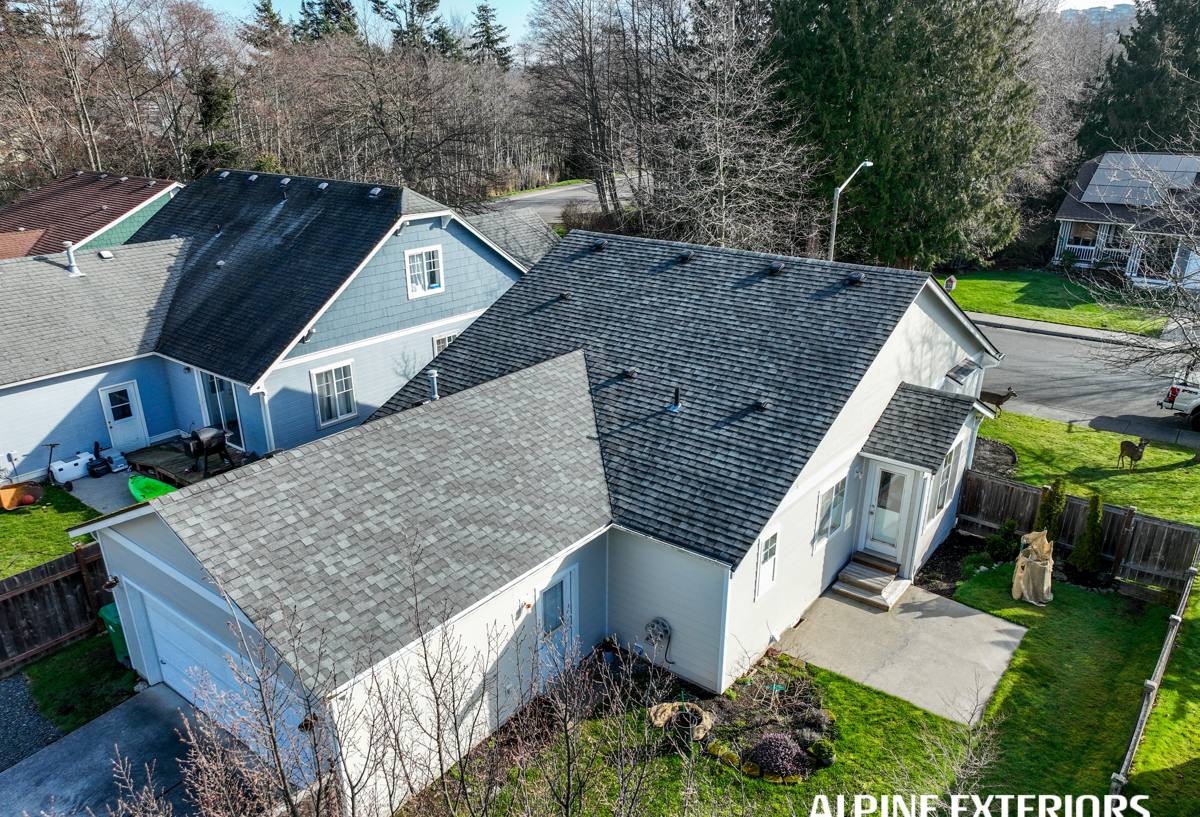
What Salt Air, Driving Rain, and Moss Actually Do to a House
Salt Air and Corrosion
Airborne salt from the bay doesn't just affect boats and metal railings — it settles on every exterior surface, including siding, trim, fasteners, and flashing. Over time it accelerates corrosion on unprotected metal fasteners and can degrade certain paint and coating systems faster than they'd wear in a non-coastal environment. Homes closer to the water see this more than homes set back a few blocks, but the whole Semiahmoo area gets some level of salt exposure that a contractor unfamiliar with coastal work might not account for.
Driving Rain and Wind-Driven Moisture
Storms coming off the water don't fall straight down — they hit siding at an angle, which pushes water into seams, laps, and butt joints that would stay dry in a calmer setting. This is why installation detail matters as much as the material itself. A siding job with sloppy flashing or poorly sealed joints will let water in eventually, and once water gets behind siding in a wet climate like this one, it rarely dries out fast enough between storms to avoid damage.
Moss, Algae, and the Long Wet Season
Whatcom County's moss season runs long, and waterfront and tree-shaded properties around Semiahmoo tend to stay damp even during breaks in the rain. Moss and algae growth on siding isn't just cosmetic — sustained moisture against a wall assembly, especially on north-facing or shaded elevations, is what eventually leads to rot in wood-based products and breakdown in materials that weren't engineered for constant damp exposure.
Why We Install Only James Hardie Fiber Cement
Ferndale Siding made a decision to install James Hardie fiber cement siding exclusively, and we don't install vinyl, LP SmartSide, Cemplank, Allura, primed spruce, or cedar. That's not a marketing position — it's a standard we hold to because of what we've seen play out on homes in exactly this kind of environment.
- Vinyl siding can warp or become brittle with temperature swings and UV exposure over time, and its seams and panel edges give wind-driven rain more opportunities to find a way behind the cladding.
- LP SmartSide and other engineered wood products use wood strand technology that performs reasonably well when installation and maintenance are perfect, but any gap in caulking, flashing, or paint upkeep exposes the wood substrate to moisture — a real risk in a climate with this much sustained dampness.
- Primed spruce and cedar are natural wood products that require diligent, ongoing maintenance (repainting, caulking, moisture monitoring) to avoid rot, and that maintenance burden only grows in a marine environment.
- James Hardie fiber cement is non-combustible, dimensionally stable across temperature and moisture swings, and manufactured with ColorPlus factory-applied finishes engineered to resist fading and hold up in demanding climates — including the HZ5 product line formulated for the Pacific Northwest's wetter conditions.
None of this means the products we don't install are worthless — some are perfectly reasonable choices in the right setting. It means that for the specific combination of salt air, wind-driven rain, and prolonged dampness that homes in Semiahmoo deal with, we've concluded fiber cement is the material that holds up with the least amount of ongoing homeowner maintenance and the least risk of moisture-related failure.
How We Approach a Siding Installation on a Coastal Property
The material is only part of the equation — how it's installed determines whether a house actually gets the protection that material is capable of providing. On homes in and around Semiahmoo, our installation process pays particular attention to:
- Proper weather-resistive barrier and rainscreen detailing behind the siding, so any moisture that does get past the cladding has a path to drain and dry rather than sitting against the wall sheathing.
- Correct flashing at windows, doors, and every horizontal trim transition — the places wind-driven rain is most likely to find a way in.
- Corrosion-resistant fasteners appropriate for coastal, salt-exposed conditions rather than standard interior-grade hardware.
- Manufacturer-specified nailing patterns, joint treatment, and clearances (including ground clearance and roof-to-wall clearance) that keep the siding system performing the way it was engineered to.
- Careful sealing and caulking at penetrations — vents, hose bibs, light fixtures — that are common points of failure if rushed.
This level of detail takes longer than a quick panel-and-nail installation, but it's the difference between siding that performs for decades in a wet coastal climate and siding that starts showing moisture problems within a few years.
Beyond Siding: Roofing, Windows, and Decks for the Same Conditions
The same salt air, driving rain, and moss exposure that affects siding in Semiahmoo affects the rest of a home's exterior too, which is why we handle roofing, windows, and decks as well rather than treating siding as an isolated project.
Roofing
A roof takes the most direct hit from wind-driven rain and is also where moss growth tends to show up first and cause the most damage if left unaddressed — moss holds moisture against roofing material and can work its way under shingles and shakes over time.
Windows
Window flashing and seal integrity matter enormously in a climate where rain regularly hits glass and trim at an angle. Aging or improperly flashed windows are one of the most common sources of hidden water intrusion we find on older homes in this area.
Decks
Decks facing the water take direct sun, salt air, and standing moisture in a way that inland decks don't, which affects material choice, fastener selection, and how often a deck surface needs attention.
Handling all four trades under one roof means we can look at a whole exterior — not just siding in isolation — and flag issues in roofing or window flashing that would undermine even a perfect siding installation.
What Affects the Cost of a Siding Project in Semiahmoo
| Factor | Why It Matters Here |
|---|---|
| Home size and wall complexity | More corners, gables, and trim details mean more cutting, flashing, and labor time |
| Existing siding removal | Tear-off of old wood, vinyl, or damaged material adds labor and disposal cost, and can reveal sheathing damage from prior moisture intrusion |
| Condition of underlying sheathing | Homes with a history of moisture problems may need sheathing repair before new siding goes on |
| Trim and accessory selection | Hardie trim boards, soffit, and fascia add cost but keep the whole exterior system consistent |
| Site access | Waterfront lots, steep grades, or limited driveway access can affect equipment staging and labor time |
| Siding profile and finish | Lap siding, shingle-style panels, and board-and-batten all price differently based on material use and install complexity |
We provide a written estimate after walking the actual property — coastal conditions vary enough from lot to lot around Semiahmoo that a phone quote without an on-site look isn't something we'd stand behind.
A Homeowner's Maintenance Checklist for Coastal Whatcom County
Even low-maintenance materials benefit from periodic attention, especially this close to the water. A short seasonal checklist:
- Rinse salt residue and grime off siding surfaces periodically, particularly on elevations facing the water
- Inspect caulking around windows, doors, and trim joints yearly and re-seal where it's cracked or pulled away
- Check for moss or algae buildup on shaded or north-facing walls and roof surfaces, and remove it before it spreads
- Look at fastener heads and metal trim/flashing for early signs of corrosion
- Walk the gutter and downspout system before the winter storm season to make sure water is being carried away from the wall assembly, not draining down the siding
- Watch for soft spots, discoloration, or bubbling paint, which can signal moisture behind the surface rather than just on it
Why a Local Crew Matters for a Job Like This
A contractor who mainly works drier, inland areas may not naturally build in the flashing, fastener, and rainscreen detail that coastal Whatcom County conditions call for — it's not that they're careless, it's that the environment simply doesn't demand it where they normally work. A crew that's done siding, roofing, window, and deck work throughout this part of the county — including areas like Semiahmoo that take the full brunt of weather off the water — brings that judgment to the job by default rather than as an afterthought. It also means faster response if a warranty question or minor issue comes up after the work is done, instead of chasing down a contractor who's moved on to a different region.
Getting Started
If you're weighing a siding, roofing, window, or deck project for a home in Semiahmoo, we're glad to come take a look, walk the exterior with you, and put together a clear, no-pressure estimate — including an honest read on what your current siding's condition actually is before we talk about replacement. Use the form below to request a free estimate.