 Ferndale
 Roofing for Cordata's Specific Climate Conditions
Cordata sits close enough to Bellingham Bay and the Strait of Georgia that salt-laden air is a real factor in how long a roof lasts, and it's far enough north that the region gets a long, wet shoulder season on both ends of winter. Add driving rain that comes in sideways during winter storms and a moss season that can stretch from October through May, and you have a set of conditions that punishes roofs installed with shortcuts. We install and repair asphalt shingle roofs for homes in this area regularly, and the details we pay attention to are shaped directly by what this climate does to a roof over ten, twenty, and thirty years.
This page is specifically about asphalt shingle roofing for the Cordata area — not a general overview of every roofing material we offer. If you own a home here and are trying to understand what a correctly installed shingle roof looks like in this climate, and why hiring a crew that already works in this specific area matters, this is written for you.
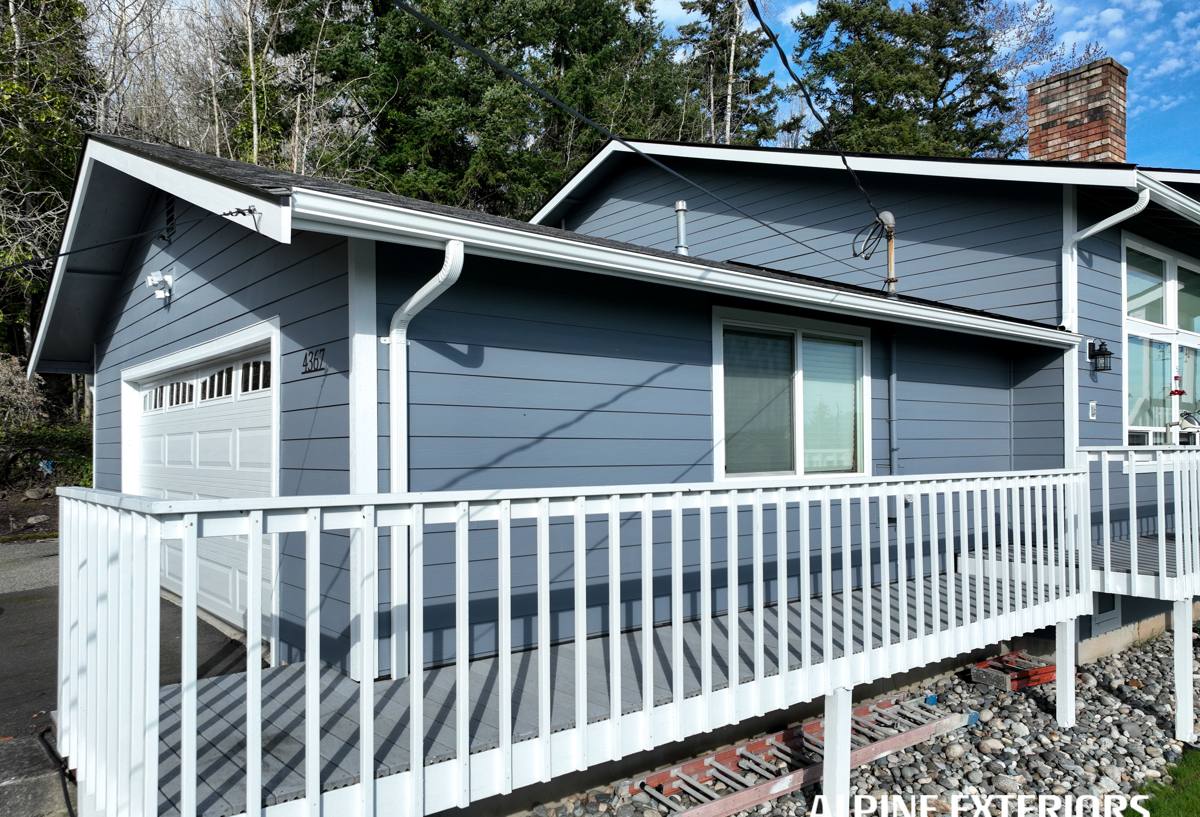
What Salt Air, Driving Rain, and Moss Actually Do to a Roof
Salt Air and Corrosion
Homes closer to the water deal with airborne salt that settles on roofing metal — flashing, nail heads, vent boots, and gutter hardware. Over years, ordinary galvanized fasteners and thin flashing can corrode faster than they would further inland. This doesn't ruin a shingle roof overnight, but it shortens the life of the metal components that keep water out at the vulnerable points: valleys, chimneys, skylights, and roof-to-wall transitions. Using corrosion-resistant fasteners and flashing in this area isn't an upsell — it's a practical response to the environment.
Driving Rain
Rain that falls straight down is relatively easy for any roof to shed. Rain that's pushed sideways by wind is a different problem — it can work its way up under shingle tabs, around poorly sealed penetrations, and into gaps that would never leak in a calmer climate. This is why underlayment choice, nailing pattern, and sealing at every penetration matter more here than they would in a drier, calmer region.
The Long Moss Season
Whatcom County's combination of shade, moisture, and cool temperatures gives moss and algae a long window to establish themselves on a roof. Moss isn't just cosmetic. Its root structure holds moisture against the shingle surface, and as it spreads it lifts shingle edges and granules, which accelerates wear and can eventually create paths for water to get underneath the shingle layer entirely. A roof in this area needs both the right materials and a maintenance rhythm that keeps moss from getting a foothold in the first place.
Choosing the Right Asphalt Shingle for This Area
Not every asphalt shingle product is a good match for a moss-prone, salt-air, high-rainfall environment. We generally steer Cordata homeowners toward algae-resistant architectural shingles rather than basic three-tab products, for reasons that come down to durability and long-term maintenance rather than appearance alone.
| Shingle Type | Typical Lifespan Here | Moss/Algae Resistance | Wind Performance |
|---|---|---|---|
| Basic 3-tab | 15-20 years | Lower unless treated | Adequate, thinner profile |
| Algae-resistant architectural | 25-30+ years | Built-in copper/ceramic granules resist growth | Higher wind ratings, laminated construction |
| Premium/designer architectural | 30+ years | Same algae-resistant technology, heavier mat | Highest wind ratings in the asphalt category |
Algae-resistant shingles use copper or ceramic-coated granules that slow the growth of the algae species responsible for the dark streaking and moss establishment common on shaded, damp roofs in this part of Washington. They cost more up front than basic three-tab shingles, but for a roof that's going to sit under Cordata's tree cover and marine air for decades, the trade-off is worth explaining honestly rather than glossing over.
What a Correct Installation Actually Involves
Tear-Off and Deck Inspection
We remove the old roofing down to the deck rather than layering over existing shingles. This lets us actually see the plywood or OSB underneath and catch soft spots, rot, or water staining that a layover would hide. In a climate this wet, hidden deck damage is one of the most common reasons a "new" roof fails early — the shingles were fine, but they were nailed over a deck that was already compromised.
Underlayment
Synthetic underlayment goes down across the full deck as the primary water barrier beneath the shingles. In a region with this much driving rain, underlayment quality and correct overlap at every seam is not a place to cut corners.
Ice and Water Shield at Vulnerable Points
Self-adhering ice and water membrane goes in at eaves, valleys, and around every roof penetration — chimneys, skylights, vent stacks. These are the areas where wind-driven rain is most likely to find a way in, and they're the areas where a rushed installation shows problems first.
Flashing
New flashing at every valley, wall intersection, and penetration, matched to the corrosion resistance the salt air environment calls for. Reusing old flashing to save time is a shortcut that shows up as a leak years later, usually right where it was reused.
Nailing Pattern and Fastening
Shingles are only as wind-resistant as their fastening. We follow manufacturer nailing patterns exactly — correct nail count, placement, and depth — because under-driven or over-driven nails are a common, avoidable cause of shingle blow-off in coastal wind events.
Ventilation: The Part Homeowners Rarely See
A shingle roof's lifespan depends heavily on what's happening underneath it, in the attic. Balanced intake and exhaust ventilation keeps the attic close to outdoor temperature and controls moisture that would otherwise condense against the underside of the roof deck. In a climate as wet as this one, poor attic ventilation can cause moisture problems that look identical to a roof leak but actually originate from trapped humidity inside the attic itself. We check existing ventilation on every roof we work on and correct it as part of the job when it's inadequate, rather than treating it as a separate upsell.
Our Process From Estimate to Cleanup
- On-site inspection. We look at the current roof, the attic, and the specific exposure of your home — how much tree cover, which direction storms hit, how much shade holds moisture on the north or west-facing slopes.
- Written estimate. A clear scope of work and price range, explained in plain terms, with the shingle options that make sense for your home's exposure and budget.
- Scheduling around weather. Asphalt shingle installation needs a dry, reasonably mild window. We plan around Whatcom County's forecast rather than pushing a job through in the wrong conditions.
- Tear-off, deck inspection, and installation. As described above, done in sequence with no layering over old material.
- Site cleanup. Magnetic sweep for nails, tarps to protect landscaping, and full debris removal before we consider the job finished.
- Final walkthrough. We go over the completed roof with you before we call it done.
Maintenance That Actually Matters in a Moss-Prone Climate
A well-installed shingle roof still needs periodic attention in this environment. The following checklist covers what actually moves the needle for roofs in Cordata's climate — not a generic list, but the specific things that matter given the moss and moisture conditions here.
- Keep overhanging branches trimmed back so roof slopes get more sun and dry out faster after rain.
- Clean gutters at least twice a year — clogged gutters back water up under the shingle edge and behind fascia.
- Have moss physically removed (not just chemically killed) before it spreads past small patches, since dead moss left in place still holds moisture against the shingle.
- Use zinc or copper strips near the ridge where appropriate, which release trace metal ions that discourage new moss growth as rain washes over them.
- Schedule a roof inspection after any major windstorm, since lifted or cracked shingles are easiest to fix before the next rain finds them.
- Check attic ventilation annually — blocked soffit vents or damaged baffles undo the benefit of a correctly vented roof.
Why a Local Crew That Works This Area Matters
A roofing crew that regularly works in and around Cordata and greater Ferndale has already seen how homes here weather — which slopes hold moss longest, how much salt exposure a given distance from the water actually translates to, and which older installation habits from decades past are now causing problems. That's different from general roofing knowledge. It means fewer surprises during tear-off, materials chosen with this specific climate in mind rather than a generic spec sheet, and a crew that isn't learning the local conditions on your roof for the first time.
Being local also means we're accountable after the job is done. If a question comes up during the next storm season, we're not a crew that drove in from out of the area and moved on — we're working roofs in this community on an ongoing basis.
Cost Factors to Understand Before You Get Quotes
Every roof is different, so we won't put a fixed number here that doesn't apply to your home. What we can tell you honestly is which factors move the price, so quotes make more sense when you get them.
| Factor | Why It Affects Cost |
|---|---|
| Roof size and number of planes | More squares and more valleys/hips mean more material and labor time |
| Deck condition underneath | Rot or soft spots found during tear-off require deck repair before shingles go on |
| Shingle class chosen | Algae-resistant architectural shingles cost more per square than basic 3-tab |
| Roof pitch and access | Steeper roofs and difficult access (limited driveway space, tall trees) add labor time |
| Ventilation upgrades needed | Adding or correcting intake/exhaust venting is additional scope beyond reshingling |
| Number of penetrations | Each chimney, skylight, and vent stack needs new flashing and adds labor |
Get a Straight Answer for Your Roof
If you're weighing a repair against a full replacement, or just want to know honestly where your current roof stands, we're happy to take a look. We'll tell you what we actually see — not the worst-case sales pitch, not a rubber-stamp "it's fine" if it isn't. Fill out the form below for a free, no-pressure estimate on your Cordata home.