 Ferndale
 Siding Replacement for Kendall Homes
Kendall sits within our Ferndale service area, part of the wider Whatcom County landscape that stretches from Bellingham Bay out toward the foothills. Homes here deal with the same underlying weather pattern that shapes exterior work across this corner of the Pacific Northwest: rain that arrives sideways more often than it falls straight down, air carrying enough salt and moisture off the Salish Sea to work its way into unprotected wood and metal over time, and a moss season that runs longer here than in drier parts of the state. We work throughout the Kendall area regularly, and the approach we bring to a home's exterior is built around what that combination actually does to siding, trim, and roofing year after year.
We install James Hardie fiber cement siding exclusively. For a property in a community that sees this much sustained moisture and marine air, it's the material we recommend without hesitation.
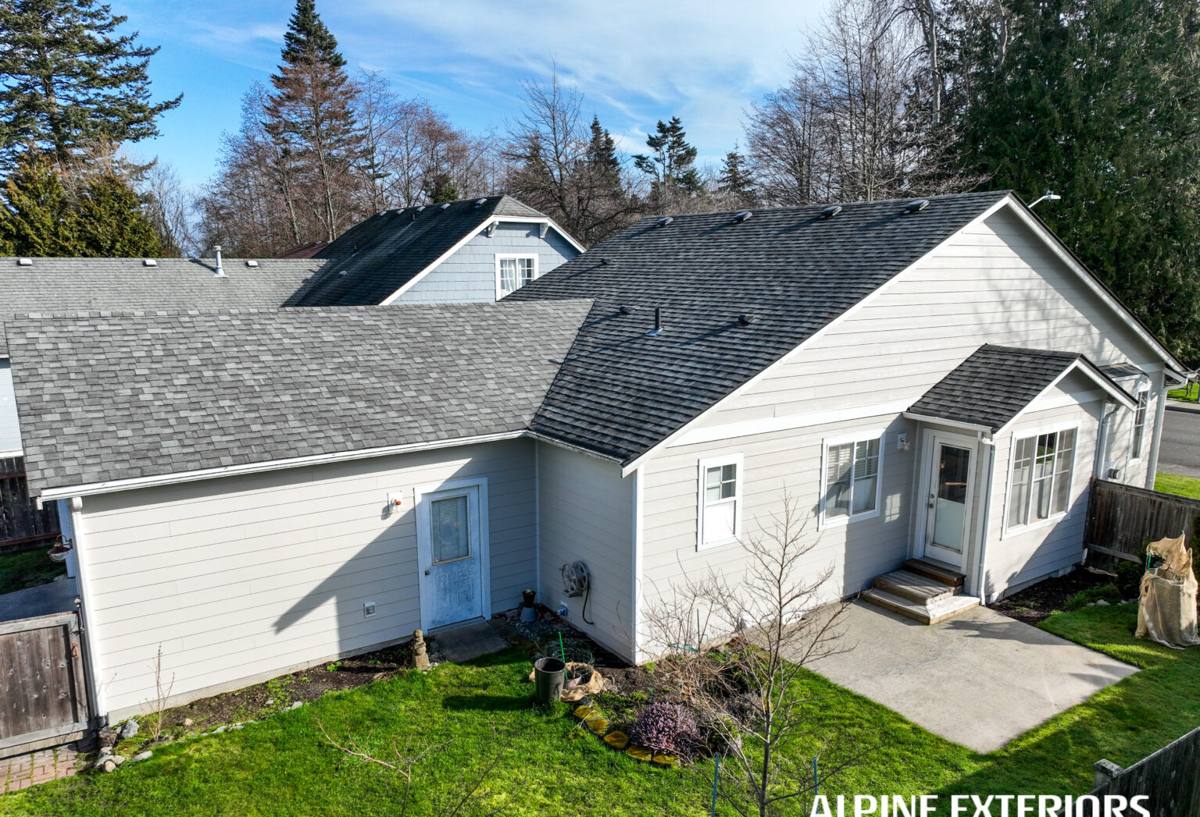
What the Local Climate Does to a Home's Exterior
Salt Air and Driving Rain
Even communities set back from the immediate waterfront aren't insulated from the marine-influenced weather that defines this part of Whatcom County. Salt-laden air moves inland on prevailing winds, and combined with wind-driven rain, it accelerates corrosion on fasteners, flashing, and any exterior material that wasn't built to handle sustained moisture exposure. Siding and trim that aren't detailed to shed rain coming in at an angle — rather than just rain falling straight down — tend to show water damage first at seams, corners, and anywhere flashing is doing less work than it should.
A Long Moss and Mildew Season
Persistent regional dampness, mild year-round temperatures, and plenty of shaded or tree-covered wall area on most Kendall properties add up to a moss and mildew season that stretches across much of the year. It shows up first as green staining or growth on north-facing and shaded walls, and it's more than a cosmetic issue — sustained organic growth holds moisture directly against the wall assembly, which is exactly the condition that leads to hidden rot if it isn't cleaned and addressed early.
Wind Exposure
Storm systems moving through Whatcom County bring real wind load along with the rain, and homes with more open exposure or taller tree lines nearby can see that wind funneled and intensified in ways a sheltered in-town lot wouldn't experience as often. Fastening patterns and material choices that hold up fine under ordinary regional weather can still get tested harder when a storm rolls through with sustained wind behind it.
Seasonal Temperature Swings
Whatcom County sees enough variation between summer dry spells and cold, wet winters to put real stress on exterior materials over a full year. Products that expand, contract, swell, or absorb moisture unevenly through those swings tend to develop cracking, cupping, or separation at joints faster than a stable, engineered material does.
Why James Hardie Is What We Install
We used to work with a wider range of siding products before narrowing to one system. That decision came from watching, over years of jobs across Whatcom County, which materials actually held up under sustained regional moisture and which ones quietly became maintenance headaches for the homeowners who chose them. For a property dealing with salt air, driving rain, and a long moss season, the case for fiber cement is a strong one.
- Non-combustible core: Fiber cement doesn't feed a fire the way wood-based or wood-derived siding products can, which matters for household safety and insurance underwriting alike.
- Factory-applied ColorPlus finish: The color is baked on under controlled factory conditions instead of brushed on in the field, so it resists fading, chalking, and moisture intrusion far longer than site-applied paint.
- Climate-engineered HZ product lines: Hardie builds different formulations for different climate zones, including versions engineered for regions with sustained moisture exposure — a real match for a Whatcom County property.
- Dimensional stability: Fiber cement doesn't swell, cup, or warp the way engineered wood siding can after repeated wet-season moisture cycles, which matters more here given how long the wet season runs.
- Strong transferable warranty: Hardie backs its products with a solid warranty structure, provided the installation follows spec, giving homeowners real protection rather than a marketing claim.
We don't install LP SmartSide, vinyl siding, Cemplank, Allura, primed spruce, or cedar. Each of those has a place in the broader market, and plenty of homeowners elsewhere are satisfied with them. But we made a professional call that one system we trust completely, installed correctly, is worth more to a homeowner than a cheaper option that quietly shifts maintenance risk onto them a few years down the road — especially in a climate that doesn't forgive shortcuts.
Choosing the Right Hardie Product for a Kendall Home
| Product Line | Best Use | Why It Fits This Area |
|---|---|---|
| HardiePlank lap siding | Most standard single-family homes | Traditional lap profile sheds wind-driven rain effectively when installed with proper overlap and flashing |
| HardiePanel vertical siding | Accent walls, gables, and modern designs | Clean vertical lines that pair well with the mix of ranch, farmhouse, and newer builds found in this area |
| HardieShingle siding | Craftsman-style homes and accent sections | Textured look without the moisture absorption and upkeep that real wood shingle requires in a damp climate |
| HardieTrim boards | Corners, window and door casing, fascia | Factory-finished trim resists the same salt air and moisture cycling as the field siding |
Color and profile choices come down to the individual home and the homeowner's preference, but the underlying product family and installation approach are consistent — we spec what fits a property's actual exposure rather than defaulting to whatever's easiest.
Picking a Color That Holds Up
ColorPlus finishes are available across a range of tones, and the right choice isn't purely aesthetic. Darker colors absorb more heat and can show dust or pollen buildup differently than lighter tones, while lighter colors show less contrast against moss and mildew staining on shaded walls. We'll talk through which finishes tend to hold their look longest given how a specific wall faces the weather.
What Correct Installation Looks Like Here
Material choice only gets a home halfway there. The rest comes down to installation detail: fastening patterns that account for local wind exposure, correct clearance from grade so siding isn't wicking up ground moisture, joints that are lapped and sealed rather than simply butted together, and a house wrap and flashing system that does the real work instead of relying on caulk to cover gaps. On a property that holds moisture longer than average, cutting corners on any of these steps tends to show up faster — sometimes within a single wet season.
Repair vs. Full Replacement
Not every siding problem calls for a full tear-off. Wind-damaged sections, an isolated trim failure around a window, or a section that's taken impact can often be repaired and matched into existing Hardie siding. But if water has been tracking behind the wall for a while, or the home still has an older, non-Hardie product nearing the end of its service life, patching it usually just delays a bigger job while hidden rot keeps spreading underneath. We'll tell you honestly which situation you're actually looking at.
Siding Readiness Checklist
- Walls checked for soft spots, staining, or visible gaps at seams and corners
- Trim and flashing around windows and doors inspected for cracking or separation
- North-facing and tree-shaded walls checked for moss, mildew, or persistent dark staining
- Grade clearance confirmed so siding isn't sitting too close to wet ground or landscaping
- Any deck ledger connections to the house inspected for trapped moisture
- Current energy bills reviewed for signs the wall assembly may no longer be sealing well
Roofing, Windows, and Decks in the Kendall Area
Siding problems rarely start with the siding itself. A roof valley that's lost its seal, a window that wasn't flashed correctly, or a deck ledger trapping moisture against the wall can all surface as siding damage long before anyone traces the water back to its actual source. Because we handle roofing, windows, and decks along with siding, we look at a Kendall-area property as one connected exterior system exposed to the same rain, wind, and moss-season dampness, rather than treating each component as a separate job and missing where the water is really getting in.
Roofing Considerations
Roofs in this area take sustained rain and periodic wind events, and fastening patterns, underlayment quality, and flashing detail around penetrations all matter more here than on a sheltered, milder site. Moss growth on a roof is often the first visible warning sign of the same moisture conditions that eventually threaten the siding below it.
Window Considerations
Wind-driven rain finds gaps around window flashing faster than almost anywhere else on a house. Correctly flashed, properly sealed window installation is one of the more important details on an exterior remodel here, and one of the more commonly rushed ones by crews unfamiliar with this specific climate.
Deck Considerations
Decks in the Kendall area take sun, sustained moisture, and real seasonal cycling through the colder months. Ledger board attachment and flashing where the deck meets the house deserve particular attention, since a poorly flashed ledger is a direct path for water into the wall behind it.
Cost Factors for Exterior Work in This Area
| Factor | What It Affects | Why It Matters Here |
|---|---|---|
| Tear-off vs. overlay | Labor scope and substrate access | Tear-off reveals hidden moisture and rot damage that's common under older siding in this climate |
| Substrate condition | Repair costs before new siding or roofing goes on | Long-term trapped moisture can rot sheathing, framing, and roof decking |
| Wind and fastening spec | Material and labor requirements | Exposed sites can call for tighter fastening patterns than a sheltered, tree-protected lot |
| Grade and drainage | Siding clearance and moisture management | Wooded and lower-lying lots hold ground moisture longer, which affects how siding is detailed near grade |
| Site access | Labor time and equipment needs | Rural and larger-lot properties can have longer driveways or wider staging needs than an in-town lot |
Exact costs depend on the specific property and its exposure, which is why we walk the home in person before giving a real number instead of quoting off a generic price sheet.
Why a Local Crew Matters in Kendall
A crew that works this part of Whatcom County regularly understands how salt air, driving rain, and a long moss season behave on real homes here over a full year, not just how a product performs on a spec sheet. That experience shapes practical decisions on install day: which wall orientations stay wet the longest, where extra flashing attention pays off, and which fastening details are worth the added time so a homeowner isn't dealing with a callback after the next winter storm. Kendall's mix of wooded lots and open exposure means conditions can vary from one property to the next even within the same neighborhood, and a crew with hands-on local experience treats that difference seriously instead of applying a one-size-fits-all approach.
What to Expect When You Call Us
- A walk-through of the home, inside and out where relevant, to look at siding, trim, roofing, windows, and any deck connections together
- An honest assessment of whether you're looking at a repair, a partial replacement, or a full re-side
- A clear explanation of why we recommend James Hardie for a property with this kind of exposure
- A written estimate with no pressure to sign on the spot
If your Kendall-area home needs new siding, roofing, windows, decking, or just an honest second opinion on what's happening behind an aging wall, we're glad to take a look. Reach out using the form below to schedule a free, no-pressure estimate.