 Ferndale
 Metal Roofing Built for Bellingham's Weather, Not a Catalog Photo
Bellingham sits close enough to the water and the hills that its roofs take a specific kind of beating: salt-laden air off the bay, long stretches of driving rain, and shaded lots where moss never really stops growing. A metal roof can handle all of that better than most materials — but only if it's the right metal, installed the right way, by someone who has actually worked on roofs in this part of Whatcom County. This page is about that specific job: metal roofing on Bellingham-area homes, and what it takes to get it right.
We're based in Ferndale and work this whole corridor regularly, so this isn't a generic overview. It's what we've learned putting metal roofs on homes that deal with the same weather yours does.
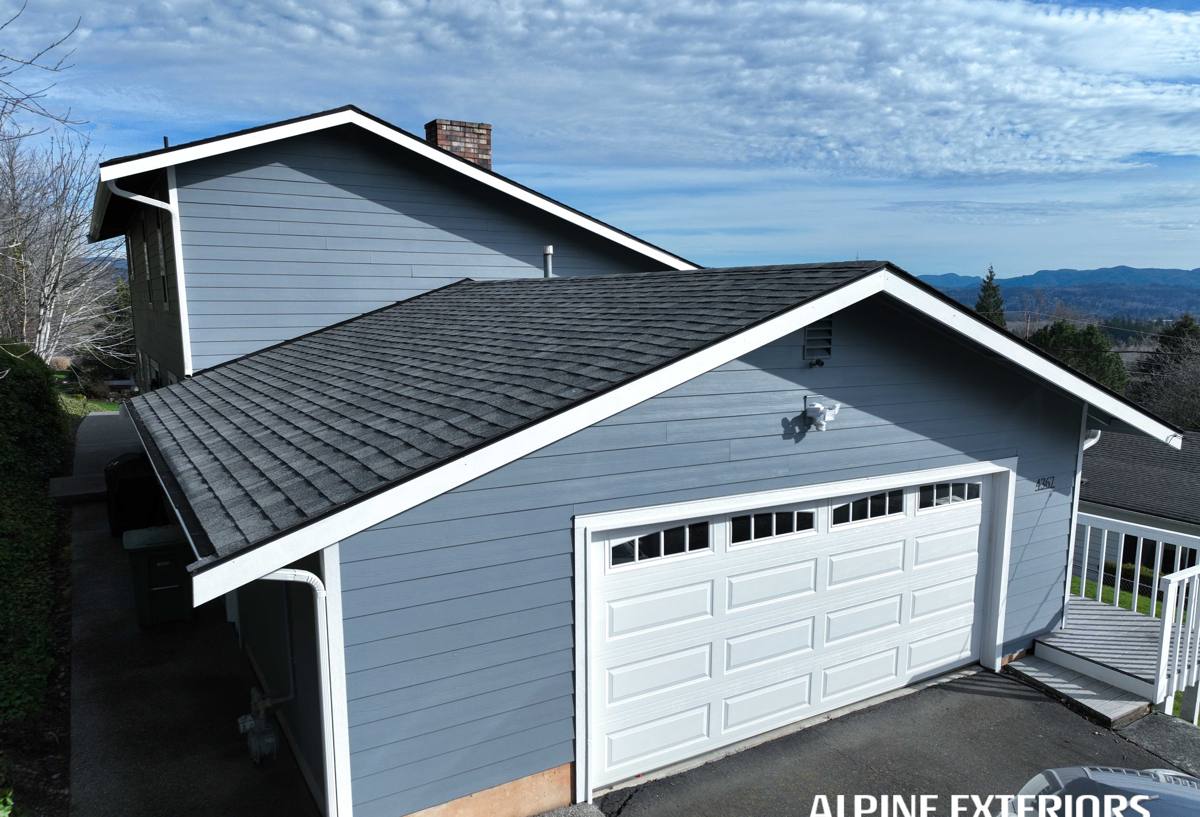
What Whatcom County Weather Actually Does to a Roof
Salt Air and Corrosion
Homes closer to Bellingham Bay and the water get a steady dose of salt-laden moisture in the air. Over years, that salt exposure accelerates corrosion on any metal that isn't properly coated or isn't suited for a marine-influenced environment. This doesn't mean metal roofing is a bad choice here — it means panel coating, fastener material, and flashing metal all need to be selected with that exposure in mind, not just picked off a standard spec sheet.
Driving Rain and Wind-Driven Water
Storms coming off the water often bring rain sideways, not straight down. That matters more than people expect, because a roof that sheds water fine in a calm rain can still let water push backward under panels or through marginal flashing when wind is driving it uphill against a seam. Every seam, panel overlap, and flashing detail on a metal roof needs to account for wind-driven water, not just gravity.
Moss and Shade
Whatcom County's tree cover and cloudy stretches mean plenty of roofs sit in partial shade for much of the year. That's exactly the condition moss thrives in. Metal roofing resists moss far better than asphalt shingles or wood shakes because there's no organic material for it to root into, but debris buildup in valleys and against trim can still hold moisture long enough to grow moss and stain the finish if the roof isn't detailed to shed debris cleanly.
Metal Roofing Options That Actually Hold Up Here
Not all metal roofing is the same product wearing a different name. The panel style and coating matter a lot in a climate like this. Here's how the common options compare for Bellingham-area homes:
| Type | How It Handles Salt Air | How It Handles Driving Rain | Typical Use |
|---|---|---|---|
| Standing seam (concealed fastener) | Best — no exposed fasteners to corrode | Best — raised seams resist wind-driven water intrusion | Full roof replacements, higher-visibility homes |
| Exposed-fastener panel | Fair — depends entirely on fastener quality and gasket condition | Fair — seams and screw penetrations are the weak point | Outbuildings, budget-conscious projects, some re-roofs |
| Stone-coated steel | Good — coating adds a protective layer over the steel | Good — profile sheds water well when properly lapped | Homes wanting a shake or tile look with metal durability |
For most Bellingham-area homes, we lean toward standing seam because it removes the biggest long-term liability in a salty, wet climate: exposed screws that loosen, back out, or corrode over fifteen or twenty years. That's not a knock on exposed-fastener panels — they have their place, especially on shops and outbuildings — but for a primary residence exposed to weather off the bay, concealed fasteners hold up with a lot less future maintenance.
What a Correct Installation Actually Involves
Underlayment That Backs Up the Panels
Metal panels are the visible layer, but the underlayment underneath is what protects the deck if wind-driven rain ever gets past a seam. In this climate we use a synthetic underlayment rated for the exposure, with self-adhered membrane at the eaves, valleys, and any penetration — the spots where wind-driven rain and ice damming (on the rare cold snap) are most likely to test the system.
Fastener Choice and Panel Attachment
Fastener material and spacing aren't cosmetic details — they're the difference between a roof that lasts decades and one that starts leaking at the screws in ten years. In a salt-air environment, we spec fasteners and clips rated for that exposure rather than defaulting to whatever's standard inland.
Flashing Details
Most metal roof leaks don't happen in the field of the panel — they happen at flashing: chimneys, sidewalls, valleys, and roof-to-wall transitions. Getting these details right, with proper laps and sealant that's rated for long-term UV and moisture exposure, is where experience actually shows up. It's also the part that's easiest to shortcut, and the shortcuts don't show up as a leak until years later.
Ventilation
Metal roofs perform best with proper attic or roof-deck ventilation. Without it, moisture can get trapped underneath, which undermines the whole point of putting on a low-maintenance, moisture-resistant roof in the first place. We check ventilation as part of every metal roofing job, not as an upsell.
Our Process on a Bellingham-Area Metal Roofing Job
- Inspection and assessment — we look at the existing deck, ventilation, flashing points, and any moss or moisture damage before quoting anything.
- Panel and coating selection — we walk through the standing seam, exposed-fastener, and stone-coated options above and match it to your home, budget, and how exposed the site is to wind and salt air.
- Tear-off or overlay decision — depending on the condition of the existing roof and deck, we'll tell you honestly whether an overlay is appropriate or whether a full tear-off is the right call for the deck to last as long as the new roof.
- Installation — underlayment, panels, and flashing installed in sequence, with particular attention to the wind-driven-rain details covered above.
- Final walkthrough and cleanup — we check seams, fastener lines, and flashing before we consider the job done, and we clean the site thoroughly.
Maintaining a Metal Roof in a Marine Climate
Metal roofing is genuinely low-maintenance compared to asphalt or wood, but "low-maintenance" isn't "no-maintenance," especially this close to the water. A short annual routine keeps a metal roof performing for its full lifespan:
- Clear debris (needles, leaves, moss fragments) from valleys and against any wall flashing at least once a year
- Check gutters and downspouts for buildup that can back water up under eave flashing
- Look for any panel fasteners that appear loose, lifted, or discolored (a sign of corrosion starting)
- Trim back overhanging branches that keep sections of the roof shaded and damp
- After major windstorms, do a visual check for lifted panel edges or displaced flashing
Cost Factors for Metal Roofing in This Area
There's no single price that applies to every home, but the variables that move the number are consistent. Here's what actually drives cost on a Bellingham-area metal roof:
| Factor | Why It Matters |
|---|---|
| Panel type | Standing seam costs more upfront than exposed-fastener panel but needs less long-term maintenance |
| Roof complexity | More valleys, dormers, and penetrations mean more flashing work and labor time |
| Tear-off vs. overlay | Removing an old roof adds cost but is often necessary if the deck has moisture damage |
| Deck condition | Rotted or moss-damaged sheathing found during tear-off needs to be replaced before panels go on |
| Ventilation upgrades | Adding or correcting attic ventilation during the job protects the investment long-term |
We give straightforward, itemized estimates so you can see exactly where the cost is coming from — not a single lump number with no explanation behind it.
Why a Local Ferndale Crew Matters for This Job
A metal roof installed by a crew unfamiliar with Whatcom County conditions can still look fine on installation day and still fail early — the failure points here are gradual: fastener corrosion from salt air, water intrusion at flashing that only shows up in a real wind-driven storm, moss buildup in valleys that a crew from a drier climate wouldn't think to detail against. Working Bellingham and Ferndale roofs regularly means we've seen how these systems actually perform locally over years, not just on a spec sheet. It also means we're nearby if you ever have a question about your roof after the job is done, and we know local permitting and inspection expectations for this area without having to learn them on your project.
Get a Straight Answer on Your Roof
If you're weighing metal roofing for a home in Bellingham, Ferndale, or elsewhere in Whatcom County, we're happy to take a look and give you an honest read on what your roof actually needs — no pressure, no inflated quote to "leave room to negotiate." Fill out the form below for a free estimate and we'll walk the roof with you.