 Ferndale
 Siding Installation for Bellingham Homes, Done by a Crew That Already Works This Area
Bellingham sits close enough to the water that homes here deal with a specific combination of weather stress: salt-laden air drifting off Bellingham Bay, long stretches of driving rain through fall and winter, and a moss season that can run most of the year in shaded yards. None of that is unusual for Whatcom County, but it does mean siding installed here needs to handle conditions that a lot of national siding guidance simply doesn't account for. We're based in Ferndale, we install in Bellingham regularly, and this page covers what a correct siding installation actually looks like for homes in this specific area.
We install James Hardie fiber cement siding exclusively. That's not a marketing angle — it's a standard we hold because of what we've seen hold up (and what doesn't) on homes in this climate over years of installs. More on that below.
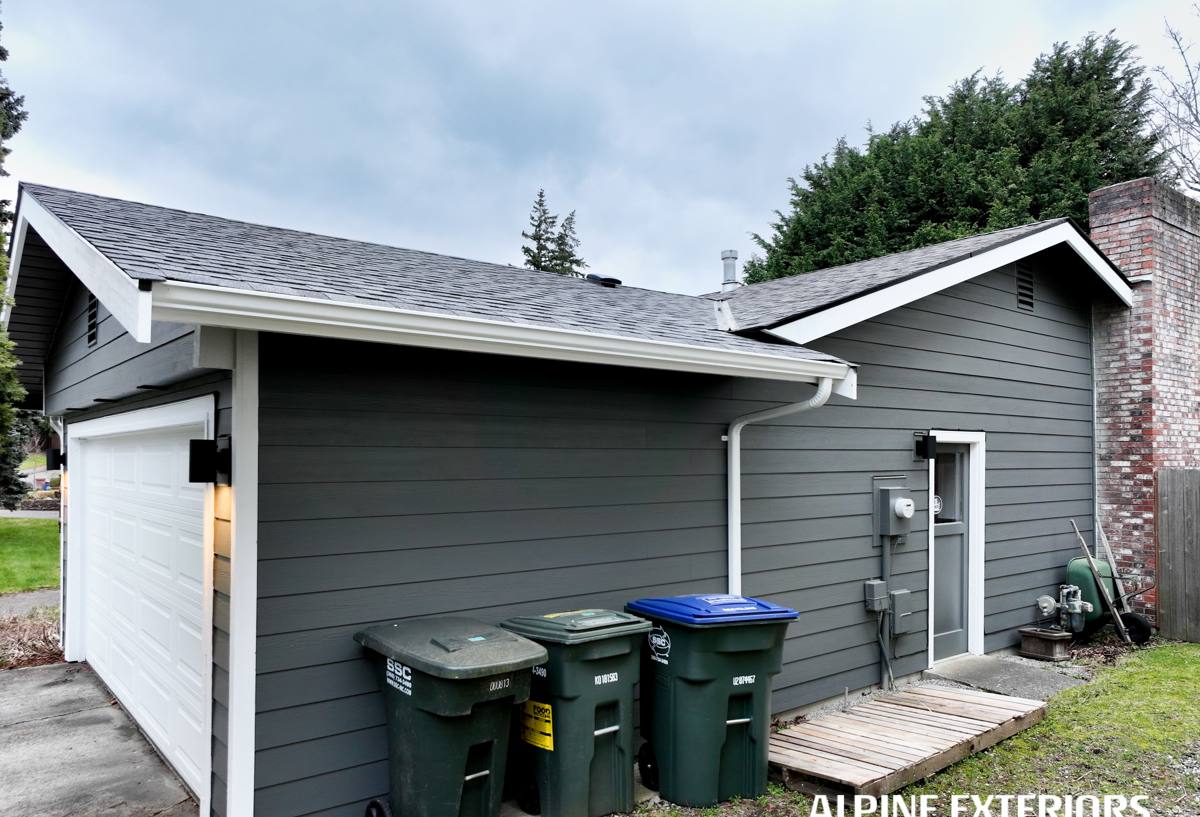
What Bellingham's Climate Actually Does to Siding
Salt Air
Homes within a few miles of Bellingham Bay get low-level salt exposure carried in on marine air. Salt accelerates corrosion on any exposed metal fasteners or trim and can degrade certain paint and coating systems faster than the manufacturer's stated service life. It's rarely dramatic — it's slow, and it shows up as premature fading, chalking, or fastener staining five to ten years before a homeowner expects it.
Driving Rain
Whatcom County doesn't just get rain — it gets wind-driven rain that hits siding at an angle rather than falling straight down. That matters because it pushes water into laps, seams, and butt joints that a vertical-rain climate would never test. Poor flashing detail or undersized laps that would survive in a drier region will leak here.
Moss and Sustained Moisture
Shaded lots, tree cover, and north-facing walls in Bellingham stay damp for extended stretches, especially October through April. Moss and algae growth on siding isn't just cosmetic — sustained moisture against a wood-based or moisture-sensitive substrate is where rot starts. Siding material and installation detail both matter here more than in a drier climate.
Why We Don't Install Everything on the Market
We get asked to quote vinyl, LP SmartSide, and occasionally primed wood siding. We don't install any of them, and we'd rather explain why than dodge the question.
- Vinyl moves a lot with temperature swings, and in driving-rain conditions its overlapping panel design relies on gaps and weep points that can let wind-driven water behind the cladding. It also doesn't hold paint, so color options are limited and fading is permanent.
- Wood-based composite siding (like LP SmartSide) uses an engineered wood substrate. It's a genuinely improved product over old-school hardboard, but it's still wood at its core — meaning it's more sensitive to sustained moisture exposure and edge damage than a cement-based product, particularly in the kind of shaded, damp conditions common in Bellingham yards.
- Primed spruce or cedar looks great new but demands a repainting and caulking maintenance cycle that most homeowners underestimate, and it's the least forgiving of the group when it comes to standing moisture.
James Hardie fiber cement isn't immune to Bellingham's climate — nothing is — but it's non-combustible, dimensionally stable across temperature and moisture swings, and holds a factory-applied ColorPlus finish that's formulated to resist the fading and chalking that salt air accelerates on field-applied paint. That's the trade-off we're comfortable standing behind on homes in this area.
What a Correct Installation Involves
The siding material is only part of the equation. In a driving-rain, high-moisture climate, installation detail is often what actually determines whether a wall stays dry for the next 30 years.
Weather-Resistive Barrier and Rainscreen
We install a proper weather-resistive barrier behind the siding, and on homes with more moisture exposure — shaded lots, north walls, areas closer to the bay — we use a rainscreen gap to let any incidental moisture that gets behind the cladding drain and dry out instead of sitting against the sheathing.
Flashing at Every Penetration
Windows, doors, hose bibs, light fixtures, vents — every penetration through the siding plane is a potential entry point for wind-driven rain. Correct flashing detail at each one isn't optional trim work, it's the difference between a wall that sheds water and one that slowly rots from the inside.
Fastener Spec and Placement
James Hardie has specific fastener requirements — type, length, and placement — that vary by product line and climate exposure. In a salt-air environment, using the correct corrosion-resistant fastener spec matters more than it would inland. We follow Hardie's published fastening schedules rather than shortcutting to whatever's fastest.
Proper Laps and Clearances
Minimum lap dimensions and ground/roof clearances aren't arbitrary numbers — they're sized for the amount of water a wall assembly needs to shed in a given climate. We don't shrink laps or clearances to save material on a Bellingham install.
Our Process, Ferndale to Bellingham
- On-site assessment. We look at sun/shade exposure, proximity to the water, existing siding condition, and any moisture or rot signs before quoting anything.
- Tear-off and sheathing check. Old siding comes off and we inspect the sheathing underneath — this is often where hidden moisture damage from a previous installation shows up.
- Weather barrier and rainscreen installation. Done to spec for the exposure level of that specific wall, not a one-size-fits-all approach.
- Flashing at all penetrations. Windows, doors, and fixtures get properly flashed before siding goes on, not caulked after.
- James Hardie installation to manufacturer spec. Correct fasteners, laps, and clearances for our climate zone.
- Final walkthrough. We go over the finished job with the homeowner before calling it done.
Why a Local Crew Matters Here
Siding installation guidance that works for Spokane or Sacramento doesn't automatically work for Bellingham. A crew that installs across drastically different climates all year can default to generic spec sheets. We work Ferndale, Bellingham, and the surrounding Whatcom County area consistently, which means we're making the same flashing, rainscreen, and fastener decisions on similar homes repeatedly — not guessing at what a marine climate needs on a job-by-job basis.
We also know which parts of Bellingham tend to run damper and shadier than others, which affects whether we recommend a rainscreen gap or additional ventilation detail on a given wall. That's the kind of judgment call that comes from doing this work in this specific place, not from a national installation manual.
Cost Factors for a Bellingham Siding Installation
Every job is different, but the factors that move price on a Bellingham home tend to be consistent. We don't quote exact numbers without seeing the house, but here's what typically drives the estimate:
| Factor | Why It Matters Here |
|---|---|
| Existing siding removal | Tear-off cost depends on layers and whether hidden rot or moisture damage is found underneath |
| Wall exposure | Shaded, north-facing, or bay-facing walls may need a rainscreen system, which adds labor and material |
| Sheathing repair | Any rot found during tear-off has to be repaired before new siding goes on — this is common on older homes with prior moisture intrusion |
| Trim and flashing detail | Homes with more windows, doors, and architectural detail require more flashing work per square foot |
| James Hardie product line | HardiePlank, HardieShingle, and panel systems carry different material costs |
| Access and site conditions | Sloped lots, tight setbacks, and landscaping can affect labor time |
Signs Your Bellingham Home Needs New Siding Sooner Rather Than Later
- Soft or spongy spots when you press on the siding, especially near the bottom courses or around windows
- Persistent moss or algae growth that comes back quickly after cleaning
- Visible warping, buckling, or gaps at seams and laps
- Paint that's peeling or bubbling rather than just fading
- Musty smell or visible staining on interior walls that share an exterior wall with damp siding
- Fastener heads showing rust or staining streaks down the siding face
Any one of these on its own isn't necessarily an emergency, but in Bellingham's climate they tend to progress faster than homeowners expect once moisture gets behind the cladding.
Get a Straight Answer on Your Siding
If you're weighing a siding replacement in Bellingham, we're happy to come take a look, tell you honestly what condition your current siding and sheathing are in, and walk you through what a correct James Hardie installation would involve for your specific home. No pressure, no inflated quote games — just a straightforward assessment. Reach out for a free estimate using the form below.