 Ferndale
 Board & Batten Siding in Blaine: A Different Climate Test Than Inland Homes Face
Blaine sits about as close to the water and the Canadian border as a Whatcom County home can get, and that location changes what siding actually has to withstand. Homes here deal with salt-laden air coming off the Strait of Georgia and Boundary Bay, driving rain that hits walls sideways during winter storms, and a moss season that stretches for months under the region's persistent gray skies and shade cover. Board and batten siding — with its bold vertical lines and deep shadow reveals — is one of the most popular looks for this stretch of the county, but it's also a style that punishes a shortcut installation faster than lap siding does.
We install board and batten exclusively in James Hardie fiber cement, and only that product, on every home we work on in Blaine and the surrounding Ferndale area. This page covers what that combination needs to hold up here, what a correct installation actually involves, and what our process looks like from first estimate to final walkthrough.
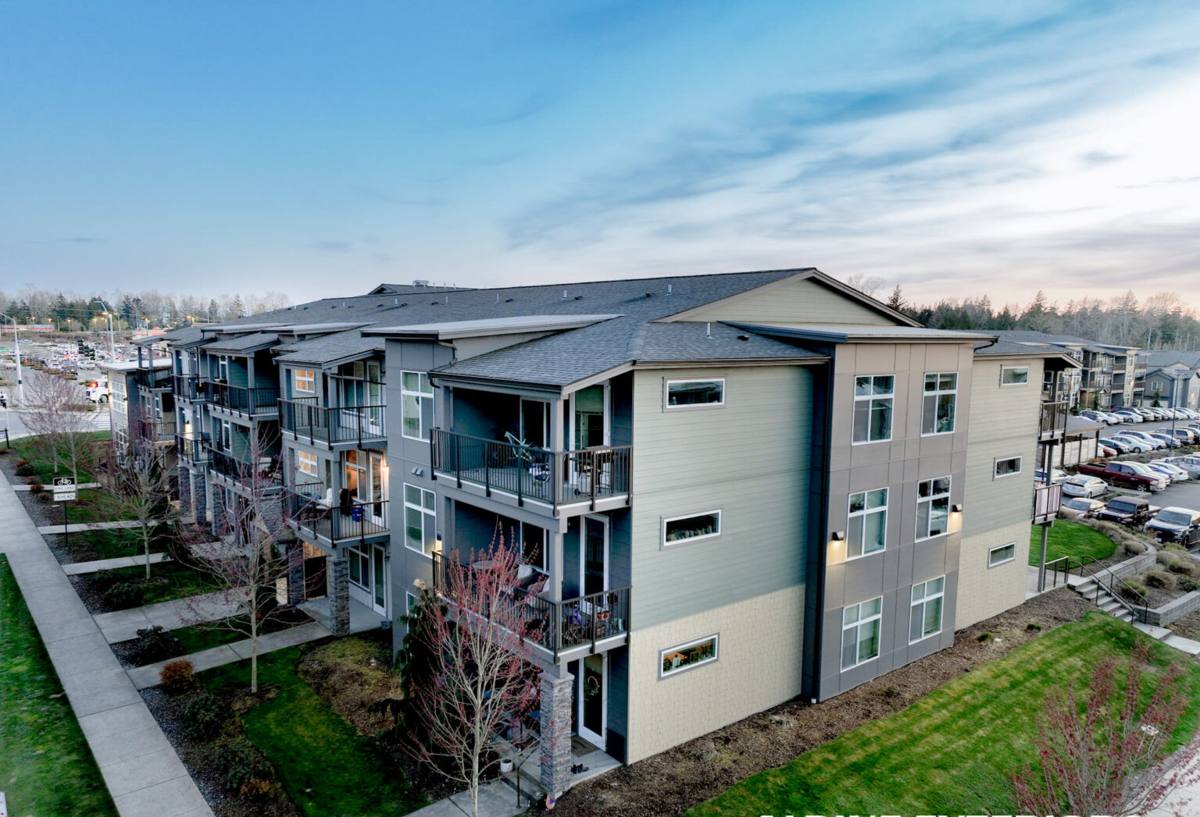
Why Board & Batten Is Popular Here — and Where It Goes Wrong
The vertical board and batten profile reads as modern farmhouse, coastal, or craftsman depending on trim and color choices, and it pairs well with the mix of newer builds and older coastal homes you see around Blaine. It's a strong architectural choice. But the same design elements that make it attractive — narrow battens, exposed vertical seams, and often a flatter reveal than lap siding — are exactly the details that fail first when the product or the installer cuts corners near salt air and wind-driven rain.
- Vertical seams give water more entry points if caulking and flashing aren't done correctly
- Narrow battens have less material mass, so cheap or moisture-sensitive substrates swell, warp, or rot faster than they would in a wider lap profile
- Flat, low-texture board and batten shows moss and algae growth more visibly than a shadowed lap profile, especially on north- and west-facing walls that stay damp longest
- Salt air accelerates corrosion on any exposed or low-grade fastener, which shows up as rust streaking down the face of vertical boards
None of that means board and batten is a bad choice for Blaine. It means the product and the installation both have to be matched to the exposure the home actually gets.
Why We Only Install James Hardie for This Application
We don't install LP SmartSide, vinyl, Cemplank, Allura, primed spruce, or cedar board and batten. That's a standard we hold across every job, and it matters more here than almost anywhere else in the county because of the salt air and moisture load.
What Hardie Gets Right for This Exposure
James Hardie fiber cement is non-combustible and dimensionally stable — it doesn't absorb moisture the way wood-based or wood-fiber composite sidings can, which matters directly for the swelling, cupping, and rot that show up on lower-grade board and batten near the water. The ColorPlus factory finish is baked on under controlled conditions rather than field-applied, so the color holds up to UV and salt exposure more consistently than a job-site paint or stain application, and it comes with its own finish warranty separate from the substrate warranty.
The Honest Trade-Offs
Hardie isn't the cheapest board and batten material available, and it's heavier and less forgiving to install than vinyl or engineered wood panel systems — it requires correct fastener spacing, blade selection for cutting, and manufacturer-specified gapping and flashing details. Installed poorly, any siding fails; Hardie is simply less tolerant of shortcuts being hidden by the material itself. That's precisely why we treat installation quality as inseparable from the product decision, not a separate line item.
What a Correct Board & Batten Installation Involves
Board and batten is a two-layer system — vertical boards (or a solid panel) underneath, narrower battens covering the seams — and every layer of that system has to be built correctly for it to perform in a wet, salty climate.
Weather-Resistive Barrier and Drainage Plane
Before any siding goes up, the wall needs a continuous, correctly lapped weather-resistive barrier with proper flashing at every window, door, and penetration. In Blaine's rain exposure, we also install a drainage gap behind the siding using vertical furring strips, so any moisture that does get past the cladding has somewhere to drain and dry instead of sitting against the substrate.
Fastening and Board Layout
James Hardie specifies exact nail spacing, embedment depth, and edge distance for board and batten applications, and specifies corrosion-resistant fasteners — which we treat as non-negotiable this close to salt water. Boards need consistent, code-compliant gapping at seams to allow for expansion, and battens need to be fastened to structural framing or blocking, not just face-nailed into the board layer underneath.
Caulking and Sealant Details
Every seam, corner, and trim intersection gets sealed with a sealant rated for exterior fiber cement use — and it has to be the right amount in the right place. Over-caulking traps moisture; under-caulking lets it in. This is one of the most common places we see prior installations fail during inspections of existing homes in the area.
Moss and Algae Considerations
We factor in wall orientation and shade when planning color and finish recommendations — darker, shaded, north-facing walls in a long moss season need siding and trim details that shed water quickly and don't hold organic growth. ColorPlus finishes clean more predictably than field-applied paint, which matters over years of moss and algae exposure.
Our Process for Blaine Board & Batten Projects
- Site walk and exposure assessment: we look at wind direction, sun/shade pattern, roofline drainage, and existing moisture damage before recommending anything
- Substrate check: if there's existing rot, inadequate flashing, or a failed weather barrier under the current siding, we address it before board and batten goes up — covering a problem never fixes it
- Product and color selection: matched to the wall's actual sun and moisture exposure, not just the homeowner's initial preference in isolation — we'll tell you honestly if a color or reveal choice will show moss faster on a shaded elevation
- Installation to Hardie's published specifications: correct drainage plane, fastening, gapping, and sealant details, no deviations to save time
- Final walkthrough: we go over every elevation with you before calling the job finished
Comparing Board & Batten Material Options for This Climate
| Factor | James Hardie Fiber Cement | Engineered Wood (LP-type) | Vinyl | Cedar / Primed Spruce |
|---|---|---|---|---|
| Moisture stability near salt air | High — doesn't absorb water like wood-based products | Moderate — vulnerable at cut edges and seams | High, but seams can allow water behind panel | Low to moderate — requires ongoing sealing |
| Finish durability / UV | Factory ColorPlus finish, separately warrantied | Factory or field finish, variable | Color molded in, can fade or chalk | Field-applied, needs recoating on a cycle |
| Fire resistance | Non-combustible | Combustible | Combustible, can deform in heat | Combustible |
| Maintenance in moss-prone areas | Low — cleans predictably | Moderate | Low, but can trap moisture behind panel | High — needs regular treatment |
| Installed cost | Mid-to-upper | Lower to mid | Lower | Mid to upper, plus ongoing maintenance cost |
Cost is real and we don't pretend otherwise — Hardie board and batten typically costs more upfront than vinyl or engineered wood. What we've found installing in this climate is that the upfront difference is offset by lower long-term maintenance and fewer moisture-related callbacks, particularly on exposed, water-facing walls common around Blaine.
What to Check Before Hiring Anyone for Board & Batten in This Area
- Ask specifically what weather-resistive barrier and drainage plane approach they use behind the siding — not just what siding brand goes on top
- Ask whether they follow the manufacturer's published fastening and gapping specs, and whether they'll show you the spec sheet
- Ask what fastener material they use — salt air corrodes low-grade fasteners faster than homeowners expect
- Ask how they handle existing rot or flashing problems found once old siding comes off
- Ask whether the crew doing the actual installation has hands-on experience with fiber cement specifically, not just siding in general
A crew that regularly works Blaine and the greater Ferndale area already knows the wind exposure patterns, the moss-prone elevations, and the drainage details that matter on this stretch of coastline — that local pattern recognition is worth as much as any brochure.
Why Local Experience on This Coastline Matters
Whatcom County's exposure varies more than people expect over a short distance — a home a mile inland from the water can need meaningfully less aggressive moisture detailing than one facing the strait directly. Crews that work this specific area regularly build that judgment into every estimate: where to add extra flashing attention, which elevations need a different color strategy to manage moss, and where drainage details matter most. That's not something a general contractor unfamiliar with this coastline picks up on the first pass.
If you're considering board and batten siding for a home in Blaine, we're happy to walk the property, look at your specific exposure, and give you a straight assessment of what the job actually needs — no pressure, no upsell, just an honest estimate.