 Ferndale
 Building Decks for the Cordata Area, the Way Whatcom County Weather Demands
A deck built for Cordata has to earn its keep differently than one built somewhere dry. This is Whatcom County — close enough to the water for salt-laden air to reach fasteners and hardware, wet enough that driving rain finds every gap in flashing, and shaded enough in the wet months that moss and algae get a real foothold on any horizontal wood surface. A deck that isn't detailed for that combination will look fine the first summer and start showing problems by the second or third wet season. We build decks for this area specifically, not decks that happen to be installed here.
This page covers what a deck build should include for a Cordata-area property near Ferndale: the material trade-offs, the structural details that actually matter in this climate, how our process runs from first visit to final walk-through, and why working with a crew that already knows this ground beats bringing in someone unfamiliar with it.
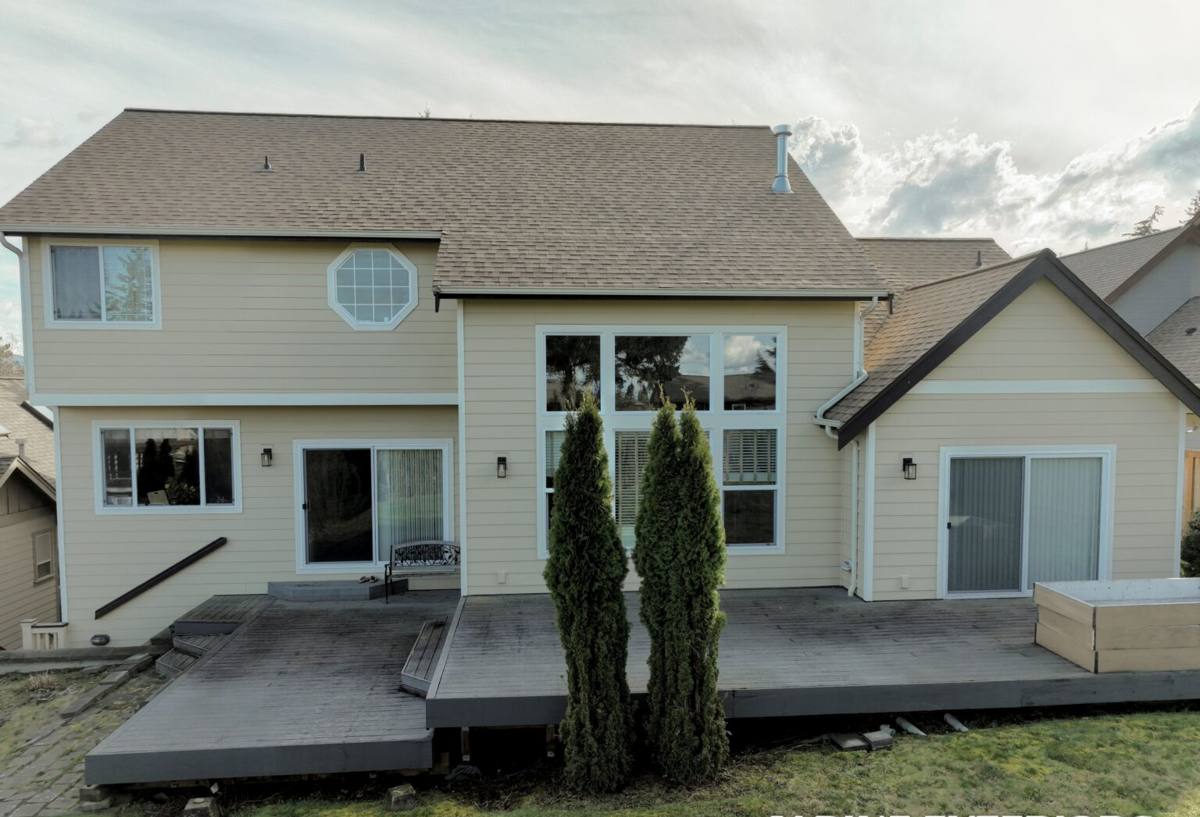
What This Climate Actually Does to a Deck
Salt Air and Hardware Corrosion
Proximity to Puget Sound and the Strait of Georgia means the air here carries more salt than most inland regions ever deal with. Standard zinc-coated fasteners and connectors corrode faster in that environment, and once a fastener starts rusting, it weakens the connection long before the wood around it shows any sign of trouble. That's a hidden failure point — the deck looks fine on the surface while the hardware holding it together is degrading underneath.
Driving Rain and Water Intrusion
Rain here doesn't just fall straight down; wind-driven rain gets pushed sideways into ledger connections, under railing posts, and into any seam that isn't properly flashed. A deck ledger board attached to the house is one of the most common failure points in Pacific Northwest deck construction, and it's almost always a flashing or fastening problem, not a design problem. Get the water management wrong at the ledger and you're looking at rot inside the house wall, not just deck damage.
Moss, Algae, and a Long Wet Season
Whatcom County's wet season runs long, and shaded decks under trees or on the north side of a house stay damp for weeks at a time. That's exactly the condition moss and algae need. Beyond the cosmetic issue, a mossy deck surface holds moisture against the wood and becomes genuinely slick underfoot — a real slip hazard on stairs and near door thresholds.
Choosing Decking Material for a Cordata Property
There's no universally "best" decking material — there's the material that fits your budget, your maintenance appetite, and how much shade and moisture your specific lot deals with. Here's how the common options compare for this climate specifically.
| Material | Moisture Behavior Here | Maintenance | Typical Lifespan |
|---|---|---|---|
| Pressure-treated lumber | Handles wet exposure well if detailed and sealed correctly; end cuts need re-treating | Annual cleaning, periodic sealing | 15-20 years with upkeep |
| Cedar | Naturally rot- and insect-resistant, but softer surface holds moss without regular cleaning | Regular cleaning, sealing every 1-2 years to hold color | 15-20 years |
| Composite decking | Doesn't absorb water or rot, but surface texture matters — smoother profiles get slick with algae | Periodic washing; no sealing or staining | 25-30+ years |
Composite is a strong fit for shaded, damp lots where owners don't want a sealing schedule, but the surface texture matters — some composite profiles get noticeably slicker than others once algae sets in, so we steer clients toward products with real grip in wet conditions rather than the smoothest-looking option. Cedar and pressure-treated lumber both work fine here as long as the framing underneath is detailed correctly and the owner keeps up with cleaning and sealing. We'll walk through the honest trade-offs for your specific lot rather than push one material across the board.
What a Correctly Built Deck Actually Involves
Footings Set Below Frost Depth
Footings need to be sized and set to local frost depth and soil conditions, not guessed at. Undersized or shallow footings are one of the most common causes of a deck that develops a slight lean or bounce within a few years.
Ledger Flashing Done Right
Where the deck attaches to the house, the ledger board needs proper flashing that sheds water away from the house sheathing — not caulk alone, which fails over time and is not a substitute for mechanical flashing. This single detail is responsible for more hidden rot damage than almost anything else in deck construction.
Corrosion-Resistant Hardware Throughout
Given the salt air this region deals with, we spec fasteners, joist hangers, and structural connectors rated for the exposure — not the cheapest hardware that happens to be on the shelf. It costs a little more up front and saves the structural integrity of the deck for decades.
Fastening Pattern and Gapping
Board spacing and fastener pattern affect both drainage and long-term board movement. Boards installed too tight trap moisture between them; gapped correctly, water sheds through and the deck surface dries faster after rain — which matters directly for moss control.
Our Deck Building Process
- Site visit and design. We look at sun exposure, drainage, existing grade, and how the deck ties into the house before recommending a layout or material.
- Permitting. Deck permits in Whatcom County jurisdictions depend on size, height, and attachment to the structure — we handle the application and inspection scheduling as part of the job.
- Footings and framing. Footings are set to proper depth, framing goes up with corrosion-resistant hardware, and the ledger connection is flashed before anything else proceeds.
- Decking and railing installation. Boards are fastened with correct spacing for drainage, and railing is set to current code height and baluster spacing requirements.
- Final walk-through. We go over the finished deck with you, including what maintenance it needs and on what schedule, before we consider the job done.
Permits and Setbacks Near Ferndale
Most new decks and many deck replacements in this area require a building permit, and the requirements shift depending on deck height, size, and whether it's attached to the house. Property line setbacks also come into play, especially on smaller Cordata-area lots where the buildable footprint is tighter than it looks. We don't skip this step to save time — an unpermitted deck can create real problems at resale, and inspections catch structural issues before they're buried under decking boards. We handle the permit process as a standard part of the job rather than treating it as optional paperwork.
Keeping a Deck Healthy Through the Wet Season
Whatever material you choose, a little seasonal attention goes a long way toward avoiding the moss, slickness, and slow rot issues this climate causes. A simple annual routine keeps most problems from ever starting:
- Sweep debris and standing leaves off the deck surface regularly through fall, since trapped organic matter holds moisture and feeds moss growth
- Clean the surface at least once a year with a deck-safe cleaner to remove algae and moss before it gets established
- Check and re-seal wood decking on the schedule appropriate to that product — skipping a cycle lets moisture in faster than most owners expect
- Inspect fastener heads and hardware periodically for early signs of corrosion, especially on decks facing prevailing wind and salt air
- Confirm gaps between boards haven't closed up from wood swelling, which blocks drainage and traps water against the frame
- Keep gutters and downspouts near the deck clear so roof runoff isn't dumping extra water onto or under the structure
Why a Local Cordata-Area Crew Makes a Real Difference
A contractor who works this specific area regularly already knows which details matter here — the flashing that has to be right because of the rain, the hardware grade that has to hold up to salt air, the material choices that actually perform in a shaded, moss-prone yard versus the ones that just look good in a showroom. That's different from general deck-building knowledge applied anywhere. We're not driving in from out of the area to bid a job and driving back out once it's built — we're working this ground on an ongoing basis, which means we're around for warranty questions, maintenance advice, and follow-up long after the last board is fastened down.
It also means we know the local permitting process and inspection expectations without having to learn them on your job, and we've seen firsthand what happens to decks built without these details in mind — the ledger rot, the corroded hardware, the slick moss-covered stairs — because we're often the crew called in years later to fix them.
Get a Straightforward Estimate
If you're planning a new deck or replacing one that's showing its age, we're happy to come take a look, walk the property with you, and put together a clear, no-pressure estimate based on what your Cordata-area lot actually needs. Fill out the form below and we'll get in touch to schedule a visit.