 Ferndale
 Roof Repair Built for Custer's Coastal Exposure
Custer sits close enough to the water that salt air is a daily fact of life, and far enough into Whatcom County's farmland that wind has nothing to slow it down before it hits a roofline. That combination is harder on a roof than either factor alone. Salt-laden moisture accelerates corrosion on fasteners, flashing, and metal roof panels, while open exposure means wind-driven rain gets pushed under shingle tabs and around vent boots that would stay dry in a more sheltered neighborhood. A roof repair here has to account for both problems at once, not just patch the visible symptom.
We've worked on enough roofs in this stretch of the county to know that a leak in Custer rarely has a single cause. It's usually a chain: a cracked pipe boot let in a small amount of moisture, moss held that moisture against the shingles longer than it should have sat, and salt-accelerated corrosion on the nearby flashing gave the water a path inward. Fixing just the leak point without addressing the chain means the same repair call again in a year or two.
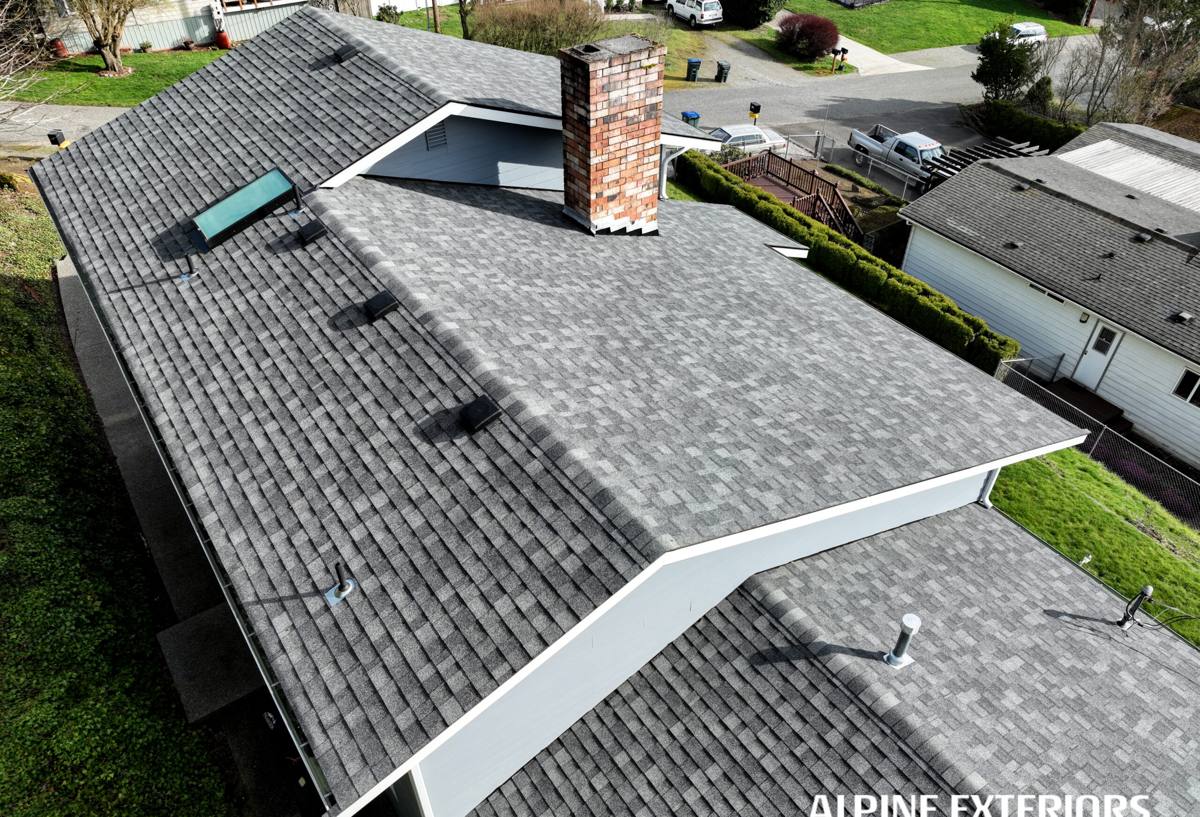
What Makes Roofs in This Area Fail Faster
Salt Air and Metal Fatigue
Airborne salt is corrosive to exposed metal — nails, drip edge, valley flashing, and any exposed fasteners on a metal roof. Galvanized coatings that would last decades inland can start showing rust streaks and pinholing years earlier in a coastal-influenced area like Custer. Once flashing starts to corrode, its seal to the roofing material weakens long before the metal actually fails structurally, and that's when leaks start.
Driving Rain and Wind-Driven Moisture
Whatcom County storms coming off the water don't just drop rain straight down — they push it sideways, up under shingle tabs, and into any gap in flashing or siding-to-roof transitions. Roofs that would be fine in a calmer microclimate can develop leaks at penetrations, ridge caps, and low-slope transitions simply because the wind gives water somewhere to go that the design didn't fully anticipate.
A Long Moss Season
Between the region's damp winters and mild, overcast stretches, moss and algae get a long growing window on north-facing and shaded roof slopes. Moss doesn't just look bad — it holds water against the shingle surface, works its rhizoids under tab edges, and lifts granules that protect the shingle from UV and physical wear. A roof with heavy moss coverage ages faster than a clean one, even if both are the same age and material.
Signs a Custer Roof Needs Repair, Not Just a Cleaning
- Granules collecting in gutters or at downspout outlets — a sign of shingle wear, not just normal shedding
- Dark streaking or thick moss mats on north-facing slopes
- Soft or discolored ceiling spots, especially after a windy rainstorm rather than a calm one
- Rust staining below metal flashing, vent stacks, or valley metal
- Curling, cracked, or missing shingle tabs near ridges and edges where wind uplift is worst
- Daylight visible through the roof deck from inside the attic
- Sagging or spongy feel underfoot near valleys or chimney flashing
How We Diagnose the Actual Problem
We don't quote a repair off a photo or a guess. A proper diagnosis means getting on the roof and, where accessible, into the attic to trace water staining back to its actual entry point — which is often several feet from where the ceiling stain shows up, since water travels along rafters and sheathing before it drips through. On a coastal-exposed roof we pay particular attention to:
- Flashing condition around chimneys, skylights, and any roof-to-wall transitions
- Fastener and metal condition for early signs of salt-related corrosion
- Moss coverage and whether it has already lifted granules or shingle edges
- Ventilation — poor attic airflow traps moisture and speeds up deck rot from the underside
- Sealant condition around every penetration, since old caulk is a common hidden leak source
Once we know the cause, we give a straight answer: sometimes it's a targeted flashing or boot repair, sometimes it's a section of shingles that needs replacing, and occasionally the roof has enough underlying damage that repair would just be a short-term patch on a roof closer to the end of its service life. We'll tell you which situation you're in.
What a Correct Repair Actually Involves
Flashing and Penetration Work
Corroded or poorly sealed flashing is one of the most common repair calls in this area. A correct fix means replacing the flashing itself where corrosion has compromised it — not just re-caulking over a failing metal piece — and using fasteners and materials suited to a salt-air environment.
Shingle and Deck Repair
Where shingles have failed locally (wind-lifted tabs, cracked seals, granule loss), we replace the affected section with matching material and re-integrate it properly into the surrounding courses so water sheds correctly. If the underlying deck has soft spots from prolonged moisture exposure, that gets addressed before any new shingles go down — covering rotten decking with new shingles just hides the problem.
Moss and Debris Removal Done Right
Moss removal has to be done carefully — aggressive pressure washing strips granules and shortens shingle life just as much as the moss itself does. We use low-pressure methods appropriate to the roofing material and follow up with treatment options that slow regrowth, rather than a one-time scrape that leaves the roof looking clean but still vulnerable.
Repair vs. Replacement: How We Help You Decide
| Factor | Points Toward Repair | Points Toward Replacement |
|---|---|---|
| Roof age | Under 15 years, or newer material with life left | Nearing or past expected service life for the material |
| Damage extent | Isolated to one section or a few penetrations | Widespread granule loss, moss, or flashing failure across the roof |
| Deck condition | Solid, dry sheathing under the damaged area | Soft, delaminated, or rotted decking in multiple spots |
| Leak history | First or isolated leak event | Recurring leaks in different spots over time |
| Cost over time | Repair cost is a small fraction of full replacement | Repeated repairs are approaching replacement cost |
Most roofs we look at in Custer fall clearly on one side or the other once we've actually inspected the deck and flashing. We'll walk you through where yours lands and why, in plain terms, before you commit to anything.
Materials and Methods We Use for This Climate
For coastal-exposed repairs, we favor corrosion-resistant fasteners and flashing over standard galvanized options where budget allows, since the incremental cost is small compared to redoing the same repair a few years sooner. Sealants are chosen for flexibility and UV resistance rather than the cheapest option on the shelf, since Whatcom County's mix of wet winters and summer sun cycles sealant hard if it isn't rated for the range. Shingle replacement sections are matched as closely as possible to existing material so the repair blends in rather than creating an obvious patch.
What We Avoid and Why
We're selective about a few common shortcuts you'll see in cheaper repair jobs: caulk-only fixes over failing flashing, pressure-washing moss off without addressing what's underneath it, and reusing old, brittle pipe boots instead of replacing them outright. These aren't manufacturer failures — they're maintenance shortcuts that don't hold up against this area's rain and salt exposure, and we'd rather do the repair once, correctly, than come back out for the same call next season.
Why a Crew That Already Works Custer Matters
A roof repair crew that hasn't worked this specific stretch of coastline tends to underestimate how much salt exposure and driving rain shorten the life of standard fixes. We've seen which flashing details hold up here and which ones don't, which roof orientations grow moss fastest, and where wind-driven rain tends to find its way in on homes built to typical inland specs. That local pattern recognition means fewer surprises during the inspection and a repair scoped to actually last in this environment, not just on paper.
We also know the practical side of working in Custer and the surrounding Ferndale area — seasonal weather windows for safe roof access, and planning repairs around the wetter stretches of the year so the work isn't fighting active rain while it's underway.
Maintaining a Roof After Repair
- Clear gutters and downspouts at least twice a year — clogged drainage backs water up under lower courses
- Trim back overhanging branches that keep shaded roof sections damp and feed moss growth
- Have flashing and pipe boots inspected every couple of years, since sealant and rubber components age faster in this climate than the shingles around them
- Address small moss patches early rather than waiting for full coverage
- Check the attic after major windstorms for new staining, especially the first season after any repair
If you're dealing with a leak, moss buildup, or flashing that's showing its age on a Custer roof, we're happy to take a look and give you a straight, no-pressure assessment of what it actually needs. Use the form below to request a free estimate.