 Ferndale
 Why Lynden Decks Take a Beating
Lynden sits inland from the Strait of Georgia and Bellingham Bay, but that doesn't spare it from the same wet weather pattern that soaks the rest of Whatcom County. Long stretches of drizzle, heavy fall and winter rain, and a moss season that can run from October through April all work against exposed wood and fasteners. Add in the salt-tinged marine air that drifts inland off the Sound, and you have a climate that's genuinely hard on decks, even ones that were built well to begin with.
Most deck problems we see in Lynden aren't dramatic. They're slow: a ledger board that's been absorbing splashback for years, joists that stay damp under a deck surface that never fully dries between rains, or fastener heads that have started to weep rust stains into the boards around them. None of it happens overnight, and none of it announces itself until someone notices a soft spot underfoot or a railing that flexes more than it should.
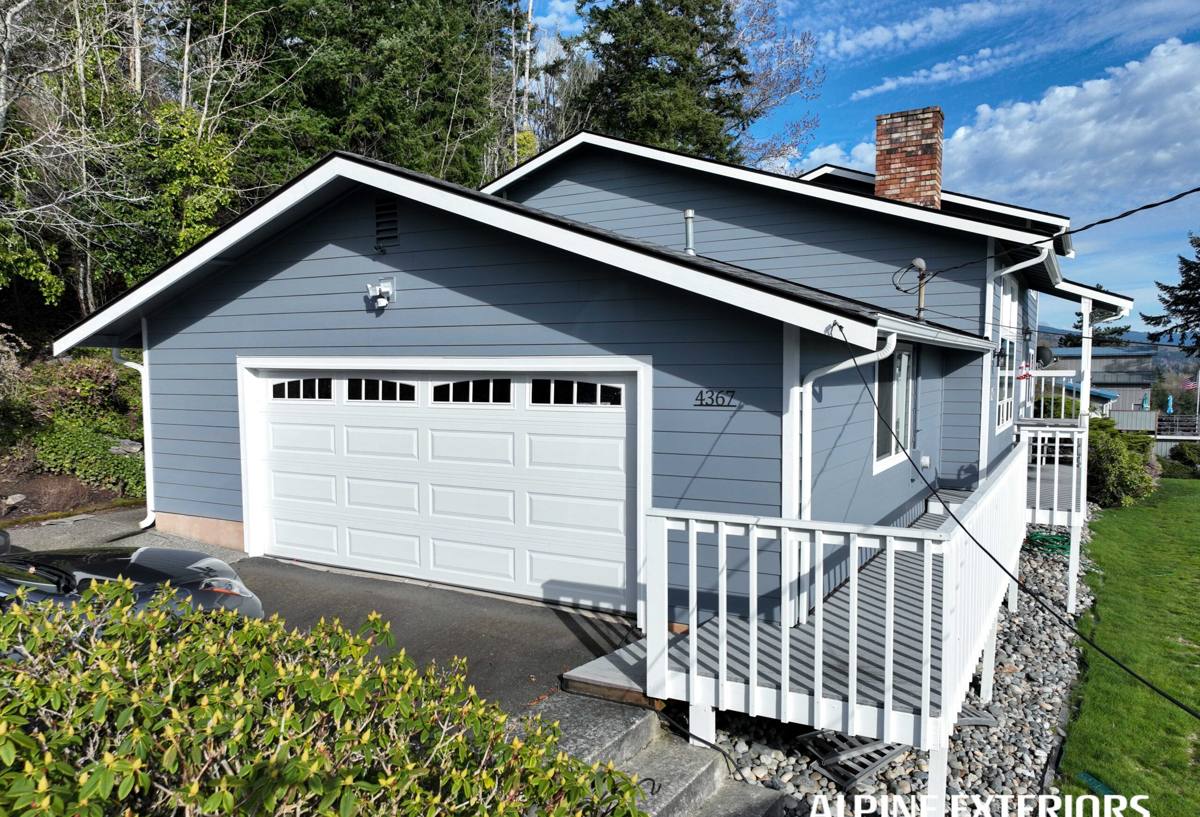
What This Climate Does to a Deck, Specifically
Moisture That Never Fully Leaves
Whatcom County doesn't get the hard freeze-thaw cycles that crack concrete in colder climates, but it makes up for it with duration. Wood that stays damp for months at a stretch — rather than getting soaked and then drying out — is exactly the environment wood rot and fungal decay need to establish themselves. Decks with poor airflow underneath, tight board spacing, or shade from nearby trees are the ones that show problems first.
Moss and Organic Growth
Moss on a deck surface isn't just a slip hazard, though it is that. It holds moisture directly against the wood or composite surface, which accelerates decay underneath even when the top of the board still looks fine. Moss and algae also work into fastener holes and seams, which is often where hidden rot starts.
Fastener and Hardware Corrosion
Standard fasteners and lower-grade structural hardware don't hold up well to years of damp, salt-influenced air. Once a fastener starts corroding, it loses holding strength and can stain and weaken the wood fiber around it. This is a common, quiet failure point in older Lynden decks — the boards themselves can look salvageable while the hardware underneath has already given up.
UV and Weathering Between Rain Events
Lynden does get real sun in the summer months, and UV exposure between rain events dries and checks the surface of wood decking, opening up small cracks that then take on water the next time it rains. That cycle — dry and crack, then soak — is part of what shortens the life of an unmaintained deck surface.
Signs Your Deck Needs Repair, Not Just Cleaning
- Boards that feel spongy, springy, or noticeably softer than the boards around them
- Visible gaps, splitting, or cupping in individual deck boards
- A railing or post that moves or flexes when you lean on it
- Rust streaking coming from screw or bolt heads
- Dark staining or a musty smell near the ledger board where the deck meets the house
- Stairs that feel less solid than they used to, especially at the stringers
- Persistent moss or algae that comes back quickly after cleaning
- Gaps or separation where the deck attaches to the house
Any one of these on its own might be minor. Several together, especially near the ledger or support posts, usually means the damage has moved past the surface.
What a Correct Deck Repair Actually Involves
A repair that just replaces the boards you can see and leaves everything underneath alone is a temporary fix, not a real one. Our process starts with getting underneath and around the structure, not just walking across the top.
1. Structural Assessment
We check the ledger board connection, joists, beams, posts, and footings before we touch the surface. This is where the deck's actual integrity lives. A deck can have brand-new boards on top and still be unsafe if the framing underneath is compromised.
2. Identifying the Moisture Source
Rot doesn't happen randomly — it happens where water collects or lingers. That might be a flashing gap at the ledger, a low spot with poor drainage, or board spacing that's too tight to let air move underneath. We identify the cause, not just the symptom, because replacing wood without fixing the moisture path just buys a few more years before the same repair is needed again.
3. Removing and Replacing Only What's Actually Compromised
Good repair work is selective. We remove and replace boards, joists, or hardware that have genuinely failed, and we leave sound material alone. There's no need to tear apart a whole deck when the damage is isolated to a section.
4. Hardware and Fastener Upgrades
Where corrosion has been part of the problem, we replace failing hardware with fasteners and structural connectors better suited to the moisture exposure here, rather than putting the same grade of hardware back in and expecting a different result.
5. Addressing Drainage and Airflow
If poor airflow or standing water contributed to the damage, we address that as part of the repair — adjusting board spacing, clearing debris paths, or correcting a drainage issue — so the fix actually holds up through the next several wet seasons.
Repair vs. Replacement: How We Decide
| Factor | Points Toward Repair | Points Toward Replacement |
|---|---|---|
| Framing condition | Joists and beams are structurally sound | Widespread rot in joists, beams, or posts |
| Extent of damage | Isolated to a few boards or one section | Damage spread across most of the deck |
| Ledger board | Solid connection to the house | Ledger rot or flashing failure |
| Age of deck | Under 15-20 years, built to a decent standard | Older deck already near the end of its service life |
| Footings and posts | Stable, no movement or settling | Heaving, settling, or undersized footings |
We'll walk you through what we find and give you an honest read on which side of that line your deck falls on. Sometimes a deck that looks rough is actually a straightforward repair. Sometimes a deck that looks fine on the surface has framing problems that make replacement the more sensible long-term choice. We'd rather tell you that upfront than sell you a repair that won't last.
Deck Materials and Long-Term Maintenance in This Climate
When we're replacing sections of a deck, the material choice matters more here than it would in a drier climate. Pressure-treated lumber holds up well when properly maintained but does need periodic sealing to keep performing. Composite and capped composite decking cost more upfront but resist moisture and moss buildup better over time, which matters given how long our wet season runs. Neither is automatically the "right" answer — it depends on your budget, how the deck is used, and how much upkeep you want to do. We'll talk through the real tradeoffs rather than push whatever's easiest for us to install.
Whatever material is used, a few maintenance habits go a long way in Lynden's climate: keeping the deck surface clear of leaves and debris so water doesn't pool, cleaning moss off before it has a chance to hold moisture against the boards, and doing a quick annual check of railings, stairs, and any spots near the ledger where water tends to collect.
Our Process, Start to Finish
- Free on-site inspection, including underneath the deck and around the ledger connection
- Clear explanation of what we found, in plain terms — no pressure toward the most expensive option
- A written estimate that separates structural repair from cosmetic work, so you know what you're paying for
- Repair work performed with attention to the moisture source, not just the visible damage
- A final walk-through so you can see exactly what was done and why
Why Hire a Crew That Already Works in Lynden
Deck problems caused by long-term moisture exposure look different than storm damage or simple wear, and diagnosing them correctly takes familiarity with how homes in this area age. A crew that regularly works Whatcom County homes knows what a ledger board looks like after fifteen wet seasons, recognizes moss-driven rot patterns early, and isn't guessing at what "normal" deterioration looks like here versus somewhere with a drier climate. That local pattern recognition is often the difference between a repair that gets diagnosed correctly the first time and one that gets revisited a year later because the real cause was missed.
We also know that a deck repair isn't just a standalone project for most homeowners — it's connected to the overall condition of the exterior, including siding, trim, and drainage around the house. Problems in one area often point to something worth checking in another.
Get a Straight Answer About Your Deck
If your Lynden deck has soft spots, a shaky railing, recurring moss, or you just haven't had it looked at in a while, we're glad to take a look. Request a free, no-pressure estimate using the form below and we'll give you an honest assessment of what it needs.