 Ferndale
 Why Decks in Sudden Valley Take More Abuse Than the Photos Suggest
Sudden Valley sits in a wooded, lake-adjacent pocket of Whatcom County, and that setting is exactly what makes deck maintenance here different from a deck out in open, sunny yard space. Mature tree cover keeps large sections of many decks shaded for most of the day, which sounds pleasant until you realize shade means slow drying. A deck board that stays damp longer than it should is a deck board that's already on the clock for rot, no matter how good the lumber was when it went in.
Add in what the rest of Whatcom County deals with — driving rain off the Pacific storm track, salt-tinged marine air that works its way inland, and a moss season that can run from fall through spring — and you've got a climate that's genuinely tough on exterior wood structures. Moss doesn't just look bad on decking; it holds moisture against the board surface and works into fastener holes, which is where a lot of hidden rot actually starts. We've repaired enough decks in this area to know the failure points aren't random. They're predictable, and they show up in the same spots year after year: north-facing sections, areas under overhanging branches, and anywhere water has nowhere to go once it lands.
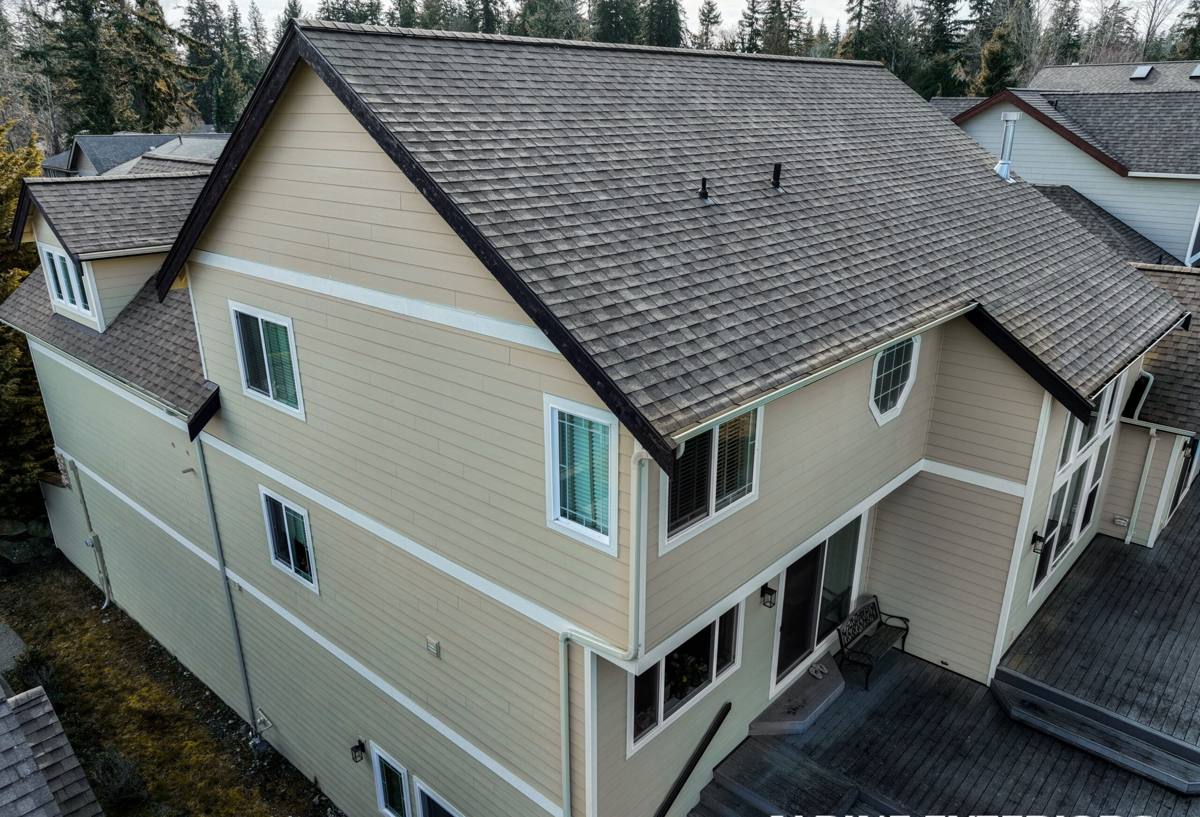
Common Signs a Sudden Valley Deck Needs Repair
Soft, Spongy, or Discolored Boards
Press on a board with your foot. If it flexes more than the boards around it, or feels slightly spongy, moisture has gotten into the wood fiber and rot has started. Dark staining, especially near board ends or around fastener heads, is usually the visible sign of the same problem.
Loose or Wobbly Railings
Railings take constant stress from people leaning on them, and in a wet climate the wood or the fasteners holding the post to the frame can weaken faster than the deck surface itself. A railing that shifts under light pressure isn't a cosmetic issue — it's a safety issue that needs to be looked at before someone leans on it at the wrong moment.
Gaps or Rust at the Ledger Board
The ledger board — the piece that attaches the deck to your house — is the single most important structural connection on the whole structure. Any daylight showing between the ledger and the house, rust streaking down the siding below it, or soft wood around the lag bolts is worth having checked promptly, since this is the connection point most deck collapses trace back to.
Persistent Moss and Algae Film
A light green film that comes back within weeks of cleaning usually means the deck isn't drying out properly between rains, often because of shade, poor board spacing, or a finish that's worn through. Treating the symptom without addressing drainage or airflow is a short-term fix at best.
What a Proper Deck Repair Actually Involves
Structural Repairs Come First
Before anything gets replaced on the surface, we check what's underneath: the ledger connection, the posts and footings, the joists, and the hardware tying it all together. Sistering a rotted joist, replacing a corroded post base, or re-flashing a ledger board isn't glamorous work and it's often invisible once finished decking goes back down — but it's the part of the job that determines whether the deck is actually safe, not just presentable.
Surface and Cosmetic Repairs
Once the frame is sound, we address what you actually see and walk on: individual board replacement, re-fastening loose boards with corrosion-resistant screws, sanding or replacing splintered sections, and refinishing or staining to protect the wood going forward. Skipping straight to this stage without checking the structure underneath is how a deck ends up looking new for a season and then failing where you can't see it.
Repair or Replace? How We Help You Decide
Not every deck problem calls for a full tear-off, and not every deck is worth patching either. We walk through this with every homeowner honestly, based on what we actually find during inspection — not on which option is more profitable for us.
| Factor | Repair Usually Makes Sense | Replacement Usually Makes Sense |
|---|---|---|
| Structural frame | Ledger, posts, and most joists are sound | Widespread rot at ledger, posts, or multiple joists |
| Age of decking | Under 15-20 years, isolated board damage | Original decking near or past its practical service life |
| Extent of damage | Localized — a few boards, one railing section | Damage spread across most of the deck surface |
| Fastener condition | Hardware mostly sound, some spot corrosion | Widespread rusted or failing fasteners |
| Budget goal | Extend usable life at lower upfront cost | Reset the clock and upgrade materials at once |
Most decks we're called out to see fall somewhere between these two ends, and the right call often ends up being a hybrid: replace what's failed structurally, repair what can be saved on the surface, and refinish the rest to match.
Our Deck Repair Process in Sudden Valley
- Inspection: We check the frame first — ledger, footings, posts, and joists — then the surface, railings, and stairs.
- Written scope and estimate: You get a clear breakdown of what's structural, what's cosmetic, and what each part costs, so you're not guessing at what you're paying for.
- Structural repair: Any rotted framing, failing connections, or unsafe footings get addressed before anything else.
- Surface repair: Board replacement, re-fastening, railing repair, and stair work.
- Cleanup and finish: Sanding, moss and algae treatment where needed, and sealing or staining to protect the repair going forward.
- Walkthrough: We go over the work with you and point out anything worth keeping an eye on down the road.
Decking Materials and Fasteners We Recommend for This Climate
For repair work, matching the existing decking material usually makes the most financial and visual sense — replacing a few pressure-treated boards on a pressure-treated deck, for example, rather than mixing materials. Where a homeowner is open to it, we'll talk through composite decking as a repair option for high-wear sections, since it resists the moss and moisture staining that wood is prone to in shaded, damp spots. The trade-off is real: composite costs more upfront, and it needs its own care — some composite boards can still grow surface mildew in constant shade, just without the rot risk underneath.
Fasteners matter more than most homeowners expect. In a climate with this much moisture and moss, standard coated screws can corrode and stain the wood around them within a few years. We use stainless steel or high-grade coated fasteners rated for exterior ground-contact and coastal-influenced environments, and we'll use hidden fastener systems where it fits the board profile, both for appearance and because it reduces the number of points where water can work into the wood.
Keeping Your Repaired Deck in Good Shape
A repair holds up a lot longer with a little seasonal attention. This is the same checklist we'd give any homeowner in this area:
- Sweep off leaves, needles, and debris regularly — trapped organic matter holds moisture and feeds moss.
- Rinse or lightly scrub moss and algae film before it gets a chance to establish, rather than after it's thick.
- Check railings and stair connections for looseness once or twice a year.
- Reapply sealant or stain on the schedule the product calls for — in this climate, that's often more frequent than the label suggests for sun-exposed products.
- Keep gutters and downspouts clear so runoff isn't draining directly onto or under the deck.
- Trim back overhanging branches where practical to improve airflow and sun exposure.
Why It Matters to Hire a Crew That Already Works in Sudden Valley
A lot of deck problems in this community come from the same handful of causes — shade patterns from mature trees, moisture that lingers longer than it would in an open lot, and moss that returns faster here than in drier parts of the county. A crew that's worked on decks in this specific setting recognizes those patterns quickly instead of treating every job as a blank slate. That matters for accuracy in the estimate and for getting the drainage and finish details right the first time.
It also matters for the practical side of the job. Sudden Valley's terrain and private road network mean access and material staging take a bit more planning than a flat, easy-access lot, and if your property falls under homeowners association guidelines for exterior work, it helps to have a contractor who's used to working within that kind of framework rather than being caught off guard by it partway through the job.
Get an Honest Look at Your Deck
If your deck in Sudden Valley has soft boards, a loose railing, or moss that keeps coming back no matter what you do, it's worth having someone look at the frame, not just the surface. We offer free, no-pressure estimates — we'll tell you honestly whether you're looking at a repair or something bigger, and what it would take either way. Use the form below to get started.