 Ferndale
 Deck Replacement for Fairhaven's Waterfront Conditions
Fairhaven sits on the hillside above Bellingham Bay, and that setting is hard on an outdoor deck in ways that don't apply to a deck built further inland. A deck has no roof, no siding, no wall assembly protecting it — it's the one part of a home's exterior that sits fully exposed to whatever the weather brings, day after day, year-round. In this neighborhood that means a steady drift of salt-tinged marine air, rain that gets pushed sideways by wind more often than it falls straight down, and a moss season that can stretch across most of the calendar on shaded, tree-covered lots. Add in the sloped terrain common through Fairhaven's older residential blocks, and a deck here is dealing with more variables at once than a stock deck design was ever built to handle.
This page is specifically about replacing a deck in Fairhaven — not general deck-building advice, and not a generic climate page. It covers what tends to fail first on an aging Fairhaven deck, how to tell whether you're looking at a repair or a full replacement, what a correct rebuild involves on this kind of site, and how our process works from first look to finished deck.
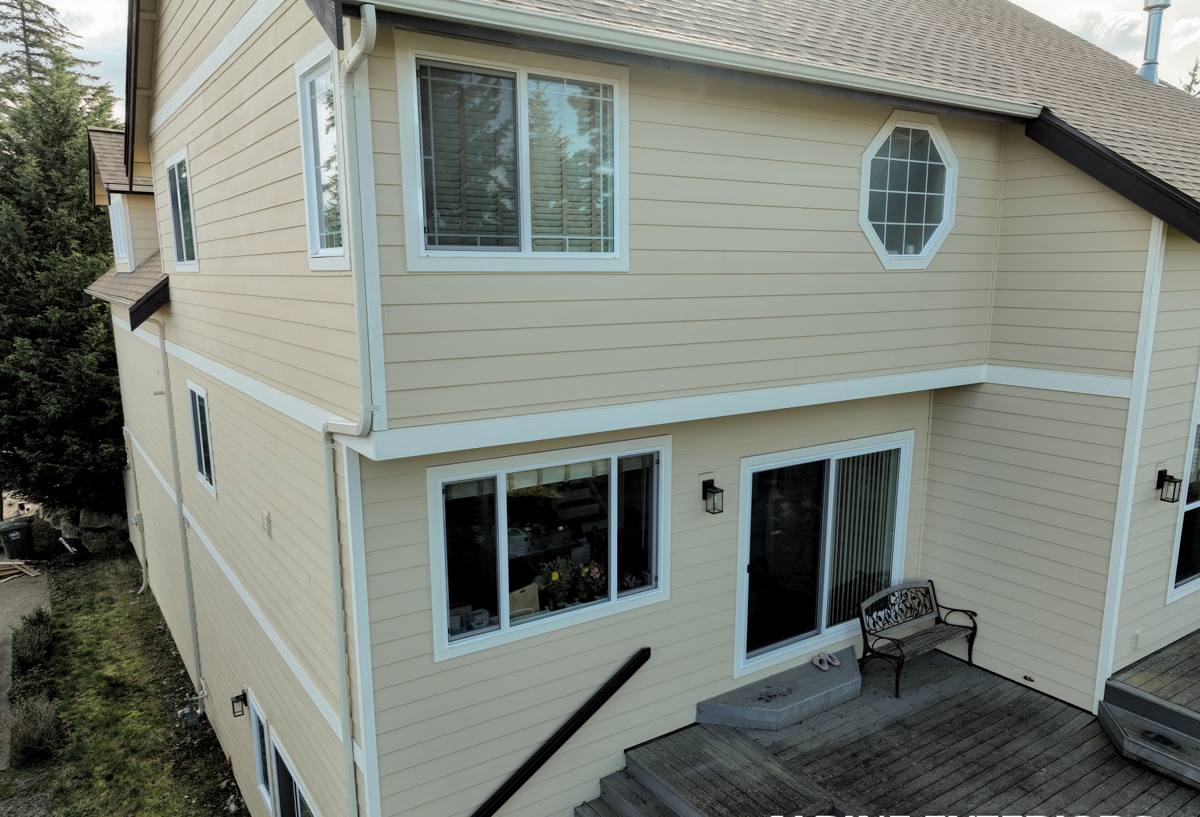
What Bay-Side Exposure Does to a Deck Over Time
Salt Air and Fastener Corrosion
Homes close to Bellingham Bay take a near-constant, low-grade dose of salt-laden air, and a deck sits directly in it with nothing overhead to soften the exposure. Salt accelerates corrosion in exposed metal — screws, joist hangers, post brackets, railing hardware — and a corroding fastener loses holding strength well before it looks obviously bad from the surface. On a structure people stand, walk, and set furniture on, that's a structural concern long before it's a cosmetic one.
Wind-Driven Rain
Storms coming off the bay don't just fall on a Fairhaven deck, they get driven into it. Wind pushes rain up under railings, into ledger connections, and between boards that weren't gapped with that kind of exposure in mind. A deck surface that would shed water fine on a calm day can still trap moisture the moment wind gets involved, and in Fairhaven that combination shows up more often than it would on a sheltered inland lot.
A Moss Season That Runs Most of the Year
Mild temperatures, sustained dampness, and the mature tree canopy common across Fairhaven's older residential streets add up to a moss and mildew season that can run nearly year-round on shaded decks. Horizontal surfaces hold water longer than a vertical wall does, and any decking material with even modest surface porosity gives moss something to grip. North-facing decks and ones tucked under tree cover are usually first to show it.
Hillside Grading and Drainage
A fair amount of Fairhaven sits on sloped terrain leading up from the waterfront, and that affects how a deck's substructure drains and how water moves underneath it during heavy rain. On a sloped lot, poor grading or blocked drainage under a deck can trap moisture against the framing in a way a flat, well-drained yard wouldn't, which is one more reason a generic rebuild plan doesn't always fit a Fairhaven site.
Signs a Fairhaven Deck Needs Replacement, Not Just Repair
Not every aging deck needs to come out entirely. But there's a point where patching individual problems stops making sense, and pushing past that point usually means paying for repairs twice — once now, and again when the underlying issue resurfaces. A few honest signs point toward full replacement rather than another round of spot fixes:
- Soft, spongy, or spalling deck boards in more than an isolated spot or two
- Visible rot, splitting, or insect damage in the joists or beams underneath the surface
- A ledger board connection showing water staining, softness, or separation from the house
- Railing posts that wobble or have noticeably loosened from their connection points
- Rust staining bleeding from fasteners across multiple boards, a sign hardware is failing broadly rather than in one spot
- Persistent moss or mildew that returns quickly after cleaning, especially on shaded sections
- A structure that's original to an older home and has never been substantially updated for current fastening and flashing practices
One or two of these in isolation might point to a repair. Several at once, or any sign of framing rot near the ledger, usually means the deck has reached the point where a full rebuild is the more honest recommendation — and the more cost-effective one over the next several years.
Repair Versus Full Replacement: How We Make the Call
We'd rather tell a homeowner their deck can be repaired than talk them into a rebuild they don't need. A section of damaged decking, a single loose railing post, or isolated fastener corrosion can often be addressed without touching the substructure. But a full replacement is the right call when the framing itself has been compromised, when the ledger connection has let water track into the wall behind it, or when the deck predates current fastening and flashing standards and shows the kind of wear that comes with age in this climate. We'll walk the deck with you, explain exactly what we're seeing underneath the surface where we can access it, and give you a straight answer about which situation you're actually in.
Choosing Decking Material for a Fairhaven Rebuild
Material choice matters more here than it would on a drier, more sheltered lot, because the gap between a well-suited product and a poorly-suited one shows up faster under sustained salt air and moss pressure. Most Fairhaven replacement projects come down to a choice between wood, capped composite, and cellular PVC.
| Material | Handling Salt Air & Moisture | Moss Resistance | Upkeep |
|---|---|---|---|
| Cellular PVC | Excellent — no wood fiber to absorb moisture | Strong, smooth non-porous surface | Occasional washing |
| Capped composite | Strong — cap layer resists moisture and staining | Good on most product lines | Occasional washing |
| Cedar | Moderate — natural resistance, but needs sealing | Fair when sealed and maintained regularly | Regular oiling or sealing |
| Pressure-treated wood | Weak against sustained salt exposure over time | Poor without regular treatment | Regular sealing or staining |
Capped composite is the most common choice we install in Fairhaven — it balances upfront cost against long-term performance well for this kind of exposure. Cellular PVC costs more but makes sense on decks that sit closer to the water or get heavy shade, since it has no wood fiber at all to absorb moisture at cut edges or fastener holes. Wood can still be the right call for homeowners who want that specific look and are committed to a real maintenance schedule, but in this climate it's the material that falls behind fastest if upkeep slips even one season.
What a Correct Deck Replacement Involves Here
The decking surface gets most of the attention when homeowners picture a new deck, but in Fairhaven's climate, what's underneath and how it's fastened is what actually determines how long the rebuild lasts. A replacement done right on this kind of site includes:
- Framing sized correctly for the span and load, using lumber rated for sustained moisture exposure
- Stainless steel or coastal-grade corrosion-resistant fasteners throughout, not standard hardware that starts corroding in salt air within a few seasons
- A ledger board connection that's properly flashed where the deck ties into the house — the single most common point where water gets into the wall behind an older deck
- Correct board gapping so wind-driven rain and standing moisture can actually drain and dry between boards
- Joist spacing matched to the specific decking product's span rating, not a generic layout
- Railing and post attachment sized for real wind exposure, particularly on elevated sections of a hillside lot
- Grading and drainage under the deck that accounts for the site's slope, so water moves away from the framing instead of sitting against it between storms
Skip any one of those details and the new deck can still look good on day one. The consequences tend to show up a few winters later — a soft joist, a loosening railing post, or corrosion staining working its way through the boards above it.
How Our Process Works for a Fairhaven Deck Replacement
We start with a site visit to look at what's actually there: the condition of the existing structure, the ledger connection and any signs of moisture damage behind it, the slope and drainage around the deck area, and how much sun, shade, and wind exposure the site actually sees through the day. From there we talk through decking material options that fit the budget and how the space gets used, and we're straightforward if the site's specific exposure points toward one material over another.
Deck replacement work in Bellingham generally requires a permit, and we handle that process as part of the job rather than leaving it for the homeowner to navigate. Once permitted, demolition of the old deck lets us actually inspect the framing, ledger connection, and any hidden moisture damage that wasn't visible from the surface — which sometimes changes the scope, and we'll walk you through that honestly if it does. From there the build follows the sequence above: substructure and ledger flashing first, sized and fastened for the site's real exposure, then decking, railing, and stairs. We finish with a walkthrough covering what your specific material actually needs going forward, which for most modern decking is modest but not nothing.
Cost Factors for a Fairhaven Deck Replacement
| Factor | What It Affects | Why It Matters Here |
|---|---|---|
| Extent of substructure damage | Framing and ledger repair costs before new decking goes on | Older decks near the bay often have hidden moisture damage at the ledger connection |
| Decking material | Material cost and long-term upkeep | Salt air and moss pressure widen the real-world performance gap between materials |
| Site slope and access | Labor time and staging needs | Fairhaven's hillside lots can add scaffolding, shoring, or extra site prep |
| Deck size and footprint | Total material and labor | Larger decks and multi-level designs add framing and railing complexity |
| Railing and fastener grade | Hardware and material cost | Corrosion-resistant fasteners cost more upfront but hold up far longer against salt exposure |
Real numbers depend on the specific deck and site, which is why we walk the property in person before quoting rather than pricing off square footage alone.
What to Check Before Hiring Anyone for This Kind of Work
- Confirm an active Washington state contractor license and current insurance
- Ask specifically how they handle ledger board flashing where the deck attaches to the house
- Ask what fastener grade they use, and whether it's rated for sustained salt air exposure
- Ask how they handle hidden framing damage discovered once the old deck comes off
- Get a written scope that spells out framing, fastener grade, and flashing details, not just "new deck installed"
Why It Matters That We Already Work Fairhaven
A crew that mostly builds decks further inland can still put one together competently, but a Fairhaven job carries variables that don't come up as often elsewhere in Whatcom County: corrosion-grade fastener requirements from sustained bay-side salt exposure, ledger flashing decisions shaped by an older home's original construction, and drainage details that have to account for sloped, hillside lots rather than flat, well-drained ones. Working this neighborhood regularly means we're not guessing at those requirements on your project — we've seen which framing and fastener details hold up against Fairhaven's specific combination of salt air, driving rain, and a long moss season, and which ones are worth the extra time rather than an upsell.
If your Fairhaven deck is showing its age, or you just want an honest read on whether it's a repair or a replacement, we're glad to take a look. Reach out using the form below to schedule a free, no-pressure estimate.