 Ferndale
 Composite Decking Built for Kendall's Damp, Shaded Conditions
Kendall sits inland from the coast in Whatcom County, but it shares the same wet, gray, shoulder-season-heavy climate as the rest of Northwest Washington. Long stretches of drizzle, heavy tree cover on a lot of rural and semi-rural properties, and a moss season that can run half the year all put real stress on an outdoor deck. A composite deck built for this area needs to handle standing moisture, shaded ground, and repeated wet-dry cycles without warping, staining, or growing a green film across the boards by year two.
We install composite decking throughout Whatcom County, and Kendall properties tend to have a specific set of conditions in common: partial to full shade from mature trees, lower airflow under and around the deck structure, and ground that stays damp longer into spring than it does closer to open water or town. None of that rules out composite decking — it's actually a good match for this environment when it's built correctly. The problems show up when a deck is installed the same way you'd build one in a dry, sunny climate.
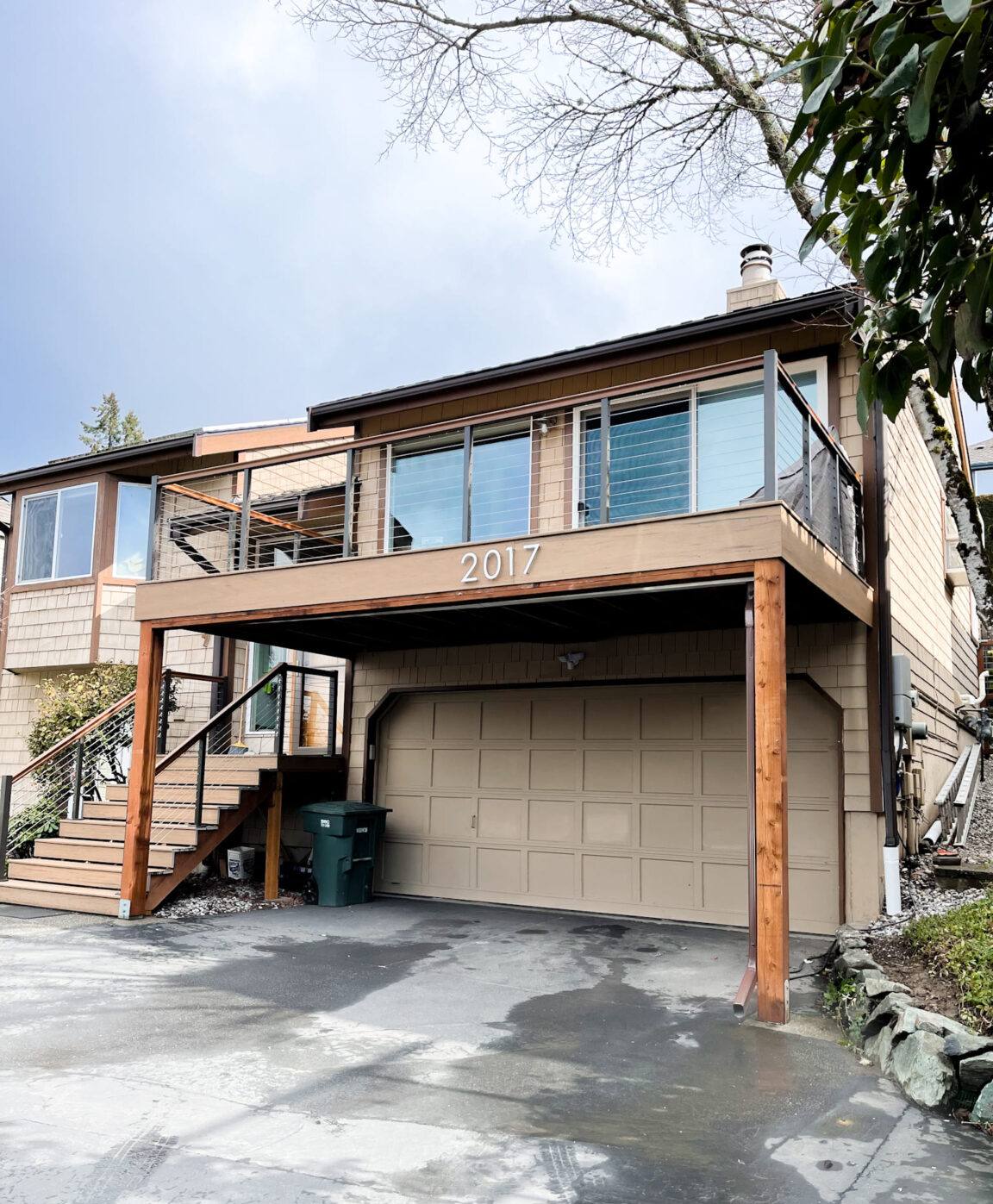
Why Moisture and Moss Are the Real Enemy of a Deck Here
Composite boards themselves resist rot the way wood doesn't, but the material isn't the whole story. Moisture problems on a deck almost always start underneath or between the boards, not on top of them. Standing water trapped against a ledger board, poor drainage off the substructure, or boards packed too tight for airflow will trap moisture right where mold, algae, and moss spores want to grow — even on a composite surface.
In a shaded Kendall yard, a deck that doesn't get much direct sun stays damp longer after every rain. That's normal for the area, but it means the build details matter more here than they would on a south-facing deck in full sun. Board spacing, joist protection, and under-deck ventilation aren't optional extras — they're the difference between a deck that stays clean with an occasional rinse and one that needs to be scrubbed every spring.
What a Correct Composite Deck Installation Involves
Substructure and Framing
The frame underneath a composite deck does the real structural work, and it's usually pressure-treated lumber or, on some jobs, a coated or composite substructure product. Joist spacing for composite decking is typically tighter than what's standard for wood boards — composite has more flex over long spans, so we frame to the manufacturer's spacing requirements rather than reusing old wood-deck spacing, which is a common shortcut that leads to bounce and premature sagging.
Joist Protection and Flashing
Every joist top and the ledger connection to the house get sealed with a self-adhering flashing tape before any decking goes down. This is the detail that gets skipped most often on lower-bid jobs, and it's the one that matters most in a wet climate. Untaped joists soak up water at every screw hole and cut end, which shortens the life of the frame even when the decking on top looks fine.
Fastening and Board Layout
Most composite systems use a hidden fastener clip system rather than face screws, which keeps the walking surface clean and avoids the small water traps that form around exposed screw heads. Board gaps are set to the manufacturer's spec for expansion and drainage — too tight and water sits on the surface longer; too wide and debris packs into the gaps.
Ventilation and Drainage
On decks close to the ground or enclosed with skirting, we build in venting so air can actually move underneath. A shaded, low-airflow deck without any underside ventilation is exactly the setup that grows moss and mildew fastest, regardless of what the decking is made of.
Composite vs. Other Decking Materials
We get asked fairly often why we steer most Kendall customers toward composite over other options. It comes down to how each material behaves in a shaded, wet climate over time — not a claim that other materials are bad, just an honest look at trade-offs.
| Material | Behavior in Shade & Moisture | Maintenance | Typical Lifespan |
|---|---|---|---|
| Capped composite | Resists moisture absorption; surface doesn't rot; needs periodic cleaning to prevent surface algae film | Occasional wash, no staining or sealing | 25-30+ years |
| Pressure-treated wood | Absorbs moisture, prone to splitting, checking, and rot at fastener points in constant damp shade | Annual sealing/staining recommended | 10-15 years before major repair |
| Cedar | Naturally rot-resistant but still absorbs moisture; graying and surface softening common in full shade | Regular sealing to maintain appearance and integrity | 15-20 years |
| PVC decking | Fully moisture-resistant, similar to capped composite; can feel less like natural wood underfoot | Low, similar to composite | 25-30+ years |
Our standard on shaded, damp lots is capped composite because it removes the moisture-absorption variable almost entirely while still giving a wood-grain look most homeowners want. PVC is a reasonable alternative and we'll install it if that's your preference — the choice usually comes down to look and feel rather than performance in this climate.
Choosing the Right Composite Board for Your Kendall Property
Capped vs. Uncapped Composite
Capped composite has a protective polymer shell wrapped around a wood-plastic composite core. That cap is what actually resists moisture, staining, and fading — the core underneath still has some organic content and can absorb water if the cap is cut, drilled improperly, or damaged. Uncapped, first-generation composite (still sold at lower price points) doesn't have that shell and is more prone to moisture uptake and surface mold, especially in a shaded yard. We install capped products as our standard for that reason.
Color and Grain Considerations
Darker composite boards run hotter in direct sun but that's rarely the concern in a shaded Kendall lot — the bigger factor is how a color hides or shows surface debris, pollen, and the occasional moss spot between cleanings. Lighter and mid-tone colors tend to show less of that buildup than very dark boards, worth factoring in if your deck sits mostly under tree cover.
Cost Factors for a Composite Deck Project
Every property is different, so we price jobs after a site visit rather than off a flat rate — but the factors that move the number are consistent.
| Factor | Why It Affects Price |
|---|---|
| Deck size and shape | More square footage and cut angles mean more board waste and labor time |
| Board tier | Entry-level capped composite vs. premium multi-tone boards spans a wide price range |
| Height off grade | Taller decks need more substantial framing, stairs, and code-required railings |
| Site access | Sloped, wooded, or tight-access Kendall lots take longer to stage material and frame |
| Substructure condition | Replacing an existing frame costs more than building fresh on new footings |
| Railing and fascia choices | Composite or metal railing systems add cost over basic wood rail |
Our Process From Estimate to Finished Deck
- On-site visit to walk the space, check grade, drainage, and existing structure if there is one
- Straightforward written estimate covering board selection, substructure work, and railing
- Permit and footing plan sized to the deck's height and load, per Whatcom County requirements
- Framing with treated lumber, correct joist spacing for composite spans, and full flashing tape
- Composite board installation with hidden fasteners and manufacturer-spec gapping
- Railing, stair, and fascia finish work
- Final walkthrough with you before we consider the job done
Permits, Footings, and Whatcom County Considerations
Most deck projects in unincorporated Whatcom County, including Kendall, require a building permit once the deck exceeds a certain height or square footage — and footing depth has to account for our regional frost line. Skipping the permit process is a shortcut some homeowners get talked into, but it creates real problems at resale and with insurance if something's built out of code. We handle the permit paperwork and inspection scheduling as part of the job rather than leaving it for you to sort out.
Setback requirements from property lines also come into play on rural and semi-rural Kendall lots more than they might in a tighter town lot, so we check those before finalizing a design rather than after footings are already in the ground.
Maintenance Checklist for Composite Decks in This Climate
Composite decking is genuinely lower-maintenance than wood, but "low-maintenance" doesn't mean "no maintenance" in a climate like ours. A few habits keep a shaded, damp-lot deck looking and performing the way it should:
- Sweep leaves, needles, and debris off the surface regularly, especially in fall — trapped organic matter under debris is what starts surface mold and moss
- Rinse the deck and clear gaps between boards a few times a year, more often under heavy tree cover
- Trim back overhanging branches where possible to let more light and air reach the deck surface
- Check underside ventilation isn't blocked by stored items, skirting debris, or overgrown vegetation
- Inspect fastener clips and railing hardware annually for movement, since ground moisture can affect anchoring over time
- Address any standing water or pooling promptly — it's usually a grading or drainage issue, not a board defect
Why Hiring a Crew That Already Works in Kendall Matters
A deck built to a generic national spec sheet can still fail early in a shaded, wet Whatcom County lot if the crew isn't accounting for local conditions — frost-depth footings, drainage on sloped or tree-covered ground, and the ventilation a low-airflow site actually needs. We work this area regularly, so the permit process, the county's footing and setback requirements, and the climate-driven build details aren't guesswork on our end — they're just how we build every deck here.
If you're weighing a new composite deck or replacing an aging wood one in Kendall, we're glad to walk the site with you and give you a straight estimate — no pressure, no upsell script, just an honest look at what your property needs. Use the form below to request a free estimate.