 Ferndale
 Roof Repair Built for Lynden's Weather
Lynden sits in the farmland and river-valley country of Whatcom County, where long wet winters, driving rain, and a moss season that never really ends put steady pressure on every roof in town. A roof here doesn't usually fail all at once. It fails one small entry point at a time — a lifted shingle tab, a cracked pipe boot, a clogged valley — until water finds its way into the attic or the wall line. Roof repair in Lynden is about catching those small failures early and fixing them correctly, not just patching the visible symptom.
We work on homes throughout Ferndale and the surrounding Whatcom County communities, including Lynden, and we see the same patterns again and again: moss holding moisture against shingles, wind-driven rain forcing water sideways under laps that were only designed to shed it straight down, and gutters that back up during heavy fall and winter storms. A repair that doesn't account for those local conditions tends to fail again within a season or two.
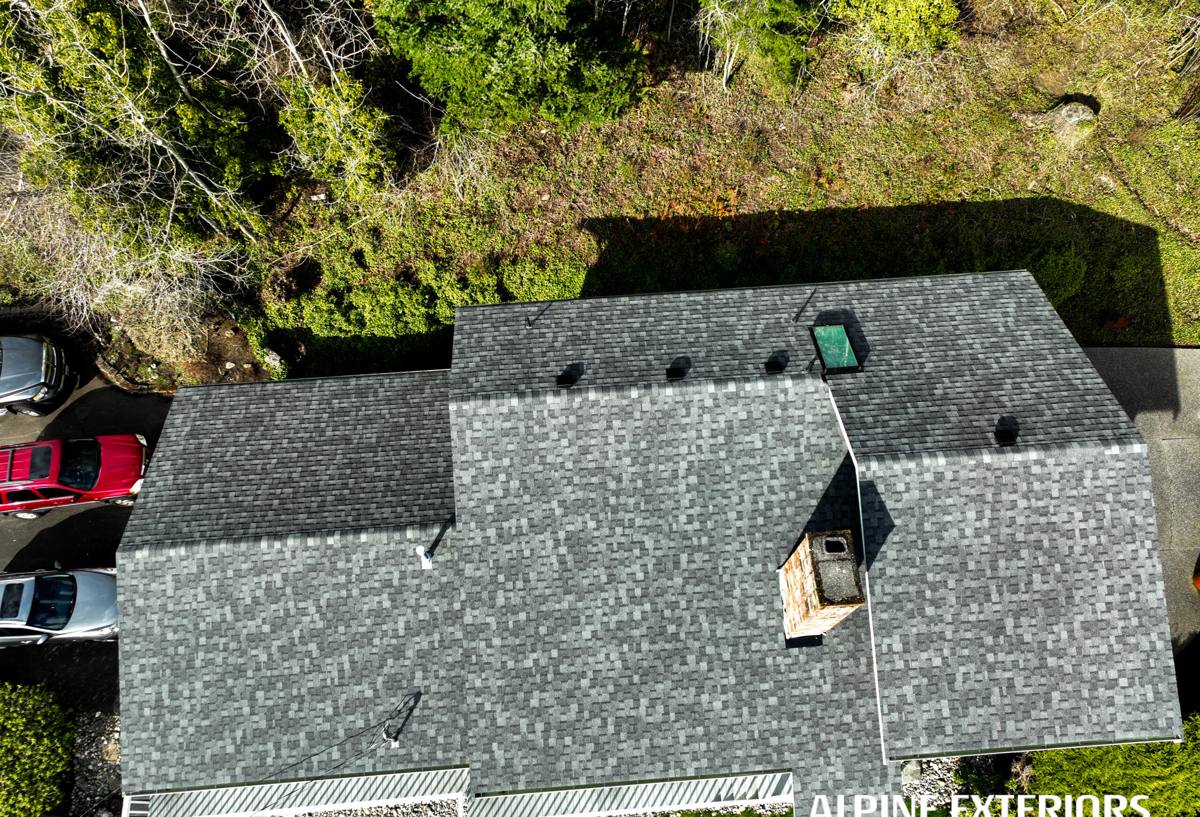
What This Climate Actually Does to a Roof
Understanding the damage pattern is the first step to fixing it right. In Lynden and the rest of Whatcom County, three conditions do most of the work:
Persistent Moisture and Moss
Long stretches of overcast, damp weather mean roofs rarely get a full dry-out period. Moss and algae take hold on north-facing slopes and shaded areas first, then spread. Moss doesn't just sit on top of shingles — its root structure lifts shingle edges and holds water against the surface, which accelerates granule loss and, eventually, leads to soft spots in the roof deck underneath.
Driving, Wind-Blown Rain
Storms coming off the water and across open farmland often push rain sideways rather than straight down. That matters because shingle, flashing, and underlayment systems are engineered to shed water flowing downhill — not water being forced uphill or sideways under a lap. Wind-driven rain is one of the top causes of leaks that show up nowhere near where the actual entry point is.
Temperature Swings and Freeze-Thaw Cycling
Whatcom County doesn't get extreme cold often, but it gets enough freeze-thaw cycling in winter to widen small cracks in flashing sealant, pipe boots, and old caulk repairs. What was a hairline gap in October can be a active leak point by February.
Signs a Lynden Roof Needs Repair
Most roof problems give warning signs well before there's an active leak inside the house. Homeowners who catch these early usually save significant money over waiting for a ceiling stain to show up.
- Shingles that look dark, streaked, or velvety green from moss or algae growth
- Granules collecting in gutters or at the base of downspouts
- Curling, cupping, or lifted shingle edges, especially on north-facing slopes
- Soft or spongy spots when walking the roof (a sign of deck rot underneath)
- Rusted, cracked, or lifted flashing around chimneys, skylights, and vent pipes
- Water stains on interior ceilings or in the attic, even faint ones
- Daylight visible through the roof deck from inside the attic
- Gutters that overflow during heavy rain instead of draining cleanly
Any one of these on its own might just need a straightforward repair. Several at once, especially soft decking combined with interior staining, usually means it's time to talk about whether repair or a partial re-roof makes more financial sense.
What a Correct Roof Repair Involves
A roof repair that actually holds up in this climate goes beyond sealing the spot where water is currently getting in. That location is often not the same as where the water originally entered — it can travel along the underlayment or decking before dripping through somewhere else entirely.
A proper repair typically includes:
- Tracing the leak to its true source, not just patching the visible drip point
- Removing damaged shingles and underlayment in the affected area, not just covering over them
- Inspecting the decking underneath for rot or soft spots and replacing any compromised sections
- Rebuilding flashing details around chimneys, vents, skylights, and valleys with new material, not just re-caulking old metal
- Matching shingle or roofing material as closely as possible so the repair doesn't stand out or create a new weak seam
- Clearing and treating moss in the surrounding area so it doesn't undermine the new work within a year
Skipping the decking inspection is the most common shortcut in a rushed repair, and it's the one that causes the most repeat calls. If the wood underneath is still wet or soft, new shingles on top of it are a short-term fix at best.
Common Roof Repair Situations We See in Lynden
| Issue | Typical Cause Locally | Repair Approach |
|---|---|---|
| Leak near chimney or skylight | Flashing sealant dried out or cracked from freeze-thaw cycling | Remove and rebuild flashing with new step and counter-flashing, not just re-sealing |
| Moss-damaged shingle sections | Shaded, north-facing slopes staying damp through moss season | Moss removal, spot shingle replacement, treatment to slow regrowth |
| Soft or sagging deck area | Long-term hidden moisture from a slow leak | Cut out and replace rotted decking, then re-roof the section |
| Leak that moves location in heavy wind | Wind-driven rain forced under shingle laps | Extend underlayment coverage, re-lap shingles correctly, add ice-and-water barrier at vulnerable points |
| Gutter overflow causing fascia rot | Clogged or undersized gutters during heavy storm runoff | Clear and adjust gutter pitch, repair or replace damaged fascia and adjacent roof edge |
Our Roof Repair Process
1. On-Site Inspection
We walk the roof and the attic where accessible, not just look from the ground. Ground-level inspections miss most of the early warning signs listed above.
2. Honest Assessment
We tell you what we actually found — including if a repair isn't the right call and a partial or full re-roof would serve you better long-term. We'd rather give that answer upfront than sell a repair that won't hold.
3. Written Estimate
You get a clear scope of work and price before anything starts. No surprise add-ons once we're on the roof unless we find something that genuinely wasn't visible during inspection, and we'll always explain it before proceeding.
4. The Repair Itself
We remove and replace what needs replacing, rebuild flashing properly, and match materials as closely as possible. Job sites are kept clean, and debris and old materials are hauled off, not left for you to deal with.
5. Follow-Up
We stand behind the work. If something related to the repair doesn't perform as expected, we come back and make it right.
Roofing Materials We Repair
Lynden has a mix of roof ages and types, from older asphalt shingle roofs on established homes to newer architectural shingle and metal roofing on recent builds. We work with what's already on your house rather than pushing an unnecessary switch:
Asphalt and Architectural Shingles
The most common roofing material in the area, and generally the most straightforward to repair section-by-section as long as matching material is available.
Metal Roofing
Metal roofs handle driving rain well, but repairs require attention to fastener seals and panel seams specifically, since a generic patch won't match the way metal roofing sheds and moves with temperature changes.
Flat and Low-Slope Sections
Porches, additions, and garage tie-ins often have low-slope roofing that behaves differently than the main roof and needs membrane-specific repair methods rather than shingle techniques applied to the wrong surface.
Why a Local Whatcom County Crew Matters
A roofing crew that regularly works Ferndale, Lynden, and the surrounding Whatcom County area already knows which details fail first in this climate — where moss builds up fastest, which flashing details take the worst of the driving rain, and how fast a small leak can turn into deck rot during a wet winter. That local pattern recognition means less time spent diagnosing and more time spent fixing the actual problem correctly the first time.
It also means someone who'll actually be around if a follow-up question comes up next storm season, rather than a crew that worked the area once and moved on.
Simple Maintenance That Extends Repair Life
A repair holds up longer when paired with basic seasonal upkeep. Between service visits, homeowners in Lynden can help their roof by:
- Clearing gutters and downspouts before the heavy fall rains start
- Trimming back tree branches that keep roof sections shaded and damp
- Watching for moss regrowth on north-facing slopes and addressing it early
- Checking the attic occasionally for damp insulation, musty smell, or daylight gaps
- Having the roof looked at after any major windstorm, even without visible damage
None of these replace a professional inspection, but they buy time and catch problems before they become expensive.
Get a Straight Answer About Your Roof
If you're dealing with a leak, moss buildup, storm damage, or just want a second opinion on a roof section that looks off, we're glad to take a look. Use the form below to request a free, no-pressure estimate — we'll tell you honestly what we see and what it would take to fix it right.