 Ferndale
 Roofing for Lynden's Corner of Whatcom County
Lynden sits a few miles inland from Bellingham Bay, so it doesn't take the same direct salt air exposure that homes right along the Ferndale waterfront or the Nooksack River delta deal with. But "inland" in Whatcom County still means wet. The same weather systems that roll off the Salish Sea push moisture into Lynden year-round, and the moss season here runs nearly as long as it does closer to the coast. Add in the open farmland winds that funnel across the valley and driving rain that hits roofs at an angle instead of straight down, and you've got a roof that's working harder than it looks like it should.
We're based in Ferndale and have crews out in Lynden regularly, so this isn't a one-off trip for us. We know which roofs in this area tend to fail early, which ones hold up, and why.
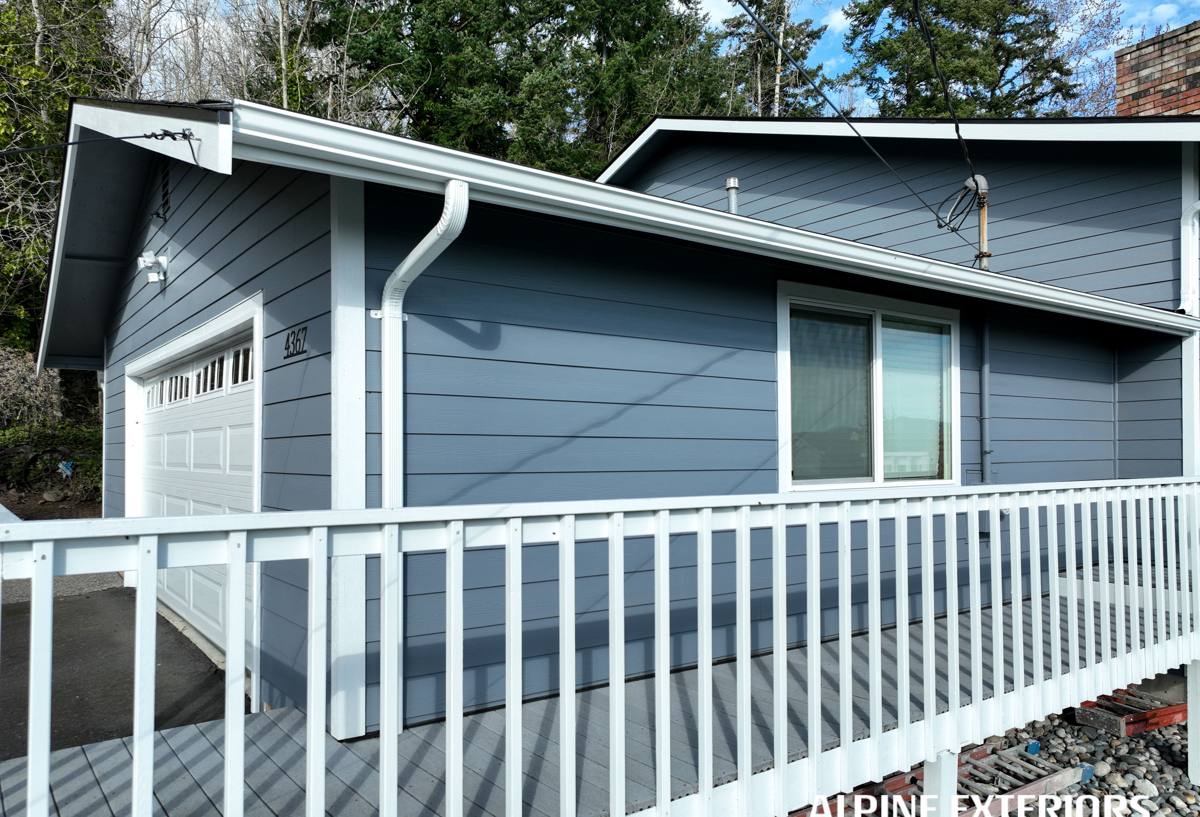
What Lynden Homes Actually Need From a New Roof
Lynden's housing stock is a mix — older farmhouse-style homes near the town center, newer subdivisions on the outskirts, and a fair number of properties with outbuildings or shops that need roofing too. Roof pitches vary more here than in a tightly platted subdivision, which matters because pitch changes how water and moss behave on a roof.
Moisture Is the Real Enemy, Not Just Rain
It's rarely a single storm that takes out a roof around here. It's cumulative moisture — shingles that stay damp longer because of shade from mature trees, valleys that collect debris and hold water, and attics that don't vent well enough to let a roof dry out between rain events. A correct roof replacement in this climate isn't just about the shingles on top; it's about giving the whole roof system a way to shed water fast and dry out in between.
Wind Exposure on Open Lots
Homes on larger, more open lots — common on the edges of Lynden — take more direct wind than a house tucked into a wooded subdivision. That affects fastening patterns, shingle wind ratings, and how we detail ridge and hip lines. A roof that's fine on a sheltered in-town lot can underperform on an exposed one if it's installed the same way.
Signs Your Roof Is Due for Replacement
Homeowners often wait for a leak, but by then there's usually already interior or decking damage. Here's what we tell people to watch for:
- Granules collecting in gutters or at downspout outlets — a sign shingles are wearing thin
- Shingles that are cupping, curling at the edges, or visibly cracked
- Moss buildup that keeps coming back within a season or two of cleaning
- Dark streaking or algae staining across large sections of the roof
- Soft or spongy spots underfoot when walked (we check this, not something to test yourself)
- Daylight visible through the roof deck from inside the attic
- A roof approaching or past 20-25 years old, even if it looks okay from the ground
- Rising energy bills that track with poor attic ventilation or insulation gaps
Any one of these on its own isn't necessarily an emergency. Several together usually means it's time to stop patching and start planning a full replacement.
What a Correct Roof Replacement Involves
A roof replacement done right in this climate has a few non-negotiable steps. Skipping any of them is how a roof that looks good on day one starts leaking in year three.
Full Tear-Off and Deck Inspection
We remove the old roofing down to the deck rather than layering over it. That lets us actually see the plywood or plank sheathing underneath — soft, delaminated, or water-stained decking gets replaced before anything new goes down. Roofing over a compromised deck just hides the problem for a while.
Ice and Water Shield at Vulnerable Points
Eaves, valleys, and areas around chimneys or skylights get a self-adhering waterproof membrane underneath the main underlayment. These are the spots where wind-driven rain and ice dams (on the rare cold snap) cause the most damage, so they get extra protection regardless of what shingle goes on top.
Proper Flashing
Flashing around chimneys, walls, and roof penetrations is one of the most common places we find old, undersized, or improperly lapped metal on roofs we're replacing. New step flashing, counterflashing, and pipe boots are part of every job, not an upsell.
Balanced Attic Ventilation
Intake at the eaves and exhaust at the ridge, sized to move air through the whole attic — not just a couple of vents scattered around. This is what actually slows moss regrowth and shingle aging, because it keeps the underside of the roof deck dry instead of letting condensation sit against it.
Material Options and Cost Factors
Most Lynden homes we work on end up with a laminated (architectural) asphalt shingle — it's the best balance of cost, wind resistance, and moss resistance for this climate. Metal is a smaller share of what we install, usually on shop buildings, steeper pitches, or for homeowners planning to stay long-term and wanting a longer service life. We don't push either product on someone whose home and budget point the other direction.
| Factor | Architectural Asphalt Shingle | Standing Seam Metal |
|---|---|---|
| Typical upfront cost | Lower | Higher |
| Moss/algae resistance | Good with algae-resistant granules; needs periodic cleaning | Very good; sheds moss more easily due to surface and slope behavior |
| Wind performance | Strong when properly fastened and rated for the exposure | Excellent |
| Noise in heavy rain | Minimal, standard attic assembly dampens sound | Manageable with proper decking and underlayment, but noticeably different |
| Repair/patch ease | Easier to patch a small section | Harder to blend a repair invisibly |
| Typical lifespan range | Roughly 25-30 years depending on product | Roughly 40-50+ years depending on product and gauge |
Neither option is "wrong" — it's a question of budget, how long you plan to own the home, and what the roof's pitch and exposure call for. We'll walk through the honest trade-offs during your estimate rather than defaulting to whatever's easiest to sell.
Our Process for a Lynden Roof Replacement
- On-site inspection. We walk the roof and attic, check the deck condition where accessible, and note pitch, exposure, and any problem areas like valleys or chimney flashing.
- Written estimate. You get a clear scope and price before anything is scheduled — no vague allowances that turn into surprise change orders.
- Material selection. We go over shingle or metal options that fit your home and budget, including color and warranty differences.
- Scheduling around weather. We watch the forecast and plan tear-off days to avoid leaving a roof open during a rain system whenever possible.
- Tear-off and deck repair. Old roofing comes off, the deck gets inspected and repaired as needed, and we haul debris off-site as we go rather than letting it pile up.
- Underlayment, flashing, and installation. Ice and water shield, synthetic underlayment, new flashing, and the roofing material go on in that order, per manufacturer specs.
- Ventilation check. We confirm intake and exhaust venting are balanced before calling the job finished.
- Final walkthrough and cleanup. We check the yard and gutters for stray nails and debris and walk the finished roof with you.
Moss and Ventilation: The Long-Term Part of the Job
A new roof in Whatcom County will grow moss again eventually — that's the climate, not a defect. What changes with a correct installation is how fast it comes back and how much damage it does while it's there. Zinc or copper strips near the ridge can help slow regrowth on shingle roofs, and we'll discuss whether that's worth it for your specific roof's shade and exposure. But the bigger factor is always attic ventilation: a roof that can actually dry out between rain events sheds moss slower and ages more evenly than one trapped under constant dampness.
What to Check Before Your Roof Needs Replacing
- Clear gutters and downspouts at least twice a year so water isn't backing up under the roof edge
- Trim back tree limbs that shade sections of the roof and keep them damp
- Have moss physically removed rather than just treated when it gets thick, especially in valleys
- Check attic ventilation isn't blocked by insulation stuffed into soffit vents
- Address small flashing or fastener issues promptly instead of waiting for a leak
Why a Crew That Already Works Lynden Matters
Roofing isn't identical everywhere in Whatcom County. A crew that mostly works dense city lots in a different climate zone doesn't necessarily know how to detail a roof for an open, wind-exposed farm property, or how aggressive moss growth gets under the tree cover common on older Lynden lots. Working this area regularly also means we're not learning the local permitting process or supplier lead times on your job — we already know them, which keeps your project moving instead of stalling on logistics.
It also means we're not disappearing after the invoice clears. If a question comes up a year or two down the road, we're still working in the area and easy to reach.
If your roof is showing its age or you just want an honest read on how much life it has left, we're happy to take a look. The estimate is free, there's no pressure to sign anything on the spot, and you'll get a straight answer about what your roof actually needs — not a padded scope. Use the form below to get in touch.