 Ferndale
 Windows Built for Marietta's Weather, Not Just Its Openings
Marietta sits close enough to the water that homes here take a different kind of weathering than a house ten miles inland. Salt-laden air works on metal hardware and finishes year-round. Driving rain off the water pushes horizontally into wall assemblies during winter storms, not just straight down. And Whatcom County's long, wet moss season means anything that stays damp for weeks at a time — sills, trim, low corners — gets a chance to grow something on it. Windows in this neighborhood need to manage water first and insulate second, because a window that leaks eventually rots the wall around it no matter how good its energy rating is.
"Custom" in this context doesn't mean fancy shapes or premium upgrades. It means windows sized, flashed, and detailed to fit the actual opening in front of us — which in Marietta is often an older or irregular one, not a standard new-construction rough opening.
Why "Custom" Matters More in an Established Neighborhood Like This
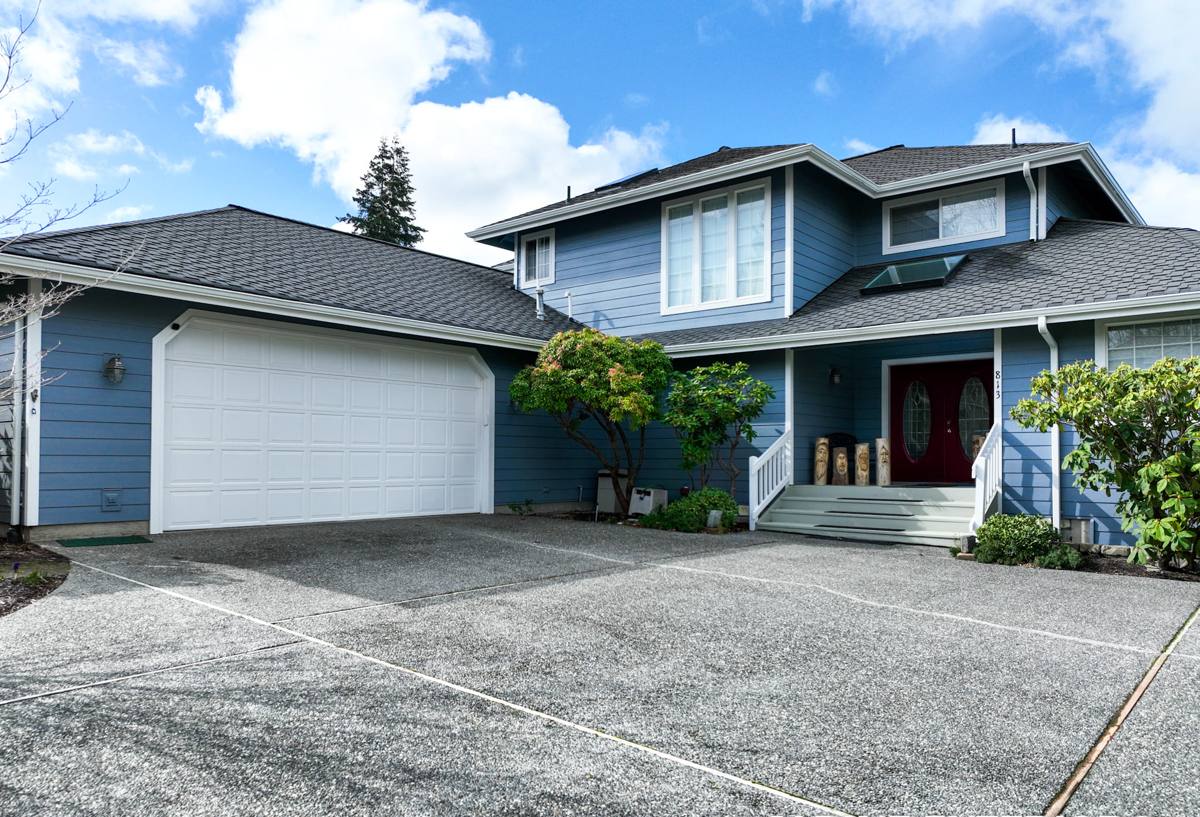
A lot of the housing stock around Marietta was built in eras before today's standardized window sizing, or has had additions, remodels, and repairs over the decades that shifted openings slightly out of square. When we say custom windows, we mean:
- Windows built to the exact dimensions of your existing opening, rather than forcing a stock size and packing the gaps with trim
- Frame depth and jamb extensions matched to your specific wall thickness, including homes with added insulation or interior finish layers
- Sill and head detailing designed for the actual water exposure of that wall — a west-facing wall catching weather off the water gets treated differently than a sheltered north wall
- Matching sightlines and proportions across a run of windows, even when the original openings aren't perfectly uniform
Ordering a "close enough" stock size and shimming it into place is how you end up with a window that looks slightly wrong from the street and leaks at the corners within a few winters.
Signs Your Current Windows Are Losing the Fight
Most window failures in this area show up as water problems before they show up as comfort problems. Things worth walking around your house and checking for:
Exterior signs
Soft or discolored trim below a window, paint that bubbles or peels in a consistent pattern near the sill, greenish-black staining that keeps coming back no matter how often it's cleaned, and corroded or stiff hardware are all common on homes exposed to salt air and driving rain.
Interior signs
Fogging between panes means a failed seal on a double-pane unit — not fixable, only replaceable. Condensation on the frame itself (not the glass) in winter often points to a poor thermal break or a frame that's absorbing more moisture than it should. Drafts you can feel with a hand near the sash, and windows that have gotten harder to open or lock, usually mean the frame has swollen, warped, or the weatherstripping has given out.
None of these are emergencies the day you notice them, but none of them get better on their own either, especially heading into another wet season.
Frame Materials: What Actually Holds Up Here
We install a range of frame materials, and the right one depends on your budget, the style of the home, and how much exposure that particular wall gets. Here's how the common options compare for a marine-influenced, high-moisture climate like ours:
| Material | Moisture & salt-air behavior | Maintenance | Typical cost position |
|---|---|---|---|
| Vinyl | Won't rot or corrode; performs well in salt air; can expand/contract with temperature swings | Low — occasional cleaning | Most affordable |
| Fiberglass | Very stable dimensionally, strong resistance to moisture and corrosion, holds paint well if you want a custom color | Low | Mid to upper range |
| Wood-clad | Warm interior look; the exterior cladding protects the wood from direct weather, but any breach in the cladding or sealant lets moisture reach real wood underneath | Higher — sealant and cladding joints need periodic checking | Upper range |
| Aluminum | Strong but conducts heat/cold and is more prone to condensation; hardware and fasteners need corrosion-resistant treatment near the water | Moderate | Varies by style |
For most Marietta homes we lean toward vinyl or fiberglass on primary exposures because they simply give us less to worry about ten years from now. Wood-clad is a legitimate choice for homes where the look matters, but it's a product that rewards a very careful installation and a homeowner willing to keep an eye on the exterior detailing — we'll tell you honestly if a given opening isn't a great candidate for it.
How We Approach a Marietta Window Job
1. On-site assessment
We look at each opening individually — wall assembly, current flashing (or lack of it), sill condition, and how exposed that specific wall is to wind-driven rain. Two windows on the same house can need different details.
2. Measurement and ordering
Every opening is measured on its own; we don't assume a house full of "the same size" windows actually has identical openings, especially on older construction.
3. Removal and opening prep
Once the old window is out, this is the point where hidden rot or past water intrusion becomes visible. We address any damaged sheathing or framing before anything new goes in — sealing a new window over a compromised opening just hides the problem for a while.
4. Flashing and moisture barrier
This is the step that matters most in our climate. Proper sill pan flashing, correctly lapped house wrap or weather-resistive barrier, and sealant placed so that any water that does get past the exterior can still drain back out — not get trapped in the wall.
5. Installation and air-sealing
The window is set level, plumb, and square, shimmed and fastened per the manufacturer's specifications, then insulated and air-sealed around the frame.
6. Interior and exterior finish
Trim, caulking, and touch-up work so the finished window looks intentional, not patched in.
Why Flashing Gets More Attention Here Than a Standard Installation Guide Suggests
Manufacturer installation instructions are written for a generic climate. A wall that only sees rain falling straight down needs less water management than a wall in Marietta catching rain that's being blown sideways off the water for days at a time. That's why we treat sill pan flashing and drainage planes as non-negotiable rather than optional steps to save time. A window can be perfectly installed by the letter of a basic instruction sheet and still leak here if the wall behind it wasn't detailed for driving rain and salt-laden moisture. Cutting corners on flashing doesn't show up as a problem on install day — it shows up two or three winters later as rot inside a wall that looked fine from outside.
Living With Windows in a Long Moss Season
Even a correctly installed, high-quality window benefits from some basic upkeep in a climate that stays damp for months at a stretch. A short seasonal checklist:
- Clear debris and moss buildup from sills, tracks, and weep holes so water has somewhere to drain
- Rinse salt residue off frames and hardware a couple of times a year, especially on wind-exposed sides of the house
- Check and re-caulk exterior joints where caulking has cracked or pulled away — small gaps let in disproportionate amounts of wind-driven rain
- Operate locks and hardware periodically through the wet months so mechanisms don't seize up
- Watch for soft trim or bubbling paint near sills as an early warning sign, not something to wait out
None of this is heavy maintenance — it's the kind of thing that takes an hour a couple of times a year and meaningfully extends the life of the installation.
Why It Matters to Hire a Crew That Already Works This Neighborhood
A contractor who mostly works drier, inland areas can still install a technically correct window and still get the water management wrong for a site like Marietta, simply because they're not used to designing for wind-driven rain and salt exposure as the default condition rather than the exception. Working regularly in Whatcom County's coastal-influenced neighborhoods means we're not guessing at how much flashing detail a given wall needs or which frame materials are worth the extra cost here — we've seen how the choices play out over years, not just on install day.
It also means practical things: knowing the general age and construction patterns common in this area, being familiar with local permitting expectations, and being reachable if a question comes up after the job is done rather than after we've moved on to a different region entirely.
Get a Straight Answer for Your Home
Every house on this street or the next one can have a slightly different story — different exposure, different age, different past repairs. Rather than guessing at what your windows need from a description, we'd rather come look at them. If you'd like a free, no-pressure estimate for your Marietta home, the form below is the fastest way to reach us.