 Ferndale
 Siding Built for Nooksack's Weather, Not Just Its Look
Homes in and around Nooksack sit in one of the wetter corners of Whatcom County. Weather systems roll in off the water and push moisture up the valley for months at a stretch, and that pattern shapes what siding actually needs to do here. It's not just about curb appeal — it's about a wall assembly that can shed driving rain, resist constant dampness, and stand up to a moss season that can run from fall through spring. Siding that works fine in a drier climate can fail early here if it isn't installed with this area's conditions in mind.
When we talk about siding installation in Nooksack, we're talking about a job that has to account for prolonged wetting cycles, wind-driven rain that hits siding at an angle instead of straight down, and organic growth — moss, algae, and mildew — that thrives on surfaces that stay damp. Get the material and the install details right, and a home can go decades with minimal drama. Get them wrong, and problems show up in the first few wet seasons.
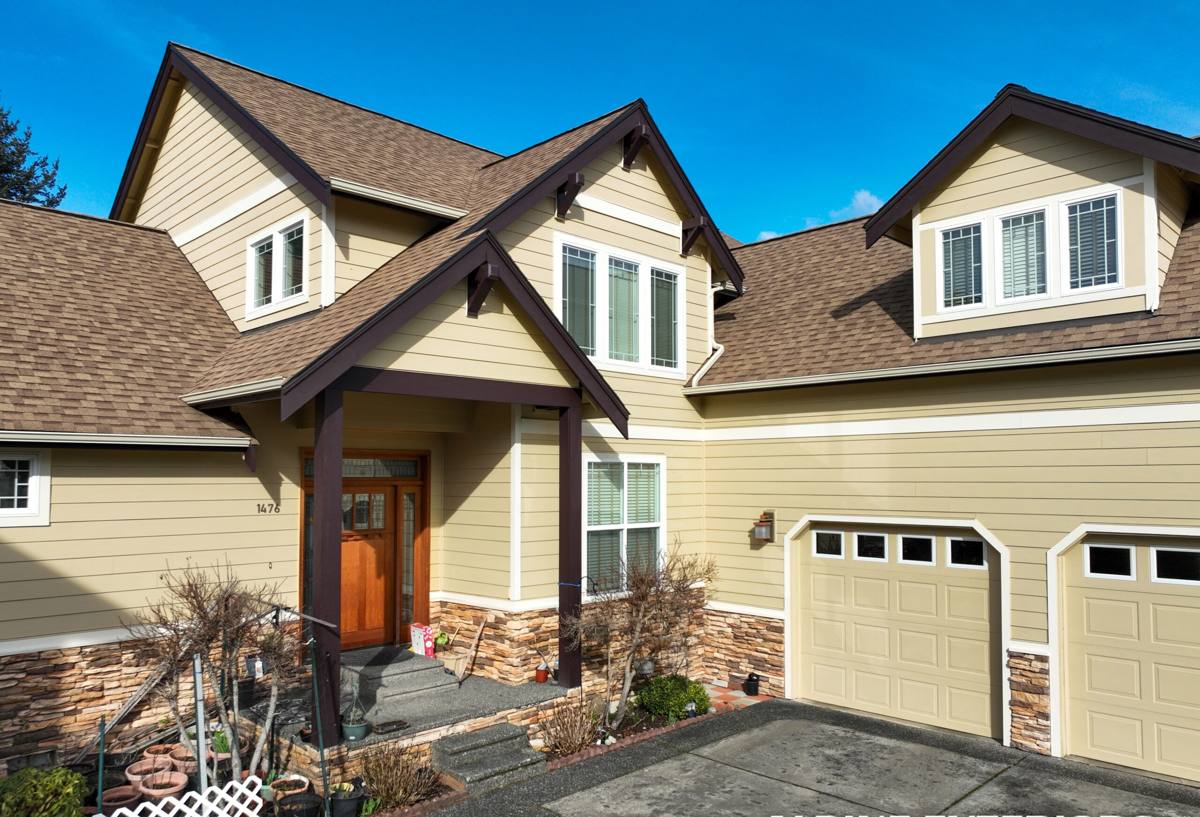
What "Correct" Actually Means on a Nooksack Job
A siding job can look finished and still be wrong underneath. The parts that determine whether it holds up in this climate are mostly things a homeowner never sees once the crew packs up:
Weather-Resistive Barrier and Drainage Plane
Behind every board, there needs to be a continuous weather-resistive barrier and a way for any moisture that does get behind the siding to drain and dry out. In a climate with this much sustained rainfall, a wall that traps moisture against the sheathing is a slow-motion rot problem, even if the siding itself is doing its job.
Flashing at Every Penetration
Windows, doors, hose bibs, light fixtures, deck ledgers — every place something interrupts the siding is a place water can find a way in. Correct flashing detail at these points matters more here than in drier regions, because there are simply more wet days for a bad detail to fail on.
Fastening and Gapping
Fiber cement siding has manufacturer-specified nailing patterns, fastener types, and expansion gaps for a reason. Nailing too tight, using the wrong fastener, or butting boards without the specified gap can cause buckling, cracking, or premature caulk failure — problems that show up faster in a climate that swings between soaked and dry.
Caulking and Sealant Placement
Sealant belongs at specific joints, not everywhere. Over-caulking can trap moisture behind siding just as easily as under-caulking lets it in. Knowing which joints should be sealed and which should be left to drain is a detail that separates a correctly installed job from one that just looks tidy on install day.
Why We Only Install James Hardie Fiber Cement
We install James Hardie siding exclusively — not vinyl, not LP SmartSide, not primed cedar or spruce, not other fiber cement brands. That's a deliberate standard, not a sales preference.
James Hardie fiber cement is non-combustible, which matters in a region where wildfire smoke and ember exposure have become a real seasonal concern across Washington. It's manufactured with a climate-engineered formulation — Hardie's HZ5 product line is built for regions like the Pacific Northwest, where sustained moisture and freeze-thaw cycles are part of normal weather, not an edge case. The ColorPlus factory finish is baked on and warrantied against fading and peeling far beyond what field-applied paint on wood or engineered wood products typically holds up to. Wood-based siding products can perform well when maintained aggressively, but they demand ongoing attention to paint, caulk, and moisture exposure that most homeowners don't want to sign up for indefinitely. Vinyl sidesteps some of that maintenance but comes with its own trade-offs — it can warp or distort in heat, it's a combustible material, and repairs after impact damage are rarely invisible. For a Nooksack home that's going to spend a good chunk of every year wet, we'd rather install one product we trust completely than offer several and hope the homeowner picked the right one.
Our Installation Process for Nooksack Homes
- On-site assessment. We look at existing siding, trim, and — where accessible — the condition of the sheathing behind it. Moisture-damaged sheathing gets addressed before new siding ever goes up; covering a wet wall with new siding just hides the problem.
- Tear-off and inspection. Old siding comes off, and we check for rot, insect damage, or moisture staining that wasn't visible from outside. This is often where a job's real scope becomes clear.
- Weather barrier and flashing. A continuous, correctly lapped weather-resistive barrier goes on, with flashing detailed at every window, door, and penetration before a single piece of siding is installed.
- Hardie installation to spec. Boards, panels, or shingles go up following James Hardie's fastening, gapping, and clearance requirements — including the ground clearance and gutter clearance details that keep siding from sitting in standing moisture.
- Trim, caulking, and finish work. Trim is installed, sealant goes exactly where it should and nowhere else, and touch-up paint is applied at cut edges per manufacturer guidance.
- Final walkthrough and cleanup. We walk the job with the homeowner, and the site is cleaned of debris and old material.
Signs a Nooksack Home May Need New Siding
Some signs are obvious, others take a closer look. Watch for:
- Visible warping, buckling, or boards that have pulled away from the wall
- Persistent moss or algae growth that comes back within weeks of cleaning
- Soft or spongy spots when you press on siding, especially near the bottom courses
- Paint that's peeling or bubbling repeatedly in the same spots
- Visible gaps, cracks, or missing caulk at trim and window edges
- Rising energy bills that can't be explained by anything else — a sign the wall assembly may no longer be sealing properly
- Interior signs like musty smells, discolored drywall, or peeling interior paint on exterior-facing walls
What Affects the Cost of a Siding Installation Here
Every home is different, and we don't quote a job without seeing it, but these are the factors that most commonly move the price up or down for Nooksack-area projects:
| Factor | Why It Matters |
|---|---|
| Existing sheathing condition | Rotted or moisture-damaged sheathing found during tear-off has to be replaced before siding goes on — this is the most common source of scope changes on older homes. |
| Home size and wall complexity | More corners, dormers, and roof lines mean more cutting, flashing, and trim work per square foot of coverage. |
| Siding profile chosen | Lap siding, vertical panel, and shingle-style Hardie products differ in material and labor requirements. |
| Story height and access | Two-story walls, steep grades, or limited equipment access add time and staging costs. |
| Trim and detail work | Corner boards, window trim, and fascia detailing add labor even when the main wall area is straightforward. |
| Tear-off scope | Removing multiple existing layers or hazardous old materials adds time compared to a single-layer tear-off. |
Why Hiring a Crew That Already Works Nooksack Matters
A lot of what determines whether siding lasts here isn't the product — it's judgment calls made on-site. A crew that already works throughout Whatcom County has seen how homes in this specific moisture environment actually age: which details tend to fail first, which wall orientations take the worst weathering, and how much clearance actually holds up once moss and debris start to build up over time. That's the kind of knowledge that doesn't come from a spec sheet.
Local familiarity also means fewer surprises with permitting and inspection expectations, faster response if something needs a follow-up visit, and a crew that isn't learning this climate on your project. For a job that's supposed to last decades, that experience is worth as much as the material itself.
Living With Hardie Siding After Installation
James Hardie siding is low-maintenance compared to wood, but "low-maintenance" isn't "no-maintenance." A periodic rinse to knock off accumulated moss and grime, keeping gutters clear so water isn't sheeting down the wall, and a quick visual check of caulk lines every year or two will go a long way. Because the ColorPlus finish is factory-applied and warrantied, homeowners aren't stuck on a repainting cycle the way they would be with wood siding — which, in a climate that's wet as often as this one is, is a real advantage over time.
Get a Straight Answer About Your Siding
If you're weighing siding options for a home in the Nooksack area, we're happy to take a look and give you an honest read on what your walls need — no pressure, no upsell script. Request a free estimate below and we'll walk the property with you.