 Ferndale
 Windows Built for Sandy Point's Coastal Exposure
Sandy Point sits close enough to the water that homes here deal with a different set of stresses than a house a few miles inland in Ferndale. Salt-laden air, wind-driven rain off the Strait, and the long stretch of gray, damp months that let moss and algae get a foothold all work against windows that weren't built or installed with that exposure in mind. If your windows are original to the house, or if they're newer but were installed without much attention to flashing and sealing, you've probably already noticed the symptoms: fogged glass between the panes, drafts you can feel standing nearby, sashes that stick or won't latch cleanly, and frames that look tired years before they should.
Energy-efficient windows are usually framed as a way to cut heating bills, and they do that. But in Sandy Point, the bigger story is often durability — picking glass, frames, and hardware that can take salt exposure and constant moisture cycling without breaking down, and having them installed in a way that actually keeps water out. A window that's efficient on paper but fails at the seal within five years because of coastal weather isn't a good value no matter what the energy label says.
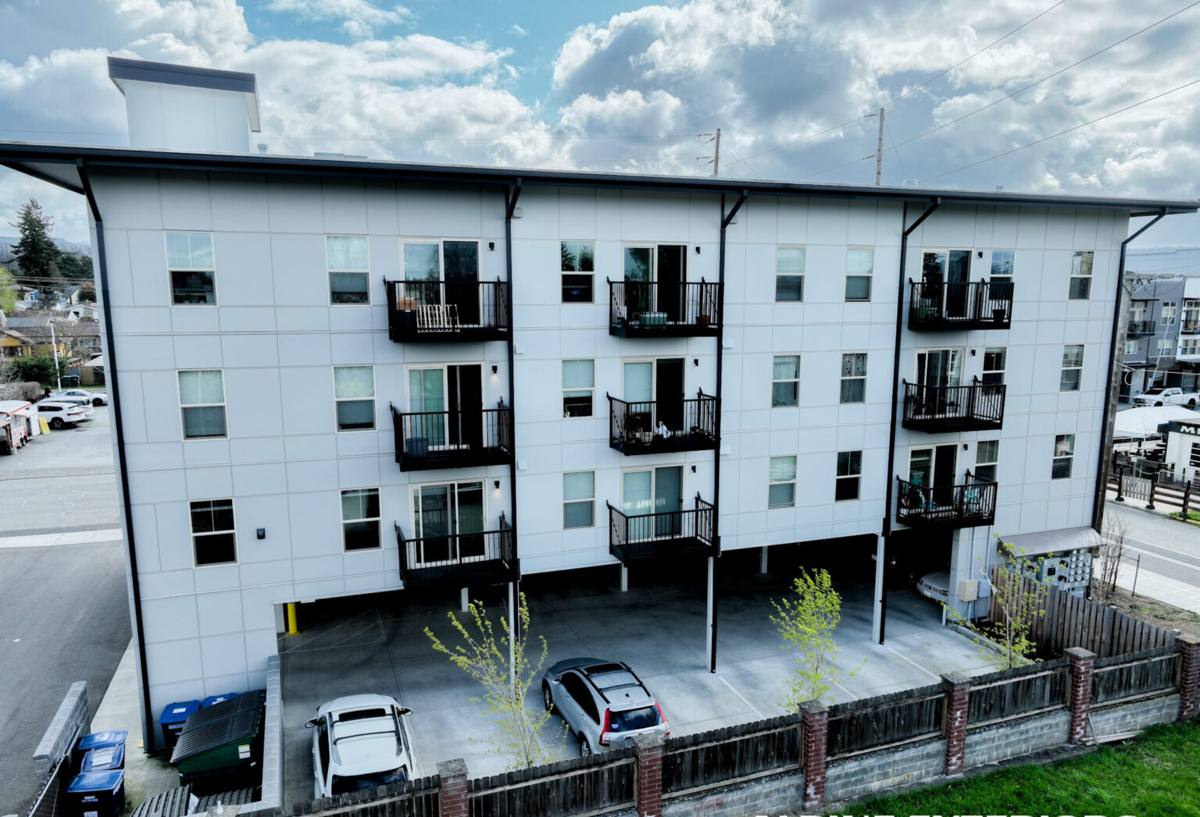
How Salt Air, Rain, and Moss Wear Down Windows Here
Three things do most of the damage to windows in this part of Whatcom County, and they work together rather than separately.
Salt Air
Airborne salt is corrosive to metal hardware — hinges, cranks, locks, and especially aluminum frames or aluminum spacer bars inside older insulated glass units. Corrosion doesn't just look bad; it's often what causes a seal to fail, letting moisture into the airspace between panes and fogging the glass permanently.
Driving Rain
Wind off the water doesn't just fall — it pushes rain sideways into wall assemblies and window openings. A window that would perform fine in a calm, sheltered location can leak here if the flashing details around it weren't built for wind-driven water. Most leaks we find aren't a failure of the window itself; they're a gap in how it was tied into the wall.
Moss and Sustained Dampness
Whatcom County's long wet season keeps wood trim, sills, and cladding damp for extended stretches, which is exactly the environment moss and mildew need to take hold. On windows, that dampness accelerates rot in untreated wood components and keeps caulk and sealant joints under constant stress, so they crack and fail sooner than the same materials would in a drier climate.
What Energy-Efficient Actually Means in This Climate
"Energy-efficient" isn't one feature — it's a combination of choices that affects both comfort and how well the window holds up.
- U-factor — how well the window resists heat transfer. Lower is better for keeping heat in during our cool, wet winters.
- Low-E coatings — a microscopically thin coating on the glass that reflects heat while still letting light through, without changing the look of the window from the street.
- Gas fills (argon or krypton) — inert gas sealed between panes that insulates better than plain air. This only matters if the seal holds, which is why seal quality and installation matter as much as the spec sheet.
- Warm-edge spacers — the material separating the panes at the edge of the glass. Non-metal spacers resist condensation and corrosion far better than older aluminum spacers, which matters a lot in a salt-air environment.
- Frame material and construction — covered in detail below, since it's often the biggest factor in how a window holds up here specifically.
Double-pane windows with a good Low-E coating and warm-edge spacers cover most homes' needs. Triple-pane adds cost and weight for a modest additional efficiency gain — worth discussing for a north-facing or particularly exposed wall, but not something we'd push on every window in the house.
Comparing Frame Materials for Whatcom County Homes
Frame material has a bigger effect on long-term performance near the water than most homeowners expect. Here's how the common options stack up for a Sandy Point property specifically.
| Frame Material | Coastal & Moisture Performance | Maintenance | General Cost Tier |
|---|---|---|---|
| Vinyl | Won't corrode or rot; handles salt air well; can flex slightly in temperature swings | Low — occasional cleaning | Lowest to mid |
| Fiberglass | Very stable dimensionally, strong resistance to moisture and salt exposure, holds paint well if a custom color is wanted | Low | Mid to higher |
| Wood-clad | Attractive interior wood look, but the exterior cladding and any exposed wood joints need real attention in a wet, salty climate | Moderate to high — exterior finish needs monitoring | Higher |
| Bare aluminum | Poor fit for this location — conducts heat and cold, and is the material most prone to corrosion and condensation near salt air | Higher | Varies |
We don't install bare aluminum-framed windows on Sandy Point homes as a matter of professional standard — the corrosion and condensation issues in this exposure aren't worth the trade-off, regardless of upfront cost. Vinyl and fiberglass are our default recommendations for most homes here; wood-clad is a reasonable choice when the interior look matters and the homeowner understands the added maintenance.
What a Correct Window Installation Involves
The window unit itself is only part of the job. In a driving-rain environment like this one, how the window is integrated into the wall matters just as much as what you buy.
- Removing the old window and inspecting the rough opening and sill for hidden rot or water staining before anything new goes in
- Repairing or replacing any damaged framing found during that inspection — not covering it up
- Installing sill pan flashing so any water that does get past the window sheds outward instead of sitting on the sill
- Integrating the window's flashing with the existing weather-resistive barrier in the correct shingle-lap order, so water is always directed down and out
- Sealing and insulating the gap between the window frame and rough opening properly — not just caulking the exterior trim and calling it done
- Setting the window level, plumb, and square so sashes operate smoothly and locks seat correctly for years, not just on install day
Skipping any of these steps is how a brand-new, high-efficiency window ends up with a leak or a draft within a year or two. It's rarely the window's fault — it's the installation.
Our Process, Start to Finish
We keep the process straightforward and give you real information at each step rather than a sales pitch.
1. On-Site Assessment
We look at your current windows, note where moisture, drafts, or hardware problems are showing up, and check the condition of the surrounding trim and wall assembly — especially on walls that face prevailing wind and rain.
2. Product Selection
Based on that assessment and your budget, we walk through frame material, glass package, and style options, and explain the honest trade-offs of each rather than steering you toward the most expensive option.
3. Installation
Our crews follow the flashing and sealing sequence described above on every window, every time, regardless of whether it's one window or a whole-house replacement.
4. Walkthrough and Cleanup
We check operation on every window before we consider the job done, clean up the work area, and make sure you know how to operate and maintain your new windows.
Signs It's Time to Replace Your Windows
Not every problem means full replacement — sometimes hardware or sealant repair solves it. But if you're seeing several of these together, replacement is usually the more cost-effective path than repeated patching.
- Fog, haze, or moisture trapped between the panes of double-pane glass
- Visible corrosion or pitting on aluminum frames or hardware
- Drafts you can feel near the window even when it's fully latched
- Sashes that are difficult to open, close, or lock
- Soft, discolored, or moss-covered wood trim around the window frame
- Noticeably higher heating costs compared to similar homes nearby
- Paint or finish failing repeatedly on the same window despite touch-ups
Why Hire a Crew That Already Works Sandy Point
A contractor who mostly works inland or in drier parts of Whatcom County may not default to the flashing and material choices this exposure calls for — not out of carelessness, but because it simply isn't the problem they see most often. Crews familiar with Sandy Point and the Ferndale coastline know to plan for wind-driven rain on certain elevations, to steer away from materials that corrode quickly in salt air, and to recognize early moss and moisture damage on trim before it turns into a bigger repair.
That local pattern-recognition doesn't show up on a spec sheet, but it's usually the difference between a window installation that holds up for decades and one that needs attention again in a few years.
Getting Started
If your windows are fogging, drafty, or just showing their age, we're happy to take a look and give you a straightforward, no-pressure estimate — no obligation, and no pressure to replace more than what actually needs it. Fill out the form below and we'll set up a time to assess your home.