 Ferndale
 Why Sumas-Area Homes Need Siding Built for This Climate
Homes in and around Sumas sit in one of the more demanding stretches of Whatcom County when it comes to exterior weathering. You're close enough to the water and the lowland river valleys to catch salt-laden air, you get long stretches of driving, wind-pushed rain off the Pacific systems that roll through, and the shaded, damp conditions common to this part of the Puget Sound region mean moss and algae have a long growing season on north-facing walls and anything under tree cover. None of that is unusual for western Washington — but it adds up faster than most homeowners expect, and it's exactly the kind of exposure that separates siding installed correctly from siding that just looks fine on installation day.
Salt air accelerates corrosion on fasteners, flashing, and trim if the wrong materials are used. Driving rain finds every gap in a water-resistive barrier, every under-caulked joint, every place where siding was nailed too tight against a wall. And moss doesn't just sit on the surface — given enough time and moisture, it holds water against the cladding and finds its way into seams that weren't detailed correctly the first time. A siding job that's going to hold up here has to be built with all three of those in mind, not just installed to the minimum of the manufacturer's instructions.
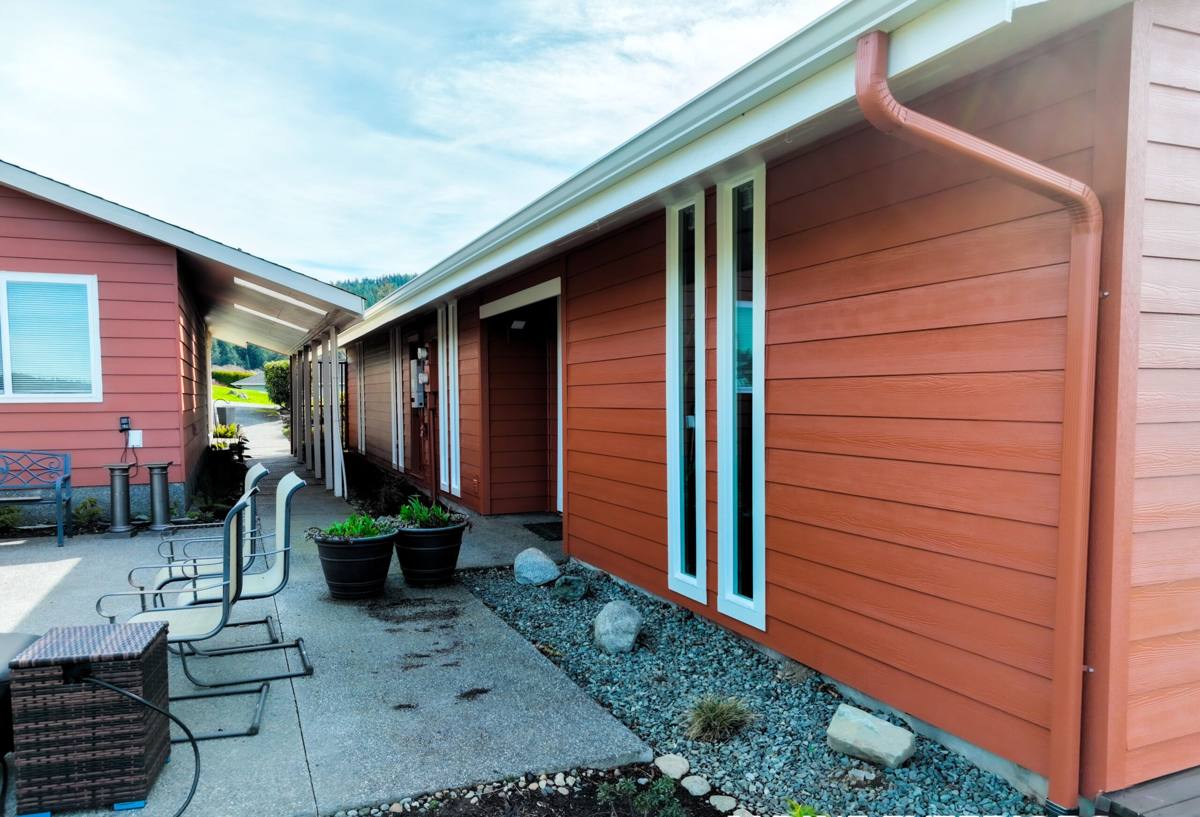
What Correct James Hardie Installation Actually Involves
James Hardie fiber cement is engineered to handle wet Pacific Northwest conditions, but the product only performs to spec when the installation details are right. This is where a lot of siding jobs — Hardie or otherwise — quietly fail years down the road, not because the material was wrong, but because the install skipped steps that don't show up in a walk-around inspection.
The details that matter most in a climate like this
- A properly lapped, taped, and inspected water-resistive barrier behind the siding — this is the actual waterproofing layer; the siding is the weather shield in front of it
- Correct flashing at every window, door, roofline, and deck ledger, integrated with the barrier so water sheds outward and down, never behind the cladding
- A minimum 1/4-inch gap maintained between siding and any abutting trim, decking, roofing, or masonry, per James Hardie's fastening and clearance requirements
- Fasteners driven correctly — not overdriven, which crushes the material and opens a path for water — and set with the corrosion resistance the coastal air here calls for
- Field-cut edges primed or sealed before installation so raw fiber cement isn't left exposed to rain during construction
- Caulking only at the joints James Hardie's install guide actually calls for — not as a substitute for correct flashing and gapping
Every one of these is written into James Hardie's published installation instructions. None of them are optional add-ons — they're the difference between a siding system that sheds water for decades and one that traps it.
Choosing the Right HZ Product Line for This Part of Whatcom County
James Hardie builds its HardieZone system around regional climate zones, and homes in this part of Washington fall into the HZ5 category — engineered for higher moisture exposure and freeze-thaw cycling compared to milder or drier zones. That climate engineering shows up in the formulation of the fiber cement itself, not just the surface finish, which matters when a home is dealing with the level of rain and dampness common around Sumas.
Beyond the HZ engineering, there's a profile decision to make. Lap siding (in various reveal widths) is the most common choice for full-wall coverage and handles driving rain well because of its consistent shingled overlap. Board-and-batten reads more vertical and modern and works well as an accent or full treatment on some home styles. Shingle-profile panels suit homes going for a more traditional Pacific Northwest look. The right call depends on the home's architecture and how much wall area is exposed to wind-driven rain versus more sheltered elevations — something worth walking through in person rather than picking off a brochure.
ColorPlus Factory Finish vs. Field-Painted Siding
In a climate with this much moss and algae pressure, finish durability isn't a cosmetic detail — it affects how often the siding needs attention. James Hardie's ColorPlus technology is a factory-applied, baked-on finish that's more resistant to fading and chipping than a field-applied paint job, and it comes with its own finish warranty separate from the product warranty. Field-painted (primed) Hardie siding is also an option and can be the right call for custom or unusual colors, but it puts more of the long-term maintenance burden on repainting cycles — which, on a shaded or north-facing wall around here, tends to come sooner than homeowners expect.
Comparing Siding Options for Sumas Conditions
We only install James Hardie, but homeowners researching their options deserve an honest comparison. Here's how the common alternatives stack up against the specific conditions this area throws at exterior cladding.
| Factor | James Hardie Fiber Cement | Vinyl | Wood / Cedar |
|---|---|---|---|
| Moisture behavior | Engineered for wet climates (HZ5); doesn't rot | Won't rot, but can warp and gap, letting water behind it | Absorbs moisture; needs consistent sealing to resist rot |
| Moss / algae resistance | Factory ColorPlus finish resists buildup better than field paint | Surface can host algae growth, especially in shaded areas | Highly susceptible; a common moss host in this region |
| Fire performance | Non-combustible material | Combustible | Combustible |
| Maintenance cycle | Occasional wash; repaint only if field-finished | Low maintenance but brittle and hard to repair invisibly | Regular sealing/staining or repainting required |
| Expected service life | Multiple decades when installed to spec | Shorter; UV and impact damage shorten lifespan | Variable; heavily dependent on maintenance discipline |
None of these materials are "bad" in isolation — they're trade-offs. We standardized on James Hardie because, for this specific climate, it holds up with the least ongoing maintenance burden and the fewest failure points when installed correctly.
How Our Process Works on a Sumas-Area Job
The steps don't change much home to home, but the attention to detail at each one is what determines how the siding performs ten and twenty years out.
- On-site assessment: We look at wall exposure, existing moisture damage, trim condition, and roofline flashing before ever pricing the job.
- Tear-off and sheathing check: Old siding comes off and we inspect the sheathing underneath for rot or soft spots — this is often where hidden moisture problems from a prior install show up.
- Water-resistive barrier installation: A new barrier is installed and properly lapped and taped, with flashing integrated at every penetration.
- James Hardie installation: Panels or planks are installed to manufacturer spec — correct gaps, correct fastening, correct overlaps — with field cuts sealed.
- Trim, caulking, and final detailing: Only the joints that call for sealant get it; we don't use caulk to cover up gaps that should have been flashed instead.
- Walkthrough: We go over the finished work with the homeowner before calling the job done.
Maintaining James Hardie Siding Through a Sumas Winter and Moss Season
Correctly installed Hardie siding is low-maintenance, not no-maintenance. A little seasonal attention goes a long way in this climate:
- Rinse siding annually (a garden hose is usually enough) to keep moss and algae from establishing on shaded or north-facing walls
- Keep gutters clear so overflow doesn't run down the siding face during heavy rain events
- Trim back vegetation and tree cover that keeps a wall section damp and shaded longer than the rest of the house
- Walk the exterior once a year and check caulked joints around windows and trim for cracking or separation
- Address any impact damage (a dented panel, a cracked corner) promptly rather than letting it sit through a wet season
Why Hiring a Crew That Already Works This Area Matters
Siding installation isn't just about following a manufacturer's manual — it's about applying that manual correctly to the specific exposure a given wall faces. A crew that's worked on homes throughout Whatcom County already knows which elevations around Sumas tend to take the worst of the wind-driven rain, where moss pressure is highest, and how the local moisture cycle behaves through a full year, not just on a dry install day. That local pattern recognition is what catches problems — an under-flashed window, a wall that needs extra drainage attention — before they become the reason a homeowner is calling about water damage five years later.
Warranty and Long-Term Value
James Hardie backs its fiber cement products with a strong, transferable limited warranty, and ColorPlus-finished products carry a separate finish warranty covering fading and chipping. Warranty coverage depends on correct installation to the manufacturer's specifications — another reason installation quality isn't a place to cut corners. Beyond the paperwork, the real value is a siding system that keeps doing its job through decades of Whatcom County winters without becoming a recurring maintenance project.
If you're planning a siding project in the Sumas area and want a straight answer about what your home actually needs, we're happy to walk the exterior with you and give you a free, no-pressure estimate — no obligation, just an honest look at the job.