 Ferndale
 Siding Replacement Built for the Sumas Climate
Homes in and around Sumas deal with a specific combination of weather that most siding products were never designed to handle well over the long term. Moist air moves in off the Salish Sea and settles into the low-lying valleys of Whatcom County, driving rain comes in sideways for days at a time in the fall and winter, and a long, damp moss season stretches from October well into spring. None of that is dramatic on any given day. It's the accumulation, year after year, that separates a siding job that looks fine for a decade from one that keeps a home dry and solid for thirty or forty years.
When we replace siding on a home serving the Sumas area, we're not just swapping old boards for new ones. We're re-evaluating the whole wall assembly against a climate that punishes weak seams, absorbent materials, and shortcuts in flashing and drainage. That's a different job than replacing siding in a dry inland climate, and it should be treated that way.
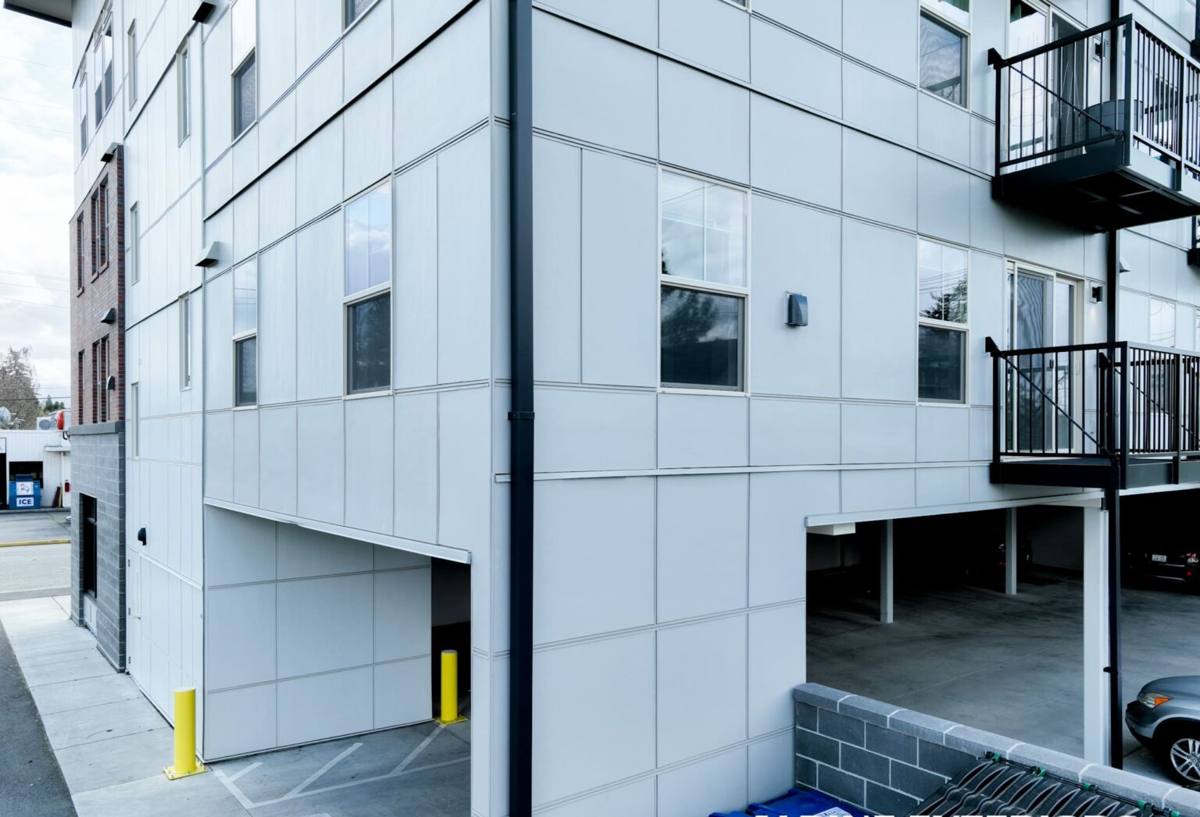
What Constant Moisture Actually Does to Siding
Most siding failures we see in this region aren't sudden. They're slow, and they usually start in the same few places.
Moisture Absorption and Swelling
Wood-based products — cedar, primed spruce, and engineered wood siding like LP SmartSide — are cellulose at their core. Cellulose absorbs water. In a climate with driving rain and a real moss season, that means repeated wet-dry cycling at butt joints, panel edges, and anywhere caulk has started to fail. Over time this shows up as swelling, softening, and eventually rot, especially near the ground and around window and door trim where water tends to collect.
Moss and Organic Growth
A long moss season isn't just cosmetic. Moss and algae hold moisture against the siding surface far longer than open air would, which accelerates whatever moisture damage is already starting underneath. Textured or absorbent siding surfaces give moss more to grip onto than a smooth, factory-sealed surface does.
Salt-Tinged Air and Fastener Corrosion
Air moving inland off the coast carries trace salt with it, and that has a real effect on exposed metal — nail heads, fasteners, and unprotected trim components corrode faster than they would in a dry inland climate. Corroded fasteners loosen siding, and loose siding lets in more water. It's a cycle that compounds if it isn't addressed at installation.
Signs a Sumas-Area Home Needs Siding Replacement
Most homeowners don't notice siding failure until it's visible from the street, but there are earlier signs worth walking your exterior for a few times a year:
- Soft or spongy spots when you press on siding near the bottom courses or below windows
- Paint that's peeling, bubbling, or needing repainting far more often than it used to
- Persistent moss or dark streaking that comes back within weeks of cleaning
- Visible gaps, warping, or cupping at panel joints and corners
- Rising energy bills with no other explanation, suggesting moisture-compromised insulation behind the siding
- A musty smell in interior rooms along exterior walls
- Fastener heads showing rust streaks or backing out of the siding face
Any one of these on its own might be minor. Two or three together, especially on a home that's had the same siding for 15-20 years in this climate, usually means it's time for a real inspection rather than another round of caulk and paint.
Why We Install Only James Hardie Fiber Cement
We made a decision to stop installing vinyl, LP SmartSide, primed spruce, and cedar siding, and to install James Hardie fiber cement exclusively. That's not a marketing position — it's a response to what we've seen happen to other products in exactly this kind of climate.
Vinyl siding is affordable and low-maintenance in mild weather, but it's a thin material that expands and contracts significantly with temperature swings, and it can crack or warp under the kind of driving wind-driven rain and temperature cycling this region sees. Wood-based and engineered wood products perform well when maintenance stays current, but they depend on an unbroken paint or coating layer to keep moisture out — and in a climate with this much sustained dampness, that maintenance schedule is unforgiving. Miss a few years of upkeep and moisture finds its way into the substrate.
James Hardie fiber cement is a genuinely different material. It's roughly 90% sand, cement, and cellulose fiber, which means it doesn't absorb and swell with water the way wood-based products do, and it won't warp, crack from freeze-thaw cycling, or feed rot. It's also non-combustible, which matters given wildfire smoke and ember exposure has become a more regular concern across the Pacific Northwest in recent summers.
ColorPlus Factory Finish
Hardie's ColorPlus finish is baked on at the factory under controlled conditions, which gives a more consistent, durable color layer than field-applied paint — and it means less repainting maintenance for the homeowner over the life of the siding.
Climate-Engineered HZ Product Lines
James Hardie engineers its HZ5 product line specifically for regions with heavy moisture exposure and freeze-thaw cycling, which describes Whatcom County well. That's a meaningful difference from a generic siding product — it was built with this kind of weather in mind, not adapted to it afterward.
Warranty Backing
Hardie backs its siding with a strong, transferable limited warranty, which also supports resale value — a buyer inspecting a home in a few years sees a documented, reputable product rather than a question mark.
What a Correct Siding Replacement Actually Involves
Replacing siding is not simply removing old panels and nailing up new ones. Done correctly, especially in a climate this wet, the work underneath the siding matters as much as the siding itself.
- Full tear-off and substrate inspection. Old siding comes off completely so we can inspect the sheathing, framing, and existing house wrap for hidden rot or moisture damage — problems that are invisible until the old siding is off the wall.
- Repair before covering. Any soft sheathing, damaged framing, or compromised wrap gets repaired or replaced. Covering a moisture problem with new siding just hides it for a few more years.
- Weather-resistive barrier and flashing. A correctly lapped house wrap and properly integrated flashing at windows, doors, and penetrations is what actually keeps water out — the siding itself is the second line of defense, not the first.
- Correct fastening per manufacturer spec. James Hardie has specific fastener type, placement, and spacing requirements. Following them is what the warranty depends on, and what keeps panels secure through wind-driven rain seasons.
- Proper clearances and drainage. Siding needs the right ground clearance and a drainage path behind it so incidental moisture can escape instead of sitting against the material.
- Trim, caulking, and paint touch-up at cut edges. Factory-finished panels still need field-cut edges sealed correctly to maintain the moisture barrier the finish provides.
Our Process, Start to Finish
For a Sumas-area siding replacement, our process is straightforward and we walk you through each stage before it happens:
- On-site assessment: we inspect your current siding, trim, and any visible problem areas, and talk through what we're seeing.
- Written estimate: a clear scope of work and pricing, no pressure to decide on the spot.
- Product and color selection: choosing the right James Hardie line and ColorPlus finish for your home.
- Tear-off and substrate check: old siding removed, sheathing and framing inspected and repaired as needed.
- Weather barrier and flashing installation: the part of the job that does the real waterproofing work.
- Siding installation to manufacturer spec: correct fastening, spacing, and clearances throughout.
- Final walkthrough: we go over the finished work with you before calling the job done.
Cost Factors in a Sumas Siding Replacement
Every home is different, so we don't quote pricing until we've seen the house, but these are the main factors that move the cost up or down on a typical project:
| Factor | Why It Matters |
|---|---|
| Extent of substrate damage | Rotted sheathing or framing found during tear-off adds repair work before new siding can go on |
| Home size and wall complexity | More corners, dormers, and trim details mean more labor and material cuts |
| Siding profile and accessories | Lap siding, panel systems, and trim/soffit work are priced differently |
| Story height and access | Multi-story homes or difficult site access require more scaffolding and time |
| Existing paint or coating removal | Older lead-safe practices may apply on homes built before 1978 |
Why Hiring a Crew That Already Works Around Sumas Matters
Siding installation isn't just about following a manufacturer's manual — it's about knowing how a specific region's weather actually behaves against a wall over years, not just during a demonstration install. A crew that regularly works homes across Ferndale and the surrounding Whatcom County communities has already seen where water tends to collect on homes facing prevailing weather patterns, which trim details hold up and which don't, and how moss actually behaves on different siding textures through a real winter and spring.
That experience shows up in small decisions during installation — extra attention at a vulnerable corner, a flashing detail done slightly differently because of how rain hits a particular wall orientation, fastener choices suited to salt-tinged air. Those are the kinds of details that separate siding that still looks and performs well after fifteen years from siding that needs attention again in five.
Get a Straightforward Estimate
If you're noticing early signs of wear on your Sumas-area home's siding, or you're just planning ahead, we're happy to take a look and give you an honest assessment — no pressure, no hard sell. Fill out the form below to schedule a free estimate.