 Ferndale
 Bellingham's Marine Climate Puts Decks Through More Than Most
A deck in Bellingham lives a harder life than a deck built somewhere dry and inland. Sitting this close to the Salish Sea, homes here deal with salt-laden air that accelerates corrosion on anything metal, long stretches of driving rain that drive water sideways into places it was never meant to reach, and a moss season that can run from October through May in shaded yards. None of that means a deck can't hold up for decades — it means the details that get glossed over in a fair-weather climate can't get glossed over here.
Most deck failures we get called out to inspect in Whatcom County aren't dramatic structural collapses. They're slow, quiet problems: a ledger board that's been absorbing water behind the siding for years, fasteners rusting from the inside out, or decking boards holding moisture underneath because nobody thought about drainage when the deck went in. A deck built specifically for this climate looks almost identical to a deck built anywhere else — the difference is entirely in what's underneath and what materials were chosen, and that's where we focus.
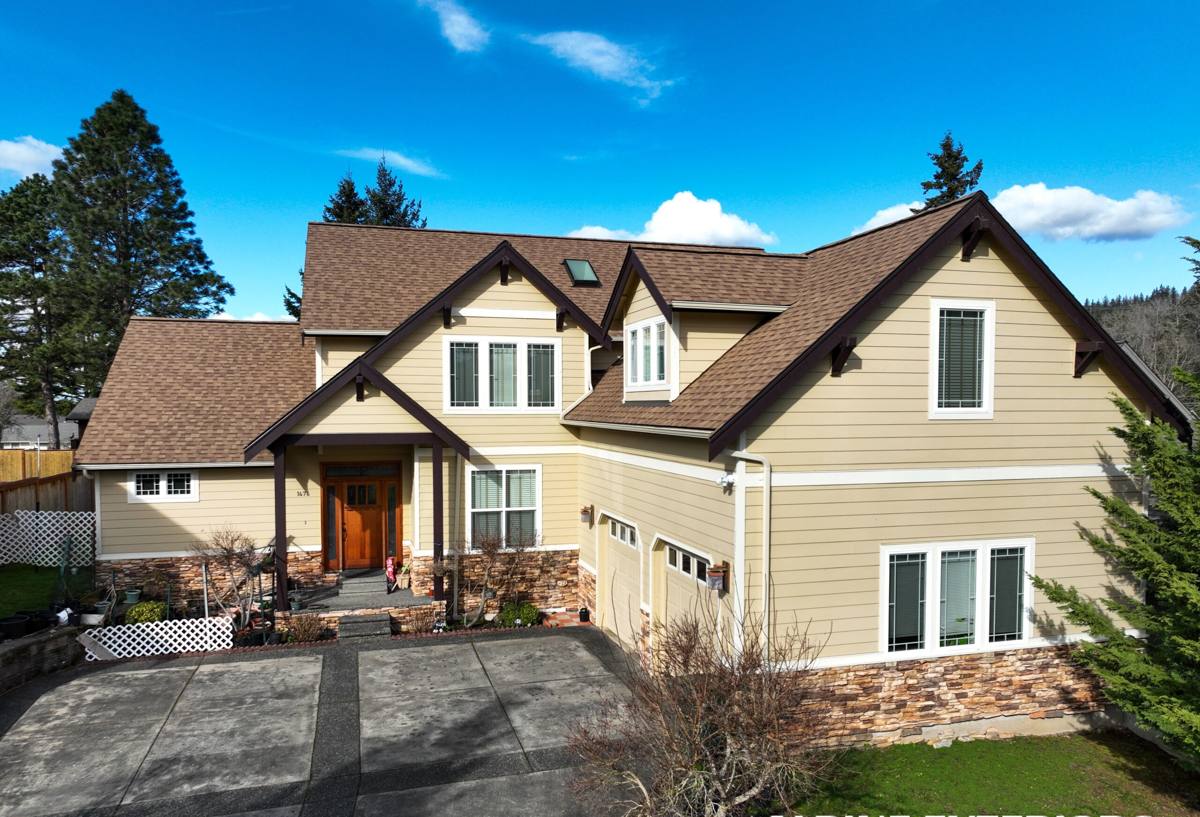
What a Deck Built to Last Here Actually Requires
The Ledger Board and Flashing
The ledger board — the piece that bolts the deck to your house — is the single most common point of rot on decks in this region, because it sits directly against the wall where driving rain gets pushed by wind. Correct installation means proper flashing that sheds water away from the house, not just caulk and hope. We install ledger flashing that integrates with the existing siding or wall covering so water runs over it and off, rather than behind it and into the framing.
Footings and Framing
Footings need to sit below the frost line and bear on undisturbed, well-drained soil — a real concern in a lot of Whatcom County yards where clay soil holds water and drainage is poor. We also use joist tape or an equivalent moisture barrier on top of the framing lumber. It's a small material cost that keeps water from sitting in the screw holes and end grain of the joists, which is exactly where hidden rot starts on decks that otherwise look fine from the top.
Fasteners and Hardware
Salt air corrodes standard galvanized hardware faster than most homeowners expect, especially within a few miles of the water. We use stainless steel or heavy coated fasteners rated for coastal exposure, along with structural connectors sized for the actual loads involved — not just whatever holds the boards down today. Cutting corners on hardware is invisible for the first year or two and then becomes very visible.
Choosing a Decking Material for Salt Air and Moss
There's no single "best" decking material — there's a best material for your budget, your maintenance appetite, and how much shade and moisture your specific site gets. Here's how the common options actually perform in this climate:
| Material | Moss & Mildew Resistance | Maintenance | Typical Lifespan Here |
|---|---|---|---|
| Cedar | Naturally resists rot better than most softwoods, but still grows moss in shade if left unsealed | Needs cleaning and re-sealing every 1-2 years | 15-20 years with upkeep |
| Pressure-Treated Pine | Resists structural rot well; surface still needs treatment to shed moss and mildew | Annual cleaning, periodic sealing | 15-25 years |
| Composite (Trex, TimberTech, etc.) | Doesn't rot; can still grow surface mildew or algae in constant shade | Periodic washing, no sealing or staining | 25-30+ years |
| PVC/Cellular Decking | Fully moisture-resistant surface; least prone to organic growth | Occasional washing | 25-30+ years |
Composite and PVC decking cost more up front but remove the sealing and staining cycle entirely, which matters a lot in a climate where wood needs attention almost every year to stay ahead of moss and gray weathering. That said, real wood still has a place — it's less expensive, it can be refinished rather than replaced when it ages, and a lot of homeowners simply prefer how it looks and feels. We'll walk through the honest trade-offs for your specific site rather than push one product line.
Design Details That Cut Down on Moss and Standing Water
Board Spacing and Airflow
Proper gapping between boards lets water drain through instead of pooling on the surface, which is one of the biggest factors in how fast moss and algae take hold. Framing height and joist spacing also affect airflow underneath the deck — a deck built too close to grade with poor ventilation underneath stays damp far longer after a storm than one with proper clearance.
Covered vs. Open Layouts
A partial roof or pergola over part of the deck keeps that section usable during Bellingham's wetter months and reduces how much standing water the decking itself sees. It's not required, but for homeowners who want the deck to actually get used outside of July and August, it's worth discussing early — it changes the framing and drainage plan, not just something bolted on afterward.
Site Orientation and Shade
North-facing decks and those shaded by mature trees hold onto moisture the longest and are the ones that grow moss fastest, regardless of material. We can't move your house, but we can factor site orientation into material choice, board spacing, and whether a cleaning/maintenance plan needs to be more aggressive on your particular lot.
How We Build a Custom Deck in Bellingham
- Site visit and assessment — we look at drainage, shade, existing structure attachment points, and how you actually plan to use the space.
- Design and material selection — sizing, layout, railing style, and decking material chosen against your budget and maintenance preferences, not a one-size template.
- Permit submittal — we handle the paperwork with the local jurisdiction so you're not chasing it down yourself.
- Demolition or prep — removal of any existing deck or structure, site grading if drainage needs correcting.
- Framing and flashing — footings, ledger attachment and flashing, joist protection, and structural hardware installed to code.
- Decking, railings, and finish work — boards, railings, stairs, and any trim or lighting installed and inspected.
- Final walkthrough — we go over care and maintenance specific to the material you chose before we consider the job done.
Permits and Local Requirements
Most new decks and many deck replacements in Whatcom County require a building permit, particularly once you're above a certain height off grade or attaching structurally to the house. Guardrails are required on decks above a modest height, with code-specified rail height and baluster spacing to prevent falls. Exact thresholds and requirements can vary by jurisdiction and by the specifics of your property, so we handle the permit application and inspection scheduling as part of the job rather than leaving it for you to sort out with the county or city.
Keeping Your New Deck Ahead of Moss Season
Every decking material benefits from a little seasonal attention here — it's the price of the climate, not a flaw in the deck. A simple yearly routine keeps most problems from ever starting:
- Sweep leaves and debris off the deck surface regularly through fall — trapped organic matter is what moss and mildew feed on first.
- Rinse or wash the deck surface at least once a year, more often in heavily shaded areas.
- Check and clean gutters and downspouts near the deck so overflow isn't dumping extra water onto the structure.
- Inspect the ledger flashing and the area where the deck meets the house once a year for any signs of water staining.
- Re-seal or re-stain wood decking on the schedule recommended for your species — don't wait until it looks obviously weathered.
- Trim back overhanging branches where possible to let more light and airflow reach shaded sections.
- Look over fasteners and metal hardware periodically for rust or corrosion, especially if you're within a few miles of the water.
Cost Factors for a Bellingham Deck Project
Every deck is different, but the same handful of factors drive most of the cost difference between a modest deck and a larger custom build:
| Factor | Why It Matters |
|---|---|
| Size and shape | Larger decks and multi-level or angled layouts require more material and framing labor |
| Decking material | Composite and PVC cost more upfront than wood but reduce long-term maintenance |
| Height and stairs | Taller decks need deeper footings, more structural support, and additional guardrail and stair work |
| Covered or open | Adding a roof or pergola changes the framing requirements and adds material cost |
| Railing style | Cable, glass, and composite railing systems cost more than standard wood or metal baluster rail |
| Site access | Difficult access or extensive demolition of an existing structure adds labor time |
Rather than quoting a number that doesn't mean much without seeing your property, we walk the site and give you a written estimate based on what your project actually needs.
Why Choose a Crew That Already Works in Bellingham
A contractor who works this area regularly already knows which neighborhoods sit in heavier shade, where drainage tends to be a problem, and how the local permitting process actually runs — that's time and guesswork you don't have to pay for. We've built and repaired decks throughout Whatcom County long enough to know that the driving rain and long moss season aren't occasional annoyances here, they're the baseline condition every deck has to be built for. That's the standard we hold every project to, whether it's a simple platform deck or a larger multi-level build.
If you're planning a new deck or replacing one that's showing its age, we're happy to take a look and put together a free, no-pressure estimate — just fill out the form below to get started.