 Ferndale
 Building Decks That Hold Up in Blaine's Coastal Climate
A deck in Blaine has a harder job than a deck almost anywhere inland. It sits close to the water, catches salt-laden air off the Strait of Georgia and the Salish Sea, and spends a good chunk of the year wet from driving rain that comes in sideways off the coast. Add Whatcom County's long, gray moss season and you have a structure that's under constant low-grade attack from moisture, salt, and organic growth almost year-round. A deck built the way it would be built in Spokane or Yakima simply doesn't last out here. The materials, the fasteners, the framing details, and the drainage all need to account for what this specific location does to wood, metal, and composite over time.
We build decks for homes in and around Blaine regularly, and the patterns repeat: decks that were built cheaply or built by a crew unfamiliar with coastal exposure show rot at the ledger board, rust streaks from the wrong fasteners, and slick, moss-covered boards within a handful of years. None of that is inevitable. It's a product of choices made before the first board was ever cut.
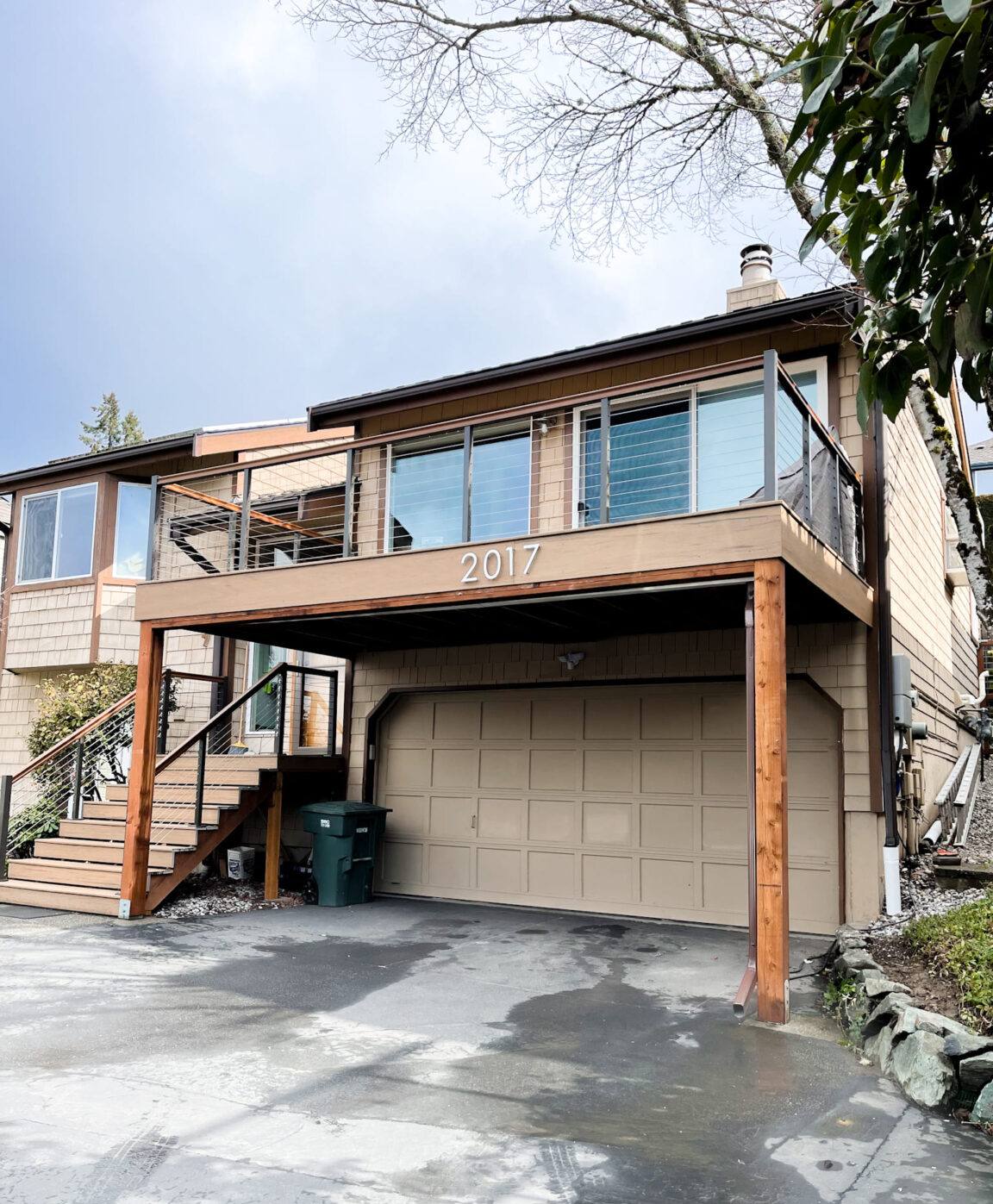
What Blaine's Salt Air and Rain Actually Do to a Deck
Salt air isn't just a smell — it's airborne moisture carrying dissolved salt that settles on every exposed surface of a deck, including fasteners, hardware, and connectors you can't see once the boards are down. Over time it accelerates corrosion in anything that isn't rated for coastal exposure. Standard electro-galvanized screws and joist hangers that would be fine forty miles inland can start rusting within a few years this close to the water.
Driving rain is the second problem. Wind-driven rain doesn't just fall on a deck's surface — it gets pushed sideways and up underneath railings, into end grain, and behind ledger boards where flashing is often skipped or done poorly. That's the single most common failure point we see: water working its way behind the ledger board where the deck attaches to the house, rotting the rim joist from the inside where nobody looks until there's a problem.
Then there's moss. Whatcom County's wet season stretches long, and any horizontal wood or composite surface that doesn't get regular sun and airflow will grow moss and algae. Beyond looking bad, a mossy deck surface holds moisture against the board and turns slick and genuinely dangerous underfoot, especially on stairs.
Why This Matters More in Blaine Than Elsewhere in Whatcom County
Properties further inland in the county still deal with plenty of rain, but they don't get the salt exposure that comes with Blaine's shoreline proximity. That combination — salt plus near-constant dampness plus a short summer drying window — is what separates a deck build here from a build in Bellingham or Lynden. It's a narrower set of tolerances, and it's why generic advice from national decking brands or big-box contractors often misses the mark for homes out here.
Choosing the Right Decking Material for a Blaine Property
There's no single "best" decking material — there's a best material for your budget, your maintenance appetite, and how exposed your particular deck is to weather. We walk every homeowner through the real tradeoffs rather than pushing whatever has the best margin.
Pressure-Treated Wood
Still the most affordable option and a reasonable choice if you're willing to stay on top of maintenance. It needs to be sealed or stained on a regular cycle out here — skip that in a climate this wet and you'll see graying, splitting, and eventually rot well ahead of schedule. We only use treated lumber rated for ground contact where it's structurally appropriate, not just because it's cheaper.
Composite and PVC Decking
Composite boards resist moisture and don't need staining, which is a real advantage in a climate where staining season is short and unreliable. The tradeoff is a higher upfront cost and the fact that composite still needs occasional cleaning to keep moss and mildew from taking hold on the surface — it resists rot, it doesn't repel algae growth on its own. PVC decking costs more again but handles constant moisture exposure better than composite in our experience, which matters on a deck that's shaded or close to the water.
Cedar and Other Naturally Resistant Woods
Cedar has natural rot resistance and looks good, but it's softer than composite and still needs periodic sealing to fend off the moss and gray weathering that comes with our wet season. It's a good middle option for homeowners who want real wood but understand the upkeep.
| Material | Upfront Cost | Maintenance in This Climate | Typical Lifespan Here |
|---|---|---|---|
| Pressure-treated wood | Lowest | Seal/stain every 1-2 years | 10-15 years with upkeep |
| Cedar | Moderate | Seal every 1-2 years, clean moss regularly | 15-20 years with upkeep |
| Composite | Moderate-High | Periodic wash, no staining | 20-25+ years |
| PVC | Highest | Periodic wash, best moisture tolerance | 25-30+ years |
Framing and Fasteners: Where Most Blaine Deck Failures Start
The decking surface is what homeowners notice, but the framing underneath is what actually determines whether a deck is safe and how long it lasts. In a salt-air environment, we treat fastener and hardware selection as a structural decision, not an afterthought.
- Stainless steel or heavy hot-dip galvanized fasteners — not standard electro-galvanized — for anything exposed to salt air
- Corrosion-resistant joist hangers and structural connectors rated for coastal or treated-lumber contact
- Proper ledger board flashing where the deck meets the house, sealed to keep driving rain from tracking behind it
- Joist tape or a moisture barrier on top of framing lumber to slow water intrusion into end grain and fastener holes
- Adequate joist spacing and blocking sized for our snow and wind-load requirements, not just minimum code
Cutting corners on any one of these is invisible on installation day and expensive five years later, once rust streaks show up on the decking or a railing post starts to feel loose.
Footings, Drainage, and Site Prep for Blaine Lots
A lot of deck problems start below grade, not above it. Blaine properties often sit on soil that stays saturated for long stretches during the wet season, and footings that aren't sized or set correctly for that moisture can shift over time, which throws the whole structure out of level. We dig footings to the depth and diameter the local frost and soil conditions call for, and we grade the area under and around the deck so water moves away from the house and the posts rather than pooling against them.
Airflow underneath a deck matters just as much as drainage. A low deck with poor ventilation traps moisture against the framing and encourages both rot and moss growth on the underside of the boards. Where clearance allows, we build in enough gap and skirting ventilation to let air move through.
Our Deck Building Process
1. On-Site Assessment
We look at sun exposure, wind exposure, existing drainage patterns, and how close the deck will sit to salt-laden air off the water. That assessment drives our material and hardware recommendations — it's not a one-size-fits-all quote.
2. Design and Material Selection
We walk through the material comparison above with real numbers for your project, talk through maintenance expectations honestly, and settle on a layout that fits how you'll actually use the space.
3. Permitting
We handle the permit application and inspection scheduling required for the jurisdiction your property falls under, so you're not chasing paperwork.
4. Build
Footings, framing, flashing, decking, and railings, in that order, with the coastal-rated hardware and moisture detailing described above built in as standard practice, not an upgrade.
5. Final Walkthrough
We go over the finished deck with you, including what maintenance it needs and on what schedule, so there are no surprises the first time moss season rolls around.
Permits and Code Considerations
Most deck construction work in and around Blaine requires a building permit, particularly for any deck attached to the house, elevated above a certain height, or involving structural framing changes. Requirements can vary depending on your specific jurisdiction within Whatcom County, including setback rules if your lot is close to a shoreline or environmentally sensitive area. We pull the required permits as part of our process rather than leaving that step to the homeowner, and we build to the load and railing-height requirements that apply to your project.
Maintenance: Getting the Most Life Out of a Blaine Deck
Even the best-built deck needs some seasonal attention in this climate. The good news is that it doesn't take much time if you stay ahead of it rather than catching up after moss season has already taken hold.
- Sweep debris and standing leaves off the deck surface regularly through fall, when they trap moisture against the boards
- Scrub moss and algae off with a deck-safe cleaner before it has a chance to establish, rather than waiting until it's thick
- Check and re-seal wood or cedar decking on the schedule recommended for your specific product
- Inspect fasteners and hardware annually for early rust streaking, especially near railing posts and stair stringers
- Confirm drainage paths under and around the deck aren't blocked by plantings, mulch, or settled soil
- Clear gutters and downspouts near the deck so overflow isn't dumping extra water onto or under the structure
Why Hire a Crew That Already Works in Blaine
A deck builder who mostly works inland can still build a structurally sound deck — but they may not think to spec coastal-rated fasteners, detail the ledger flashing for driving rain, or plan for the airflow and drainage a shoreline-adjacent lot needs. Those are the details that don't show up on a bid sheet but show up in the deck's condition five or ten years down the road. Working regularly on homes throughout Whatcom County's coastal areas means we've already seen what fails out here and why, and we build every deck to account for it from the start rather than learning it on your project.
If you're planning a new deck or replacing one that's showing its age, we're happy to come take a look and put together a straightforward, no-pressure estimate — just fill out the form below.