 Ferndale
 Why Bellingham Decks Take a Different Kind of Beating
A deck in Bellingham doesn't age the way a deck does in a drier climate. Between the salt-laden air off the bay, months of driving rain, and a moss season that can stretch from fall well into spring, wood and hardware here are under near-constant pressure. We work on decks throughout Whatcom County, and the pattern is consistent: the failures we get called out for almost never come from bad luck. They come from moisture that had nowhere to go and fasteners that were never rated for this environment in the first place.
This page is specifically about deck repair for Bellingham homes — not a general "we fix decks" pitch. The fixes that hold up here are shaped by this specific climate, and that's what we'll walk through.
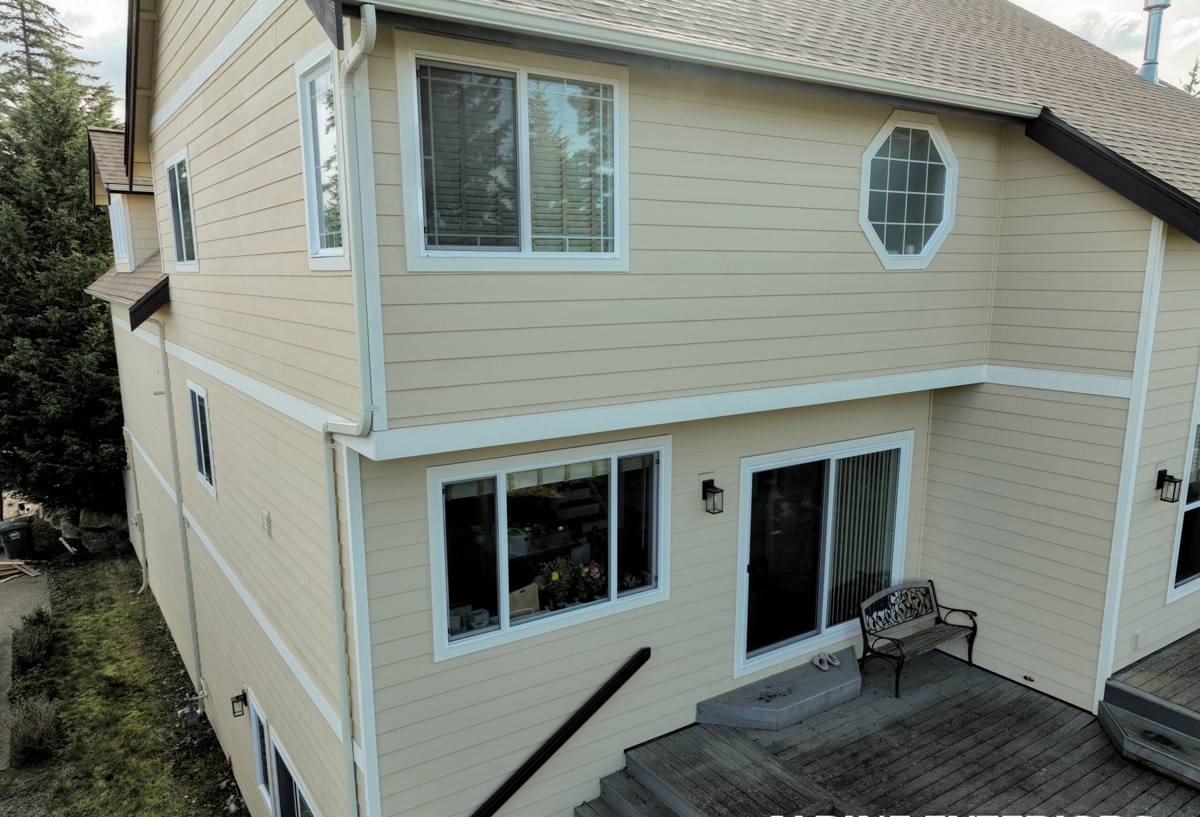
What the Local Climate Actually Does to a Deck
Moisture That Doesn't Fully Dry Between Storms
In a lot of the country, decks get a real dry-out period between rain events. Here, that window is often too short. Water sits in end grain, in the gap where decking meets a ledger board, and in any spot where two pieces of wood touch without a way to shed water. Over months and years, that's what turns into soft, spongy boards and rot at the framing underneath — long before the surface looks obviously bad.
Salt Air and Hardware Corrosion
Proximity to salt water speeds up corrosion on fasteners, joist hangers, and any exposed metal connectors. A screw or bracket that would last decades inland can start rusting and losing strength much sooner this close to the coast. This matters because a deck's strength depends on hundreds of small metal connections doing their job — if those are compromised, the wood around them can still look fine while the structure underneath is weakening.
Moss, Algae, and the Slip Hazard They Create
Extended damp, shaded conditions are exactly what moss and algae need. Beyond looking bad, a mossy deck surface holds moisture against the wood longer and gets dangerously slick — especially on stairs and any north-facing section that doesn't get much sun. We see more moss-related slip complaints in the months following the wettest stretch of the year than at any other time.
Signs Your Deck Needs Repair — Not Just a Cleaning
A pressure wash and some sealant can make a deck look better without fixing what's actually wrong. Here's what tells us the problem is structural, not cosmetic:
- Boards that feel spongy, bounce, or flex noticeably when you walk on them
- Visible gaps opening up where the deck meets the house (ledger board separation)
- Rust staining running down from screw heads or metal brackets
- Wood that's gone gray and soft, or that a screwdriver sinks into easily
- Railings or posts that wobble when pushed
- Persistent moss or dark staining that comes back within weeks of cleaning
- Stair stringers that have started to split or pull away from the frame
If you're seeing more than one of these, it's worth a proper inspection before deciding whether repair or replacement is the right call.
What a Correct Deck Repair Actually Involves
Structural Inspection First
Before any board gets replaced, we check the parts you can't see from the surface: the ledger board connection to the house, the condition of the joists and beams underneath, post bases, and footings. A deck that looks fine on top can have a compromised ledger connection — which is the single most common cause of serious deck failures.
Ledger Board and Flashing
The ledger board — where the deck attaches to the house — is the point most exposed to water intrusion if it wasn't flashed correctly to begin with. A correct repair means proper flashing that directs water away from this connection, not just caulk over an existing gap. Caulk is a stopgap; flashing is the actual fix.
Joists, Posts, and Footings
Any joist or post with soft or discolored wood gets addressed at the source, not just covered up. Where corrosion has weakened joist hangers or fasteners, we replace them with hardware rated for exterior and coastal exposure rather than whatever was originally used.
Decking Boards and Railings
Individual board replacement makes sense when the framing underneath is sound and the damage is limited to the surface. We match spacing and fastening to shed water properly — tight, poorly-spaced boards trap moisture and just recreate the same problem a few years out.
Repair or Replace? Honest Cost Factors
Not every deck needs a full rebuild, and not every problem can be solved by swapping a few boards. Here's how we think through it:
| Factor | Leans Toward Repair | Leans Toward Replacement |
|---|---|---|
| Framing condition | Joists and ledger are solid, damage is isolated | Rot or soft wood found in multiple structural members |
| Age of deck | Under 10-12 years, built to a reasonable standard | Older deck nearing the end of its practical service life |
| Extent of damage | A handful of boards, one section, or a stair run | Widespread soft spots, sagging, or multiple failed connections |
| Budget goal | Extend usable life at lower upfront cost | Reset the clock and avoid recurring repair calls |
| Code/safety concerns | Minor items correctable in place | Structural elements no longer meet current safety standards |
Honest ranges: targeted repairs — a section of decking, a stair run, hardware upgrades — are typically a fraction of the cost of a full rebuild, while a full deck replacement is a much larger project scoped on square footage, framing condition, and material choice. We'll give you real numbers after we've actually looked at your deck, not before.
Our Process for Bellingham Deck Repair Calls
- Inspection. We check the ledger connection, framing, posts, footings, and surface boards, and we tell you plainly what we find — including if a repair isn't the right long-term answer.
- Diagnosis and plan. You get a clear explanation of what's failing, why, and what it will take to fix it correctly — not just what's visible from the top.
- Repair work. We address the structural issues first, then move to surface-level fixes: boards, railings, and finish work.
- Hardware and flashing check. Any corroded or undersized fasteners and connectors get upgraded to hardware suited for this coastal, high-moisture climate.
- Cleanup and walkthrough. We walk the finished deck with you and point out anything worth watching going forward.
Decking Materials: What Actually Holds Up Here
We get asked a lot whether to repair with the same wood or switch to composite. Both can work — the trade-offs are about maintenance, not one being universally "better."
Wood Decking
Costs less upfront and is easy to spot-repair board by board, which is exactly why it's common in repair work. It needs regular sealing or staining in this climate to keep water out of the end grain — skip that maintenance for a few years and you're back to soft boards.
Composite Decking
Resists rot and doesn't need staining, but it isn't maintenance-free — it still needs regular cleaning to keep moss and algae from taking hold, and it has to be installed with the right gapping and fastening for our moisture levels or it can trap water underneath. It's also a bigger upfront investment. As our standard, we install and repair composite per manufacturer spacing and ventilation specs — cutting corners there is where composite decks actually run into trouble.
Why a Local Crew That Already Works Bellingham Matters
Deck repair advice that works in a dry climate can be the wrong advice here. A crew that works Whatcom County regularly already knows which fastener grades hold up near the water, how much ventilation a deck needs to fight moss in our shoulder seasons, and where ledger boards tend to fail on homes built to older standards common in this area. That's not something you get from a generalized checklist — it comes from repeated exposure to the way this specific climate ages a deck.
It also means someone who can respond and follow up locally, rather than a crew passing through the region for a single job.
Keeping a Repaired Deck in Good Shape
Once your deck is repaired correctly, a little seasonal attention goes a long way in this climate:
- Sweep off standing leaves and debris before fall rains set in — trapped debris holds moisture against boards
- Clean moss and algae off surfaces and stairs at least once a year, more often on shaded sections
- Check that gaps between boards haven't closed up from swelling, which blocks proper drainage
- Look at fastener heads periodically for early rust staining
- Reseal or restain wood decking on the schedule the product calls for — don't wait for it to look bad
- Keep gutters and downspouts clear so runoff isn't dumping extra water onto the deck
Getting an Honest Read on Your Deck
If your deck has soft spots, rust streaks, persistent moss, or just doesn't feel as solid as it used to, it's worth having someone look at the framing before deciding what to do. We'd rather tell you a few boards will do the job than sell you a full rebuild you don't need — and we'll tell you just as plainly if the structure underneath means repair isn't the right long-term call.
If you're in Bellingham or elsewhere in Whatcom County and want a straight answer on what your deck actually needs, reach out for a free, no-pressure estimate using the form below.