 Ferndale
 Bellingham's Climate Is Harder on Siding Than Most Homeowners Realize
Bellingham sits where Puget Sound air, near-constant Pacific moisture, and a long, shaded wet season all meet. Homes close to Bellingham Bay deal with a steady drift of salt-laden air that accelerates corrosion on fasteners, trim, and anything with a weak factory finish. Add to that the driving, wind-pushed rain that comes off the water in the fall and winter, and you have a climate that tests every seam, joint, and coating a siding product has. Then there's moss — Whatcom County's long, cool, wet stretch from October through May gives moss and algae months to establish themselves on any surface that stays damp, especially north-facing walls and anything shaded by mature trees.
None of this is unusual for the area — it's just what siding here has to survive, year after year, for decades. The problem is that a lot of siding products were never engineered with this specific combination of salt exposure, wind-driven rain, and moss pressure in mind. That's the gap James Hardie's climate-specific product lines were built to close, and it's why we install Hardie exclusively rather than mixing in vinyl, LP SmartSide, or other fiber cement alternatives.
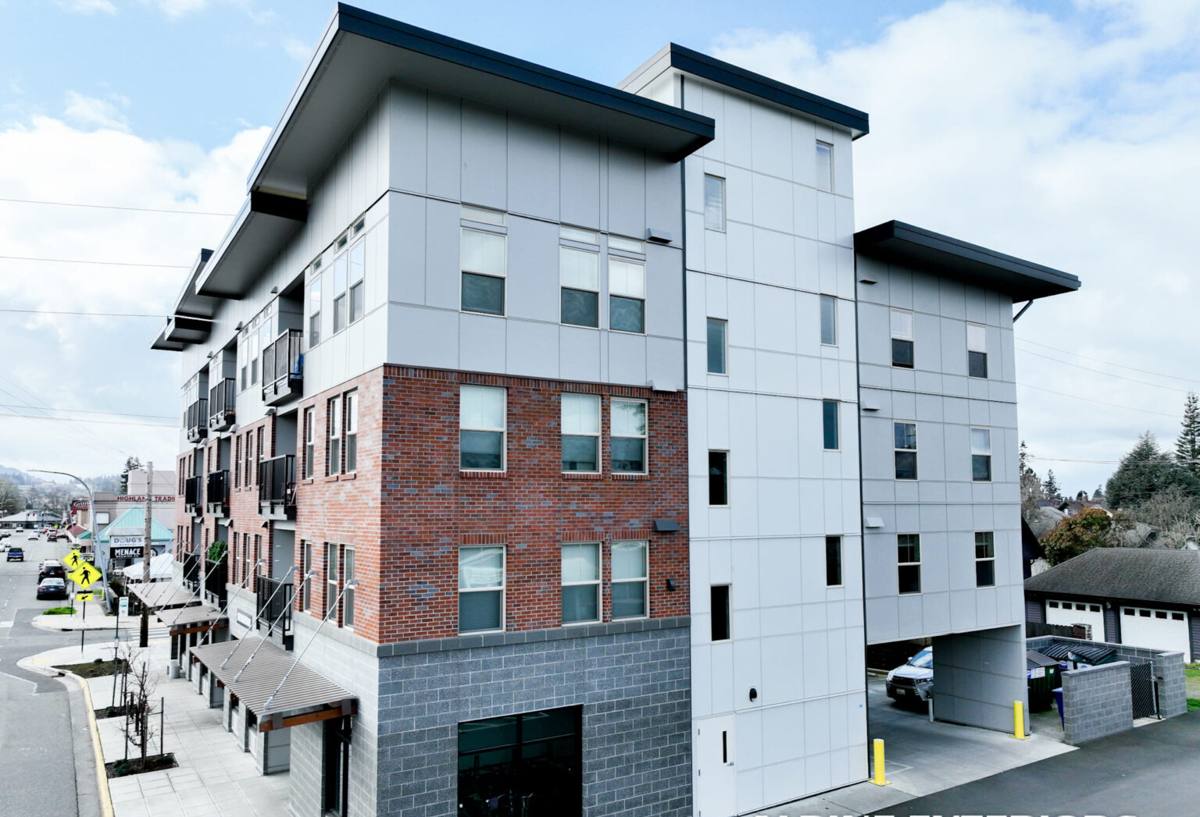
What Bellingham Homes Actually Need From Their Siding
Moisture Management, Not Just Moisture Resistance
In a climate this wet, the question isn't whether siding will get rained on — it's what happens after. Siding needs to shed water fast, resist saturation at the seams, and dry out between storms without trapping moisture behind the surface. That last part matters more here than almost anywhere else in the state, because Bellingham rarely gets the long dry stretches that let a marginal installation "air out" before the next system rolls in.
Salt-Air Tolerance
Homes closer to the water take a slow, steady beating from airborne salt. This doesn't just affect metal — it affects paint adhesion, caulk longevity, and how quickly a factory finish chalks or fades. A coating system that isn't formulated for coastal exposure will visibly age faster on a Bellingham-area home than the same product would fifty miles inland.
Moss and Algae Resistance
Moss doesn't just look bad — established growth holds moisture against the siding surface, and on some materials that trapped moisture leads to swelling, softening, or paint failure underneath. Siding with a dense, factory-cured surface and a finish that doesn't give algae and moss spores an easy foothold makes a real difference over a 10- or 20-year span, especially on shaded elevations.
Why James Hardie Fits This Climate
James Hardie fiber cement is engineered specifically for regional climate zones, and the HZ5 formulation used in the Pacific Northwest is built around exactly the conditions Bellingham deals with: sustained moisture exposure and freeze-thaw cycling in the colder months. It's not the same product sold in Arizona or Florida — the cement formulation is adjusted for where it's going.
- Non-combustible core — fiber cement doesn't feed a fire, unlike wood-based or vinyl products.
- ColorPlus factory finish — a baked-on finish applied in a controlled environment, which holds up to UV, salt air, and moisture cycling far better than field-applied paint.
- Dimensional stability — fiber cement doesn't expand, contract, or cup the way vinyl and some wood-based products do when they cycle through wet and dry, warm and cold.
- Dense, engineered surface — less hospitable to moss and algae than porous wood or textured vinyl, and it holds paint and caulk far longer.
- Transferable warranty — meaningful protection that also helps resale, since a new owner inherits the coverage.
We don't install LP SmartSide, vinyl, Cemplank, Allura, primed spruce, or cedar. Each of those has legitimate strengths in the right application, but none of them combine the moisture behavior, coastal-finish durability, and fire performance that James Hardie does — and in a climate like Bellingham's, those trade-offs show up faster than they would somewhere drier.
What a Correct James Hardie Installation Actually Involves
Hardie siding performs the way it's supposed to only when it's installed to the manufacturer's specifications — and in a wet climate, the margin for error is smaller than people expect. A correct installation is not just nailing boards to a wall.
Before the Siding Goes Up
- Inspecting and repairing the water-resistive barrier (house wrap) underneath — this is the layer that actually stops bulk water, not the siding itself.
- Correct flashing at every window, door, and roof-to-wall intersection, since these are the highest-risk points for water intrusion.
- Proper starter strips and drainage planes so water that gets behind the cladding has somewhere to go.
During Installation
- Correct fastener spacing, type, and placement — over-driven or under-driven nails are one of the most common causes of early failure.
- Proper clearance from grade, decks, roofing, and other surfaces so the bottom edge of the siding never sits in standing water or gets buried in soil or mulch.
- Field-cut edges primed and sealed, since raw cut edges are more vulnerable to moisture if left exposed.
- Correct caulking at seams and penetrations, using products compatible with the ColorPlus finish.
Skip any of these steps and you can end up with a wall that looks like Hardie siding but doesn't perform like it — trapped moisture, premature paint failure, or fastener corrosion that shows up years later, usually right around when a homeowner assumed the siding was maintenance-free for good.
How Siding Material Performs in This Climate
| Material | Moisture behavior in wet PNW climate | Salt-air / coastal durability | Moss & algae resistance |
|---|---|---|---|
| James Hardie fiber cement | Dimensionally stable, engineered drainage details | ColorPlus finish holds up well over time | Dense surface, less hospitable to growth |
| Vinyl | Can warp or buckle with temperature swings | Finish fades and chalks faster near salt air | Textured surfaces can trap moisture and debris |
| Cedar / primed spruce | Absorbs moisture, prone to rot without diligent upkeep | Requires frequent refinishing near the coast | Organic material is naturally more susceptible |
| LP SmartSide (wood-strand) | Engineered wood core is moisture-sensitive at cut edges and seams | Finish maintenance is more demanding in salt air | Moderate — depends heavily on maintenance schedule |
This isn't a knock on any of these materials in general — it's specifically about how they hold up under Bellingham's combination of salt exposure, sustained rain, and moss pressure, which is why we standardized on Hardie for the homes we work on.
Our Process for a Bellingham-Area Hardie Install
- On-site assessment — we look at your current siding, the condition of the sheathing and water barrier underneath, sun/shade exposure on each elevation, and any moss or moisture patterns already showing up.
- Product and color selection — walking through Hardie's plank, shingle, and panel lines along with ColorPlus color options, so the final look fits the home and the neighborhood.
- Prep and tear-off — removing old siding, repairing any damaged sheathing found underneath, and correcting the water-resistive barrier before anything new goes up.
- Installation to manufacturer spec — flashing, fastening, clearances, and sealing done to James Hardie's published installation requirements, not shortcuts.
- Final walkthrough — checking seams, trim, caulking, and cleanup before we consider the job done.
What to Expect From Us Before You Hire
- A written estimate that explains scope, not just a number.
- Straight answers about what your current siding's condition actually requires — we won't oversell a full replacement if repair is a reasonable option.
- Clarity on which Hardie product line fits your home's exposure (shaded, coastal-facing, etc.).
- A clear explanation of what's covered under the James Hardie warranty and what depends on correct installation.
- No pressure to sign same-day.
Why It Matters That We Already Work in This Area
A siding crew that works Bellingham and the rest of Whatcom County regularly already knows which elevations tend to hold moss, how local wind patterns push rain into certain wall assemblies, and what Bellingham's permitting and inspection process looks like. That familiarity shows up in small decisions during the job — where extra flashing attention matters, which corners of a lot see the least sun and the most algae growth, how to sequence a job around the region's wetter months. It's the difference between a crew that's installing Hardie siding for the first time in a new market and one that's already seen how it performs on homes like yours through a few Whatcom County winters.
Signs Your Current Siding Is Losing the Fight
- Visible moss or algae streaking, especially on north-facing or shaded walls.
- Paint that's peeling, bubbling, or chalking faster than it used to.
- Soft spots, especially near the bottom courses or around windows and doors.
- Warping, cupping, or gaps opening up between boards or panels.
- Rust staining around fasteners or trim.
Any one of these on its own might just mean routine maintenance. Several at once, especially on an older cedar, primed wood, or vinyl exterior, usually means the siding is nearing the end of what it can reasonably protect against in this climate.
Long-Term Value in a Wet Climate
Siding is one of the few home investments where the "cheaper now" option often costs more over 15–20 years in repainting, spot repairs, and moisture-related damage to what's underneath. James Hardie's transferable warranty, combined with a factory finish that doesn't need repainting on the same cycle as field-applied coatings, is a meaningful part of why it holds up better as a long-term investment in a climate that punishes shortcuts.
If you're weighing a siding project on a Bellingham-area home, we're happy to take a look and give you a straightforward assessment — no pressure, no hard sell. Fill out the form below to request a free estimate and we'll walk you through exactly what your home needs.