 Ferndale
 Why Birch Bay Decks Wear Differently Than Decks Inland
A deck built five miles inland in Whatcom County and a deck built along Birch Bay are not the same project, even if the plans look identical on paper. Birch Bay sits right on the water, which means every deck out there deals with salt-laden air moving off the bay, near-constant westerly moisture, and long stretches of the year when things simply don't dry out. Add in the moss and algae growth that thrives in our wet, mild winters, and you've got a structure that's fighting three things at once: corrosion, rot, and slow biological growth that turns boards slick and dark.
None of that means a Birch Bay deck can't last. It means the build has to account for those conditions from the framing up, not just at the surface. A deck that looks fine on installation day but wasn't specified for salt exposure and standing moisture will show problems within a few seasons — usually starting with fasteners, not the decking itself.
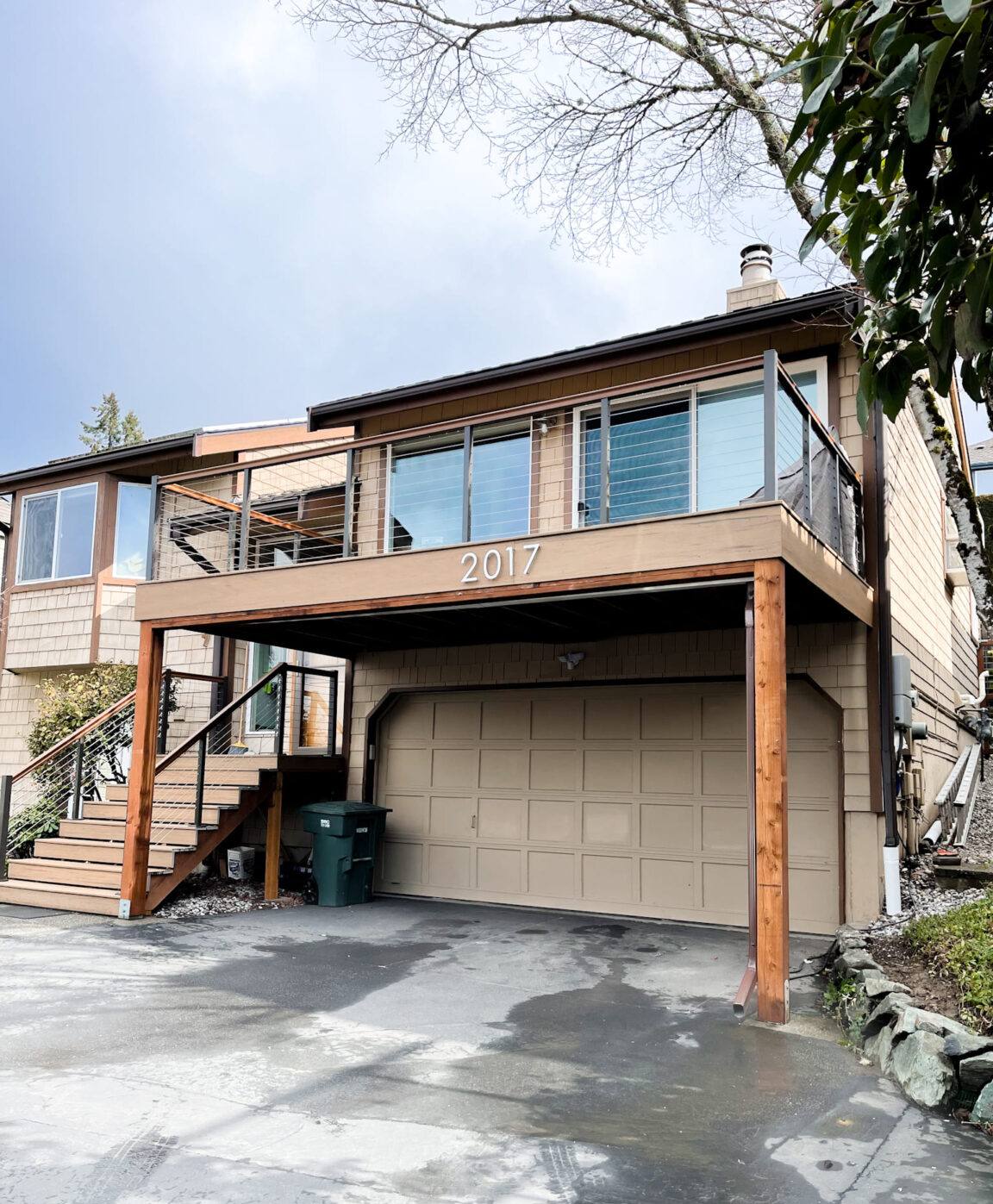
What Coastal Exposure Actually Does to a Deck
Salt Air and Metal
Airborne salt accelerates corrosion on anything metal — nails, screws, joist hangers, post bases, bolts. Standard galvanized hardware that would hold up fine on a deck ten miles inland can start showing rust streaks and pitting within a couple of years this close to the bay. Once fasteners weaken, the structural connections they're holding — ledger boards, joist hangers, railing posts — are compromised even if the visible decking looks fine.
Driving Rain and Trapped Moisture
Birch Bay gets wind-driven rain that finds its way into gaps, end grain, and any spot where two boards meet without a drainage path. Moisture that gets trapped between decking and joists, or behind ledger boards against the house, doesn't evaporate quickly in our climate. That's where rot starts — not on the top of the board where you can see it, but underneath.
Moss and Algae Season
Whatcom County's wet season runs long, and shaded or low-airflow deck areas grow moss and algae readily. Beyond looking bad, a mossy deck surface holds moisture against the wood or composite cap longer and gets genuinely slick — a real slip hazard on stairs and near doorways.
Decking Material Choices for a Birch Bay Property
There's no single "best" decking material for coastal Whatcom County — there's a best material for your budget, your maintenance appetite, and how close you are to the water. Here's how the common options actually compare under these conditions:
| Material | Coastal/Moisture Performance | Moss & Algae Resistance | Maintenance |
|---|---|---|---|
| Pressure-treated fir/hem-fir | Decent if detailed and sealed correctly; end grain is the weak point | Low — needs regular cleaning and treatment | Annual cleaning, periodic sealing/staining |
| Cedar | Naturally moisture-resistant, but still needs sealing near salt air | Moderate | Sealing every 1–2 years to hold color and resist checking |
| Capped composite | Very good — the cap resists moisture intrusion at the surface | Good, though grooved/textured boards can still hold surface algae | Occasional washing, no sealing or staining |
| PVC decking | Excellent — non-organic, doesn't absorb moisture | Best of the group, smooth-surface profiles resist buildup | Lowest — soap and water as needed |
We're honest with clients about trade-offs rather than pushing one product line. Wood costs less up front and can look great, but it asks for a real maintenance commitment this close to the bay — skip a season of sealing and you'll feel it. Composite and PVC cost more initially but shift the long-term burden from labor to material cost, which matters if you want a deck you can enjoy without a maintenance calendar.
Framing and Fasteners: Where Coastal Decks Actually Fail First
Most deck failures we see in this area don't start with the decking boards — they start below the surface, in the framing and hardware. This is the part of the job that isn't visible once the deck is finished, which is exactly why it has to be done right the first time.
| Component | Standard Approach | What We Spec for Birch Bay |
|---|---|---|
| Fasteners & hardware | Standard galvanized (G185 or similar) | Stainless steel or heavy hot-dip galvanized rated for coastal/marine exposure |
| Joist protection | Bare treated lumber | Butyl flashing tape on joist tops to stop water from wicking into end grain and fastener holes |
| Ledger attachment | Lag bolts with basic flashing | Proper ledger flashing with a drainage gap, plus corrosion-resistant fasteners |
| Post bases | Standard galvanized post base | Elevated, corrosion-rated post bases that keep post end grain off standing water |
The cost difference between standard and coastal-rated hardware is real but modest compared to the total project cost — and it's the cheapest insurance you can buy against a deck that needs structural repair in five years instead of twenty.
Drainage and Moisture Management
Good drainage is what keeps a deck's frame dry between rain events, and in this climate, rain events aren't rare. A few things we pay close attention to on every Birch Bay build:
- Gapping decking boards correctly for the material — too tight and water pools; too wide and debris collects
- Sloping the deck surface slightly away from the house so water sheds rather than sitting
- Flashing the ledger board where the deck meets the house, with a drainage gap so moisture doesn't get trapped against the siding
- Keeping footings and post bases above grade and away from areas where water naturally collects after storms
- Considering an under-deck drainage system on taller decks so the space below stays usable and dry rather than becoming a perpetually damp, moss-prone area
None of this is exotic — it's standard good building practice. But it's the kind of detail that gets skipped when a crew is used to building in a drier part of the state and treats every deck the same way.
Our Process for a Birch Bay Deck Build
1. Site Visit and Assessment
We look at sun and wind exposure, proximity to the water, drainage patterns on your lot, and how the deck will connect to your house. A deck on an exposed bluff-side lot needs different hardware and detailing than one tucked behind a windbreak of trees a few blocks back.
2. Material and Layout Discussion
We walk through decking and railing options honestly, including what each choice will actually cost you in upkeep over the years — not just the sticker price at install.
3. Permitting
Deck construction in Whatcom County typically requires a building permit once you're past certain size and height thresholds, and setback rules apply depending on your lot and its distance from the water. We handle the permit process as part of the job so you're not left navigating it alone.
4. Framing and Hardware Installation
This is where the coastal-rated fasteners, flashing tape, and proper ledger attachment happen — the structural work that determines how the deck ages, done before a single visible board goes down.
5. Decking, Railing, and Finish Work
Boards are installed with correct spacing and fastening for the chosen material, followed by railing, stairs, and any trim or skirting.
6. Final Walkthrough
We go over the finished deck with you, including what maintenance (if any) the material you chose will need, and when.
Maintenance That Actually Matters Here
Every deck benefits from upkeep, but in a coastal, moss-heavy climate, a few habits make an outsized difference in how long yours lasts:
- Rinse salt residue and debris off the deck surface periodically, especially after storms with onshore wind
- Clean moss and algae off boards and stairs before it builds up — a soft-bristle brush and deck-safe cleaner, not a pressure washer blasted directly into the wood
- Check and re-seal or re-stain wood decking on the schedule appropriate to the product — don't wait until it looks obviously weathered
- Keep gutters and downspouts near the deck clear so runoff isn't dumping extra water onto the structure
- Look underneath the deck once a year for signs of rust on hardware or soft spots in framing — catching a problem early is a repair, catching it late is a rebuild
Permits, Setbacks, and Building for the Location
Because Birch Bay sits along the water, deck projects here can involve additional considerations beyond a standard inland build — shoreline setback rules, height restrictions, or lot-specific conditions tied to slope and drainage. We're not going to guess at your specific parcel's requirements here since every lot is different, but part of doing this work correctly is knowing to check for those conditions before design and construction start, not after.
Why It Matters to Hire a Crew That Already Works This Coastline
A contractor who mostly builds decks inland isn't wrong about general deck-building — they're just missing the specific lessons that come from watching decks age along the water. We've seen which hardware holds up and which rusts early, which decking profiles shed moss and which trap it, and which framing details actually keep water out of a ledger connection through a wet Whatcom County winter. That experience shows up in the choices made before the first board is cut, not in anything you'd notice on a walkthrough of the finished deck.
If you're planning a new deck or replacing one that's showing its age in Birch Bay, we're happy to take a look and give you a straightforward, no-pressure estimate — just fill out the form below.