 Ferndale
 Metal Roofing Built for Birch Bay's Coastline
Birch Bay sits right on the water, and that changes what a roof has to deal with year-round. Homes here take on salt-laden air off the bay, wind-driven rain that finds every weak seam, and long stretches of gray, damp weather that keep roofs wet for days at a time. A roofing product that performs fine ten miles inland in Ferndale can behave differently a few hundred yards from saltwater. Metal roofing is one of the best answers to that combination when it's specified and installed correctly for this specific environment — but "metal roofing" isn't one product, and getting the details wrong is what leads to premature rust, streaking, or fastener failure five or ten years down the road instead of thirty or more.
This page is about what a metal roof needs to do specifically for a Birch Bay home, not metal roofing in general.
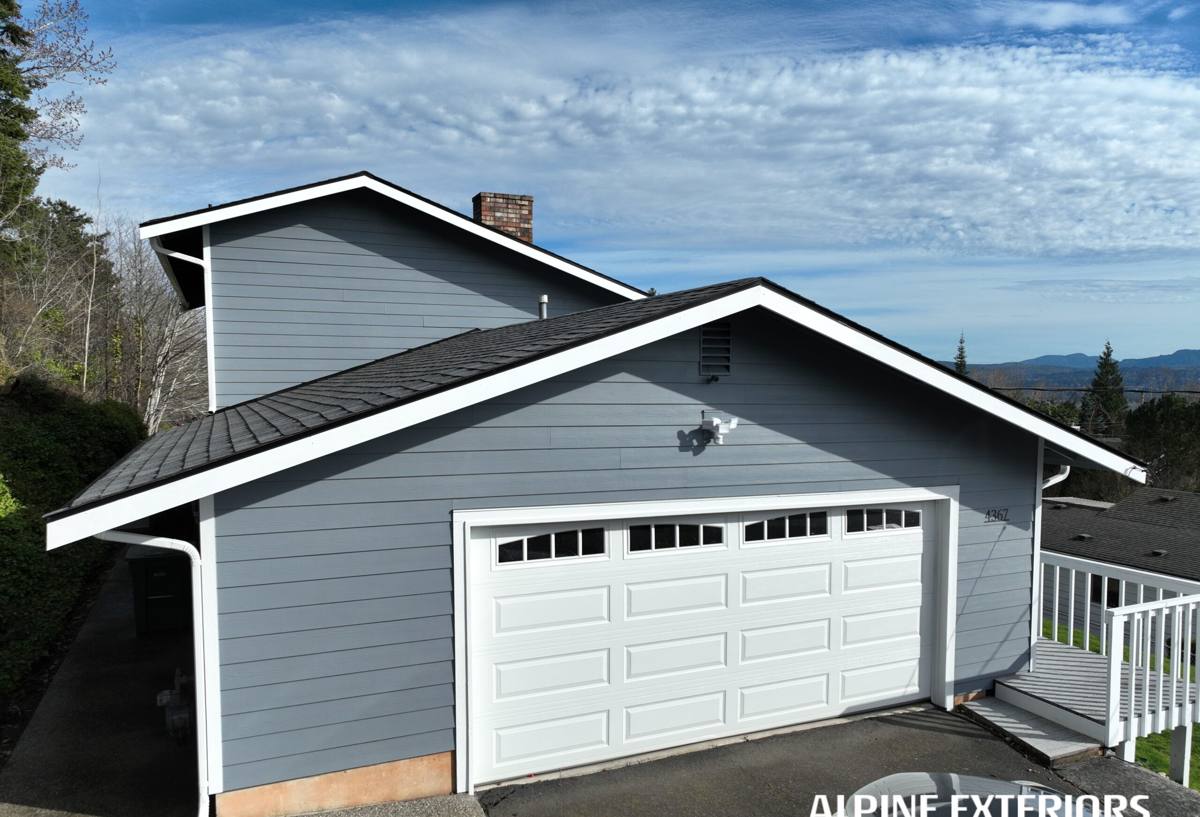
Why Birch Bay's Climate Is Harder on a Roof
Salt Air and Corrosion
Airborne salt is corrosive to exposed metal, especially at cut edges, fastener heads, and anywhere a protective coating gets scratched during installation or by wind-carried debris. Homes close to the water see this faster than homes set back from the shoreline. The right base metal and coating system, plus careful handling on the roof, is what keeps this from becoming a problem.
Wind-Driven Rain
Whatcom County storms coming off the water don't just drop rain straight down — wind pushes it sideways and up under laps, flashing, and fastener penetrations that would stay dry in a calmer climate. A metal roof's seams, not just its panels, are what determine whether that rain stays outside.
Moss and Prolonged Dampness
Shaded roof sections, north-facing slopes, and areas near trees stay damp longer through our wet season, which is exactly what moss needs to take hold. Moss holds moisture against a roof surface and, on the wrong material or in the wrong spots, can work into seams over time. A properly detailed metal roof resists this far better than most other materials, but design details around valleys, gutters, and shaded areas still matter.
What a Correct Metal Roof Installation Involves Here
A metal roof is only as good as the system underneath it and the way it's fastened, flashed, and sealed. For a Birch Bay home, that means:
- A coating and base metal chosen with coastal salt exposure in mind, not just the cheapest option in stock
- A full synthetic underlayment, with self-adhered ice-and-water membrane at eaves, valleys, and any low-slope transitions where wind-driven rain collects
- Fastener patterns and clip spacing rated for coastal wind exposure, not a standard inland install
- Properly lapped and sealed flashing at every penetration — vents, chimneys, skylights — since these are the most common points where a roof actually leaks
- Cut edges and exposed fasteners treated or capped to slow corrosion at the points most vulnerable to salt air
- Attention to how water sheds off valleys and into gutters, so moisture doesn't sit and encourage moss growth
Skipping any one of these doesn't usually show up as a problem in year one. It shows up in year eight or twelve, as a leak, a rust streak, or a section of panel that's failed while the rest of the roof still looks fine.
Comparing Metal Roofing Options for a Coastal Home
Not every metal roofing system is a good fit for a home this close to saltwater. Here's how the common options stack up for a Birch Bay property specifically:
| System | Salt Air Performance | Wind/Rain Performance | General Cost Factor |
|---|---|---|---|
| Standing seam (concealed fastener) | Strong — few exposed fasteners to corrode | Excellent; interlocking seams shed wind-driven rain well | Higher upfront, longest low-maintenance lifespan |
| Exposed-fastener metal panel | Fair — fastener heads and washers are the weak point over time and need periodic checking | Good, if fasteners are properly torqued and rechecked over the roof's life | Lower upfront, more long-term maintenance |
| Stone-coated steel panels | Good, with a quality coating; heavier gauge helps resist denting from wind-blown debris | Good; profile helps break up wind-driven rain | Mid-to-upper range |
We'll talk through which of these makes sense for your roof's slope, exposure to the water, and budget rather than pushing one system for every house — a detached shop roof and a primary residence facing open water don't always call for the same spec.
Metal vs. Other Roofing Materials for This Location
Homeowners near the water often ask why metal gets recommended over asphalt shingles for a Birch Bay property. The honest answer is trade-offs, not a blanket rule:
- Wind resistance: A properly installed metal roof, especially standing seam, handles sustained coastal wind better than shingles, which are more prone to edge lift and blow-off in exposed locations.
- Moss and moisture: Metal sheds water fast and gives moss less to grip onto than a shingle surface, though it isn't fully immune in shaded, damp spots.
- Longevity vs. upfront cost: Metal costs more to install than asphalt shingles but typically lasts two to three times as long with less maintenance, which matters if you're planning to stay in the home long-term.
- Repairability: Metal roofs are more forgiving of minor hail or debris impact than people expect, but a poor patch job stands out visually more than it would on a shingle roof — repairs should be done by someone who's matched panels before.
For some homes, especially those with tight budgets or shorter ownership horizons, a well-installed shingle roof is still the right call. We'll give you a straight answer on which fits your situation rather than steering every job toward the higher-cost option.
Our Process for Birch Bay Metal Roofing Projects
Inspection and Assessment
We start by looking at your roof's exposure — how close you are to open water, how much wind and sun it gets, whether tree cover is contributing to moss in specific areas — and your existing deck condition underneath any current roofing.
System Recommendation
Based on that assessment, we recommend a panel type, coating, and underlayment package suited to your specific exposure, not a one-size answer. We'll walk you through why, in plain terms.
Installation
Full tear-off when needed, proper deck repair before anything goes back down, ice-and-water membrane at the vulnerable areas, correct fastening and flashing detail, and cleanup that doesn't leave debris or metal shavings (which can rust and stain) around your property.
Walkthrough
We go over the finished roof with you, including what maintenance — if any — the system you chose calls for.
Why a Crew That Already Works Birch Bay Matters
Metal roofing done wrong isn't obvious until years later, which is exactly why the installer's experience with this specific coastline matters. A crew that regularly works Birch Bay and the rest of the Whatcom County coast already knows which slopes catch the worst of the wind off the bay, which shaded areas need extra attention for moss, and which fastener and flashing details hold up against salt air instead of just meeting a generic spec. That's different from a crew that mostly works inland jobs and treats a Birch Bay roof the same as one in Bellingham or Lynden.
Being based in Ferndale also means we're close enough to respond quickly if a storm causes damage or a question comes up after installation — not a company dispatching from hours away for a callback.
Maintenance: What a Metal Roof Actually Needs
One of the appeals of metal roofing is low maintenance, but "low" isn't "none," especially this close to the water. A simple annual routine keeps a metal roof performing for decades:
- Clear debris (needles, leaves, branches) from valleys and gutters so water doesn't pool and encourage moss
- Do a visual check of flashing around chimneys, vents, and skylights for any lifting or sealant wear
- On exposed-fastener systems, check that fastener heads and washers aren't showing early rust or backing out
- Trim back tree branches that are keeping sections of the roof shaded and damp longer than necessary
- After a significant windstorm, do a quick visual check for lifted panels or displaced flashing
None of this requires special equipment, and most of it can be done from the ground with binoculars or during a gutter-cleaning visit.
Get a Straight Answer for Your Roof
Every roof on the water is a little different depending on exposure, slope, and what's around it. If you're planning a new metal roof, replacing an aging one, or just want an honest read on what your current roof needs, we're happy to come take a look. The estimate is free, there's no pressure, and we'll tell you what we'd actually recommend for your specific home — not just what's easiest to sell.