 Ferndale
 Asphalt Shingle Roofing Built for Blaine's Coastline
Blaine sits about as close to the water and the border as a Whatcom County home can get, and that location comes with a specific set of roofing problems. Salt-laden air drifts in off the Strait of Georgia and Semiahmoo Bay, wind-driven rain comes in sideways during fall and winter storms, and the shaded, damp stretches of the year give moss and algae months to get established on any roof that isn't shedding water and drying out properly. An asphalt shingle roof that would hold up fine in a drier inland climate can wear out early here if it wasn't installed with this specific environment in mind.
We install and repair asphalt shingle roofs for homeowners throughout the Ferndale and Blaine area, and the approach we take on a Blaine roof reflects what this coastline actually does to a house year after year. This page covers what that looks like in practice — the materials, the details, and the process — so you know what to ask for and what to expect.
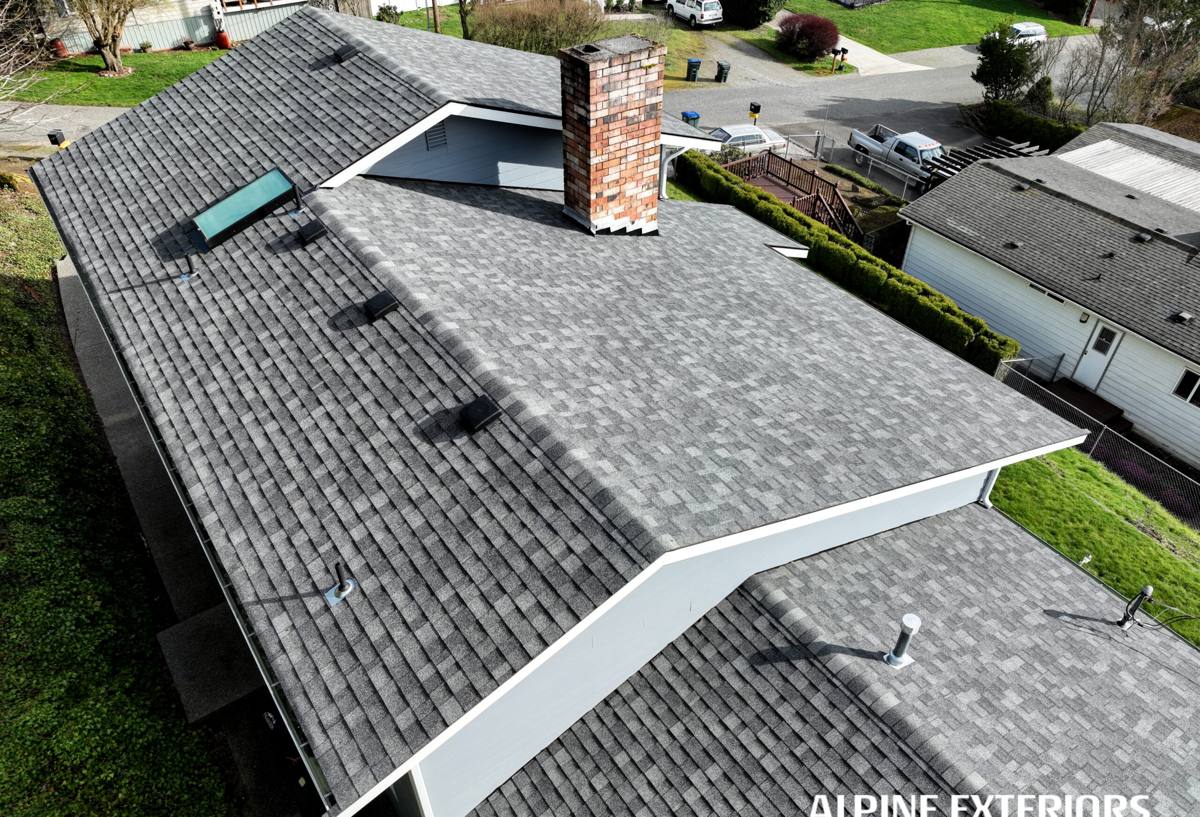
What Blaine's Climate Actually Does to a Roof
Salt Air and Metal Components
Airborne salt accelerates corrosion on any exposed metal — nail heads, flashing, vent boots, and drip edge. Standard fasteners and lower-grade flashing can start showing rust streaks and pinholes years before they would inland. On a roof this close to the water, the metal components matter as much as the shingles themselves.
Wind-Driven Rain
Storms coming off the water don't just fall straight down — they push rain sideways and up under shingle edges, at valleys, and around any penetration in the roof deck. A roof built for calmer conditions can leak here even with shingles that look intact, because the underlayment and flashing details are what actually stop wind-driven water, not the shingles alone.
Moss, Algae, and a Long Damp Season
Whatcom County's shaded, north-facing roof slopes and tree-covered lots stay damp for much of the year. Moss and algae get a long head start here, and once moss takes hold under shingle tabs it lifts them, breaks the seal, and lets water track underneath. Roofs with poor ventilation or heavy tree cover are especially prone to this.
What a Correct Asphalt Shingle Roof Involves Here
A roof that's going to hold up on this coastline needs more than shingles nailed to a deck. Every layer underneath the visible shingle surface is doing work, and skipping or shortcutting any of them is where premature failures come from.
- Ice-and-water shield at eaves, valleys, and around every penetration — not just where code minimums require it, given how much wind-driven rain this area sees.
- Synthetic underlayment across the full deck as a secondary water barrier, in addition to the shingles.
- Corrosion-resistant flashing and fasteners — stainless or heavier-gauge galvanized components sized for salt-air exposure rather than the cheapest code-minimum hardware.
- Properly lapped step and counter-flashing at chimneys, walls, and dormers, sealed and shingled correctly rather than caulked over as a shortcut.
- Balanced intake and exhaust ventilation so the attic and roof deck can dry out between storms instead of staying damp.
- Starter strips and properly sealed edges at eaves and rakes, where wind uplift and wind-driven rain do the most damage.
None of this is unusual or exotic — it's standard, well-understood roofing practice. The difference on a Blaine job is that none of these steps get skipped to save time, because this climate finds every shortcut eventually.
Choosing a Shingle for Blaine Conditions
Not every asphalt shingle product is a good match for a coastal, wet, wind-exposed roof. The table below compares the common options we discuss with Blaine homeowners.
| Shingle Type | Typical Lifespan | Wind Rating | Best Fit For |
|---|---|---|---|
| 3-Tab Asphalt | 15–20 years | Lower | Budget-conscious projects on less exposed roof slopes |
| Architectural (Laminate) | 25–30 years | Higher, with proper fastening | Most Blaine homes — better wind and moisture performance |
| Impact-Resistant Architectural | 25–30+ years | Highest | Wind-exposed lots, waterfront and open-field properties |
Architectural shingles cost more up front than 3-tab, but on an exposed, rain-heavy roof the thicker laminate construction and stronger wind rating tend to pay for themselves in fewer callbacks and a longer service life. For homes on more open or waterfront lots, we'll usually walk through whether the upgrade to an impact-resistant line makes sense given your specific exposure.
We also pay attention to shingle color and granule quality on the moss-and-algae front. Algae-resistant (AR) shingle lines use copper-infused granules that help slow blue-green algae staining, which is worth discussing on any roof with heavy shade or tree cover.
Ventilation and Moisture Control
Ventilation is one of the most overlooked parts of a roofing job, and it matters more here than in drier climates. A roof deck that can't breathe stays damp longer after every storm, which speeds up moss growth, promotes wood rot on the deck itself, and can void shingle warranties that require balanced ventilation.
On most homes this means matching soffit intake vents with ridge or roof-mounted exhaust vents so air moves continuously through the attic space. If your current roof has no ridge vent, undersized soffit vents, or bathroom fans venting into the attic instead of outside, we'll flag it — these are common, fixable issues that quietly shorten a roof's life.
Repair, Restoration, or Full Replacement?
Not every roofing problem in Blaine calls for a full tear-off. Part of doing this job honestly is telling you which category your roof falls into.
Signs a Repair Makes Sense
- Isolated shingle damage from a storm or falling branch, with the rest of the roof still sound
- A flashing leak at a chimney or vent with otherwise healthy shingles
- Moss buildup on a roof that's still structurally fine underneath
Signs You're Looking at Replacement
- Shingles that are curling, cracking, or losing granules across large areas
- Multiple past repairs in different spots, suggesting the underlayment is failing
- Soft spots in the decking, or daylight visible from inside the attic
- A roof that's at or past the expected lifespan for its shingle type
We'll always give you a straight answer on which situation you're in rather than defaulting to the bigger job.
Our Process for Blaine Roofing Projects
1. On-Site Inspection and Estimate
We walk the roof (or inspect from a ladder and attic access where a full walk isn't practical), check the decking, flashing, ventilation, and shingle condition, and give you a written estimate that explains what we found — not just a number.
2. Material Selection
We go over shingle options, colors, and any upgrades worth considering for your specific exposure, and answer questions about warranty coverage before you commit to anything.
3. Tear-Off and Deck Inspection
On a replacement, we remove the old roofing down to the deck and check for soft or rotted sheathing, which is common to find once the old shingles come off on an older coastal roof.
4. Underlayment, Flashing, and Shingle Installation
Ice-and-water shield, synthetic underlayment, corrosion-resistant flashing, and shingles go on in that order, following manufacturer specs for nailing pattern and exposure — details that directly affect wind rating and warranty validity.
5. Final Walkthrough
We walk the finished roof and the cleanup with you before we consider the job done, and make sure you understand what maintenance, if any, the new roof needs going forward.
What This Costs and What Drives the Price
Asphalt shingle roofing costs vary based on roof size, pitch, complexity, and material choice, so we won't quote a number without seeing the roof. What we can tell you up front is what actually moves the price.
| Factor | Why It Matters |
|---|---|
| Roof size and pitch | More square footage and steeper slopes mean more material and labor time |
| Number of valleys, dormers, and penetrations | Each one needs custom flashing work, which adds labor |
| Deck condition | Rotted or soft sheathing found during tear-off adds repair cost |
| Shingle tier | 3-tab, architectural, and impact-resistant products have different material costs |
| Tear-off vs. layover | Removing old shingles costs more than a layover, but it's the only way to inspect and fix the deck underneath |
We generally don't recommend layovers on Blaine roofs — with the amount of moisture and wind exposure here, a full tear-off is the only reliable way to confirm the deck and underlayment are actually sound.
Maintaining an Asphalt Shingle Roof in a Coastal Climate
A well-installed roof still needs some basic upkeep to hit its full lifespan in this environment. This is the checklist we give Blaine homeowners after a new install or major repair.
- Clear overhanging branches back from the roofline to reduce shade, debris, and moss pressure
- Keep gutters clear so water isn't backing up under the eave line during heavy rain
- Have moss treated or gently removed before it spreads under shingle tabs — don't pressure wash, which can strip granules and shorten shingle life
- Check attic ventilation periodically to confirm vents aren't blocked by insulation or debris
- Have flashing around chimneys, skylights, and vents inspected every few years, since these are the most common leak points
- Schedule a roof check after major windstorms, even if nothing looks obviously wrong from the ground
Why a Crew That Knows Blaine Matters
A roofing crew that mostly works drier, inland areas can still install a technically correct roof — but they may not default to the salt-air hardware, wind-driven-rain detailing, or moss-conscious ventilation choices that matter most right on the water. Working in Ferndale, Blaine, and the rest of Whatcom County day in and day out means we're pricing and specifying for this climate as the baseline, not as an exception.
If you're dealing with an aging roof, storm damage, or you're just planning ahead for a replacement, we're happy to take a look and give you a straightforward assessment. Reach out for a free, no-pressure estimate using the form below.