 Ferndale
 Roofing in Marietta: A Different Set of Problems
Marietta sits close to the water on the north side of Bellingham Bay, tucked between Ferndale and Bellingham along Whatcom County's shoreline. That location is what makes the neighborhood pleasant to live in and hard on a roof. Homes here take on a steady mix of salt-laden air, wind-driven rain off the water, and long stretches of gray, wet weather that never quite dries the roof deck out. A roofing crew that mostly works inland subdivisions doesn't see these conditions daily. We do, because we're based right up the road in Ferndale and this is our regular service area, not a once-a-year trip.
Roof replacement is not a one-size-fits-all job, and it's especially not one-size-fits-all in a coastal-influenced pocket of Whatcom County. The materials, ventilation details, and flashing choices that hold up fine in a dry inland climate can fail early here. This page covers what actually matters for a Marietta roof replacement: what the climate does to roofing systems, what a correct job looks like, and how our process works from first call to final cleanup.
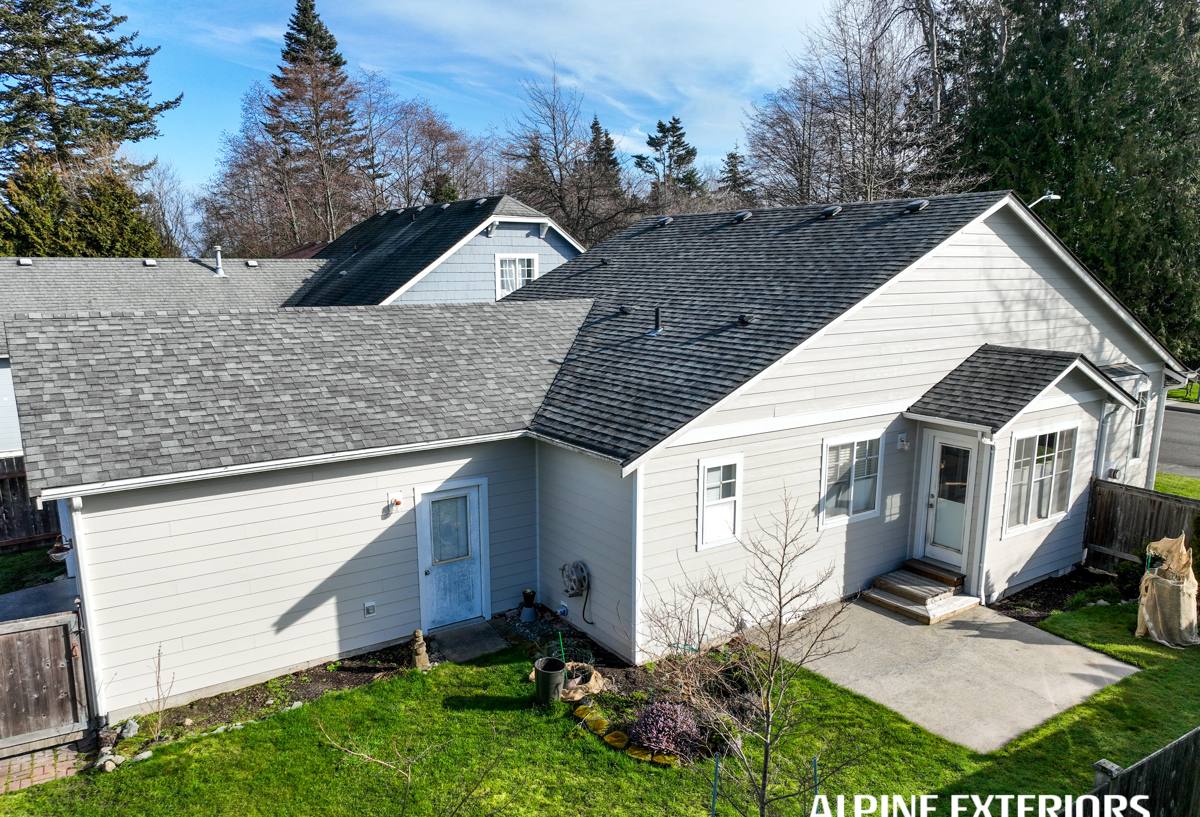
What Salt Air, Rain, and Moss Actually Do to a Roof
Salt Air
Airborne salt from the bay settles on every exterior surface, including the roof. Over years, it accelerates corrosion on exposed metal fasteners, flashing, and vent components. Cheaper electro-galvanized nails and thin-gauge flashing that would last decades inland can start rusting and staining a roof well before the shingles themselves are worn out. This is one of the most overlooked failure points in coastal-adjacent roofing — the shingles look fine, but the metal underneath them is failing.
Driving Rain
Storms coming off the water don't just fall straight down — they arrive sideways, pushed by wind. That matters because it drives water up under shingle tabs, into vent flashing, and around chimney and skylight penetrations that would stay dry in a calmer climate. A roof replacement here needs underlayment and flashing details built for wind-driven rain, not just standard vertical rainfall.
Moss
Whatcom County's moss season runs long — realistically most of the fall, winter, and spring in shaded or north-facing sections of a roof. Moss holds moisture against the shingle surface, works its way under tabs, and lifts them over time, which opens the door to leaks. It also adds weight and traps organic debris that keeps the roof deck damp longer after every rain. A roof that isn't detailed to shed moss, or that never gets treated, ages faster than the shingle warranty assumes.
Signs a Marietta Roof Needs Replacing, Not Patching
Not every roofing problem calls for a full tear-off. But in this climate, a few signs usually mean patching is a short-term fix that delays the real cost rather than avoiding it:
- Granule loss heavy enough to see bare, shiny patches on shingles, especially on south and west-facing slopes
- Shingle edges curling or cupping, which lets wind-driven rain get underneath
- Moss or algae streaking that keeps coming back within a season or two of cleaning
- Soft spots or sagging when walked on, which usually points to a compromised deck, not just old shingles
- Daylight visible through the attic roof boards, or damp insulation and staining on attic rafters
- A roof already past 20–25 years old (typical asphalt shingle lifespan, often shorter here given the moisture load)
- Multiple past repairs in different spots rather than one isolated issue
If you're seeing two or more of these, a replacement conversation is worth having before winter storms find the weak spot for you.
What a Correct Roof Replacement Involves Here
A roof replacement is more than swapping old shingles for new ones. In a climate like Marietta's, the parts you don't see matter as much as the shingle brand on the outside.
Full Tear-Off and Deck Inspection
We remove the old roofing down to the deck rather than layering over it. That's the only way to actually see the plywood or plank decking underneath, catch soft or delaminated sections from long-term moisture exposure, and replace only what's bad rather than guessing. Layering over an existing roof hides problems and shortens the life of the new one.
Ice-and-Water or Self-Adhered Underlayment at Vulnerable Points
Eaves, valleys, and areas around chimneys and skylights get a self-adhered waterproof underlayment, not just standard felt. These are the spots where wind-driven rain and ice dams (on the rare hard freeze) cause the most damage, and they're worth the extra material cost.
Corrosion-Resistant Flashing and Fasteners
Given the salt air, we use flashing and fastener materials chosen to resist corrosion rather than the cheapest code-minimum option. This is a small percentage of total job cost but a large percentage of long-term performance in this location.
Ventilation That Matches the Climate
Proper intake and exhaust ventilation keeps the attic close to outdoor temperature and lets moisture escape instead of condensing on the underside of the deck. In a wet climate, under-ventilated attics are a common hidden cause of premature deck rot — sometimes worse than roof leaks themselves.
Moss-Conscious Details
Where it fits the roof design and the homeowner's preference, we can install zinc or copper strips near the ridge, which release trace metal ions in the rain and inhibit moss regrowth on the slopes below. It's not a substitute for occasional cleaning, but it meaningfully slows regrowth on shaded sections.
Material Options: Trade-Offs for a Coastal-Adjacent Climate
There's no single "correct" material for every roof — it depends on budget, roof style, and how much long-term maintenance a homeowner wants to take on. Here's how the common options compare for a home in this climate:
| Material | Typical Lifespan Here | Moss/Moisture Behavior | Maintenance Burden |
|---|---|---|---|
| Standard 3-tab asphalt shingle | 15–20 years | Lower cost but more prone to early granule loss and moss lift on shaded slopes | Moderate; periodic cleaning recommended |
| Architectural (laminate) asphalt shingle | 25–30 years | Thicker profile handles wind-driven rain and moss better than 3-tab | Moderate; the most common upgrade choice here |
| Standing-seam metal roofing | 40–50+ years | Sheds moss and water very effectively; minimal organic buildup | Low; higher upfront cost |
| Cedar shake | 20–30 years with upkeep | Attractive but absorbs and holds moisture; needs regular treatment in a wet climate | High; not our default recommendation here |
Our standard recommendation for most Marietta homes is a quality architectural asphalt shingle rated for high wind, paired with the underlayment and ventilation details above. Metal is a strong option for homeowners planning to stay long-term and wanting to minimize moss maintenance, but it's a bigger upfront investment. We'll walk through the honest trade-offs for your specific roof rather than pushing one product.
We generally steer homeowners away from cedar shake on shaded, moisture-heavy roof sections in this area — not because it's a bad product everywhere, but because it needs consistent treatment to resist the moisture load here, and that's a maintenance commitment many homeowners underestimate when they buy the roof.
Our Process, Start to Finish
- Free on-site inspection. We walk the roof (weather permitting) and check the attic from inside, looking at deck condition, ventilation, and flashing points — not just the shingle surface.
- Written estimate with material options. You get a clear scope, material choices, and pricing before any work is scheduled — no vague verbal quotes.
- Scheduling around the weather. Given how much rain this area gets, we plan tear-off days around forecast windows and keep the roof protected with temporary covering if weather turns mid-job.
- Tear-off and deck repair. Old roofing comes off, deck is inspected board by board, and any soft or rotted sections are replaced before anything new goes down.
- Underlayment, flashing, and ventilation installed. This is the part of the job that determines how the roof performs in year 10, not just year one.
- Shingle or metal installation. Installed to manufacturer spec, which matters for keeping the material warranty valid.
- Cleanup and magnetic sweep. Yard and driveway are cleared of debris and nails before we consider the job done.
- Final walkthrough. We go over the finished roof with you and answer any questions before closing out the job.
What Drives the Cost of a Roof Replacement
Every roof is priced individually, but the same factors move the number up or down on nearly every job we quote:
| Factor | Why It Matters |
|---|---|
| Roof size and number of stories | More material and steeper access requirements increase labor time |
| Roof pitch and complexity | Steep or multi-valley roofs take longer to work safely and generate more waste cutting material to fit |
| Number of existing layers | Tearing off two layers of old roofing costs more in labor and disposal than one |
| Deck condition | Rotted or delaminated decking found during tear-off adds material and labor to replace |
| Material choice | Asphalt shingle, architectural shingle, and metal all sit at different price points |
| Ventilation and flashing upgrades | Bringing an older roof's ventilation up to a modern standard adds cost but pays off in roof lifespan |
We don't publish a flat per-square price because these variables genuinely change the number from house to house — but we'll break the estimate down line by line so you can see exactly what you're paying for.
Why Hiring a Crew That Already Works Marietta Matters
A roof replacement is a big-ticket, infrequent purchase, and it's tempting to just take the lowest bid. But a crew unfamiliar with this specific stretch of Whatcom County can miss details that only show up after a few wet seasons — under-spec'd flashing that corrodes early, ventilation sized for a drier climate, or moss-prone valleys left without any mitigation. We work in Ferndale, Marietta, and the surrounding shoreline communities regularly, so these details aren't guesswork for us; they're standard practice on every job.
Before you hire anyone for a roof replacement, here's a practical checklist worth running through:
- Are they licensed and insured in Washington, and will they show you proof without being asked twice?
- Do they inspect the attic and deck, or only look at the roof from the ground or a ladder?
- Does the written estimate spell out underlayment type, flashing material, and ventilation plan — or just "tear off and reroof"?
- Do they offer a manufacturer-backed material warranty in addition to their own labor warranty?
- Can they explain, specifically, how their approach accounts for wind-driven rain and moss in this area?
- Do they clean up thoroughly, including a nail sweep of the yard and driveway?
If a contractor can't answer the ventilation and flashing questions clearly, that's a sign they're treating your roof like any other roof in any other climate — which, in Marietta, it isn't.
After the Install: Keeping a New Roof Performing
A correctly installed roof still benefits from basic upkeep in this climate. Keeping gutters clear of needles and debris prevents water backing up under the eaves. A light annual check for moss regrowth on shaded, north-facing slopes — and addressing it early with a gentle treatment rather than pressure washing, which can strip granules — keeps the roof looking and performing the way it should for its full expected lifespan. We're happy to talk through a simple maintenance routine specific to your roof and yard when we finish the job.
If your Marietta-area roof is showing its age, or you just want a straight answer on whether repair or replacement makes sense, we offer a free, no-pressure estimate. Fill out the form below and we'll take a look.