 Ferndale
 Why Decks on Semiahmoo Wear Out Faster Than Decks a Few Miles Inland
Semiahmoo sits out on a narrow spit between Semiahmoo Bay and Drayton Harbor, right at the edge of Blaine and the Canadian border. With water on more than one side and almost nothing to break the wind, homes and condos out here take a harder hit from the weather than properties set back just a mile or two inland in Whatcom County. A deck feels that difference more than almost any other part of the house, because it's a structure with no roof or wall protecting it, sitting outside year-round in exactly the conditions that wear exterior work down fastest.
Composite decking exists specifically to handle that kind of exposure better than wood does, but "composite" isn't one product — the category covers a wide range of quality, construction, and how well a given board actually holds up against salt air, wind-driven rain, and a moss season that runs most of the year. This page covers what a Semiahmoo home actually needs from a composite deck, what a correct installation looks like out here, and why hiring a crew that already works this specific stretch of coastline matters.
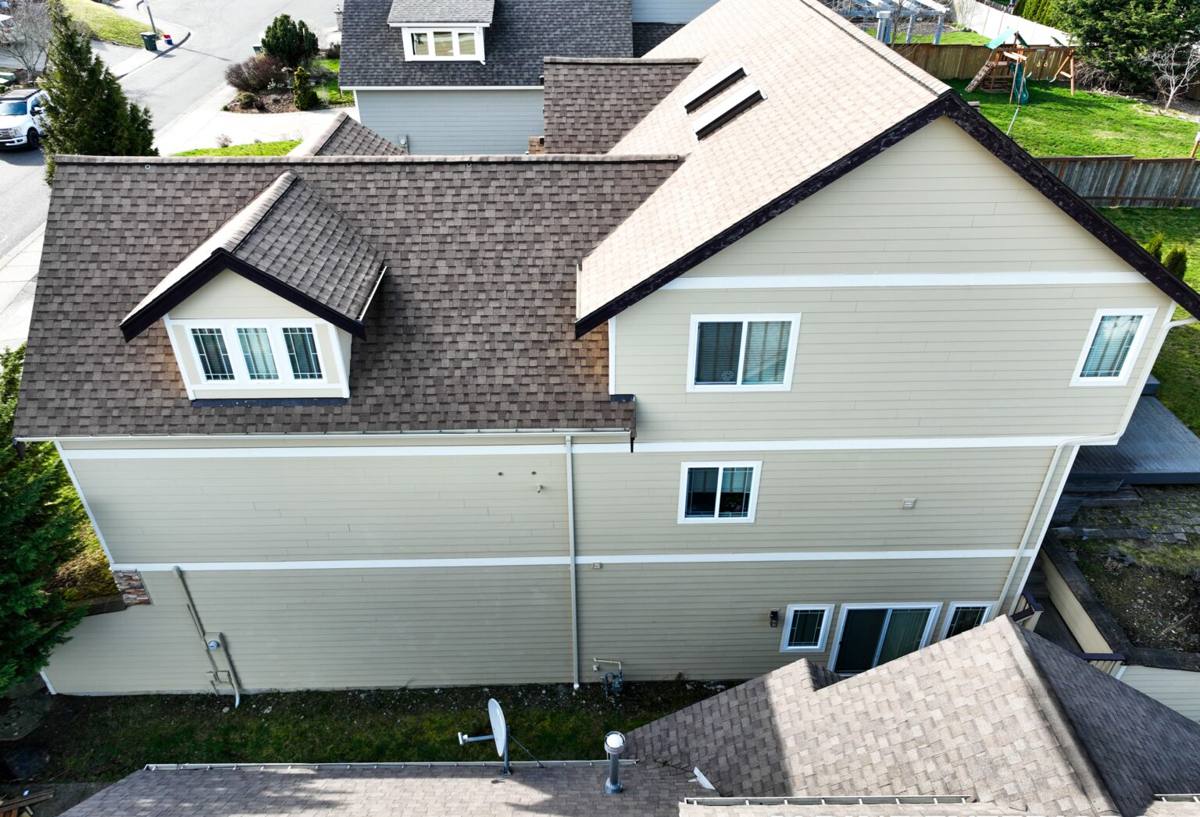
What Semiahmoo's Climate Actually Does to a Deck
Salt Air From More Than One Direction
Most homes deal with salt exposure from a single prevailing direction. Because Semiahmoo is bordered by water on more than one side, a deck out here can take salt-laden air from the bay, the harbor, or both, depending on the lot. Salt accelerates corrosion in any exposed metal — fasteners, brackets, railing hardware — and it works into surfaces continuously, not just during storms. A fastener that starts corroding loses holding strength long before it looks obviously bad, which is part of why fastener grade on a Semiahmoo deck isn't a place to save money.
Wind-Driven Rain With Nothing to Break It
With open water on multiple sides and little in the way of a windbreak, rain on the spit rarely falls straight down. It gets pushed sideways into railings, ledger connections, and the gaps between boards, which is a heavier moisture load than the region's rainfall totals alone would suggest. A deck surface that would shed water fine on a calm day can still trap moisture the moment wind is involved — and out here, wind is involved often.
A Moss Season That Runs Most of the Year
Mild temperatures and near-constant moisture give moss and mildew a long growing season across Whatcom County, and a horizontal deck surface is one of the first places it takes hold — it holds water longer than a vertical wall and stays damp between rain events. Shaded decks and north-facing surfaces usually show it first, and any decking material with even a little surface porosity gives moss something to grip onto.
UV and Glare Off Open Water
Sun reflecting off the bay and harbor adds UV exposure a deck a few miles inland doesn't see to the same degree. UV breaks down unstabilized plastics and finishes and fades color over time, and on darker or lower-quality composite boards it drives surface temperature high enough to matter for bare feet in summer. Board color and cap quality both affect how much of that heat and UV load actually reaches the material underneath.
What "Composite Decking" Actually Means
Composite decking is generally made from a blend of wood fiber and plastic, though the ratio, the plastic type, and how the board is finished vary a lot between manufacturers. Two distinctions matter most for a spit property like Semiahmoo:
Capped vs. Uncapped Composite
Capped composite boards have a plastic shell wrapped around a wood-plastic composite core, which protects the core from moisture absorption, staining, and UV degradation. Uncapped composite is the older style — the wood-plastic blend is exposed on all sides, so it absorbs moisture more readily and is more prone to fading, mold, and surface wear. In a salt-air, high-humidity environment with water on more than one side, that difference shows up faster than it would inland, which is why we standardize on capped composite for Semiahmoo installs.
Cellular PVC as an Alternative
Some manufacturers also offer fully cellular PVC decking, which contains no wood fiber at all. PVC resists moisture absorption completely and some lines run cooler underfoot, but it can flex more under heavy point loads and generally costs more than composite. We'll walk through whether capped composite or PVC makes more sense for a specific deck based on sun exposure, budget, and how the space will actually be used — there isn't one right answer for every lot on the spit.
What a Correct Composite Deck Build Involves on Semiahmoo
The decking boards get most of the attention, but on an exposed spit property, the substructure and fastening details are what actually determine whether a deck holds up. A build done right for Semiahmoo conditions includes:
- Framing material rated for sustained moisture exposure — pressure-treated lumber suited to the application, sized correctly for the span and load it carries
- Stainless steel or coastal-grade corrosion-resistant fasteners throughout, not standard hardware that starts corroding in salt air within a few seasons
- Hidden fastener systems on the deck surface where the product allows, reducing exposed metal and giving a cleaner walking surface
- Correct board gapping for expansion, contraction, and drainage — composite moves with temperature the same way other materials do, just differently than wood
- Proper ledger board flashing where the deck ties into the house, since this connection point is a common failure spot under wind-driven rain
- Joist spacing matched to the specific composite product's span rating, not a generic wood-framing layout
- Railing and post attachment sized for open-water wind exposure, especially on elevated decks or lots close to the bay or harbor
- Ventilation and grading beneath the deck so moisture doesn't sit against the framing between storms
Skipping any one of these doesn't usually cause an obvious problem on day one. It shows up a few winters later, as a soft spot in the framing, a railing post that's started to loosen, or fastener corrosion staining the boards around it.
How Our Process Works
We start with a site visit to look at what's actually there — existing structure condition if it's a replacement, drainage and grade around the deck area, sun and wind exposure through the day, and how close the site sits to the bay or harbor. From there we talk through composite product options that fit the budget and how the space will actually get used, whether that's a quiet spot for watching the water or a larger deck built for entertaining.
Permitting on Semiahmoo generally follows Whatcom County's standard setback, structural, and elevation requirements, and we handle that as part of the job rather than leaving it for the homeowner to sort out. Once permitted, the build follows the sequence above — substructure and framing first, sized and fastened for the site's actual exposure, then the composite surface, railing, and any stairs or trim work. We finish with a walkthrough covering what the specific product you chose actually needs going forward, which is usually very little, but not literally nothing.
Composite Decking Compared to the Alternatives
| Material | How It Handles Salt Air & Moisture | Maintenance | Typical Fit for Semiahmoo |
|---|---|---|---|
| Capped composite | Strong — cap layer resists moisture, staining, and UV fade | Occasional washing; no sealing or staining | Good all-around choice for most lots on the spit |
| Cellular PVC | Excellent — no wood fiber to absorb moisture at all | Occasional washing; no sealing or staining | Worth the added cost on the most exposed, water-facing decks |
| Uncapped composite | Moderate — absorbs some moisture, more prone to UV fade | Periodic cleaning to manage mold and staining | Generally not recommended for open-water exposure here |
| Cedar | Moderate — natural resistance, but still absorbs moisture | Regular oiling or sealing | Needs consistent upkeep to hold up to salt air |
| Pressure-treated wood | Weak against sustained salt exposure over time | Regular sealing or staining required | Shortest lifespan of the options on an exposed lot |
What Composite Decking Still Needs From You
Composite decking is low-maintenance compared to wood, not maintenance-free. A little routine care goes a long way toward getting the full life out of it on an exposed, salt-air property:
- Rinse or wash the surface periodically to remove salt residue and organic buildup before it stains the cap layer
- Keep gaps between boards clear of debris so water and airflow can move through as designed
- Check railing posts and hardware once a year for early corrosion or loosening, especially heading into the wet season
- Trim back plants or landscaping that hold moisture against the deck edge or block airflow underneath
- Address any soft framing or standing water underneath right away — that's a structural issue, not a cosmetic one
Why It Matters That We Already Work Semiahmoo
A crew that mostly builds decks further inland can still install composite decking competently, but a spit property has variables that don't come up as often elsewhere in Whatcom County — corrosion-grade fastener requirements from sustained, multi-directional salt exposure, wind loads tied to open water on more than one side, and a moss season that runs longer here than it does in more sheltered towns. Working this area regularly means we're not guessing at those requirements or learning them on your project. We know which composite lines actually hold up against Semiahmoo's specific combination of exposures, and which fastener grades and framing details are worth the extra time rather than an upsell.
That familiarity also shows up in the smaller judgment calls — how to orient a deck for the wind a particular lot actually sees, or being straightforward about what a deck here realistically needs to last versus what's just an extra line item.
Get a Straight Answer About Your Deck
Whether you're replacing a tired deck, building new, or want an honest read on what a composite deck would take on your Semiahmoo property, we're happy to walk the site with you and lay out the options plainly. Reach out below for a free, no-pressure estimate.