 Ferndale
 Window Installation in Cordata Isn't the Same Job as Window Installation Everywhere Else
Cordata sits in that stretch of north Whatcom County between Ferndale and Bellingham, close enough to the coast that the weather off the water shapes everything about how a house ages. Windows here don't fail because of one big storm. They fail slowly, from years of moisture finding its way past a seal that was never quite right, or a sill that was never properly flashed. A window installation crew that treats this like a generic job — measure, cut, caulk, done — is setting a homeowner up for problems in five to ten years that are entirely avoidable with the right approach on day one.
We work in this area regularly, which means we're not guessing at what the local climate does to a window opening. We've opened up enough old installations around Ferndale and the surrounding communities to know exactly where the shortcuts get taken and exactly what it costs a homeowner later.
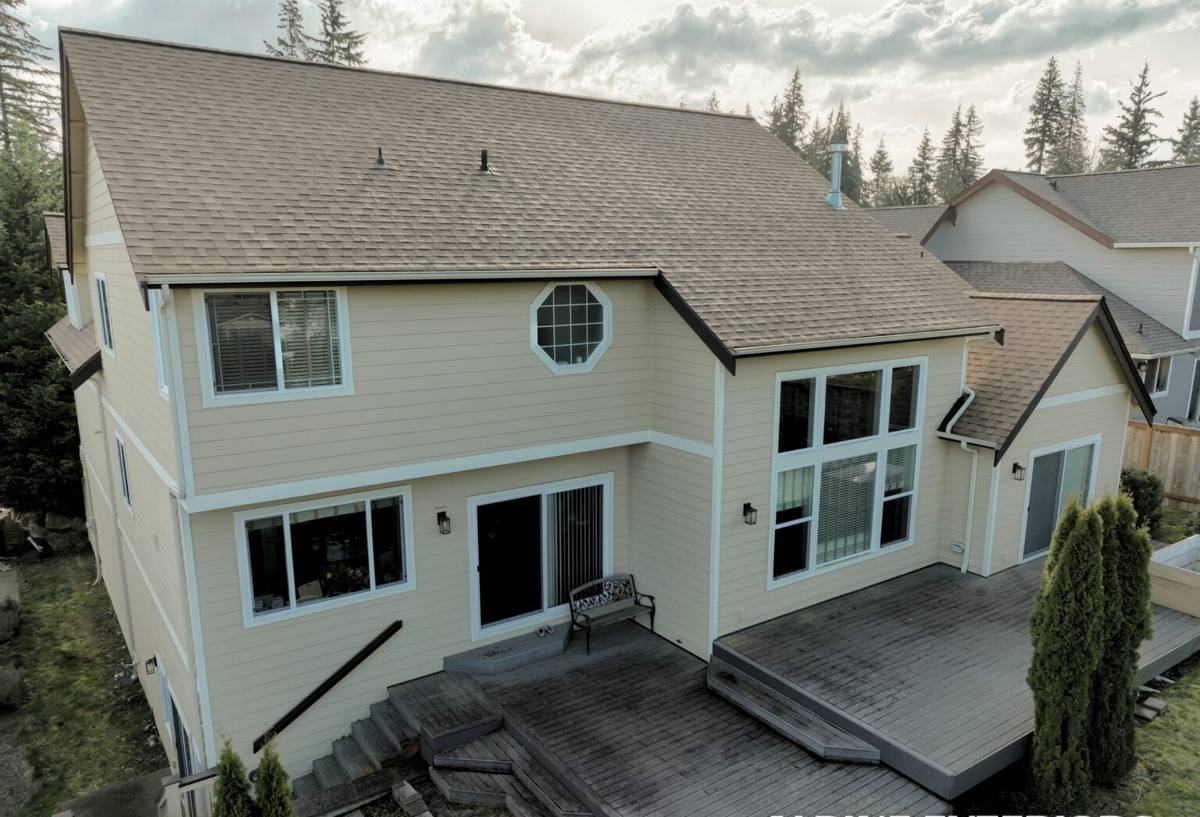
What Cordata's Climate Actually Does to a Window Opening
Salt Air and Slow Corrosion
Being close to the Puget Sound and Bellingham Bay means the air here carries salt, even a few miles inland. Salt-laden moisture is harder on metal hardware, aluminum components, and lower-grade fasteners than dry inland air. Over years, that means corroded balance mechanisms, pitted hardware, and finishes that fail earlier than the manufacturer's glossy brochure implies. It's not dramatic — it's a slow tax on anything metal that isn't properly rated or protected.
Driving Rain, Not Just Rain
Whatcom County doesn't just get rain, it gets wind-driven rain off the water, which behaves differently than a straight-down shower. Wind-driven rain gets pushed sideways and upward into gaps that would stay dry in a calmer climate. That's why the flashing detail at the head and sill of a window matters so much more here — a installation that would hold up fine in a low-wind region can leak in Cordata within a few wet seasons.
A Long Moss Season
Moss and algae growth thrive in the shaded, damp conditions common through much of the year in this part of Washington. On window trim, sills, and the siding immediately around an opening, moss holds moisture against the wood or substrate far longer than it would otherwise sit there. That constant dampness is what turns a small caulking failure into rot, and it's why the materials and detailing right around the window opening matter as much as the window unit itself.
What a Correct Window Installation Actually Involves
A window installation done right in this climate isn't just about the window product — it's about everything that happens in the rough opening before the window ever goes in. Here's what we consider non-negotiable:
- Removing the old window and fully inspecting the rough opening framing for hidden rot or moisture damage before anything new goes in
- Installing a proper sloped sill pan so any water that gets past the window has somewhere to drain, not somewhere to pool
- Applying a weather-resistant barrier and flashing tape in the correct shingle-lap order — head flashing over the barrier, side and sill flashing under it
- Setting the window level, plumb, and square, then securing it per the manufacturer's fastening schedule, not just "enough screws to hold it"
- Sealing and insulating the gap between the window frame and rough opening without overpacking it, which can bow the frame
- Finishing with exterior trim and caulking that's compatible with the siding material and rated for sustained exposure to wind-driven rain
Skip any one of these steps and the window itself becomes irrelevant — even a premium unit will leak and rot the framing around it if the opening wasn't prepped correctly.
Problems We Commonly Find in Cordata-Area Homes
A lot of homes in this area were built across several different decades, and each era brought its own window habits. Older aluminum-frame single-pane windows are still common in older housing stock, and while they were standard for their time, they conduct cold and condensate heavily in this climate, which keeps sills damp for long stretches. In homes from the vinyl-window boom of the 1990s and early 2000s, we often find installations where the window was simply caulked into the old opening without new flashing — a shortcut that was common practice at the time but doesn't hold up to decades of wind-driven rain.
The most frequent issue we're called out for isn't a broken window — it's soft trim, a musty smell near a window, or fogging between panes that signals a failed seal. By the time any of those symptoms show up, there's usually already some moisture damage in the framing that needs to be addressed as part of the replacement, not just covered up with a new window.
Choosing a Frame Material for This Climate
There's no single "best" window brand or material for every home — it depends on budget, the style of the house, and how much upkeep a homeowner wants to take on. What we can speak to honestly is how different frame materials tend to behave under Whatcom County's specific mix of salt air, sustained moisture, and long grey stretches.
| Frame Material | Moisture Behavior | Maintenance | Typical Lifespan |
|---|---|---|---|
| Vinyl | Won't rot or corrode; seams and welds are the weak point if not fabricated well | Low — occasional cleaning | 20-30 years |
| Fiberglass | Very stable in wet, temperature-swinging conditions; minimal expansion/contraction | Low | 30-40+ years |
| Wood (clad exterior) | Excellent look, but any breach in the cladding exposes wood to rot risk in a wet climate | Moderate to high — cladding seams need periodic inspection | 20-30 years with upkeep |
| Aluminum | Conducts cold, condensates heavily; salt air accelerates corrosion on lower-grade finishes | Moderate | Varies widely by grade |
For most Cordata homeowners, vinyl or fiberglass windows offer the best balance of moisture resistance and low upkeep for this climate. Wood-clad windows can be the right call for a specific architectural look, but we make sure homeowners understand the cladding needs to stay intact — once it's breached, the wood underneath is sitting in a climate that won't let it dry out quickly.
Our Installation Process, Step by Step
- On-site assessment. We look at the existing windows, the condition of the rough openings, and how the home is oriented to prevailing wind and rain before recommending anything.
- Honest scope and estimate. We tell you what we're seeing — including if we expect to find hidden rot once the old window comes out — so there are no surprise change orders mid-project.
- Careful removal. Old windows come out without tearing up more of the surrounding wall than necessary, and we inspect the opening the moment it's exposed.
- Repair before install. Any soft framing, rot, or moisture damage gets addressed before a new window goes anywhere near the opening — this is the step that gets skipped most often industry-wide, and it's the one that matters most.
- Correct flashing and sill pan. Sloped sill pan, properly sequenced flashing tape, and a weather-resistant barrier tie-in built for wind-driven rain.
- Precision setting. Level, plumb, square, and fastened to the manufacturer's specification.
- Insulation and sealing. Gap filled correctly, exterior sealed with a caulk rated for sustained wet exposure.
- Final walkthrough. We check operation, look, and seal with you before calling the job done.
What Affects the Cost of a Window Installation
Every home is different, so we won't quote a number without seeing the job, but the honest cost factors are usually the same short list:
- Frame material and glass package (standard double-pane vs. upgraded low-E or triple-pane glass)
- Window size and whether it's a standard retrofit or a full-frame replacement that touches surrounding siding and trim
- Condition of the existing rough opening — hidden rot found once the old window is out changes the scope
- Number of windows done in one visit, since mobilization and setup cost less per unit on a multi-window project
- Access and height, particularly for second-story or hard-to-reach openings
We'd rather walk a homeowner through these factors honestly during an estimate than throw out a number that won't hold up once we're actually into the wall.
Why a Crew That Already Works in Cordata Matters
Window installation is one of those trades where local experience shows up in details a homeowner won't notice until years later — whether the flashing was lapped in the right order for wind-driven rain, whether the caulk used was rated for a climate that stays damp for months at a stretch, whether the crew recognized early rot before it spread into the wall framing. A crew that's done this work throughout Ferndale, Cordata, and the surrounding Whatcom County communities isn't learning the local climate on your house — they've already seen what a shortcut costs a homeowner five winters later, and they build accordingly the first time.
There's also a simple accountability benefit to hiring locally: a crew based nearby is easy to reach if something needs a follow-up look, and has a reputation in the community worth protecting.
Get a Straight Answer on Your Windows
If you're dealing with drafty, foggy, or slow-to-operate windows anywhere in the Cordata area, we're glad to take a look and give you an honest read on what's actually needed — no pressure, no inflated scope. Use the form below to request a free estimate, and we'll walk the property with you and talk through what we find.