 Ferndale
 Why Decks Wear Out Faster in Custer
Custer sits close enough to the Salish Sea, and close enough to the rest of Whatcom County's weather pattern, that decks here take a different kind of beating than decks inland. Salt-tinged air corrodes fasteners and hardware from the inside out, long stretches of driving rain drive moisture into every joint and seam, and the tree cover common on Custer lots keeps decks shaded and damp well after a storm has passed. Add a moss season that can run from early fall through late spring, and you have a structure that's rarely given a real chance to dry out.
None of that means a deck is doomed. It means a deck built or replaced without that climate in mind will fail years before it should — usually from the inside, in places you can't see until a board finally gives way underfoot.
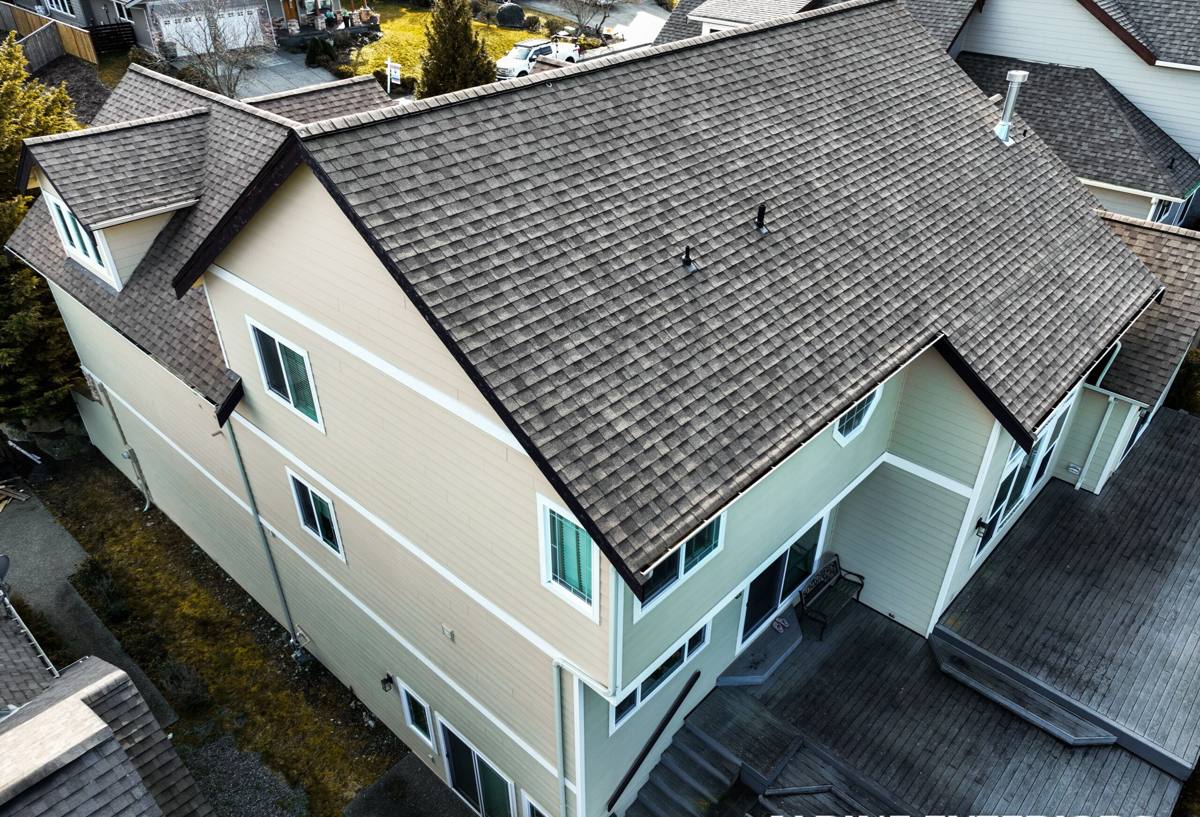
Signs a Deck Needs Replacement, Not Another Repair
Repair makes sense when the problem is isolated. Replacement makes sense when the damage is systemic — when the same conditions that rotted one board have been working on all of them. Before you spend money patching a deck that's already past the point of patching, look for:
- Boards that feel soft, spongy, or springy underfoot, especially near the house or in shaded corners
- Rust streaks bleeding out from fastener heads or joist hangers
- A ledger board (where the deck attaches to the house) that shows gaps, staining, or separation from the wall
- Joists or beams that are punky, dark, or crumble when probed with a screwdriver
- Railings or stair stringers that rack or flex when you lean on them
- A deck that's already had two or three rounds of board-by-board repair and keeps needing more
If you're seeing more than one of these, especially anything touching the framing or the ledger connection, you're usually looking at a structural problem, not a cosmetic one.
What a Correct Deck Replacement Actually Involves
A deck replacement done right isn't just new boards on the old frame. It starts underneath, with the parts that determine whether the new decking will actually last.
Footings and framing
Posts and footings need to be sized for the actual span and load of the deck, not just matched to whatever was there before — especially if the old deck was undersized to begin with. Joist spacing has to match the decking material you're installing; composite and PVC boards generally need tighter joist spacing than solid wood to avoid flexing over time.
The ledger connection
This is the single most important detail on an attached deck, and it's the one most often done wrong. The ledger board has to be properly flashed and tied into the house's water-resistive barrier so rain can't work its way behind the siding and into the rim joist. In a climate that gets as much driving rain as Whatcom County does, a poorly flashed ledger is often the reason a "good looking" deck turns out to be rotten at the wall.
Permits and code
Most attached decks, and many freestanding ones above a certain height, require a permit in Whatcom County. That permit process exists to catch exactly the kind of undersized framing or missing flashing that causes early failure — it's worth treating as a normal part of the job rather than a hurdle to skip.
Choosing a Decking Material for Custer's Climate
There's no single "best" decking material — there's a best material for your budget, your maintenance appetite, and how much moss and moisture your particular lot deals with. Here's how the common options actually compare in this climate:
| Material | Moisture & moss behavior | Maintenance | General cost position |
|---|---|---|---|
| Pressure-treated wood | Prone to moss growth and surface graying if not cleaned regularly; treatment protects against rot but not surface staining | Annual cleaning and periodic sealing recommended | Lowest upfront cost |
| Cedar | Naturally rot-resistant but still needs sealing to fight moisture staining and moss in shaded areas | Regular sealing/staining to maintain appearance | Mid-range |
| Composite decking | Doesn't absorb water like wood, but moss and algae can still grow on the surface film in constantly shaded, damp spots | Periodic washing; no sealing or staining needed | Higher upfront, lower ongoing labor |
| PVC decking | Fully moisture-resistant board itself; surface mildew/moss is a cleaning issue, not a rot issue | Occasional washing | Highest upfront cost |
We'll walk you through these trade-offs honestly during your estimate — including where a lower-maintenance material is worth the extra cost, and where solid wood is still the right call for a given budget or design.
The Detail Most Deck Failures Trace Back To
If we had to point to one thing that separates a deck that lasts from one that doesn't, it's the ledger flashing. Water doesn't usually fail a deck by falling straight down onto the boards — it fails a deck by getting behind the ledger board, sitting against the house's rim joist, and rotting the framing from a spot nobody's looking at. In a region that sees as much sustained rain as Custer and the surrounding Whatcom County area, a ledger that isn't properly flashed and sealed to the wall's water-resistive barrier is often working against the house from day one, long before any visible symptoms show up.
When we replace a deck, the ledger connection gets rebuilt correctly every time — not reused as-is just because it "looks fine" from the outside.
Our Deck Replacement Process
- Inspection. We check the framing, ledger, footings, and hardware before quoting anything, so the estimate reflects what's actually under the old decking.
- Tear-off. The old decking, and any framing that's compromised, comes out. We don't reuse rotted joists or hangers just to save a step.
- Framing and ledger rebuild. Posts, footings, joists, and the ledger flashing are brought up to what the new deck actually needs — not just matched to the old layout.
- Decking installation. Boards are fastened per the manufacturer's spacing and fastening requirements, especially important for composite and PVC products.
- Railings and stairs. Built or replaced to current code, with attention to the same moisture details that matter for the deck surface.
- Final walkthrough. We go over the finished deck with you, including what maintenance it needs and how often, before we call the job done.
Living With the New Deck: Moss, Salt Air, and Maintenance
A properly built deck still needs some upkeep in this climate — the goal is to make that upkeep light, not eliminate it entirely. A few things make the biggest difference:
- Keep gutters and downspouts directing water away from the deck and its footings, not onto them
- Sweep debris and standing leaves off the deck surface before they trap moisture underneath
- Use stainless or coated fasteners and hardware near the coast side of Whatcom County, where salt air accelerates corrosion on standard fasteners
- Wash the deck surface at least once a year to knock back moss and mildew before it gets a foothold in shaded corners
- Leave proper board spacing and airflow underneath so the deck can actually dry between rain events
None of this is difficult, but skipping it is exactly how a well-built deck ends up looking neglected within a few years in this climate.
Why Hire a Crew That Already Works in Custer
Custer isn't downtown Ferndale, and it isn't Bellingham — it's a smaller, more rural corner of Whatcom County, and that shapes how a deck job actually gets done. Lots tend to be larger and more wooded, which means more shade, slower drying, and often trickier equipment access than a tight in-town lot. A crew that already works this area knows what that means for footing placement, material staging, and how much moss pressure to expect on a given site before the first board goes down.
It also means fewer surprises on the permitting and inspection side, since we're already familiar with how Whatcom County handles deck permits and what inspectors are looking for on a ledger connection or a footing depth.
Checklist: What to Ask Before You Hire a Deck Contractor
- Are you licensed, bonded, and insured to work in Washington?
- Will you pull the permit, and is that included in the quote?
- How will the ledger board be flashed and tied into the house?
- What fastener and hardware type will you use, given the coastal air out here?
- What's the footing depth and post spacing for my specific deck size?
- Is the scope of work, material list, and warranty spelled out in writing?
If a contractor can't give you a straight answer on the ledger flashing or the fastener question, that's worth noticing before you sign anything.
If your deck is showing any of the signs above, or you're just planning ahead, we're happy to take a look and give you an honest read on repair versus replacement. Use the form below to request a free, no-pressure estimate.