 Ferndale
 Storm Damage Roof Repair Built for Custer's Weather
Custer sits in the open, rural stretch of Whatcom County north of Ferndale, where the wind off the water has nothing to slow it down before it hits a rooftop. Homes here take a different kind of beating than roofs closer to town. Wide-open fields mean less windbreak, salt-laden air off the Strait moves through freely, and the tree lines around older farmhouses and newer developments alike drop needles, moss spores, and branches onto shingles year-round. When a storm rolls through with sideways rain and gusting wind, it doesn't just test your roof's water-shedding ability — it tests every nail, seam, and flashing detail underneath.
We repair storm-damaged roofs across Custer and the surrounding county because we understand what this climate does to a roof over time, not just what a single storm did last week. A repair that only patches the visible damage without accounting for the underlying wear from salt air and moss growth is a repair that fails again within a year or two. Our job is to fix what the storm broke and flag what the climate is already working on, so you're not calling us back every winter.
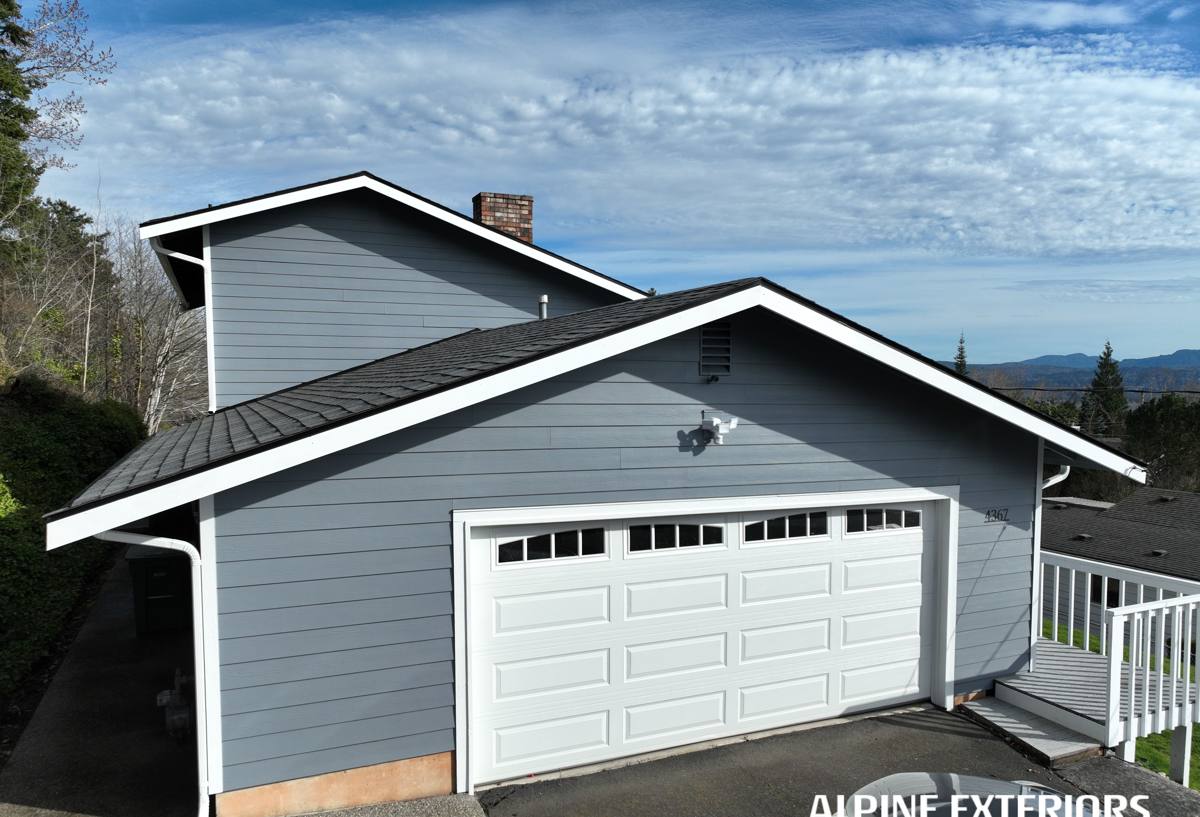
What Whatcom County Weather Does to a Custer Roof
Three things drive most of the storm damage we see out this way:
Driving, Wind-Driven Rain
Rain that falls straight down mostly just runs off. Rain that's being pushed sideways at 40-plus miles an hour finds every gap in flashing, every lifted shingle tab, and every worn seal around a vent pipe. That's how a roof that "looks fine" from the ground ends up with water staining a ceiling two rooms away from where the damage actually is.
Salt Air and Corrosion
Being close to the Strait of Georgia means the air carries salt inland further than most homeowners expect. Salt accelerates corrosion on exposed metal — nail heads, flashing, gutter fasteners, and vent boots all age faster here than they would in a drier inland climate. A storm doesn't have to be severe to exploit a flashing seam that's already been quietly corroding for years.
A Long Moss Season
Whatcom County's mild, wet climate gives moss and algae a long growing window — often eight months or more out of the year. Moss doesn't just look bad; it lifts shingle edges as it grows, holds moisture against the roof deck, and gives wind something to grab onto during a storm. A moss-covered roof is measurably more vulnerable to wind and water damage than a clean one, which is why moss condition is one of the first things we check during any storm damage inspection.
Signs Your Custer Home May Have Storm Damage
Some storm damage is obvious. A lot of it isn't, especially from the ground. After any significant wind or rain event, it's worth checking for:
- Shingles that are cracked, curled, creased, or missing entirely, especially on the roof faces that took the brunt of the wind
- Granules collecting in gutters or at downspout outlets — a sign of shingle surface wear
- Soft spots, sagging, or visible movement when walking near the roof edge (do not walk your own roof after a storm — this is for us to assess safely)
- Water stains, discoloration, or bubbling paint on interior ceilings or upper walls
- Bent, lifted, or separated flashing around chimneys, skylights, and vent pipes
- Debris — branches, needles, moss clumps — piled against a roof valley or behind a chimney where water can pool
- Gutters pulled away from the fascia or overflowing during rain
- Daylight visible through the roof deck from inside an attic space
If you notice any of these, the priority is stopping further water intrusion, not cosmetics. A small area of exposed decking can turn into a much larger repair if it sits through even one more heavy rain event.
What a Correct Storm Damage Repair Actually Involves
Storm repair gets done badly more often than most other roofing work, mainly because it's often rushed. A homeowner wants the leak stopped, a crew shows up, throws some sealant or a patch on the visible spot, and leaves. That kind of repair addresses the symptom, not the cause.
Full Assessment, Not Just the Obvious Spot
Wind damage is rarely limited to one shingle. We check the whole roof plane the storm hit, including areas that look fine from a distance — lifted tabs and stressed seals often aren't visible until you're up close checking them by hand.
Matching Repair to Cause
A wind-lifted shingle needs to be re-sealed or replaced correctly, not just glued down. A failed flashing seam needs new flashing, not a bead of caulk over corroded metal. Treating the actual failure point is what makes a repair last through the next storm instead of just the next dry week.
Checking What the Storm Exposed
Storms are good at finding a roof's existing weak points. If we find storm damage sitting on top of an already worn or moss-compromised roof section, we'll tell you plainly whether a targeted repair makes sense or whether that section is close enough to the end of its service life that a repair now is just delaying a bigger job later. We'd rather give you that honest read than sell you a patch we know won't hold.
Repair Approach by Damage Type
| Damage Type | What Causes It | Typical Repair |
|---|---|---|
| Wind-lifted or missing shingles | Gusts catching an edge or a weak seal | Re-secure or replace affected shingles, reseal tabs |
| Flashing failure | Wind stress on already-corroded or loose metal | Remove and replace flashing, correct underlying seal |
| Granule loss / surface wear | Driving rain and age combined | Assess remaining shingle life; patch or section replacement |
| Moss-related lifting | Long moss season prying up shingle edges | Moss removal, treatment, and repair of lifted areas |
| Debris impact | Branches or wind-thrown material | Localized shingle and deck inspection and repair |
Documentation and Insurance Considerations
Most storm damage repairs in this area involve a homeowner's insurance claim. We're not an insurance company and we won't promise a claim outcome, but we can make the process smoother:
- We document the damage clearly with photos before any repair work begins
- We give you a written scope of what's damaged and what we recommend, in plain language you can hand to an adjuster
- We can meet an adjuster on-site if that's useful, and answer their questions about the roofing side of the claim
- We're straightforward about the difference between storm damage and pre-existing wear, since insurers draw that line too
Being upfront about that last point matters. A claim built on an honest assessment holds up better than one that overstates the damage, and it protects you if the claim gets reviewed closely.
Our Storm Repair Process
1. Fast Response
If your roof is actively leaking, our first priority is stopping water intrusion — usually with a tarp or temporary cover — before we ever talk pricing or scheduling permanent repair work.
2. Full Inspection
Once it's safe to get on the roof, we walk the entire affected area, not just the spot you called about, checking flashing, seals, and the general condition of the roofing material around the damage.
3. Clear, Written Scope
You get a straightforward explanation of what's damaged, what needs to be repaired versus replaced, and a written estimate before any permanent work starts. No pressure, no scare tactics.
4. The Repair
We match materials to what's already on your roof where possible, correct the actual point of failure, and check surrounding areas for related wear so we're not back out for the same section next season.
5. Follow-Up Check
After the next significant rain, we're glad to do a quick follow-up check on request, particularly for repairs done during an active storm season, to confirm everything is holding.
What Affects the Cost of a Storm Damage Repair
| Factor | Why It Matters |
|---|---|
| Size of the affected area | A few shingles is a very different job than a full roof plane |
| Roof pitch and access | Steeper or harder-to-reach roofs take longer and require more safety setup |
| Underlying deck condition | Water-damaged decking under the storm damage adds material and labor |
| Flashing versus shingle-only repair | Flashing work involves more removal and re-sealing steps |
| Age and condition of the surrounding roof | Matching materials or blending repairs into an older roof takes more care |
| Moss or debris removal needed first | Some repair areas need to be cleared and treated before work can start |
Most straightforward storm repairs — a section of lifted shingles or a failed flashing point — land in a modest, well-defined range once we've inspected the roof. Larger wind events that affect a whole slope, or repairs that turn up deck damage underneath, cost more because there's simply more material and labor involved. We'll always give you the number in writing before starting, based on what we actually find, not a phone estimate.
Why It Matters to Hire a Crew That Already Works in Custer
Roofing crews unfamiliar with this specific stretch of Whatcom County sometimes underestimate how much salt air and moss cycles factor into a repair. A crew that only works drier inland markets may repair the visible wind damage and miss the corrosion or moss undermining the shingles around it. We work Custer and the surrounding Ferndale-area communities regularly, so we know what this exposure does to a roof over several seasons, not just what one storm did last week.
There's also a practical side to hiring local: response time after a storm. When a wide weather event moves through Whatcom County, roofing crews get busy fast. Being an established presence in the area means we're not driving in from out of the region to reach you, and we're not disappearing once the immediate rush of storm calls slows down — we're still here for the follow-up check and for the next moss season.
Reducing Storm Damage Risk Going Forward
You can't control the weather, but you can reduce how much damage it does to your roof over time:
- Keep gutters and downspouts clear so water isn't backing up under roof edges during heavy rain
- Address moss growth before it has a full season to lift shingle edges
- Trim back tree limbs that overhang the roof and could drop debris in high wind
- Have flashing and seals checked periodically, since salt air corrosion happens quietly, well before it causes a visible leak
- Get a roof looked at after any significant storm, even if nothing looks obviously wrong from the ground
A roof that's properly maintained between storms holds up dramatically better than one that's only ever addressed after something fails. Given how long the moss season runs here and how much salt exposure the area gets, a roof in Custer benefits from more regular attention than the same roof would need further inland.
Get an Honest Look at Your Roof
If a recent storm has you wondering whether your roof took damage, or you've got a leak you can't quite trace, we're happy to come take a look. The estimate is free, there's no pressure to move forward, and you'll get a plain-English explanation of what we find — whether that's a small repair, a bigger issue, or good news that everything held up fine. Fill out the form below and we'll get in touch to schedule a time.