 Ferndale
 Custom Windows Built for Fairhaven's Coastal Climate
Fairhaven sits close enough to the water that its homes take a different kind of weather beating than houses further inland in Whatcom County. Salt-laden air off Bellingham Bay, wind-driven rain that finds its way sideways under eaves, and a wet season that stretches long enough to grow moss on anything that stays damp for more than a few days — all of it works on window frames, sills, and seals year after year. A window that's a good fit for a dry inland climate is not automatically a good fit here.
Custom windows means the unit is built to the actual opening and the actual conditions of the house, not pulled off a shelf in a standard size and shimmed into place. For older Fairhaven homes especially — many with original openings that have settled or shifted slightly over the decades — that distinction matters. A correctly sized custom window seals better, drains better, and lasts longer than a stock unit forced to fit.
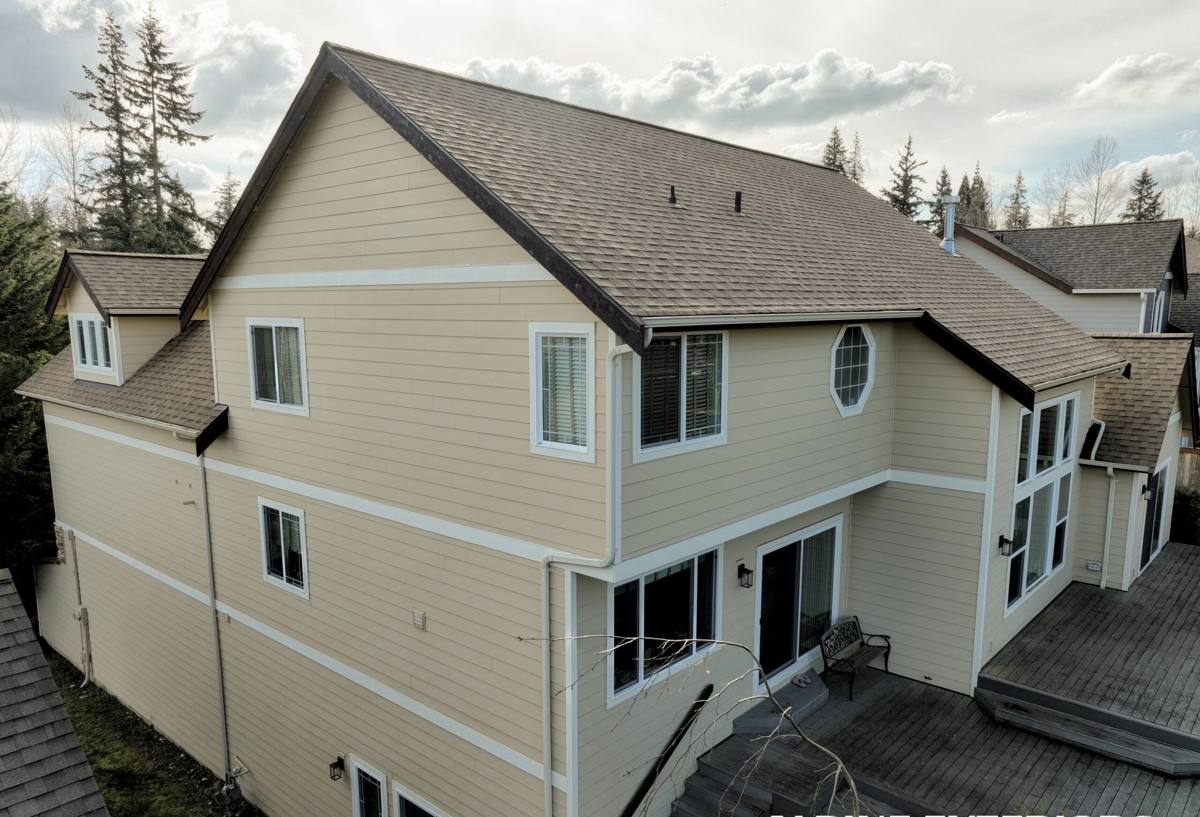
What Coastal Exposure Does to Windows Over Time
Homes in and around Fairhaven face a specific set of stresses that show up in windows before almost anywhere else on the house:
- Salt air corrosion — metal hardware, hinges, and some frame components can pit and corrode faster near the water, especially on west- and south-facing walls that catch the prevailing weather.
- Wind-driven rain — Whatcom County storms often push rain at an angle instead of straight down, which puts real pressure on flashing, sills, and the seal between the window and the wall.
- Extended damp season — long stretches of gray, wet weather mean wood trim and sills that don't drain and dry properly can stay damp for weeks, which is exactly the condition moss and rot need to take hold.
- Condensation — cooler coastal temperature swings can cause interior condensation on poorly insulated frames or single-pane glass, which over time damages sills and nearby drywall or trim.
None of this means windows near Fairhaven fail fast — it means the installation details that don't matter much in a dry climate matter a lot here. Flashing sequence, sill pitch, and sealant choice are not optional extras; they're the difference between a window that's fine in ten years and one that's leaking behind the trim in three.
Why Moss and Trim Rot Start at the Window
We see it often on older homes in this area: moss creeping along a window sill or up the bottom corner of a frame. It's rarely just cosmetic. Moss holds moisture against wood and paint, and once it gets a foothold on a sill that isn't draining or drying properly, the wood underneath starts to soften. By the time it's visible from the outside, there's usually already some degradation happening at the sill or the lower frame corners — the lowest points where water collects. Correct sill pitch and flashing during installation is the actual fix; scraping moss off periodically only buys time.
What a Correct Custom Window Job Looks Like Here
A window installation done right in this climate isn't just "measure, cut, install." For Fairhaven-area homes we treat a few things as non-negotiable:
- Accurate measurement of the existing opening — including checking for square, level, and any settling that's happened over the years, which is common in older coastal-adjacent homes.
- Proper flashing integration — the window's flashing has to tie into the house's existing weather-resistive barrier correctly, with the right shingle-lap order (top piece overlapping the one below it) so water is always directed outward and down, never trapped behind the siding.
- Sill pan installation — a sloped sill pan under the window gives any water that does get past the outer seal somewhere to go, instead of sitting against the framing.
- Corrosion-resistant hardware — given the salt air exposure, we pay attention to fastener and hardware material, not just the window unit itself.
- Sealed and insulated perimeter — gaps around the frame get properly insulated and sealed, which helps with both drafts and the condensation issues that come with coastal temperature swings.
Skip any one of these steps and the window itself can be excellent quality and still fail early — most window leaks trace back to the installation, not the manufacturing.
Choosing Materials for a Fairhaven Home
There's no single "best" window material for every house — it depends on the home's age, style, budget, and how much upkeep the owner wants to take on. Here's how the common options stack up under this area's conditions:
| Frame Material | Coastal/Moisture Performance | Maintenance | Typical Fit |
|---|---|---|---|
| Vinyl | Good — won't rot or corrode, handles moisture well | Low — occasional cleaning | Most homes, budget-conscious remodels |
| Fiberglass | Very good — dimensionally stable, resists warping in temperature swings | Low | Higher-end remodels, homes wanting a narrower sightline |
| Wood (clad exterior) | Good if exterior cladding is intact — exposed wood needs real upkeep near salt air | Higher — exterior clad reduces it | Historic or architecturally detailed homes |
| Aluminum | Fair — prone to condensation without a thermal break, hardware can corrode near the coast | Moderate | Specific architectural styles, less common as a full-home choice here |
For most Fairhaven-area homes we talk owners through vinyl or fiberglass first, simply because they hold up with the least ongoing maintenance in a salt-air, high-moisture environment. Wood-clad windows are a legitimate choice on older or architecturally significant homes where matching the original look matters — it just means going in with clear eyes about the upkeep on any exposed wood trim.
Glass Package Considerations
Double-pane, low-E glass is the practical baseline for this climate — it cuts down on the condensation issues that come with cooler coastal air meeting warm interior air, and it helps with energy performance during Whatcom County's damp, overcast winters. Triple-pane is worth discussing for west-facing rooms that catch the brunt of driving rain and wind, or for homes near louder roads, but it's a real cost jump that isn't necessary for every window in every room.
Our Process for a Fairhaven Window Project
Because we already work in this part of Whatcom County, we're not learning the area's quirks on your project — we've seen how salt air, moss, and driving rain affect windows on homes like yours before we ever show up.
- On-site assessment — we look at the existing windows, sills, and surrounding trim to understand what's actually happening, not just what the homeowner can see from inside.
- Honest scope discussion — some homes need every window replaced, others just need a few problem units addressed. We tell you which situation you're in.
- Custom measurement and ordering — units are built to your actual openings, accounting for any settling or irregularities.
- Careful removal — old windows come out without unnecessary damage to surrounding siding or trim, and we check what condition the framing is in once it's exposed.
- Correct installation sequence — flashing, sill pan, window, insulation, and sealant go in in the right order, not just "in there."
- Final inspection and walkthrough — we check operation, seals, and finish work before calling the job done.
Signs It's Time to Look at Your Windows
You don't have to wait for an obvious failure. Some early indicators worth a closer look, especially on Fairhaven-area homes exposed to the water and weather:
- Moss or persistent green growth on sills or lower frame corners
- Soft or spongy wood when you press on a sill or the bottom of a frame
- Fogging or condensation between panes of double-pane glass (a sign the seal has failed)
- Drafts or noticeable temperature difference near the window even when it's closed
- Difficulty opening, closing, or latching a window that used to operate smoothly
- Visible gaps, cracked caulk, or peeling paint concentrated around the window frame
What This Kind of Project Typically Involves Cost-Wise
Custom window pricing depends on the number of openings, the frame material chosen, glass package, and how much trim or siding work is needed around each opening — especially if we find moisture damage once an old window comes out. Rather than quote a number that won't reflect your actual house, we walk the home, look at your specific windows, and give you a real range based on what's actually there. Homes with several original single-pane windows and some sill deterioration will cost more to address properly than a home needing a handful of straightforward replacements — and we'll tell you honestly which category yours falls into.
Why a Local Fairhaven-Area Crew Matters
Window installation isn't just about the product — it's about understanding the conditions the window has to survive. A crew that's used to installing in drier inland climates can do technically fine work and still miss the details that matter here: the sill pitch that accounts for driving rain, the flashing lap that handles wind coming off the bay, the hardware choice that won't corrode as fast in salt air. We work on homes throughout the Ferndale and greater Whatcom County area, including Fairhaven, and we bring what we've learned from one coastal home to the next.
If you're noticing moss, drafts, fogged glass, or just have older single-pane windows that have never been touched, we're happy to take a look. Fill out the form below for a free, no-pressure estimate — we'll walk your home, tell you honestly what we see, and give you a clear picture of your options.