 Ferndale
 Deck Repair Built for Sumas Weather
Sumas sits in the far northeast corner of Whatcom County, right up against the foothills and the border, and the weather here does a number on outdoor structures. Long, wet falls and winters keep wood decking damp for weeks at a stretch, moss and algae take hold on any surface that doesn't dry out fast, and the moist marine air that moves in off Puget Sound and the Strait works its way inland and speeds up corrosion on fasteners and hardware over time. A deck that looked fine three summers ago can have soft boards, rusted screws, or a weakening ledger connection by the time anyone notices a problem.
We repair decks throughout Whatcom County, and Sumas jobs tend to follow a pattern: the damage is rarely random. It shows up in the same spots, for the same reasons, year after year. Knowing where to look first is most of the job, and it's what separates a repair that lasts from one that comes back in a season or two.
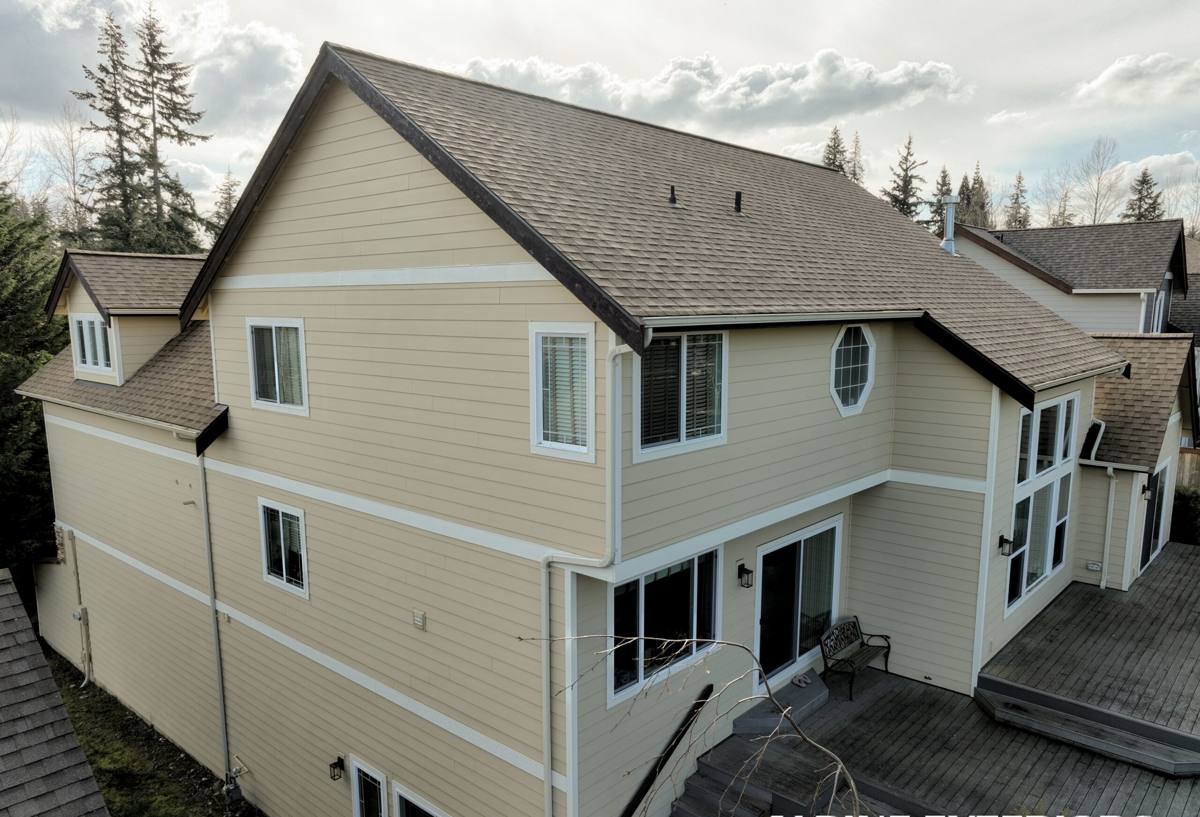
Where Sumas Decks Fail First
Ledger Board and Framing Connections
The ledger board — where the deck attaches to the house — is the single most important structural connection on the whole deck, and it's also the hardest one to inspect without pulling material. Water that gets behind poorly flashed ledger boards can rot the framing quietly for years before it shows on the surface. This is a structural safety issue, not a cosmetic one, and it's the first thing we check on any repair call, before anything else.
Decking Boards and Surface Rot
Wood decking that sits under trees or in shaded corners holds moisture the longest and grows moss fastest. Once moss takes hold, it holds even more water against the board, and the cycle accelerates through every wet stretch of weather. Soft, spongy, or discolored boards are usually further along than they look from the surface, and a board that flexes underfoot has already lost structural integrity.
Railings and Guardrails
Railing posts anchor into the frame at just a few connection points, and if those points have been wicking moisture, the railing can feel solid to lean on right up until it isn't. We test railings by hand on every inspection — it takes thirty seconds and tells us a lot about what's happening underneath the surface finish.
Posts and Footings
Deck posts that sit close to grade or in poorly draining soil stay damp longer than the rest of the structure, and rot at the base of a post is easy to miss because it's often below the sightline. Footings that have shifted or settled put uneven load on the framing above, which can show up as a deck that feels slightly off-level even when every board looks fine.
Fasteners and Hardware
Standard screws and nails corrode faster here than in drier climates, especially where two dissimilar metals meet or where a fastener sits in a spot that never fully dries out between rains. Rust stains bleeding out around screw heads are an early warning sign worth acting on before the surrounding wood is compromised and the fastener loses its grip entirely.
What a Correct Repair Actually Involves
A repair that only replaces what's visible from the top often misses what's underneath it. Our approach is to work from the structure outward:
1. Inspect the Framing First
Before we touch a single deck board, we check the joists, beams, posts, and ledger connection underneath. Replacing surface boards over a compromised frame is a short-term fix that costs more in the long run once the hidden damage catches up.
2. Fix Moisture Management, Not Just Symptoms
If rot shows up in the same spot repeatedly, there's usually a moisture path causing it — missing flashing, a gap that traps water, or grading that channels rain toward the structure. We address the cause, not just the rotten board, so the same repair isn't needed again in two years.
3. Match Materials and Fastening Correctly
Repairs get fastened with corrosion-resistant hardware rated for exterior and treated-wood contact, and replacement boards are sized and treated to match the existing structure so the repaired section performs the same as the rest of the deck, not worse.
Permits and Code on Older Decks
Whatcom County and most local jurisdictions require permits for structural deck work, and repairs that go beyond simple board replacement — new framing, new footings, or railing changes — often fall into that category. Older decks, in particular, were sometimes built to standards that have since changed, especially around guardrail height and baluster spacing. When a repair touches a railing or structural component, we'll tell you plainly whether it needs a permit and whether bringing that section up to current code is worth doing while it's already open, rather than leaving you to find out the hard way at resale or during a future inspection.
Repair or Replace? How We Help You Decide
Not every deck problem calls for a full rebuild, and not every deck is worth patching. The honest answer depends on a few factors we walk through with you during the inspection.
| Factor | Repair Usually Makes Sense | Replacement Usually Makes Sense |
|---|---|---|
| Framing condition | Joists, beams, and posts test solid | Structural rot found in multiple framing members |
| Extent of damage | Isolated to a few boards or one section | Widespread across most of the deck surface |
| Ledger connection | Flashing and attachment are sound | Ledger shows rot or was never flashed correctly |
| Deck age and material | Newer deck, quality lumber still intact | Older deck nearing the end of its service life |
| Code and railing compliance | Existing railings and spacing meet current code | Structure predates current guardrail and spacing requirements |
We'll give you a straight answer either way. A lot of homeowners assume a few soft boards mean the whole deck is done, and just as often assume a deck is fine when the real problem is hidden underneath where nobody's looked in years.
Wood, Composite, and What We Recommend for Repairs
When we replace decking boards during a repair, we talk through the trade-offs rather than pushing one product. Solid wood is easy to match to an existing deck and costs less upfront, but it needs regular cleaning and refinishing to hold up against moss and moisture in this climate. Composite decking resists moss and rot better and needs less upkeep, but it costs more, and mixing it into an all-wood deck means accepting a visible difference in look and feel between old and new sections. For a small patch repair, matching the existing material is usually the more sensible call. For a larger repair on an aging deck, it's worth discussing whether the added upfront cost of composite pays off in reduced maintenance over the years you plan to keep the house, especially given how much of the year this region stays wet.
Our Deck Repair Process
- On-site inspection: We check framing, ledger connection, decking, railings, posts, and hardware, not just the spot you called about.
- Written scope and estimate: You get a clear explanation of what's actually wrong, what we recommend, and why — before any work starts, with no surprise add-ons once we're underway.
- Repair work: Framing and moisture issues get addressed first, then decking, railings, and hardware, in that order.
- Final walkthrough: We show you what was done, what we found along the way, and what to watch for going forward.
Keeping a Repaired Deck in Good Shape
A repair holds up longer when it's paired with a little seasonal upkeep, especially given how long the moss season runs in this part of Whatcom County. This is the same checklist we leave with homeowners after a repair:
- Sweep debris and standing leaves off the deck surface regularly through fall
- Rinse off moss and algae buildup before it has a chance to hold moisture against the wood
- Check railings by hand a couple of times a year for looseness
- Look for rust staining around fastener heads and address it early
- Keep gutters and downspouts near the deck clear so runoff isn't draining onto it
- Reseal or refinish wood decking on the schedule the product calls for, not just when it looks bad
Why a Crew That Already Works in Sumas Matters
Deck repair looks straightforward until the framing tells a different story than the surface does. A crew that works Whatcom County regularly has already seen how this specific climate — the driving rain, the long moss season, the moisture that works into fastener connections — plays out on decks over time, and knows where problems tend to hide before pulling a single board. That local pattern recognition is what keeps a repair from turning into a surprise once work has already started, and it's also what lets us schedule around the wettest stretches of the year instead of fighting them.
If you've got a deck in Sumas that's showing soft spots, moss buildup, loose railings, or rust around the hardware, we're glad to come take a look. There's no pressure and no obligation — just an honest read on what's going on and what it would take to fix it right. Use the form below to request a free estimate.