 Ferndale
 Building Decks for Sudden Valley's Climate
Sudden Valley sits in a part of Whatcom County where the weather does not do decks any favors. Homes here spend most of the year under a mix of steady rain, damp marine air, and long stretches without direct sun, especially on lots shaded by mature trees or facing north. That combination is exactly what breaks down a poorly built deck years before it should fail: trapped moisture in framing, moss and algae building up on walking surfaces, fasteners corroding faster than expected, and wood surfaces going soft at the exact spots where water collects and can't dry out.
A deck built the right way for this area is not dramatically different in appearance from a deck built anywhere else. What's different is what's underneath it, how it's fastened together, and how much thought goes into drainage and airflow. That's the part homeowners rarely see when they're comparing bids, and it's usually the part that determines whether a deck is still solid in fifteen years or starting to show rot in five.
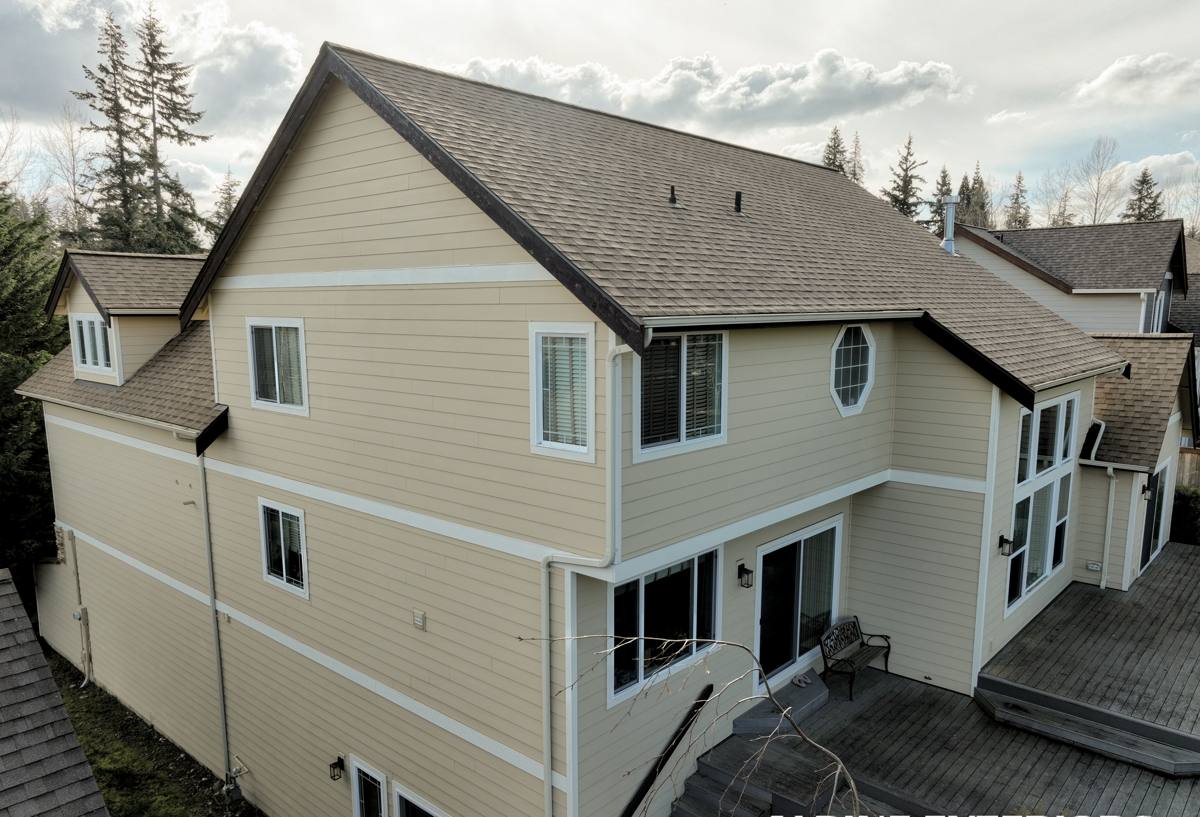
What Whatcom County Weather Does to a Deck Over Time
Most deck problems we get called out to inspect aren't caused by bad lumber or a bad design. They're caused by moisture that had nowhere to go. In a climate with driving rain, persistent humidity, and a long moss season, every horizontal surface and every joint on a deck is an opportunity for water to sit longer than it should.
- Ledger boards and rim joists against the house are the most common failure point when flashing is missing or installed incorrectly — water gets behind the board and rots the framing from the inside out, often invisibly for years.
- Fastener corrosion shows up faster here than in drier climates, especially when mismatched metals are used together (a common shortcut on lower-bid jobs).
- Moss and algae take hold on any decking surface that stays damp and shaded, making boards slick and, over time, accelerating surface wear on wood decking.
- Post bases set directly in or near standing water wick moisture into the post end grain, which is one of the fastest ways a structurally sound-looking deck starts failing from the ground up.
- Gaps and spacing that are too tight trap debris and moisture between boards instead of letting the deck dry between rain events, which in this climate can mean days at a time.
None of these are exotic problems. They're well understood, and every one of them is preventable with the right detailing at the framing stage — which is exactly where corners get cut on decks that aren't built for this climate.
What a Correctly Built Deck Requires Here
Ledger Attachment and Flashing
Where the deck attaches to the house is the single most important detail on the whole structure. It needs proper flashing that sheds water away from the house framing, not just a ledger board bolted on and caulked. Caulk is not flashing, and it fails long before the fasteners do.
Framing and Fasteners
We use fasteners and structural hardware rated for the exposure they'll see — that means corrosion-resistant coatings appropriate for pressure-treated lumber, and hardware that's matched correctly so we're not creating a corrosion problem by mixing incompatible metals. It costs a little more up front and it's the difference between hardware that lasts the life of the deck and hardware that's rusting through in a decade.
Drainage and Airflow Underneath
A deck needs to be able to dry out between rain events. That means proper spacing between joists and ground clearance, grading underneath that moves water away rather than letting it pool, and in some cases a drainage system if the deck is over a living space below. Skipping this is invisible on installation day and expensive to fix later.
Post Footings
Footings need to be set below frost depth and detailed so posts aren't sitting in water after a storm. On sloped or wooded Sudden Valley lots, this often takes more thought than a flat, open site would — drainage patterns aren't always obvious until you've watched water move across the lot in a real storm.
Decking Material Choice
Wood, composite, and PVC decking all perform differently in sustained moisture and moss conditions. There's no single right answer for every home — it depends on budget, maintenance appetite, and how much shade the deck sits in. We'll walk through the honest tradeoffs for your specific site rather than pushing one product.
Decking Material Comparison for This Climate
| Material | Moisture & Moss Behavior | Maintenance | Typical Lifespan Here |
|---|---|---|---|
| Pressure-treated wood | Performs well when detailed and finished correctly; can hold moisture if finish is neglected | Needs re-staining or sealing every 2-3 years in this climate | 15-20+ years with upkeep |
| Cedar | Naturally moisture-resistant but still needs finish maintenance to resist moss staining | Regular cleaning and periodic finish renewal | 15-20 years with upkeep |
| Composite decking | Resists rot but can still grow surface moss/algae in shaded, damp spots without cleaning | Occasional cleaning, no staining or sealing | 25-30 years, varies by product warranty |
| PVC decking | Fully resists moisture absorption; still needs periodic cleaning where shaded | Lowest maintenance of the group | 25-30+ years, varies by product warranty |
Cost, appearance, and warranty structure vary across these options, and we'll walk through the actual numbers for your project during the estimate rather than quoting broad figures that don't reflect your specific deck size and layout.
Design Considerations Specific to Sudden Valley Properties
Sudden Valley lots tend to have real topography — slopes, tree cover, and lake-influenced sightlines that flatter neighborhoods don't have to work with. That shapes deck design in a few practical ways:
- Elevated decks and multi-level layouts are common where the lot slopes toward the water or away from the house, which changes footing depth, railing requirements, and stair design.
- Tree cover means more shaded, slower-drying sections of a deck — we plan decking orientation and spacing with that in mind rather than treating the whole deck as one uniform surface.
- Privacy and view priorities differ lot to lot; some homeowners want an open deck oriented toward the lake, others want screening from neighboring properties. We design around what you actually want to look at from your deck, not a standard layout.
- Local permitting and setback requirements apply, and elevated decks in particular usually require permits and engineered footings — we handle that process rather than leaving it to the homeowner.
Our Process for a Deck Building Project
- On-site assessment. We look at your lot's drainage, sun/shade pattern, existing structure (if replacing a deck), and how the space will actually be used before talking materials.
- Design and material selection. We walk through layout, decking material, railing style, and any permit requirements, with honest cost and maintenance tradeoffs for each option.
- Permitting. We handle the permit application and any required engineering for footings or elevated structures.
- Demolition (if applicable). Old decking, framing, and footings are removed and hauled off, and we inspect the ledger and house framing behind the old deck for hidden moisture damage before building new.
- Framing. Footings, posts, beams, and joists are built to code with the flashing, hardware, and spacing detailing this climate requires.
- Decking and railings. Surface material and railing system are installed per manufacturer spec, which matters for both appearance and warranty coverage.
- Final walkthrough. We go over the finished deck with you, including any maintenance recommendations specific to the material you chose.
Maintenance That Actually Matters in This Climate
Every deck material needs some upkeep here — the question is how much and how often. A little seasonal attention prevents most of the moisture and moss problems we get called out to fix on decks that were otherwise built well.
- Clean debris out of gaps between boards before it traps moisture, especially in fall when leaves and needles build up fastest.
- Rinse or scrub shaded, slow-drying sections periodically to keep moss and algae from taking hold.
- Check and re-seal wood decking on the schedule appropriate for that product — don't wait until it's visibly graying.
- Keep gutters and downspouts near the deck clear so runoff isn't dumping extra water onto the structure.
- Have footings and ledger flashing checked periodically, especially on decks over ten years old, since these are the failure points that stay hidden the longest.
Why Local Experience on This Type of Project Matters
A deck built from a generic plan without accounting for Whatcom County's rain, humidity, and moss pressure will often look fine for the first few years and then start showing problems that are expensive to fix because they're structural, not cosmetic. Building for this climate from day one — correct flashing, the right fastener spec, real drainage planning, and decking spaced and oriented with local moisture patterns in mind — costs little to nothing extra up front and is the entire difference in how the deck holds up.
We work on homes across this region regularly, which means we're not guessing at how a design will perform once it's dealing with a real Pacific Northwest winter. We've seen what fails and why, and we build to avoid it.
Get a Free Estimate for Your Sudden Valley Deck
If you're planning a new deck or replacing an aging one, we're happy to come take a look at your lot, talk through material options honestly, and put together a straightforward estimate — no pressure, no pushy sales tactics. Use the form below to get started.