 Ferndale
 Composite Decking Built for the Everson Area's Weather
Homes in and around Everson deal with a specific combination of conditions: long stretches of driving rain, damp marine air that moves inland across Whatcom County, and a moss season that can stretch from fall through spring. A deck out here doesn't just need to look good on a dry August afternoon — it needs to hold up through months of standing moisture, shaded ground-level humidity, and the freeze-thaw swings that show up most winters. Composite decking, installed correctly, is one of the more sensible answers to that combination. It doesn't absorb water the way wood does, it doesn't feed mold and moss the way untreated lumber can, and it doesn't need refinishing every couple of years to stay presentable.
That said, "composite" isn't a single product with one installation method. Board construction, ventilation requirements, and fastening systems vary, and getting those details wrong is exactly how a composite deck ends up with the same moisture and mold problems people buy composite to avoid in the first place.
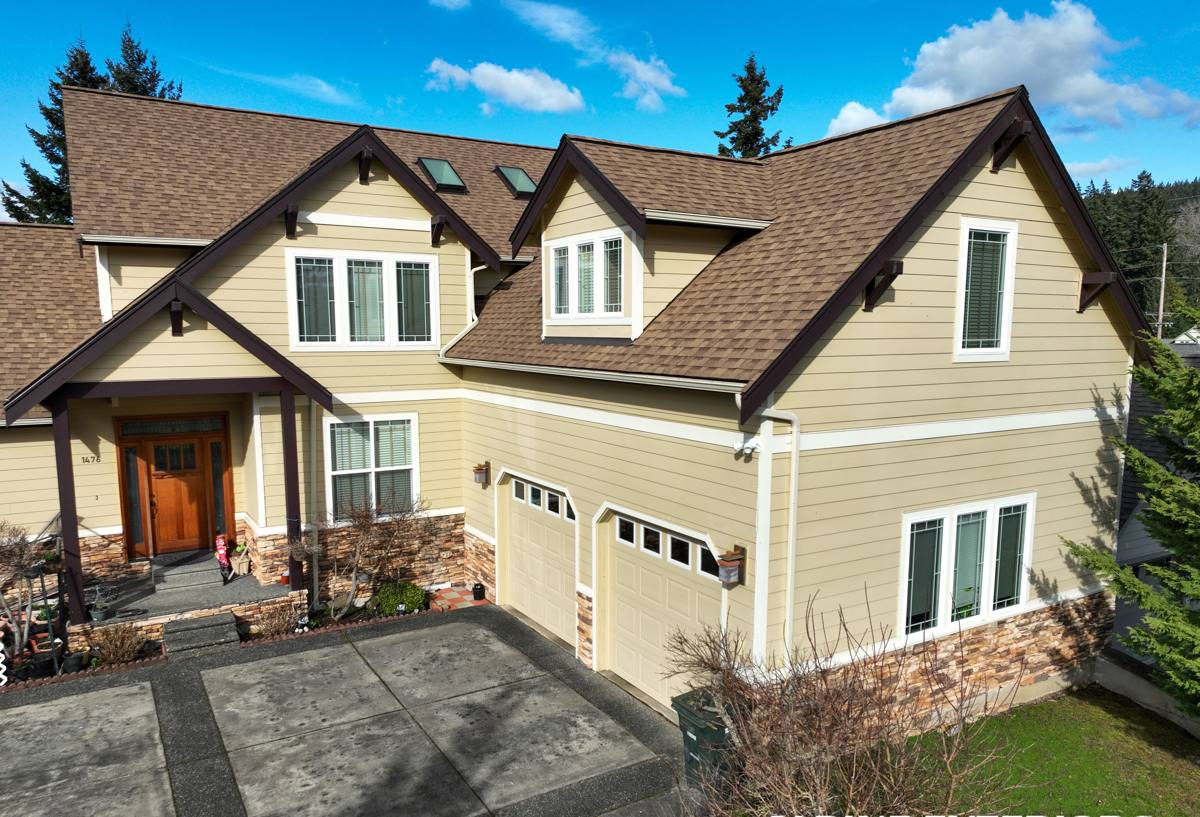
What Whatcom County Weather Actually Does to a Deck
It helps to understand the failure pattern before talking about the fix. In this region, decks don't usually fail from one dramatic event — they fail slowly, from repeated exposure:
- Driving rain gets pushed sideways under railings and against house walls, finding gaps in flashing that would stay dry in a calmer climate.
- Shaded, low-airflow areas under and around the deck stay damp for days after a storm, which is exactly where moss and algae take hold.
- Standing moisture at ground contact points — post bases, ledger boards, joist ends — is where rot starts on wood decks, usually out of sight until the damage is advanced.
- Freeze-thaw cycles expand trapped moisture in end grain and fastener holes, which is how small cracks turn into split boards over a few winters.
A deck built for this region has to plan for water that doesn't dry out quickly, not just water that falls.
Composite vs. Wood: A Straight Comparison
Both materials have a place, and we install both. But for the moisture load and moss exposure typical around Everson, the trade-offs usually favor composite for decks that see regular shade or ground-level dampness. Here's the honest comparison:
| Factor | Composite Decking | Pressure-Treated Wood |
|---|---|---|
| Upfront cost | Higher material cost | Lower material cost |
| Moisture absorption | Minimal — most boards are capped or fully encapsulated | Absorbs water; swells and shrinks seasonally |
| Moss and algae resistance | Resists surface growth; easy to rinse clean | Textured grain holds moisture and organic growth |
| Maintenance | Occasional wash-down, no refinishing | Regular sealing/staining, typically every 1–3 years |
| Fastener/installation sensitivity | Requires correct clip spacing and gapping for expansion | More forgiving of minor fastening variance |
| Typical lifespan with proper install | 25–30+ years | 15–20 years, weather dependent |
The key phrase in that table is "with proper install." Composite decking rewards correct substructure and fastening work, and it does not forgive shortcuts the way wood sometimes can — a poorly gapped composite board will buckle or trap water, while a wood board with the same error just looks a little rough.
What a Correct Composite Deck Installation Actually Involves
The board itself is the part homeowners see, but it's the last step in a longer process. A composite deck built to last through Whatcom County winters needs:
A framing layout matched to the board
Composite boards have manufacturer-specified joist spacing, and that spacing tightens for angled or picture-frame layouts. Framing built to generic lumber spacing, then decked with composite on top, is one of the most common causes of bounce and premature sagging we see on decks that weren't planned around the product from the start.
Proper expansion gapping
Composite expands and contracts with temperature more than people expect. Board ends, butt joints, and edges against walls or posts all need specific gaps — too tight and boards buckle when they expand in a warm spell; too loose and debris and moisture collect in the gaps and freeze there in winter.
Hidden fastening done right
Most composite systems use hidden clips rather than face screws. That gives a cleaner look, but it means every clip has to seat correctly — a partially engaged clip won't fail immediately, it fails two or three years later as a loose or squeaking board.
Flashing and ledger protection
Where a deck attaches to the house, the ledger board and flashing are doing the real work of keeping water out of the wall assembly behind the siding. This detail matters everywhere, but it matters more here, where wind-driven rain regularly hits vertical surfaces at an angle.
Substructure and Drainage: Where Most Deck Problems Start
Composite decking's reputation rides on what's underneath it as much as the boards themselves. A few things we treat as non-negotiable on every deck we build or replace:
- Post bases set above grade with a drainage path, not sitting in a low spot that holds water after rain
- Joist tape or a moisture barrier on top of framing lumber, so the substructure isn't sitting in standing moisture under the deck boards
- Ventilation gaps at the perimeter, especially on low-clearance decks, so damp air underneath can actually move and dry out
- Grading or gravel underneath low decks so ground moisture doesn't just sit and evaporate straight up into the framing
None of this is visible once the deck is finished, which is exactly why it's worth asking a contractor about before the first board goes down, not after.
Our Process for an Everson Deck Project
We keep the process straightforward and try not to surprise anyone partway through:
- On-site assessment — we look at drainage, existing structure (if replacing an old deck), sun/shade exposure, and how the deck ties into the house.
- Material and layout discussion — board style, color, railing type, and any structural changes needed to support the composite system correctly.
- Written estimate — scope, materials, and timeline in writing before any work starts, no verbal-only agreements.
- Demo and framing — removal of old decking if applicable, framing built to the new board's spec, moisture protection installed on the substructure.
- Decking, railing, and fastening — boards installed with correct gapping and fastening, railing and fascia finished out.
- Final walkthrough — we go over the finished deck together, including what maintenance (if any) the specific board system needs going forward.
Choosing Board Style, Color, and Railing
Once the structural side is settled, the decisions get more personal. A few things worth thinking through for a property in this area:
Darker board colors show less algae staining over time in shaded, damp spots, but they also run hotter in direct summer sun — worth weighing based on how exposed your deck actually is. Grooved-edge boards (used with hidden fastening) give a cleaner surface with no visible screws, but the grooves need to be kept clear of debris in fall, since trapped leaf litter in a groove is exactly the kind of damp, shaded spot moss prefers. Solid-core boards are heavier and typically more resistant to moisture wicking at cut ends than hollow-core boards, which matters more on stair treads and board ends exposed to weather. Railing choice — composite, aluminum, or cable — affects both maintenance and how much wind-driven rain gets through to the deck surface itself.
Maintenance: What Composite Decking Actually Needs From You
Composite decking is genuinely lower-maintenance than wood, but "low-maintenance" isn't "no-maintenance," especially with a long moss season working against you. A simple twice-a-year routine covers most of it:
- Sweep leaves and debris out of board grooves and gaps before they hold moisture through a rainy stretch
- Wash the deck surface with soap and water and a soft-bristle brush — a pressure washer on the wrong setting can etch some composite surfaces, so check manufacturer guidance first
- Rinse off any early moss or algae growth promptly rather than letting it establish, since it's far easier to remove new growth than set-in growth
- Check that furniture pads, planters, and rugs aren't trapping moisture against the board surface for long periods
- Inspect the flashing where the deck meets the house once a year for any gaps or wear
- Keep gutters and downspouts near the deck clear so runoff isn't dumping directly onto or under the deck surface
Why Local Decking Experience Matters
A composite deck built to a generic national spec sheet, without accounting for Whatcom County's rain volume and moss pressure, will underperform here even if it's technically installed "to code." Framing, ventilation, and flashing decisions that would be fine in a drier climate need to be tightened up for this area's rain and shade conditions. We work on decks throughout Ferndale and out toward Everson regularly enough to know which details actually matter locally — where moss takes hold first, which board systems handle standing dampness better, and how local drainage and soil conditions affect post bases and footings. That's the kind of judgment that doesn't show up on a spec sheet, and it's usually the difference between a deck that looks good for two seasons and one that holds up for two decades.
If you're planning a new deck or replacing an aging one in the Everson area, we're happy to take a look and walk through your options. Reach out below for a free, no-pressure estimate — we'll assess your site, talk through material and layout choices, and give you a straightforward, written quote with no obligation.