 Ferndale
 Roof Repair Built for Everson's Weather, Not Just Any Roof
Everson sits inland from Ferndale but still gets the full Whatcom County weather package: months of low-angle rain, damp marine air rolling in off the Sound, and short winter days that never quite dry a roof out before the next system arrives. That combination is hard on asphalt shingles, hard on flashing, and hard on any repair that was done in a hurry. A roof repair here has to hold up to weeks of sustained wet weather, not just survive a single storm.
We work on homes throughout Ferndale and the surrounding Whatcom County communities, including Everson, and we see the same failure patterns repeat themselves — moss lifting shingle edges, flashing that was never properly sealed, and small leaks that went unnoticed until they showed up as a stain on a ceiling. A good repair addresses the actual cause, not just the spot where the water finally became visible.
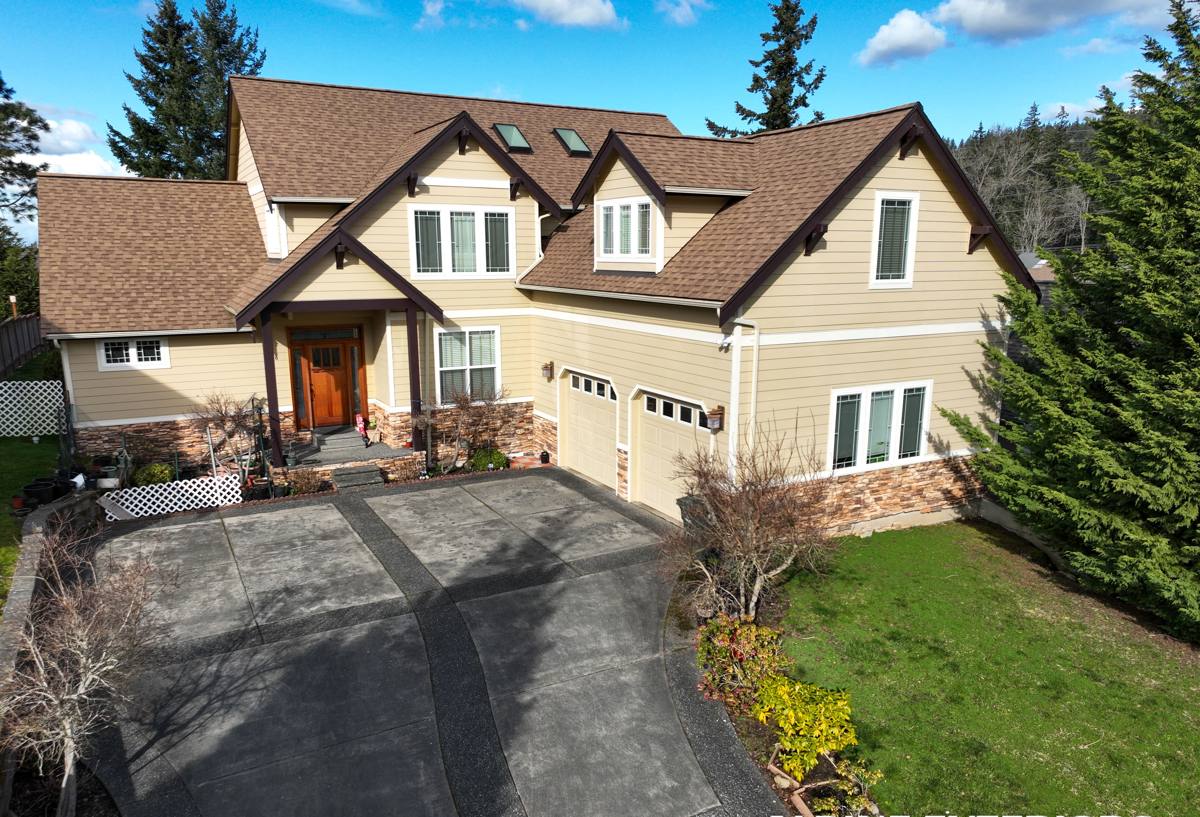
Why Local Roofs Fail Faster Than You'd Expect
Persistent Moisture
Whatcom County doesn't get the heaviest rainfall in the state, but it gets consistent rainfall — long stretches of drizzle and overcast days that keep roofing materials damp for extended periods. Asphalt shingles are designed to shed water quickly and dry between rain events. When they rarely get the chance to dry, granule loss speeds up, sealant strips degrade faster, and any gap in the flashing has more opportunities to let water in.
Salt-Laden Air
Proximity to Puget Sound means the air carrying moisture inland often carries salt with it too. Salt air accelerates corrosion on exposed metal — flashing, fasteners, gutter hardware, and vent caps all wear faster here than they would in a drier, inland climate. Once a metal flashing piece starts to corrode, it stops sealing properly, and that's a direct path for water to reach the roof deck.
Moss and Organic Growth
The Pacific Northwest's moss season isn't a few weeks — it's most of the year. Shaded roof sections, north-facing slopes, and areas under overhanging trees stay damp long enough for moss and algae to establish and spread. Moss doesn't just look bad; it physically lifts shingle tabs as it grows, breaking the seal that keeps water out and creating channels where water can sit against the roofing material instead of running off.
Signs an Everson Roof Needs Repair Now
Most roof problems give warning signs well before there's an active leak inside the house. Catching them early is almost always cheaper than waiting.
- Granules collecting in gutters or at downspout outlets — a sign shingles are wearing thin
- Shingles that look curled, cupped, or lifted at the edges, especially on moss-affected slopes
- Dark streaking or green/black growth concentrated on shaded or north-facing sections
- Rust staining or visible corrosion around flashing, vents, or chimney counter-flashing
- Soft spots or slight sagging when walked on, which can indicate deck moisture underneath
- Water stains on interior ceilings or in the attic, particularly near penetrations like vents or skylights
- Daylight visible through the roof deck from inside the attic
If you're seeing any of these, especially more than one at once, it's worth having someone look at the roof before the next heavy rain stretch rather than after.
What a Correct Roof Repair Actually Involves
A roof repair is only as good as the parts of the roof most people never think about. Replacing a shingle without addressing what's underneath it is a temporary fix at best.
Flashing First
Most leaks trace back to flashing — the metal (or sometimes rubber) material installed at roof penetrations, valleys, and wall intersections. Chimneys, vent pipes, skylights, and roof-to-wall transitions all need flashing that's properly lapped and sealed, not just caulked over. In a salt-air, high-moisture climate, we check flashing condition closely, since it's often the first component to fail.
Underlayment and Deck Condition
Underneath the visible shingles is a water-resistant barrier that's doing more of the actual waterproofing work than most homeowners realize. If a leak has been active for any length of time, we check whether the underlayment and roof deck underneath have absorbed moisture or started to soften. Patching shingles over a compromised deck doesn't solve the underlying problem — it just delays the next call.
Matching Materials
Shingle color and profile change over the years, and a repair patch that doesn't match well isn't just a cosmetic issue — mismatched or incompatible materials can shed water differently than the surrounding roof, creating new failure points. We use materials that match as closely as possible and are installed to shed water the way the rest of the roof does.
Moss and Debris Removal Done Correctly
Pressure washing a mossy roof sounds like an obvious fix, but aggressive pressure washing strips protective granules and can shorten a roof's remaining life. We remove moss and debris using methods that clear growth without damaging the shingle surface, and we address the moisture and shade conditions that let moss take hold in the first place where that's practical.
Repair vs. Replacement: How We Help You Decide
Not every roof problem calls for a full replacement, and not every roof is a good candidate for another round of patching. The right call depends on the roof's age, how widespread the damage is, and what's happening underneath the surface.
| Factor | Points Toward Repair | Points Toward Replacement |
|---|---|---|
| Roof age | Under 15–20 years, within expected lifespan | Nearing or past typical asphalt shingle lifespan |
| Damage scope | Localized — one slope, one flashing point, one leak | Widespread granule loss, multiple leak areas |
| Deck condition | Solid, dry, no soft spots | Soft, spongy, or water-stained decking |
| Moss/algae extent | Limited to shaded sections, shingles intact underneath | Heavy growth with lifted or broken shingles across the roof |
| Prior repair history | First or second repair on this roof | Repeated repairs to the same areas, recurring leaks |
We'll give you a straight answer on which side of that line your roof falls on. If a repair will genuinely hold, we'll say so — there's no reason to sell a full replacement when a targeted fix does the job.
Our Roof Repair Process
- Inspection. We assess the full roof, not just the reported leak area, since related problems often show up elsewhere on the same slope or roof plane.
- Diagnosis. We identify the actual water entry point, which is frequently different from where the stain or drip appears inside the house.
- Written scope. You get a clear explanation of what needs to be done and why, before any work starts.
- Repair. We correct flashing, underlayment, and shingle issues as needed, using materials suited to Whatcom County's wet, salt-influenced climate.
- Cleanup and check. The work area is cleaned, debris removed, and the repair reviewed with you before we consider the job done.
Why a Crew That Already Works in Everson and Ferndale Matters
A roof repair is only as good as the diagnosis behind it, and diagnosing roofs correctly in this climate takes familiarity with how local weather actually behaves — how long moss season really runs here, how salt-laden air affects metal components over time, and how sustained rain (rather than occasional downpours) changes the way a roof fails. A crew that regularly works on homes in Everson and around Ferndale has already seen how these conditions play out on roofs like yours, rather than applying assumptions from a drier or less coastal-influenced region.
There's also a practical side: being local means we can respond promptly when a leak shows up mid-storm season, and we're not working from a generic checklist built for a different climate.
Questions Worth Asking Before You Hire Anyone for Roof Repair
- Will you inspect the whole roof, or just patch the spot I called about?
- What's actually causing the leak — flashing, shingles, deck moisture, or something else?
- Are you matching materials to what's already on the roof?
- Will the moss or algae be removed in a way that won't strip the shingle granules?
- Do you provide a written scope of work before starting?
- Is this a repair, or should I be considering replacement instead — and why?
Keeping a Repaired Roof in Good Shape
Once a repair is done right, a little seasonal attention goes a long way in this climate. Keeping gutters clear so water doesn't back up under shingle edges, trimming back overhanging branches to reduce shade and debris on moss-prone slopes, and having the roof looked at after major windstorms are all low-cost habits that extend the life of the repair. None of it replaces a professional inspection, but it reduces how often you need one.
If you're dealing with a leak, visible moss damage, or just want an honest opinion on a roof's condition before it becomes a bigger problem, we're glad to take a look. Reach out for a free, no-pressure estimate using the form below.