 Ferndale
 Windows Built for Fairhaven's Coastal Climate
Fairhaven sits close enough to the water that its homes take a different kind of weathering than houses just a few miles inland. Salt-laden air works on metal hardware and finishes year-round. Driving rain off the Strait pushes water sideways into gaps that would stay dry in a calmer climate. And Whatcom County's long, damp moss season keeps north-facing trim, sills, and glazing wet for weeks at a stretch. None of this is dramatic on its own, but it adds up over the life of a window, and it's why a window that performs well in a dry climate can still underperform here.
When we talk about "energy-efficient windows" for a Fairhaven home, we're not just talking about the glass. We're talking about a whole assembly — frame material, glazing package, and installation detail — that has to hold up to wind-driven moisture and salt exposure while actually keeping heat inside during our long heating season. Get any one of those pieces wrong and you end up with a window that looks fine for a year or two, then starts fogging, sticking, or letting cold air in around the edges.
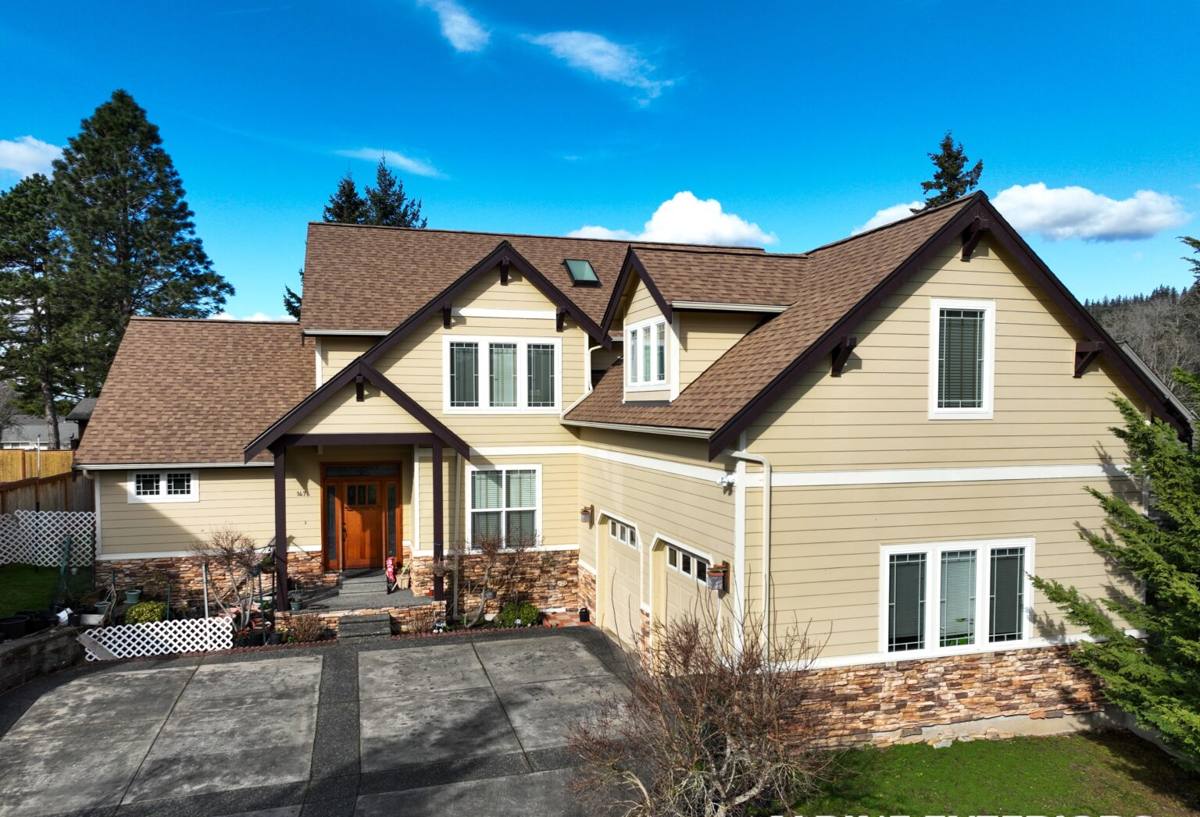
What Energy Efficiency Actually Means in a Marine Climate
Homeowners often hear "energy-efficient" and think mainly of the glass coating. That matters, but in Western Washington the bigger factors are usually air infiltration and overall U-factor, not solar heat gain.
U-Factor Over SHGC
U-factor measures how well a window resists heat loss — lower is better, and it's the number that matters most for a heating-dominated climate like ours. Solar Heat Gain Coefficient (SHGC) matters more in sunnier, hotter regions where keeping solar heat out is the priority. In Fairhaven, we're generally more concerned with keeping the heat you're paying for inside the house than blocking sun you don't get much of in the winter anyway.
Air Infiltration Rating
This is the number that tells you how much air leaks through the window assembly itself, independent of the glass. A well-rated window with a sloppy installation can still leak air at the frame-to-wall joint — which is why installation quality matters as much as the product spec sheet.
Low-E Coatings
Low-emissivity coatings reflect radiant heat back into the room in winter. For our climate, a low-E coating tuned for heat retention (rather than heat rejection) is generally the right call for most Fairhaven homes.
Signs Your Current Windows Are Underperforming
Not every window problem means you need a full replacement, but these are the signs worth having a professional look at:
- Condensation or fogging between the panes (a sign the seal has failed and the insulating gas has escaped)
- Visible corrosion or pitting on hinges, locks, or cranks — common where salt air reaches hardware directly
- Drafts you can feel by hand along the frame edge, especially during a windstorm off the water
- Soft or discolored wood at the sill or lower corners, often the first sign of water intrusion
- Windows that stick, won't latch fully, or have visibly warped frames
- A noticeable difference in room temperature near the window compared to the rest of the house
- Green or black staining on exterior trim that keeps returning within weeks of cleaning
Any one of these on its own might just need a repair. Several together, especially on the same window, usually mean the assembly has reached the end of its useful life.
Frame Material: What Holds Up Near the Water
Frame material choice matters more here than in a drier inland climate, because it's what stands between the elements and everything behind it. There's no single "best" material for every home — it depends on your budget, your home's style, and how much upkeep you want to take on.
| Material | Salt Air / Moisture Performance | Maintenance | Typical Cost Position |
|---|---|---|---|
| Vinyl | Won't corrode or rot; performs well in coastal air | Low — occasional cleaning | Lower to mid |
| Fiberglass | Very stable in moisture and temperature swings; strong for larger openings | Low | Mid to higher |
| Wood-clad | Good if the cladding is intact, but any breach exposes wood to rot risk | Higher — cladding and seams need periodic inspection | Higher |
| Aluminum | Prone to corrosion and condensation in salt air unless thermally broken | Moderate to high | Varies |
Our standard recommendation for most Fairhaven homes is vinyl or fiberglass, specifically because of how they handle sustained salt exposure and moss-season dampness without the ongoing maintenance burden that wood-clad or bare aluminum carry. That's a maintenance and moisture-behavior call, not a knock on any particular manufacturer — every material has a place, and we'll walk through the honest trade-offs for your specific home rather than push one option.
What a Correct Installation Actually Involves
Driving rain is unforgiving of shortcuts. A window can have a perfect energy rating and still fail if it's not installed correctly, and in a climate that gets wind-driven rain off the water, installation detail is where most long-term problems actually start.
Flashing and Water Management
Proper flashing directs any water that gets past the exterior trim back out, rather than letting it pool at the sill or work its way into the wall cavity. This is layered correctly — house wrap, flashing tape, and sill pan — so water always has a path out, never a path in.
Air and Moisture Sealing
The gap between the window frame and the rough opening needs to be sealed and insulated correctly — not just caulked on the surface. A bead of caulk over a poorly sealed gap will look fine for a season and then fail.
Shimming and Square
A window that isn't shimmed level and square will bind, won't seal tightly against its own weatherstripping, and will wear unevenly at the hardware — all of which get worse, not better, over time.
Exterior Trim and Caulking
The exterior perimeter is sealed with a caulk rated for exterior, wet-climate use, and trim is set to shed water rather than trap it against the frame.
Our Process for Fairhaven Homeowners
- On-site assessment: We look at your current windows, note any signs of water intrusion or hardware corrosion, and check how your home is oriented relative to prevailing wind and rain.
- Product recommendation: Based on your budget and how exposed your home is, we recommend frame material and glazing package — explaining the trade-offs, not just the upsell.
- Written estimate: A clear, itemized quote so you know what you're paying for before any work starts.
- Installation: Proper flashing, sealing, and shimming on every opening, not just the visible caulk line.
- Final walkthrough: We check operation, seals, and cleanup with you before calling the job done.
Cost Factors to Expect
Every home is different, but these are the variables that most affect what a Fairhaven window project actually costs:
| Factor | Why It Matters |
|---|---|
| Number and size of openings | Larger and more numerous windows mean more material and labor |
| Frame material | Vinyl is typically the most budget-friendly; fiberglass and wood-clad cost more upfront |
| Condition of existing framing | Rot or water damage found during removal adds repair work before the new window goes in |
| Access and home height | Second-story or hard-to-reach windows take more time and equipment |
| Glazing package | Upgraded low-E coatings or gas fills add cost but improve long-term performance |
We give straightforward, itemized estimates so you can see exactly where your money is going, and we'll flag any hidden framing issues before we start rather than after.
Why a Crew That Already Works Fairhaven Matters
General contracting knowledge gets you most of the way to a decent window install anywhere in the country. What it doesn't automatically give you is a feel for how a specific coastal microclimate behaves — which wall orientations take the worst of the driving rain, how fast moss and mildew build up on north- and west-facing trim here, or how quickly bare hardware corrodes this close to the water. That kind of judgment comes from doing this work repeatedly in Whatcom County, on homes built to the same era and exposure as yours.
It also means we're not guessing about permitting or inspection expectations for the area, and we're accountable locally — we're not driving in from out of the region for one job and gone. If a seal needs a follow-up check after the first hard winter storm, we're close by.
Maintaining Your New Windows Through Salt Air and Moss Season
Even the right windows, correctly installed, benefit from a little seasonal attention in this climate:
- Rinse exterior frames and hardware periodically to reduce salt buildup, especially on homes closer to the water
- Keep weep holes on vinyl and fiberglass frames clear of debris so water can drain properly
- Wipe down and lightly lubricate hardware (locks, hinges, cranks) once or twice a year
- Check exterior caulk lines each fall before the wet season sets in, and touch up any cracking
- Keep gutters and downspouts clear so roof runoff isn't dumping extra water near window heads
None of this takes much time, but it goes a long way toward getting the full expected lifespan out of a window investment in a climate that doesn't cut you much slack.
If you're noticing drafts, fogged glass, or sticking hardware on your Fairhaven home, we're happy to take a look and give you a straightforward, no-pressure estimate — just fill out the form below.