 Ferndale
 Why Point Roberts Is a Different Kind of Siding Job
Point Roberts sits on its own peninsula at the southern tip of the Tsawwassen headland, surrounded on three sides by the Strait of Georgia and Boundary Bay. That location gives it a climate profile that's harsher on exterior building materials than most of the rest of Whatcom County. Homes here take constant exposure to salt-laden air, wind-driven rain off the water, and long stretches of shade and dampness that keep moss and algae growing on siding, roofs, and trim for much of the year. Any siding product installed here has to hold up to all three at once, year after year, without babysitting.
That's the lens we use when we talk to Point Roberts homeowners about siding. It's not a generic "what's a good siding material" conversation — it's about what actually survives this specific exposure without curling, swelling, staining, or rotting at the seams.
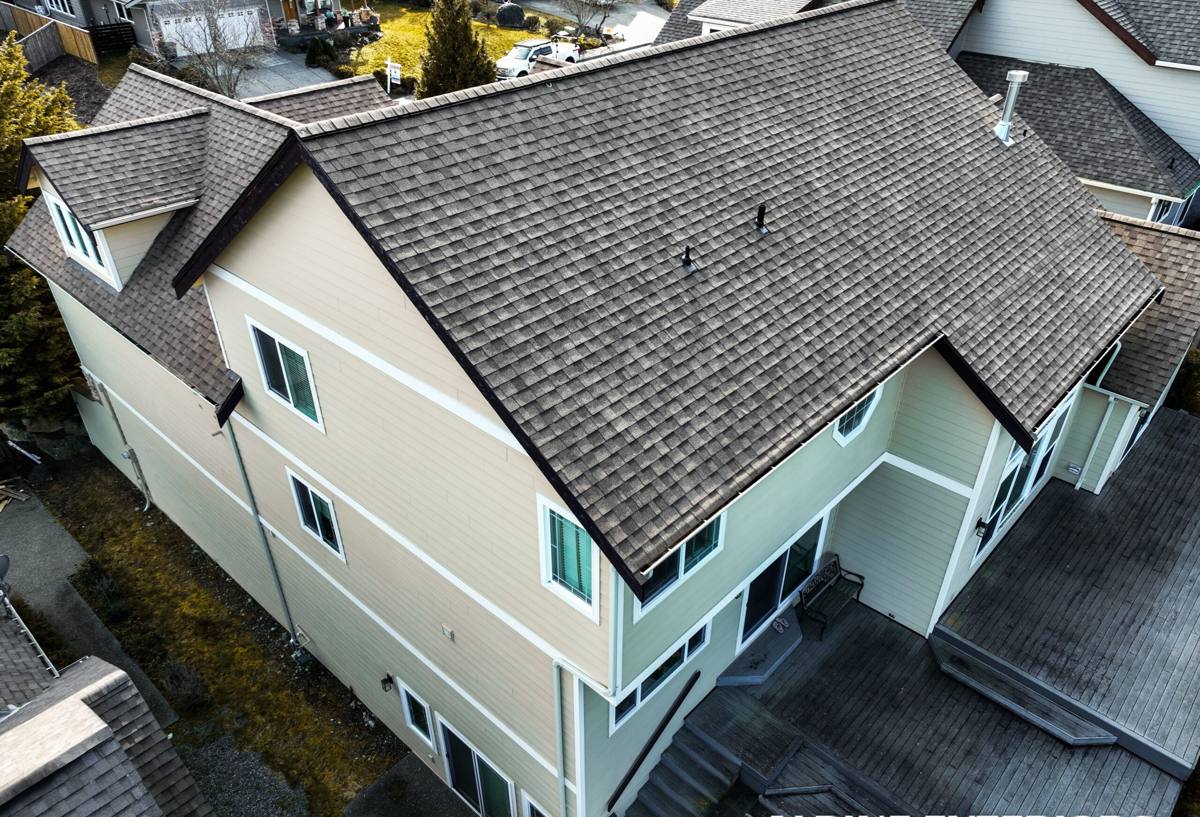
What Salt Air, Rain, and Moss Actually Do to Siding
Each of these factors attacks siding in a different way, and most siding failures we see in coastal Whatcom County homes are the result of two or three of them working together over time.
Salt Air
Airborne salt is corrosive to fasteners and metal flashing, and it accelerates the breakdown of finishes that aren't formulated to resist it. On wood-based and some engineered wood siding products, salt-laden moisture speeds up swelling and edge deterioration, especially at butt joints and corners where water collects.
Driving Rain
Wind off the water doesn't just wet the surface of a wall — it drives rain sideways and upward under laps, around window trim, and into any gap in the water-resistive barrier. Siding that isn't dimensionally stable, or that wasn't installed with correct clearances and flashing, lets that moisture behind the cladding, where it does the most damage.
Moss and Algae
Shaded, north-facing, and tree-adjacent walls in this climate stay damp longer than they dry. Moss and algae take hold on porous or textured surfaces and hold moisture against the siding itself, which is a slow but steady path to rot on wood-based products and paint failure on almost anything.
Why We Install Fiber Cement Here — and Only James Hardie
Fiber cement is a mix of cement, sand, and cellulose fibers, engineered to be dimensionally stable and resistant to moisture-driven swelling, warping, and rot. That's the core reason it makes sense for a peninsula climate like Point Roberts. But we don't install every fiber cement brand on the market — we install James Hardie exclusively, for a few reasons that matter directly to homes in this area:
- Non-combustible core — no risk from ember exposure during dry summer stretches, which does happen even in a generally wet region.
- ColorPlus factory finish — a baked-on finish applied under controlled conditions, which holds up better against salt air and UV than field-applied paint on raw material.
- Climate-engineered HZ formulation — Hardie's HZ10 line is built specifically for wetter, harsher coastal climates like ours, with moisture and freeze-thaw performance in mind.
- A strong transferable warranty — meaningful in a coastal environment where material stress is higher than average, and where a future buyer will want that protection to carry over.
We get asked why we don't also offer LP SmartSide, vinyl, or other fiber cement brands like Cemplank or Allura. Short answer: after years of installing and maintaining siding in this exact climate, Hardie's combination of moisture engineering, finish durability, and warranty structure is what we're willing to put our name behind here. We'd rather install one product correctly than offer several and let homeowners guess which one fits their exposure.
What a Correct Fiber Cement Installation Involves
Fiber cement is only as good as the installation underneath it. In a high-moisture, salt-air environment, the details that get skipped on a rushed job are exactly the details that cause problems five or ten years down the line. A correct install on a Point Roberts home includes:
- Proper water-resistive barrier and flashing at every window, door, and penetration, with correct lapping order (upper layers over lower) so water always sheds outward.
- Correct clearances between siding and grade, decks, roof lines, and other horizontal surfaces to prevent wicking.
- Stainless steel or hot-dipped galvanized fasteners rated for coastal exposure — standard fasteners corrode faster in salt air and can streak the finish.
- Factory-primed or ColorPlus-finished cut edges sealed per manufacturer spec, since exposed raw edges are where moisture intrusion starts.
- Correct nailing pattern and gapping at joints, sized for the expansion and contraction this climate produces across seasons.
- Rainscreen or drainage plane detailing where wall assembly and exposure call for it, so any incidental moisture has somewhere to go.
Skipping any one of these doesn't usually show up right away — it shows up as a callback two or three winters later, after the damage is already behind the wall.
James Hardie Product Lines We Use
Not every part of a home needs the same profile. We select from Hardie's core product lines based on the wall, the exposure, and the look the homeowner wants.
| Product | Best Use | Why It Fits Point Roberts |
|---|---|---|
| HardiePlank Lap Siding | Primary wall cladding | Most common choice; sheds driving rain well when lapped and fastened to spec |
| HardiePanel Vertical Siding | Accent walls, gables, modern facades | Fewer horizontal laps means fewer water-collection points on exposed walls |
| HardieShingle Siding | Accent areas, coastal/cottage styling | Textured look without the moisture retention of real wood shingle |
| HardieTrim Boards | Corners, window and door trim, fascia | Matches the siding's moisture and finish performance so trim doesn't fail first |
Why Hiring a Crew That Already Works Point Roberts Matters
Point Roberts is a practical exception to how most siding jobs in Whatcom County get scheduled and supplied. It's a U.S. exclave reachable by land only by driving through Canada, which means material delivery, crew scheduling, and any permitting coordination with Whatcom County all have an extra layer most contractors never plan for. A crew that hasn't worked here before often underestimates lead time on materials, misjudges how weather windows affect a job that can't easily be "run back to the shop" mid-project, or simply hasn't priced the border logistics into their bid — and that shows up later as delays or corner-cutting.
We plan Point Roberts jobs around that reality from the estimate forward: staging materials in advance, batching site visits, and building in the extra planning that this location requires so the schedule we give you is one we can actually hit.
Our Process, Start to Finish
- Free on-site estimate — we walk the home, note exposure on each elevation (sun, shade, prevailing wind and rain direction), and check the condition of existing siding and trim.
- Material and product selection — Hardie lines and colors chosen for each wall based on exposure, not just aesthetics.
- Scheduling and material staging — accounting for Point Roberts logistics so the crew and materials arrive together, on time.
- Tear-off and substrate check — old siding removed, sheathing inspected for hidden moisture damage before anything new goes up.
- Weather barrier and flashing detail work — the step that determines whether the job holds up in ten years, not just ten months.
- Installation to manufacturer spec — correct fasteners, clearances, and joint treatment throughout.
- Final walkthrough — we review the finished work with you and go over basic care before we leave.
Cost Factors for a Point Roberts Siding Job
Every home is different, and we don't quote pricing without seeing the actual walls, but the factors that move the price on a job here are consistent:
| Factor | Why It Matters Here |
|---|---|
| Home size and wall complexity | More corners, dormers, and trim details mean more labor and cut edges to seal correctly |
| Existing siding condition | Rot or hidden moisture damage behind old siding may need substrate repair before new siding goes on |
| Product mix | Lap siding, panel accents, and shingle detailing are priced differently |
| Access and logistics | Point Roberts material delivery and scheduling add planning time that's built into a realistic bid |
| Trim and flashing scope | Full trim replacement alongside siding costs more up front but avoids mismatched material lifespans |
Living With Fiber Cement Siding in This Climate
Fiber cement with a factory finish is low-maintenance compared to wood or engineered wood options, but "low-maintenance" doesn't mean "no maintenance," especially with the moss and algae pressure Point Roberts gets on shaded and north-facing walls. A simple annual routine keeps siding performing the way it should:
- Rinse siding with a garden hose and soft brush once or twice a year, more often on shaded or tree-adjacent walls
- Avoid pressure washers on close settings — they can force water behind laps and damage the finish
- Check caulking at trim joints and penetrations annually; recaulk before it cracks, not after
- Keep gutters clear so overflow isn't running down the siding face
- Trim back vegetation and branches that keep a wall section shaded and damp longer than the rest of the house
- Address any moss growth promptly with a gentle cleaning approach rather than letting it establish
Ready for a Straight Answer on Your Siding?
If your Point Roberts home has siding that's staining, curling, or showing moss it can't shake, or you're planning ahead for a replacement, we're happy to take a look and give you an honest read on what's going on and what it'll take to fix it right. Use the form below to request a free, no-pressure estimate.