 Ferndale
 Siding on Lummi Island Has to Work Harder
Homes on Lummi Island sit closer to the water and the weather than almost anywhere else we work in Whatcom County. That proximity is the whole appeal of living there, but it's also what wears siding out faster than it would a few miles inland in Ferndale or Bellingham. Salt-laden air off the Sound, wind-driven rain that hits walls sideways instead of falling straight down, and a shaded, damp moss season that can stretch from October well into spring all combine to punish exterior materials in ways that don't show up in a showroom or a spec sheet.
We install James Hardie fiber cement siding exclusively — no vinyl, no LP SmartSide, no cedar, no primed spruce, no other fiber cement brand. This page is about what that means specifically for a Lummi Island property, not a generic rundown of what Hardie siding is.
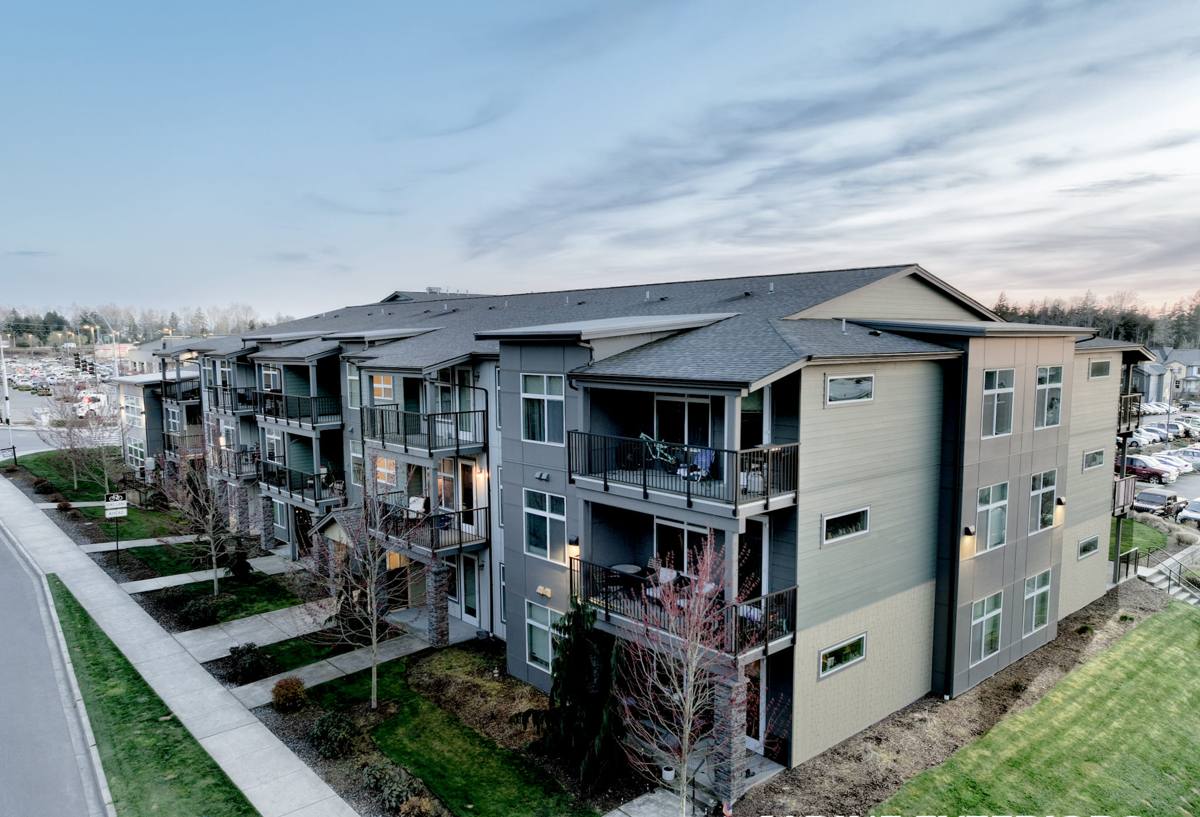
What the Island Climate Actually Does to a Wall
Salt Air
Airborne salt is corrosive to fasteners, flashing, and paint film. It settles on siding surfaces and, combined with moisture, accelerates the breakdown of lower-grade coatings and speeds corrosion on any exposed metal — nail heads, trim edges, hose bib penetrations. Over years, a home facing open water or exposed to prevailing wind off the Sound will show wear on its south and west elevations well before the more sheltered sides of the house.
Driving Rain
Straight-down rain is manageable for almost any siding product. Wind-driven rain is a different problem — it gets pushed sideways and upward into laps, seams, and butt joints that were never designed to shed water horizontally. This is where installation quality matters more than the product itself. A wall assembly with correct water-resistive barrier, flashing, and lap coverage sheds driving rain; one with shortcuts lets it track behind the cladding.
Moss and Prolonged Dampness
Tree cover and marine humidity mean north- and shade-facing walls on the island can stay damp for extended stretches, especially in fall and winter. Moss and algae take hold on surfaces that don't dry out, and on organic or absorbent siding materials that moisture doesn't just sit on the surface — it can work into the material itself over time.
Why We Only Install James Hardie Here
Fiber cement isn't automatically the right call everywhere, but on Lummi Island the case for it is direct: Hardie board is cement, sand, and cellulose fiber — it doesn't absorb water the way wood-based products do, it won't rot, and it isn't a food source for the moss and mildew that thrive in a damp marine climate. It's also non-combustible, which matters increasingly for insurance underwriting and for homeowners thinking about wildfire exposure during dry summer stretches.
James Hardie also engineers specific product lines (their "HZ5" and regional formulations) for climate zones like the Pacific Northwest, and backs the factory-applied ColorPlus finish with a longer color warranty than field-applied paint typically gets. We don't install other fiber cement brands or vinyl not because they're incapable of ever performing, but because we've standardized our crew, our detailing, and our warranty backing around one system we trust completely — and on a site exposed the way island properties are, we're not interested in hedging that bet.
What Correct Installation Involves
The siding panel is maybe half the job. The other half — the part that actually determines whether a wall stays dry for the next 30 years — is the assembly behind and around it.
- Weather-resistive barrier installed shingle-fashion so every layer drains outward and down, never trapping water against the sheathing
- Correct minimum clearances at grade, roof lines, decks, and where siding meets masonry, so water and soil moisture can't wick into the bottom edge
- Proper flashing at every window, door, and penetration — the majority of siding failures we diagnose trace back to missing or undersized flashing, not the cladding itself
- Manufacturer-specified fastener pattern and fastener type, matched to substrate and exposure, to resist the corrosion risk that salt air adds
- Correct lap coverage and butt joint treatment, sized for wind-driven rain exposure rather than the manufacturer's bare minimum
- Rainscreen or drainage gap where the wall assembly and exposure call for it, so incidental moisture behind the cladding can actually drain and dry
Any qualified installer can nail boards to a wall in dry weather. What separates a wall that performs for decades from one that needs early repair is whether the crew respects every one of those details on the parts of the house nobody sees again once it's painted.
Our Process for Lummi Island Projects
1. On-Site Assessment
We look at the specific exposure of your home — which elevations face open water or prevailing wind, where tree cover keeps walls shaded and damp, and where existing siding or trim is already showing salt or moisture damage. Island lots vary a lot in exposure even within a short distance of each other, so this isn't a one-size read.
2. Product and Line Selection
We walk through Hardie's plank, shingle, and panel options and help you land on a profile and ColorPlus color that fits the home and holds up to the specific exposure we identified. Trim and accessory materials get the same scrutiny — mismatched trim is a common weak point on otherwise solid installs.
3. Removal and Substrate Check
Old siding comes off and we inspect the sheathing underneath for rot, delamination, or prior water damage before anything new goes up. This step catches problems that are cheap to fix now and expensive to fix after new siding is already installed over them.
4. Weather Barrier and Flashing
This is the stage that determines long-term performance. We install the water-resistive barrier and flashing to manufacturer spec and to the realities of wind-driven rain exposure, not just code minimums.
5. Installation
Panels, fasteners, and joints go in to Hardie's specifications, adjusted for the fastener corrosion resistance and lap coverage that coastal exposure calls for.
6. Final Walkthrough
We review the completed work with you, including caulking, trim details, and touch-up paint at cut edges, before calling the job done.
Cost Factors on an Island Property
Every project is different, but a few factors specific to Lummi Island tend to move the estimate more than they would on a typical inland job:
| Factor | Why It Matters Here |
|---|---|
| Access and ferry logistics | Material delivery and crew scheduling account for ferry timing, which can affect project sequencing more than on the mainland |
| Existing siding removal | Homes with wood or older siding showing moisture damage often need more substrate repair before new siding goes on |
| Wall exposure | Elevations facing open water or prevailing wind may warrant upgraded flashing detail or fastener spec |
| Trim and architectural detail | Homes with more corners, dormers, or trim work take more labor per square foot than a simple rectangular footprint |
| Color and profile choice | ColorPlus finishes and certain profiles carry different material costs |
We give straightforward, itemized estimates rather than a single lump number, so you can see what's driving cost and where there's flexibility.
Maintenance Once It's Installed
James Hardie siding is low-maintenance, not no-maintenance, and island exposure means a little seasonal attention pays off.
- Rinse salt residue and moss buildup off shaded or water-facing walls with a garden hose and soft brush once or twice a year
- Keep vegetation and tree limbs trimmed back from siding so walls can dry between rain events
- Check caulking at trim joints and penetrations annually — caulk is the one component that wears out well before the siding does
- Touch up any cut-edge exposure promptly, since factory ColorPlus finish is what gives the long-term color warranty its protection
- Keep gutters and downspouts clear so roof runoff isn't dumping extra water directly onto wall sections
Why Hiring a Crew That Already Works the Island Matters
A contractor who's done work on Lummi Island understands the ferry schedule, knows how material delivery and crew logistics need to be planned around it, and has already seen how exposure varies from one side of the island to the other. That's not a small thing — a crew showing up for the first time has to learn all of that on your job, on your dime. We work across Whatcom County, including Ferndale and the surrounding communities, and island logistics are part of our normal planning rather than a surprise.
Just as important is familiarity with how the marine climate actually treats different products over years, not just what a spec sheet claims. That's the experience behind our decision to install James Hardie exclusively, and it's what shapes how we detail every wall assembly on an island job.
If you're planning a siding project on Lummi Island, we're glad to walk your property, look at your specific exposure, and put together a straightforward, no-pressure estimate — just fill out the form below to get started.