 Ferndale
 Roof Repair Built for Kendall's Conditions
Kendall sits inland from Ferndale in Whatcom County, where heavy tree cover, long wet stretches, and marine-influenced air moving through the region combine to put roofs under constant, quiet pressure. It's rarely a single dramatic storm that takes out a Kendall roof — it's the slow accumulation of moss in shaded valleys, water finding its way under a lifted shingle tab during driving rain, and flashing that's been through one too many freeze-thaw cycles. Roof repair here isn't a generic service; it's a response to a specific set of local conditions that show up differently than they would on a roof in a drier, more open part of the county.
A repair that ignores those conditions tends to fail again within a season or two. A repair that accounts for them — proper flashing detail, correct underlayment choice, real attention to how water actually moves across that particular roof — holds up for years instead of months.
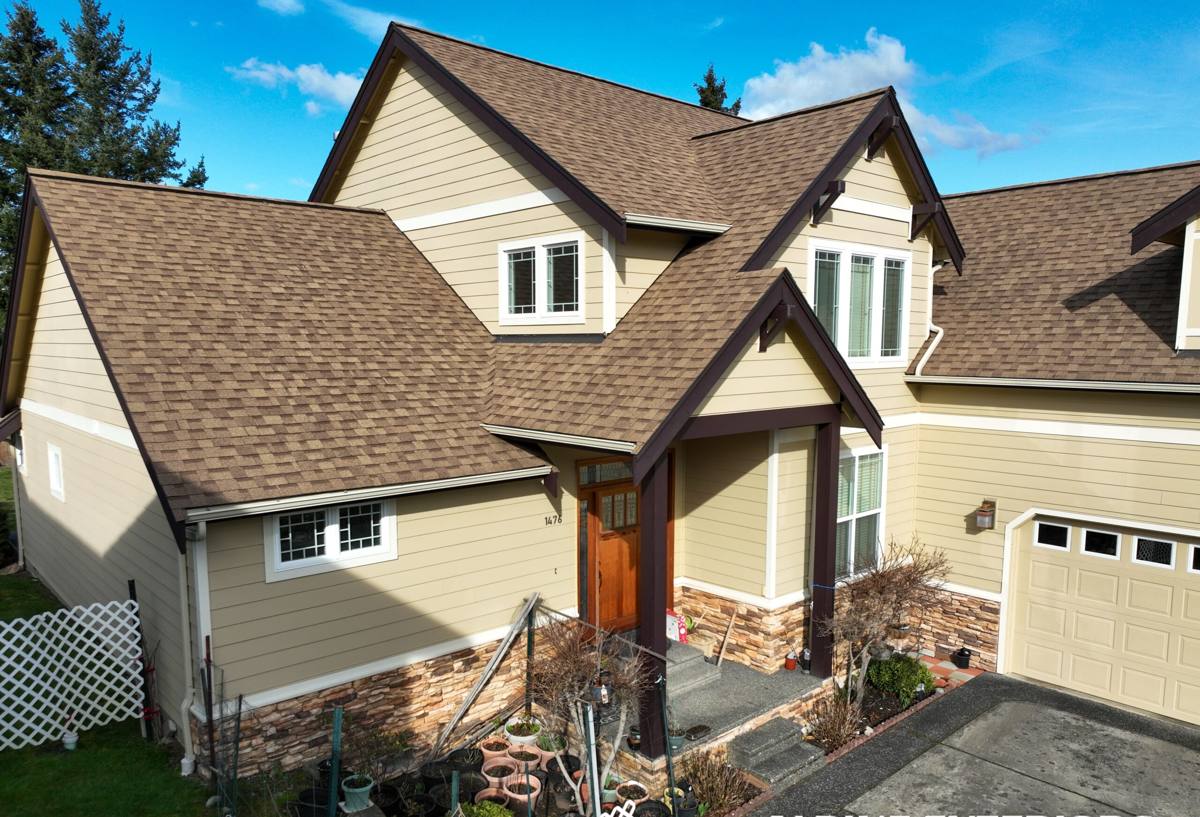
Why Kendall Roofs Wear Differently
Shade, Tree Cover, and Moss
Properties tucked under fir and cedar canopy stay damp longer after rain than roofs in open sun. That extra moisture retention time is exactly what moss and algae need to establish. Once moss gets a foothold at a ridge or in a shaded valley, it holds water against the roofing material around the clock, which accelerates granule loss on composition shingles and can work its way under lapped edges over a season or two.
Driving Rain and Wind-Driven Moisture
Whatcom County gets plenty of straight-down rain, but it also gets wind-driven rain that comes in at an angle — the kind that finds gaps a light shower never would. This is what exposes weak flashing around chimneys, skylights, and wall-to-roof transitions long before the shingles themselves show obvious wear. A repair that only addresses the visible shingle damage and skips the flashing underneath it is treating the symptom, not the cause.
Long, Wet Winters
The repair window in this climate is shorter than homeowners expect. Once the wet season sets in, minor issues — a lifted tab, a small gap at a pipe boot, a cracked piece of step flashing — have months to work water into the decking before anyone gets a dry enough stretch to fix them properly.
Signs a Kendall Roof Needs Repair — Not a Full Replacement
Most roofs that come to the end of their service life don't fail all at once. They show a pattern of localized problems first, and catching that pattern early is what keeps a roof in the "repair" category instead of the "replace" category.
- Dark streaking or green-black growth concentrated in shaded sections, especially north-facing slopes or areas under overhanging branches
- Granules collecting in gutters or at downspout outlets, often a sign of accelerated wear from moss holding moisture against the shingle
- Curling, cupping, or lifted shingle tabs — especially near valleys, ridges, or roof-to-wall intersections
- Visible daylight or staining around chimney flashing, skylight curbs, or vent boots
- Soft spots or slight sagging when walked on, which can indicate decking that's already absorbed moisture
- Interior ceiling stains that appear or grow after a windy rain event, not just a heavy one
- Rusted, cracked, or separated metal flashing at any roof penetration
If the damage is contained to one or two of these areas and the decking underneath is still sound, a targeted repair is usually the right call. If moisture has been tracking under the surface for a long time — soft decking across a wide area, multiple failed penetrations, or shingles that are brittle and cracking across the whole field — that's a different conversation, and an honest contractor will tell you so rather than patch something that needs more.
What a Correct Roof Repair Actually Involves
"Patching a roof" sounds simple, but a repair that's done right addresses several layers, not just the top one homeowners can see.
| Symptom | What's Usually Happening Underneath | Correct Repair Approach |
|---|---|---|
| Moss on shaded slopes | Moisture trapped under growth is degrading granules and adhesive | Careful removal, treatment, and inspection of shingles underneath before deciding repair vs. replacement of that section |
| Staining near a chimney or skylight | Flashing has separated, corroded, or was never properly step-flashed | Remove and rebuild flashing detail, not just caulk over the gap |
| Interior leak during wind-driven rain | Water entering laterally, not just from above — often at a valley or wall transition | Trace the actual entry point, which may be several feet from the interior stain, and rebuild the water-shedding path |
| Granule loss / bald patches | UV and moisture exposure has worn through the protective layer | Section replacement with matching shingle, tied properly into surrounding courses |
| Soft decking at a repair site | Water has been getting through longer than the surface damage suggests | Cut back and replace affected decking before any new roofing goes down — never roof over wet wood |
Flashing Comes First
More Kendall roof leaks trace back to flashing than to worn-out shingle field. Chimneys, skylights, dormers, and wall intersections are where a repair either lasts or doesn't. We rebuild flashing details properly — new step flashing, correct counterflashing, sealed and lapped the right direction — rather than relying on sealant as a long-term fix.
Matching Materials, Not Just Colors
A repair that uses a shingle with a different profile or weight than the surrounding roof can create a subtle high spot that catches water instead of shedding it. We match not just color but the actual product line where possible, and where an exact match isn't available, we place the repair where the difference matters least.
Decking Has to Be Sound
No amount of good shingle work fixes rotted or delaminated decking underneath. Any repair that uncovers soft or damaged decking gets that decking replaced before new material goes down — skipping this step is the single most common reason a "repair" fails again within a year.
Our Repair Process
- On-site inspection. We look at the roof from the ground, from the attic if accessible, and up close at the specific area of concern — not just a drive-by estimate.
- Diagnose the actual entry point. Especially with wind-driven leaks, the interior stain and the true entry point are often not in the same spot. We trace the path.
- Written scope before any work starts. You know exactly what's being repaired, what materials are being used, and why — no surprise add-ons mid-job.
- Remove and rebuild the affected section. This includes flashing, underlayment, and decking as needed, not just surface shingles.
- Match and tie in materials. New work is integrated into the existing roof so water sheds correctly across the transition, not around it.
- Clean up and final walkthrough. Debris, old materials, and displaced moss are cleared, and we walk the repair with you before calling it done.
Common Roof Types Around Kendall and Repair Considerations
| Roof Type | Typical Repair Considerations in This Climate |
|---|---|
| Composition (asphalt) shingle | Most common; moss and granule loss are the primary concerns in shaded areas, along with flashing at penetrations |
| Metal roofing | Sheds moss more easily but repairs require matching panel profile and fastener pattern; seam and flashing integrity is critical |
| Cedar shake | Needs closer monitoring for moisture retention in heavy shade; individual shake replacement is more labor-intensive than shingle repair |
Whatever the roof type, the underlying issue in this climate is almost always the same: something is holding moisture against the roof longer than the material was designed to tolerate, whether that's tree shade, a flashing gap, or wind-driven rain finding a weak lap.
Moss, Algae, and Preventing the Next Repair
Fixing the immediate damage without addressing why moss took hold in the first place just means scheduling the next repair. After a repair, we look at whether simple changes reduce the odds of a repeat problem: trimming back branches that shade the roof and keep it damp, making sure gutters aren't backing water up under the shingle edge, and confirming attic ventilation isn't adding warm, moist air to the underside of the roof deck. None of this replaces a periodic moss treatment or gentle cleaning, but it reduces how often that maintenance is needed.
A Homeowner Maintenance Checklist
- Clear moss and debris from valleys and shaded areas at least once during the dry season
- Keep gutters and downspouts flowing freely, especially before the wet months set in
- Trim back overhanging branches that keep sections of roof in constant shade
- Check attic ventilation isn't blocked by insulation at the eaves
- Have flashing around chimneys and skylights inspected every couple of years, not just when a leak shows up
Cost Factors for Kendall Roof Repairs
Repair costs vary widely based on scope, and we won't quote a number without seeing the roof — but the factors that drive cost up or down are consistent.
| Factor | Effect on Cost |
|---|---|
| Size of the affected area | A single flashing detail costs far less than a multi-section reroof of a valley or slope |
| Decking condition | Sound decking keeps cost down; rotted decking discovered underneath adds material and labor |
| Roof pitch and access | Steep or hard-to-access sections, common on tree-shaded lots, take longer to work safely |
| Material match availability | Discontinued or uncommon shingle profiles can add cost or require a broader repair area to blend properly |
| How long the leak has been active | Water damage caught early is a shingle-and-flashing job; caught late it can involve framing or interior repair too |
Why Hiring a Crew That Already Works in Kendall Matters
A roofer who's unfamiliar with the area is starting from zero on every job — guessing at how a particular slope handles wind-driven rain, or treating moss as a cosmetic issue instead of the moisture problem it actually is. A crew that already works this part of Whatcom County has seen the pattern before: which roof orientations hold moss longest, how tree-heavy lots affect drying time after a repair, and where flashing tends to fail first on the roof types common here. That familiarity shows up in faster, more accurate diagnosis and fewer callbacks.
It also matters for something more practical: response time. When wind-driven rain finds a gap during a storm, having a local crew that can get out to Kendall quickly — rather than one working from across the county — is the difference between a contained repair and a larger interior mess.
Timing a Repair Right
The best time to repair a roof in this climate is before the wet season, not during it. Late spring and summer give materials time to seal and cure properly, and they give us the ability to fully assess moss damage without working around active rain. That said, a leak doesn't wait for good weather — if water is actively getting in, a temporary or full repair during the wet months is still far better than letting it track into decking and framing over a winter.
If you're seeing moss buildup, a stain that shows up after windy rain, or you just want an honest look at a roof before it becomes a bigger job, we're happy to come take a look. Estimates are free, there's no pressure to sign anything on the spot, and you'll get a straight answer about whether you're looking at a repair or something bigger — fill out the form below to get started.